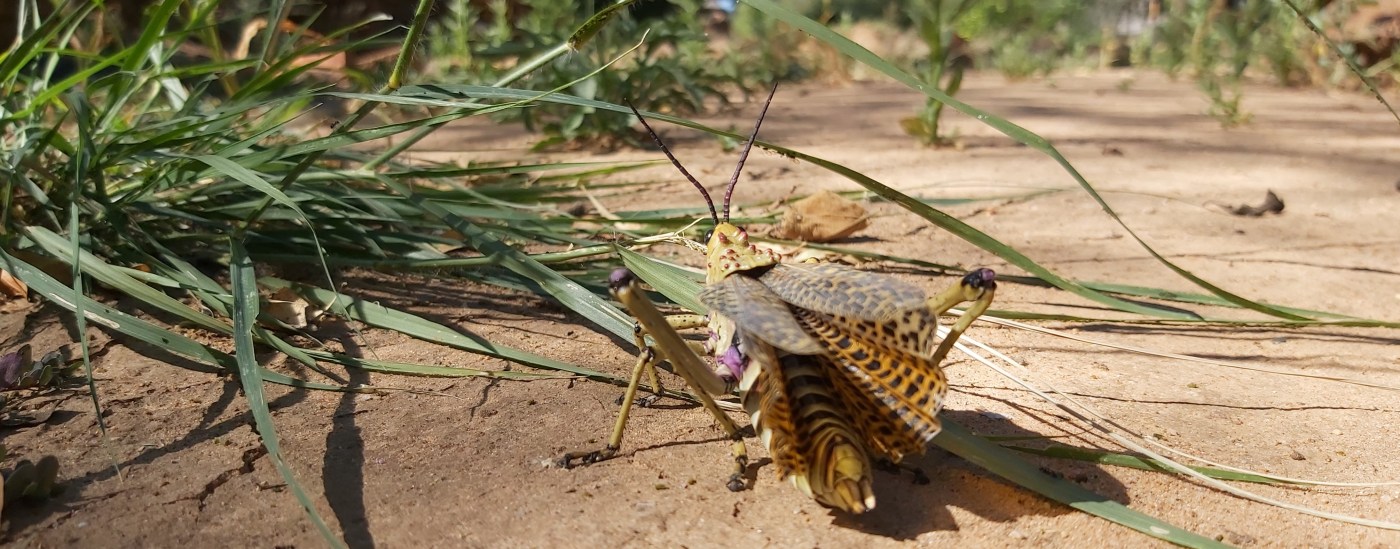
Toxic milkweed grasshopper
Phymateus viridipes
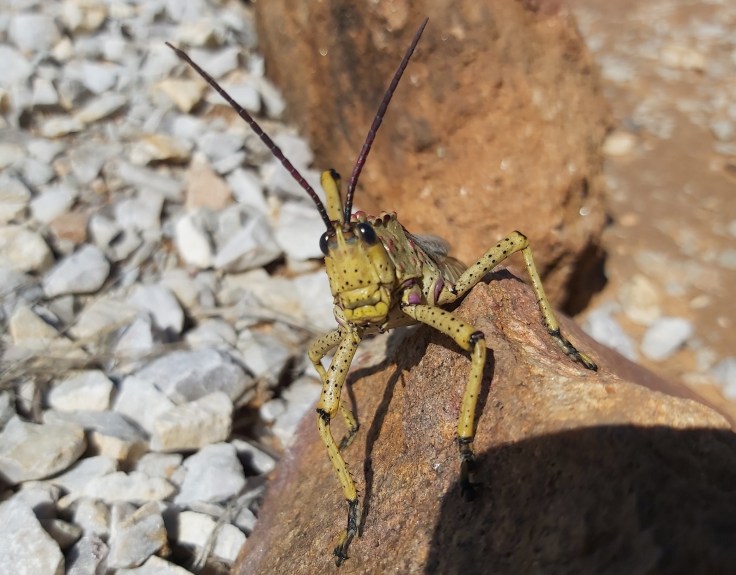
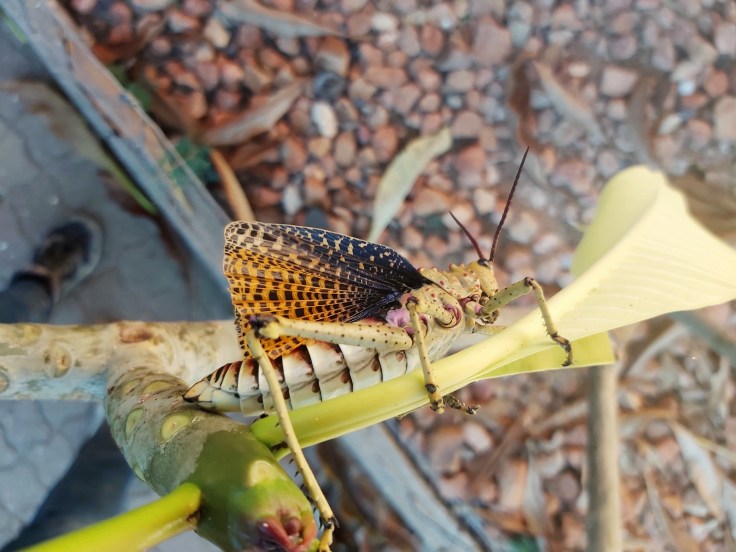
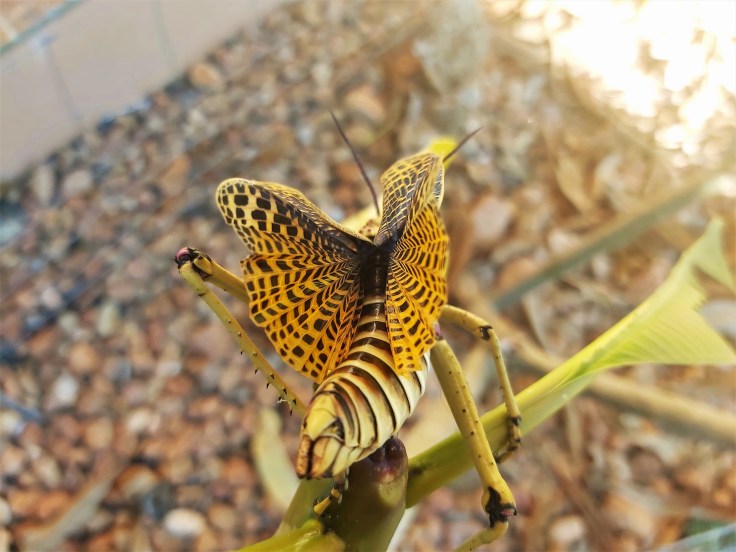
The body is up to 7 cm long, pale greenish/yellowish underneath, brown/yellow striped on top. To me, it looks a bit like a wasp (colouration-wise). Six legs. Hind legs are long and muscular and perfectly adapted for jumping. The wings are folded when resting and unspectular in colour. When opened, the wings show their distinctive orange colourful in the inside. The head has a powerful jaw, large compound eyes and is spiked with two antennas.
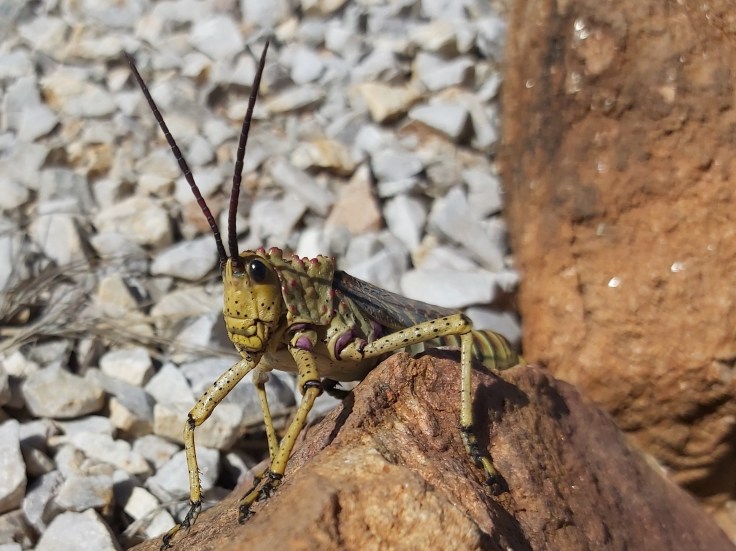
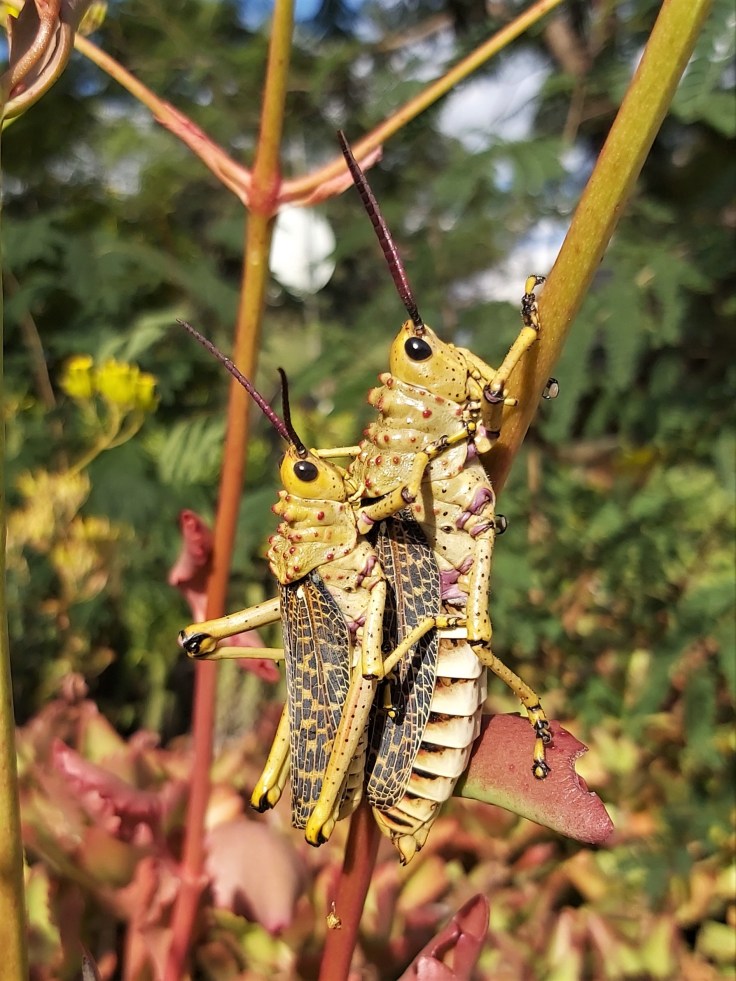
Females are larger, although both sexes look similar in colouration and shape.
The Toxic milweed grasshopper belongs to the family Pyrgomorphidae and many individuals in the family are known as Toxic Milkweed Grasshoppers, Gaudy Grasshoppers or Koppie Foam Grasshoppers.
Habitat
Grassland, Savanna, Open veld.
Distribution
Found throughout Africa, except the North. Also in Madagascar and some parts of India.
LIFESTYLE & SOCIAL LIFE
Gregarious
Diurnal
When treathened, they warn by raising and rustling their wings to enlarge their size and to display their striking colouration in the wings. This is called “aposematic colouration”. It is assumed that the brighter and more colorful an exoskeleton, the more toxic the individual.


In addition, they may also secrete a noxious fluid from its joints and their hard exoskeleton serves as protection to be easily cracked.
Grasshopper populations are strongly influenced by climate and weather.
REPRODUCTION AND LIFECYCLE
Hatching period: 4-10 months
Lifespan: 2–8 months (adults)
In breeding season, male grasshoppers create “music” with their legs to attract the females. Listen for it at night.
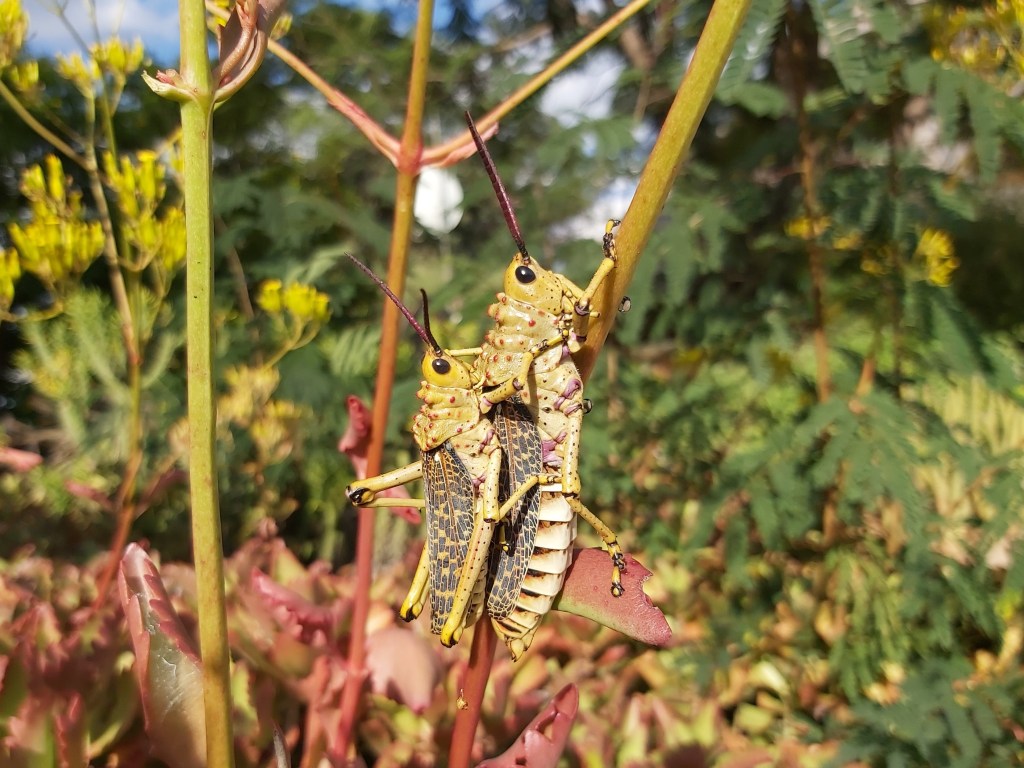
Eggs are laid in sandy soil. Alltogether, the milkweed grasshopper goes through seven development stages before reaching adulthood.
DIET
Herbivorous
This locust feeds on highly toxic plants. By doing so, they integrate the toxicity into their own body, which makes them unpalatable, if not toxic when eaten. They therefore do not have a lot of predators, but have to fear lizards and snakes and some other animals.
They may seen alone or congregated in large numbers on trees and shrubs, arranged in such a way as to resemble foliage. Grasshoppers feed on plant leaves, shoots and roots.
Did you know?
They got their name because many family members are known to feed on milkweed. They are able to retain toxic compounds of these plants in their bodies that act as a deterrent to predators. They still have to fear lizards, snakes, assassin bugs, frogs.
It is known under several other names, such as Bush locust or Milkweet locust, although they do not belong to the true locusts.
 Sininho´s World
You must be logged in to post a comment.