Slender mongoose
Galerella sanguinea
Description, Habitat & Distribution
Lifestyle, Behaviour & Social life
Communication
Diet
Reproduction & Lifestyle
Did you know?
Description
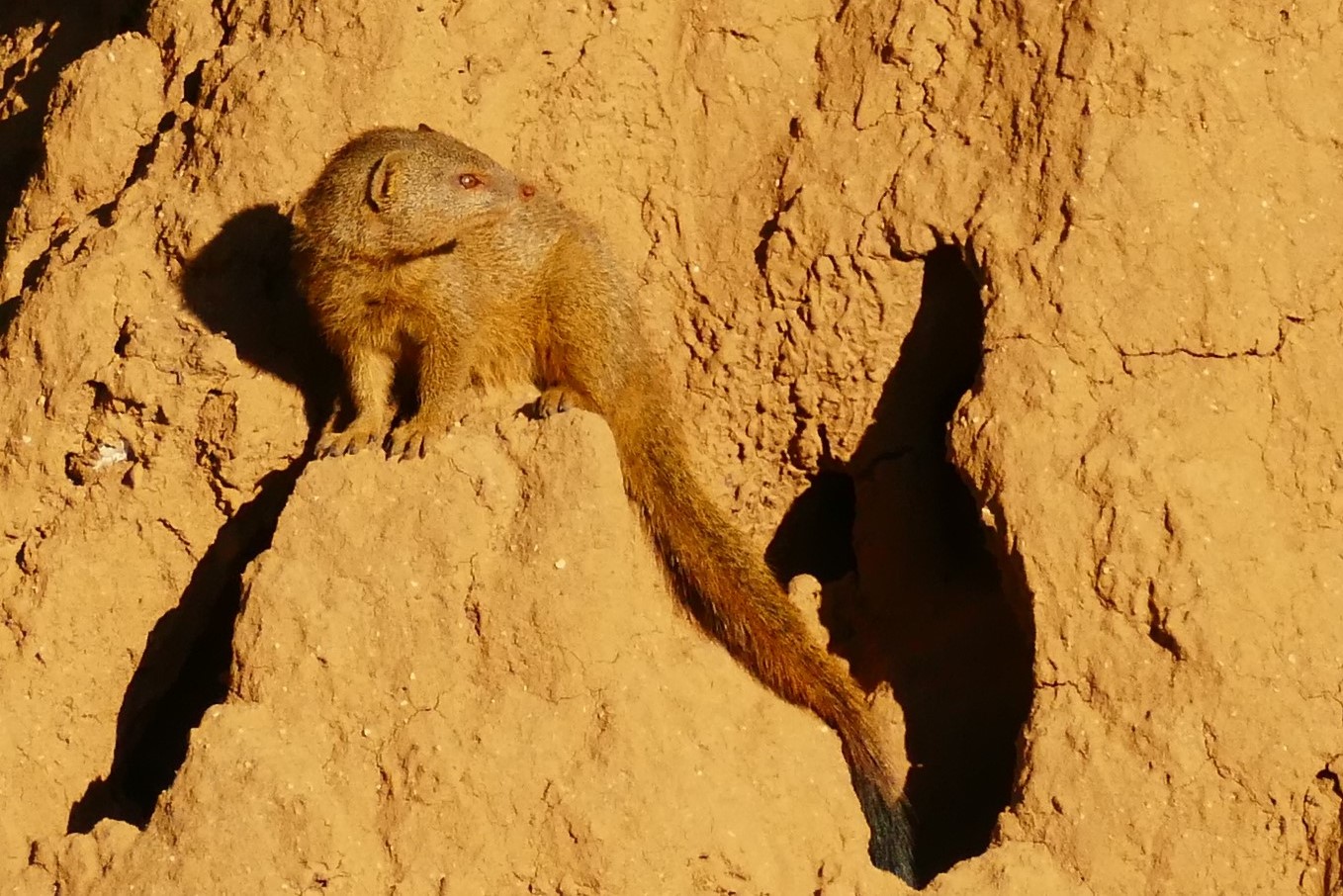
This agile mongoose is easily recognisable by its slender, weasel-like body with relatively short legs. The color of their fur varies widely between subspecies, from gray to dark reddish-brown, sometimes even with an orange or yellow touch. They have red eyes and a very prominent black-tipped tail (therefore also called “black-tipped mongoose”).
Habitat
Open woodland savannah and semiarid plains
Distribution
Sub-Saharan Africa
Lifestyle, Behaviour & Social Life
Solitary
Non-territorial
Diurnal
Slender mongoose are diurnal and predominantly solitary, they come together mainly to mate.
Mongooses are late starters – in the mornings, they can be seen lazy warming up in the sun, often streching on their favorite termite mound.
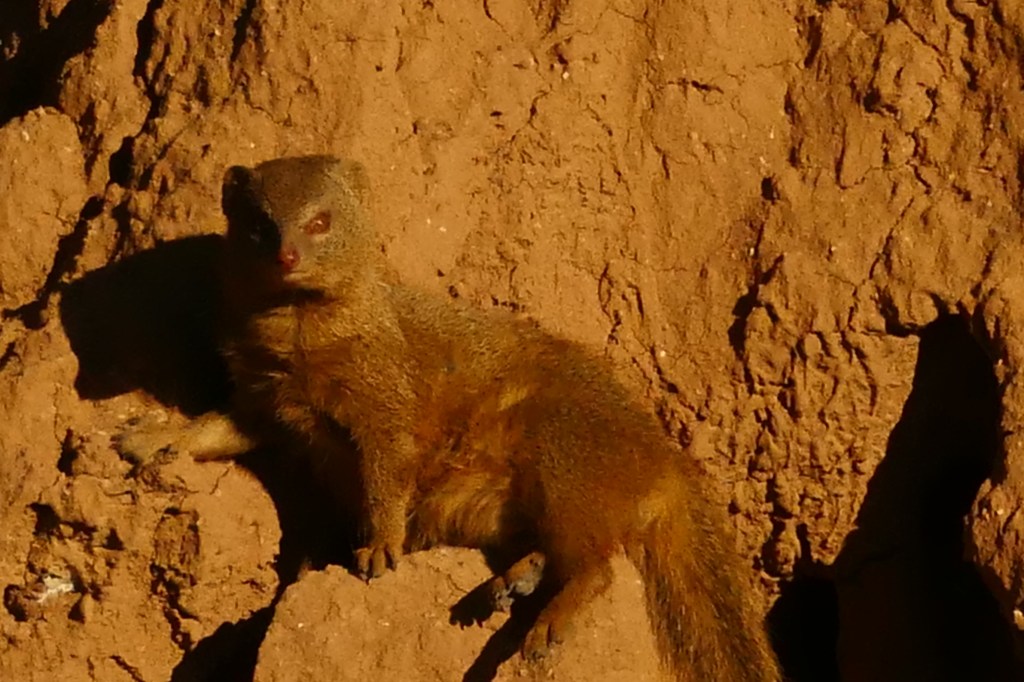
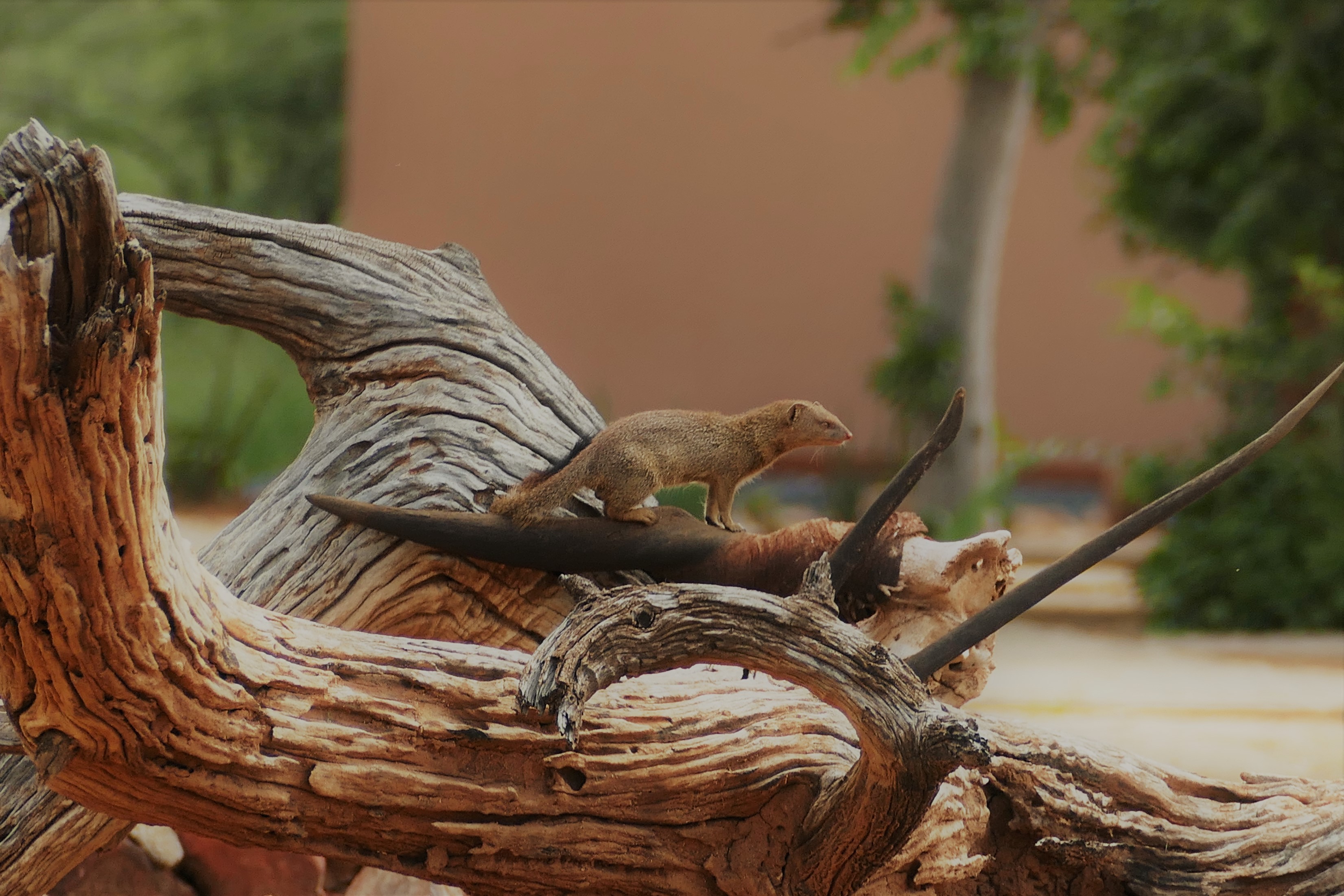
During the day, they are very energetic and often seen running along roads or pathways, tail low with only the dark tip raised, nose to the ground, and back arched. When pursued, the tail flips up into a vertical position. When disturbed, they may stand motionless. They seem curious and playful. When my neighbours once left their broom laying outside, I saw a mongoose using it as a scratch post. He constantly rubbed against it and seemed to enjoy it.
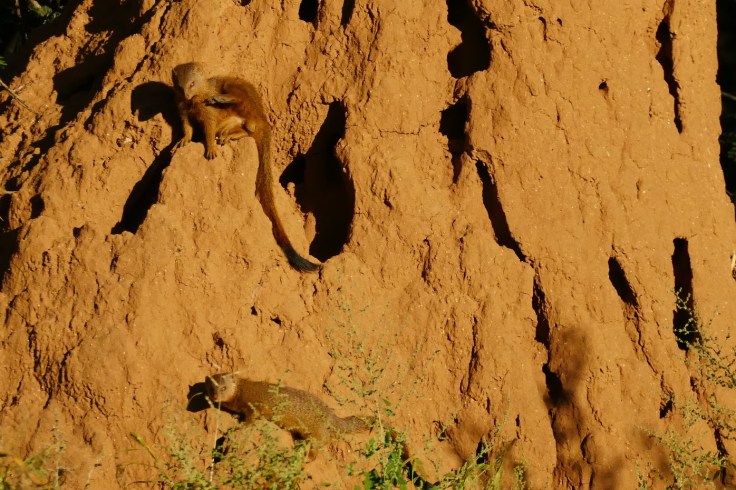
They are kind of territorial and maintain home ranges. Males hold large home ranges that encompass or overlap with several female territories. Dens are often found in termite mounds, rock piles, ground holes or in cavities at tree bases. Slender mongooses are experienced tree climbers and often seen hunting nesting birds there and stealing eggs. When excited, the hairs on their back and tail may be raised. When disturbed, they often freeze or simply walk away.
They use different types of communication, such as scent-marking with urine, dung, cheek-, chest- and anal glands or vocal communication. They hiss, growl, spit or shriek and their vocal repertoire includes for example a “whoo” contact call, a “tscharr” alarm call or a “tscherr” distress call. Scent-marking is usually used for territorial purposes and mate marking and both sexes make use of latrines for urination and defecation.
Their main predators are hawks, marabou storks, leopards, snakes, and jackals.
Communication
They use different types of communication, such as scent-marking with urine, dung, cheek-, chest- and anal glands or vocal communication. They hiss, growl, spit or shriek and their vocal repertoire includes for example a „whoo“ contact call, a „tscharr“ alarm call or a „tscherr“ distress call. Scent-marking is usually used for territorial purposes and mate marking and both sexes make use of latrines for urination and defecation.
Diet
Carnivorous
Slender mongoose are mainly carnivorous but opportunistic omnivores. Their diet inclue predominantly insects, but also lizards, rodents, birds, eggs, snakes, amphibians, and the occasional fruit are eaten when available
They are well known for their skill to kill snakes, especially cobras: the mongoose provokes the snake by approaching it and attacking its tail and lunging at it until the snake is tired. The mongoose will then bite the head and crush the skull. Mongooses are not immune towards the snake venom, so if the snake strikes the mongoose often enough, the venom overload may kill it.
Reproduction & Lifecycle
Gestation: 57-65 days
Number of young: 2-4
Weaning: 2 months
Sexual maturity: ♂ 1 year / ♀ 2 years
Lifespan: 8-12 years
Slender mongoose breed once or even twice a year. They are seasonal breeders, and the wet season appears to be favoured, which is October to March in southern Africa.
Their breeding season is therefore during March to May and October to December.
Did you know?
A group of mongoose is called troop, committee, delegation, mongeese or mongaggle, pack, gang or mob.
The swahili name is Nguchiro mkia mwebamba.
Slender mongooses have been seen hunting alongside pale chanting goshawks (even though raptors are their main predators) and playing with hyraxes, antelopes, and monkeys.
Slender mongooses eat eggs and open them by throwing them at a rock or other hard object through their back legs to break them open.
Mongooses can carry rabies and leptospirosis (which can lead to kidney damage, meningitis, liver failure, respiratory distress, and even death without treatment) . Both can be passed on to people and pets.
Top speed: 32 km/h
 Sininho´s World
You must be logged in to post a comment.