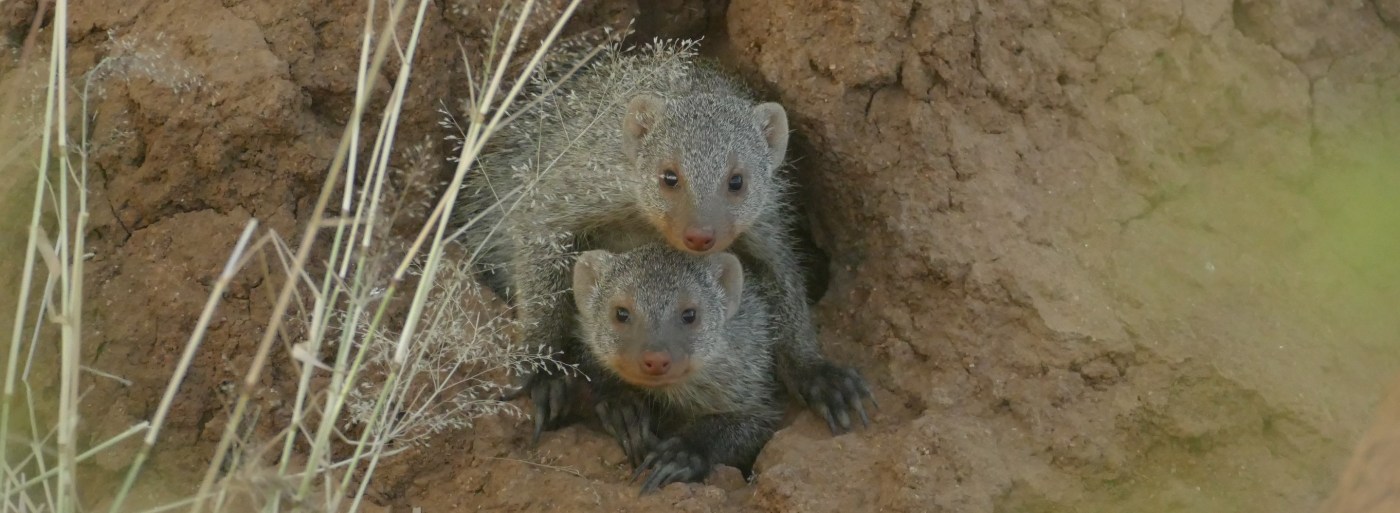
Banded mongoose
Mungos mungo
Description, Habitat & Distribution
Lifestyle, Behaviour & Social life
Communication
Diet
Reproduction & Lifestyle
Did you know?
Nice to watch
Description
Slender mongooses have a long, slim body, greyish brown in colour with bands across the body that are darker in colour as the rest. This is what gave them their name. The tail has no bands but usually a dark-brown or black tip. Legs are short and equipped with sharp claws.
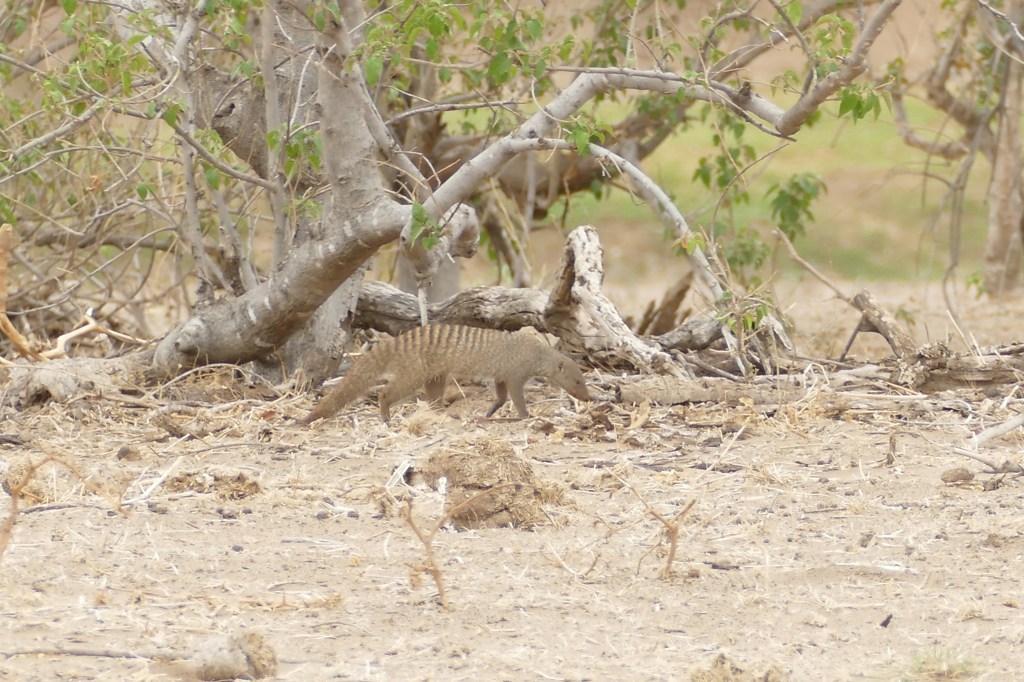
Sexual dimorphism
Males are slightly heavier than the females.
Habitat
Grasslands, woodlands and rocky terrains
Distribution
Sub-Saharan Africa, Northern and Southern Savanna
Lifestyle, Behaviour & Social Life
Gregarious
Territorial
Diurnal
Unlike many mongoose species, Banded Mongooses are very social and live in mixed, permanent, and cohesive groups between 6 and 40 individuals. These groups consist of an average of 15 adults and our offspring. They are called a group, but also troop, committee, delegation or mongaggle. Within the group, there is no strict hierarchy or dominating sex. To strengthen and maintain the strong group bond, mongooses mutually scent-mark each other with a secretion from our anal glands, practice social grooming and use vocalisation.
They care a lot for our young ones, but also look after invalids and elderly, warn them about danger, groom them, and give them access to food.
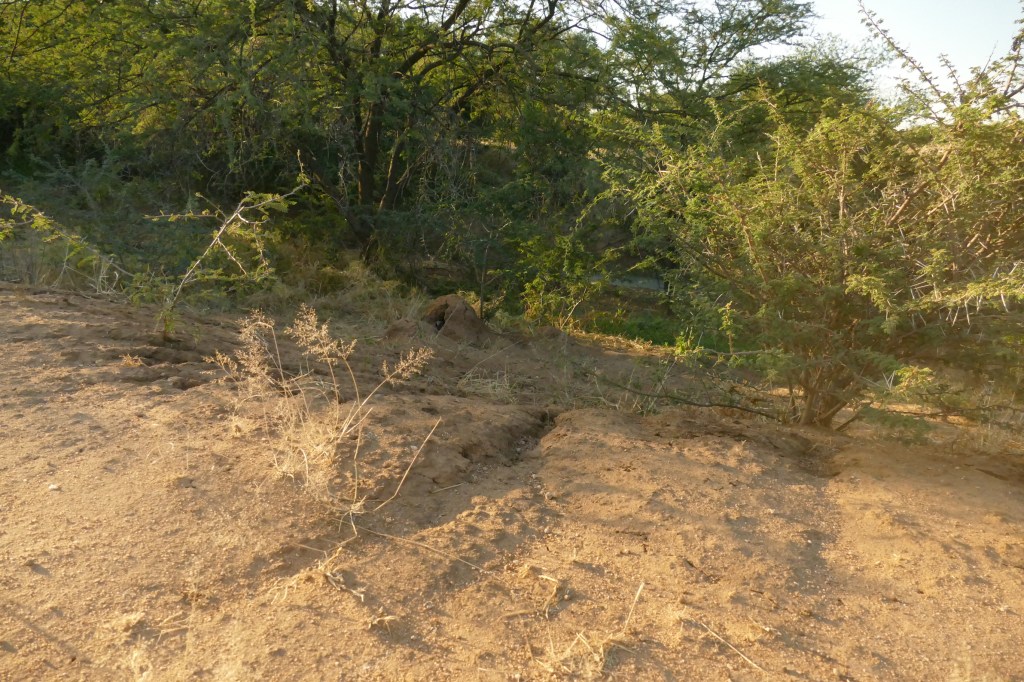
Mongooses are somewhat nomadic and will not inhabit one particular sheltering area or den for long, usually no more than several days or weeks, but they move inbetween different dens within a home range. Nevertheless, they may remain a little longer at a preferred location, and often return to a favourite shelter site or den to re-use it repeatedly. Mongooses definitely prefer termite mounds as den site and once they move in, theymake themselves comfortable, with a central sleeping area or sometimes a few smaller chambers, and several entrances – or exits.
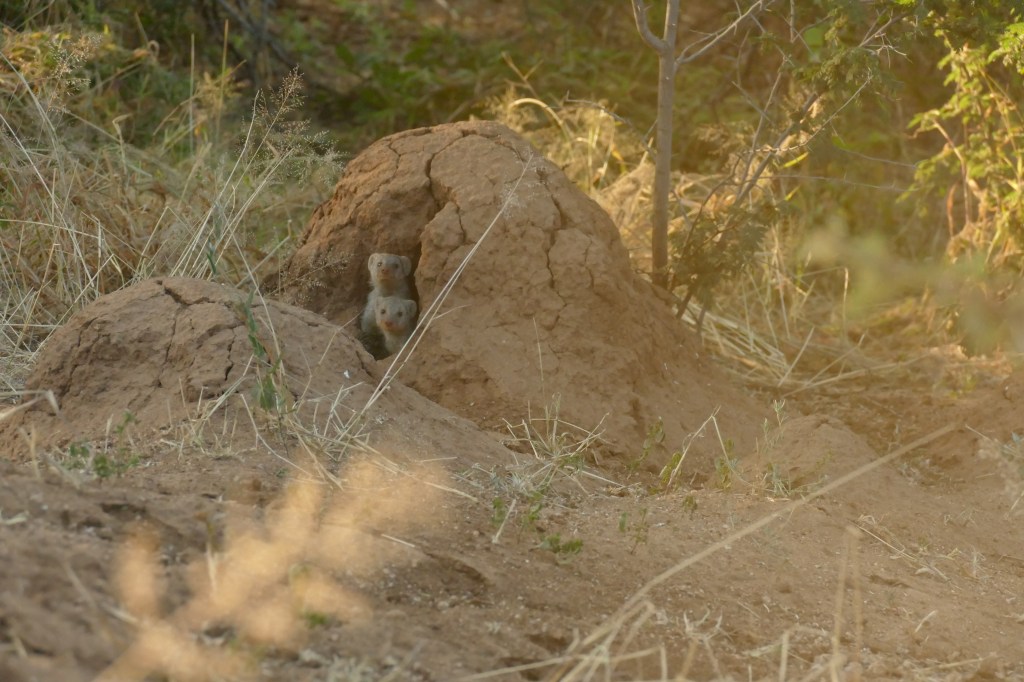
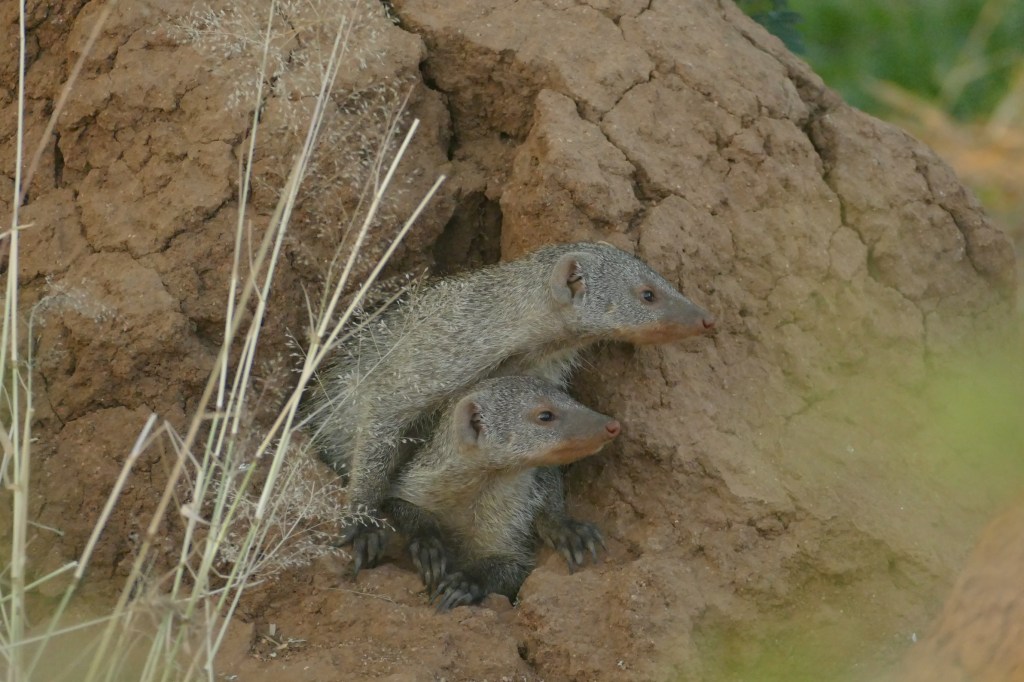
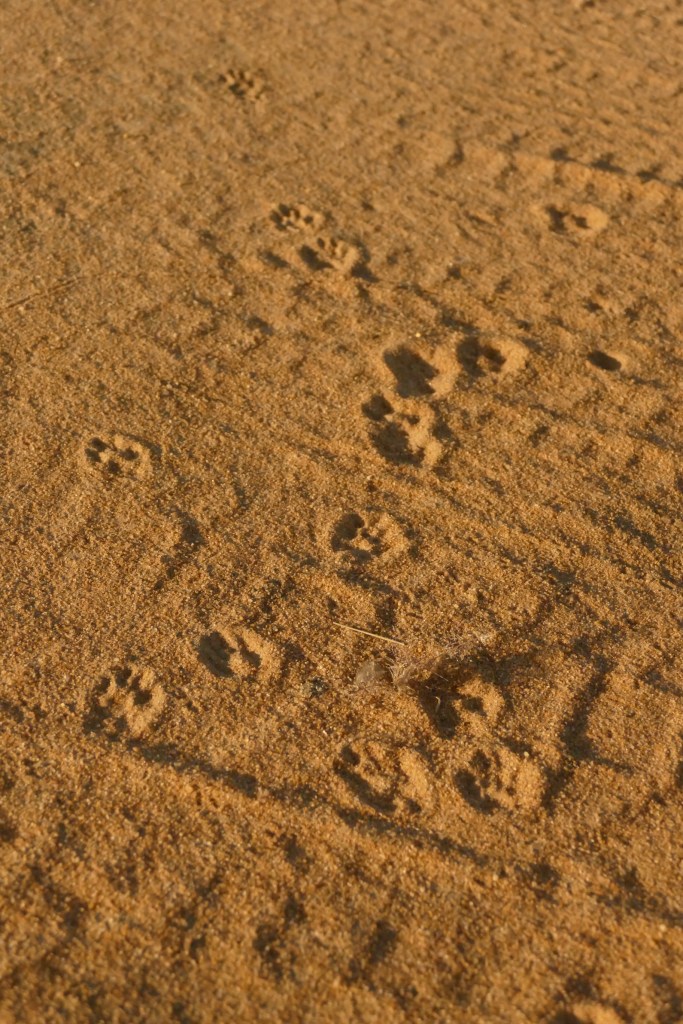
When no refuge is available and they are hard-pressed by predators such as wild dogs, they will form a compact arrangement in which they snuggle and lie on each other with heads facing outwards and upwards.
Their aggression level within the group is low. Just sometimes, they may have a dispute over food, but typically, the one who claims the food first wins. Most aggression and hierarchical behaviour occur between males when females are in oestrus. Females are usually not aggressive but do live in some kind of hierarchies based on age. The older females have earlier oestrous periods and have larger litters. In case that groups get too large, females are forced out of the group. This is done by either older females or males. But don´t worry, this is for the group safety only and these females may form new groups with subordinate males.
Talking about leaving the group: Females often remain in their natal pack (with the exception as described above), but males usually emigrate and join or take over another pack. Still, it happens that both males and females transfer to new packs. Both versions assure that population gene flow is accomplished.
Mongooses are very alert, especially when they are outside. One of them always has a head up to see what is going on around them. In case of potential danger, they warn each other with an alarm call and they also react on the alarm calls of others, e.g. an antelope´s snort or the alarm call of a bird. In case of serious threats, they group together, placing the young ones in the centre. Main predators are Wild dogs, Jackals, Hyenas, Snakes and Birds of prey such as the Tawny Eagly.
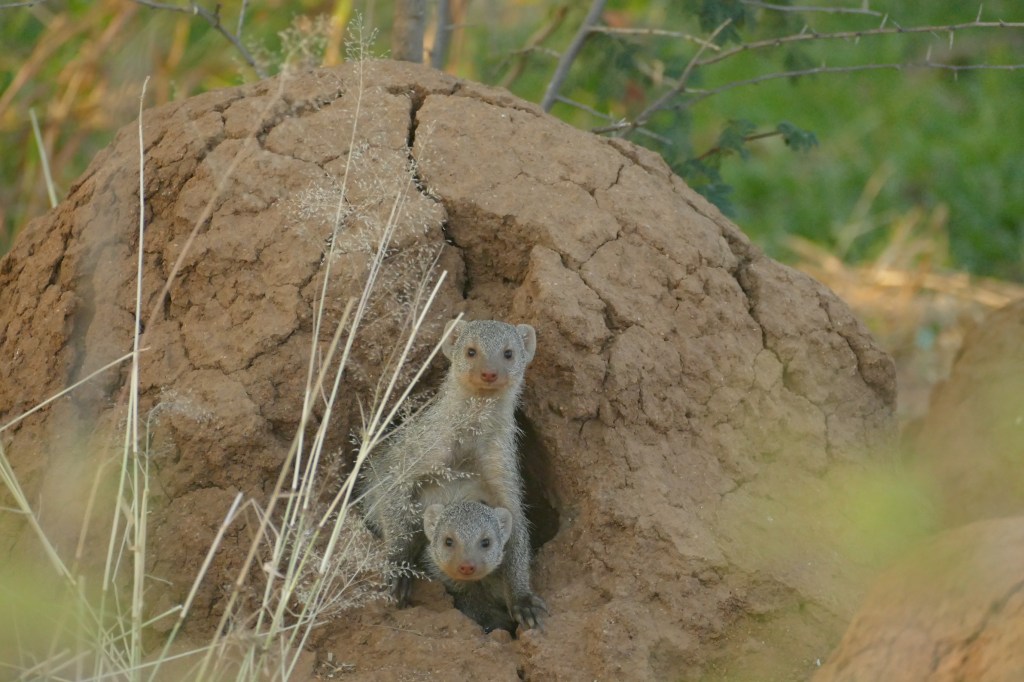
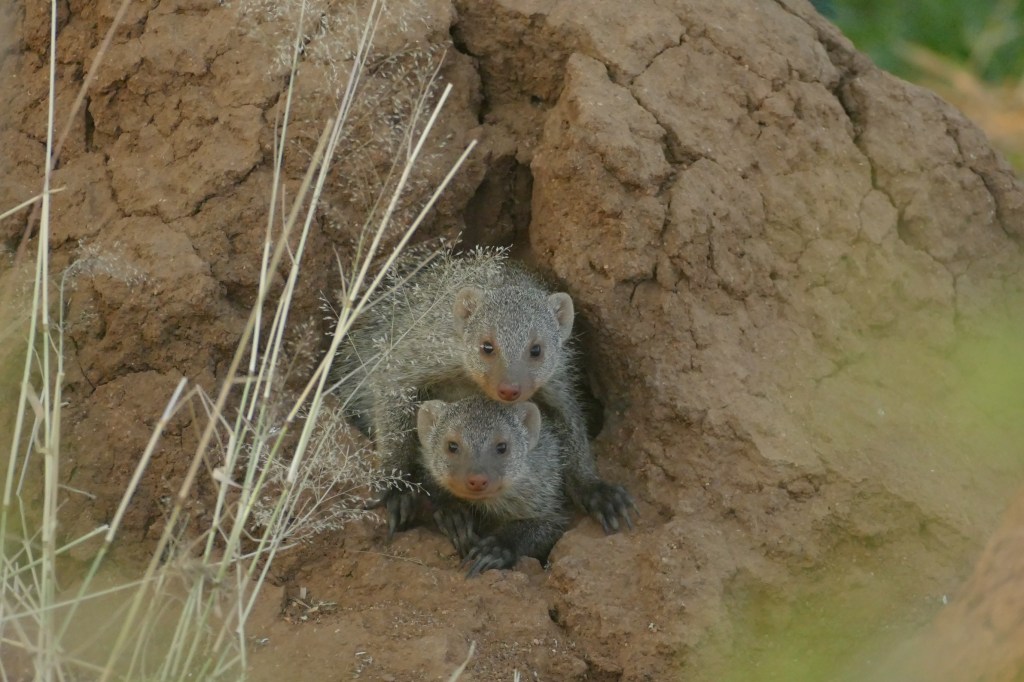
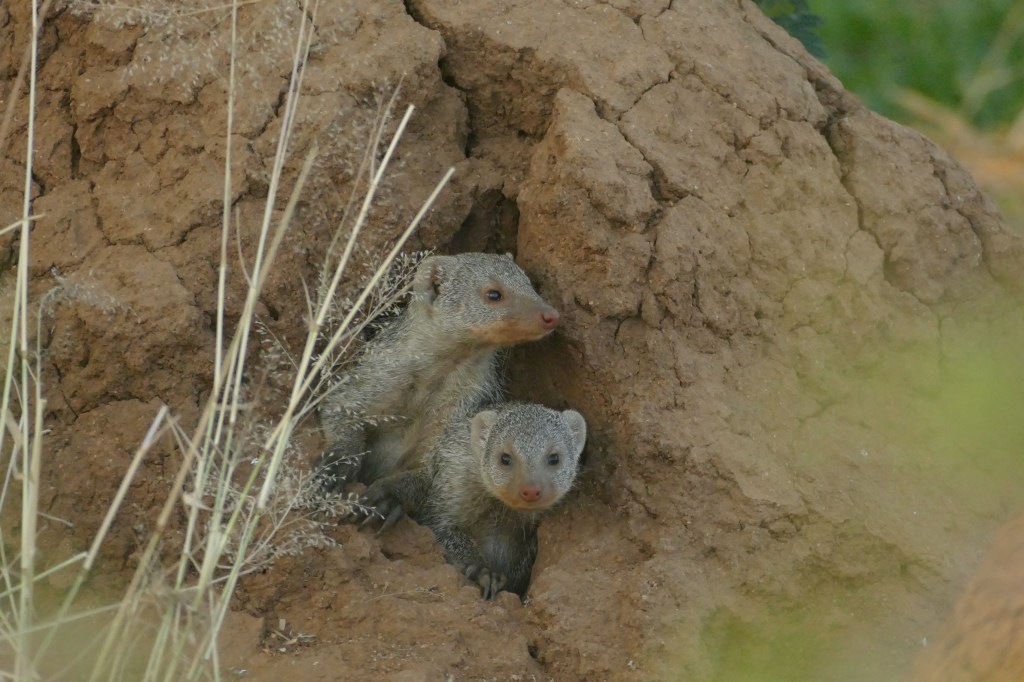
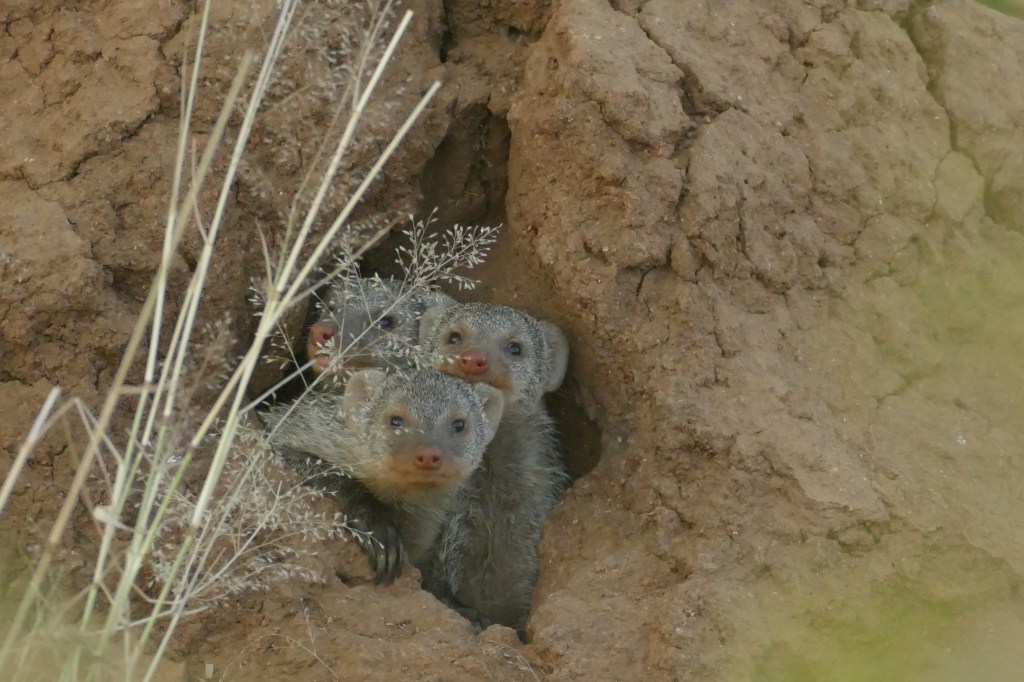
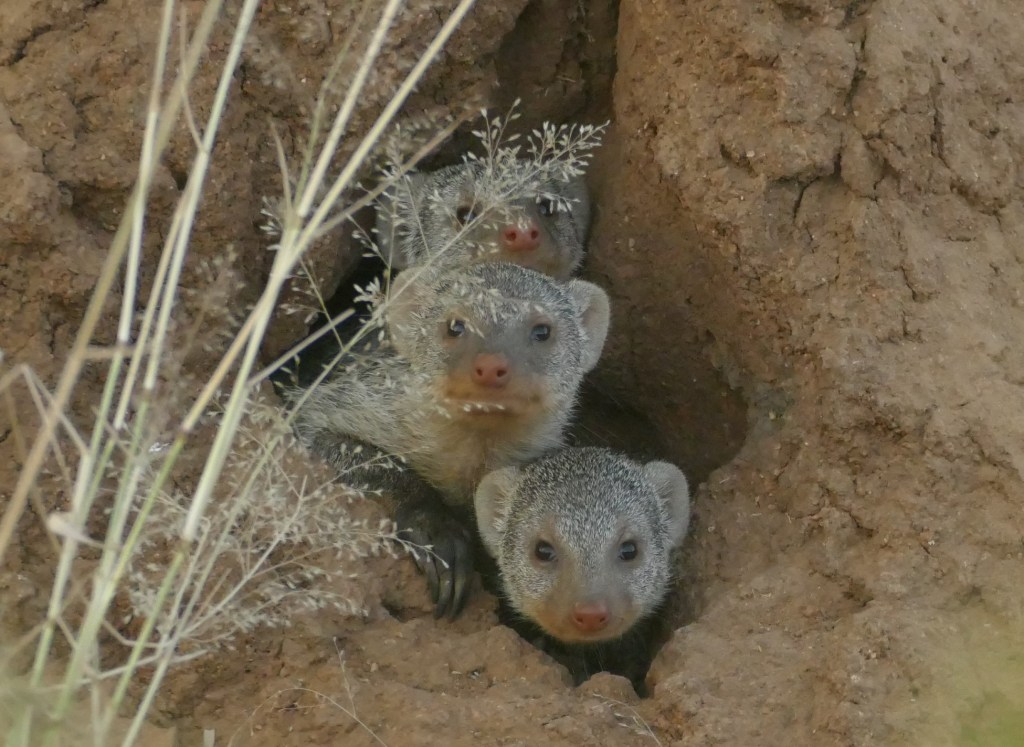
Mongooses are territorial and establish those with scent markings that may also serve as communication between individuals of the same group. In mongoose society there is a clear separation between mating rivals and territorial rivals. Within one group, males are rivals for mates while those from neighbouring groups are competitors for food and resources. Relations between different packs are not as peaceful as within one group. En contraire, they are highly aggressive, and some of them are sometimes killed and injured during intergroup encounters. Nevertheless, breeding females will often mate with males from a rival group during fights.
Daily Activities
Mongooses usually start the day with a look outside. If it is safe, they leave the den one by one, use the latrine, groom themselves or each other, scent-mark, play and socialise. They then start foraging for the rest of the day, having regular rests – especially during the heat of the day. Although they are gregarious, they may also forage alone but especially for larger prey, such as snakes, they hunt together. Mongooses are back at the den before sunset and finish the day with socialising before they snuggle together in their den.
Communication
Mongooses have developed a vocabulary of calls to communicate with each other. They use churring (from a low grunt to a high twitter ) as a contact call, a strident churr or chitter as alarm, and an explosive chattering or squealing in case of threat or danger. They even purr as a sign of contentment. Besides vocalisation, they also use olfactory communication. With a whitish musk secretion from our anal and check glands, they not only flag our territory, but also scent-mark each other, especially after group separation or a mild scare.
Reproduction & Lifecycle
Gestation: 2 months
No of young: 2-6
Weaning: 10 weeks
Sexual maturity: ♂ 4 months / ♀ 10-12 months
Lifespan: 10-12 years
Mongoose practice a polygnous mating behaviour which means that several dominant males will mate with and guard the receptive female. Females synchronise their breeding and births, means, they will breed at the same time. The majority gives birth even in the same night.
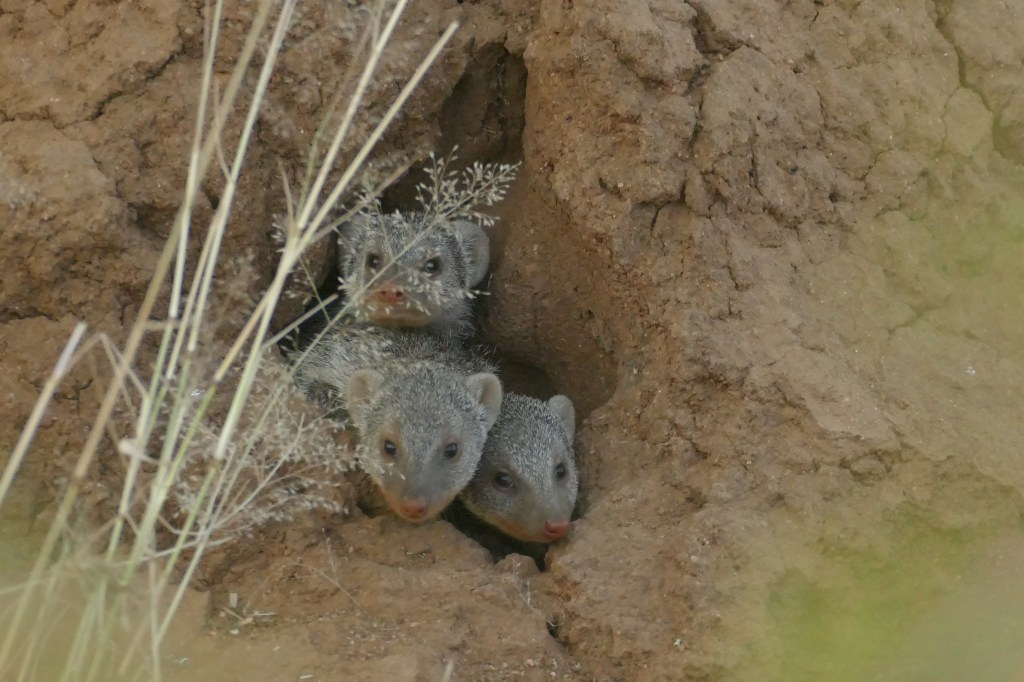
Breeding is normally restricted to the rainy season. In this manner, they assure enough food for everybody once the young ones are born. The litter size is between 2 and 6 (during her lifetime a female has average 1.4 litters per year), and females can give birth up to 4 times a year.
The young ones are called pup or mongopoe and for the first 4 weeks, they are kept underground. They are allosuckled (collectively nursed by several females) and are looked after by 1 – 3 adults. All pack members care for them, might it be playing, grooming, baby-sitting or transport.
The pups open their eyes within the second week and when 4-5 weeks old, they join foraging trips with the group, or they go out accompanied by an ‘escort’ which helps them find food and protects them from danger. By the age of 3 months they become nutritionally independent.
Maturity is reached at about 9 to 10 months old in females, and males as soon as 4 months. Females then often remain in their natal pack, but males usually emigrate and join or take over another pack.
Diet
Carnivorous (Insectivorous)
Banded mongooses are carnivorous, but to be more specific, they are insectivorous and feed primarily on insects and myriapods. Invertebrates constitute the major portion of their diet, and they particularly favour beetles and termites. Remains of them and the dark colour of our feces attest this.
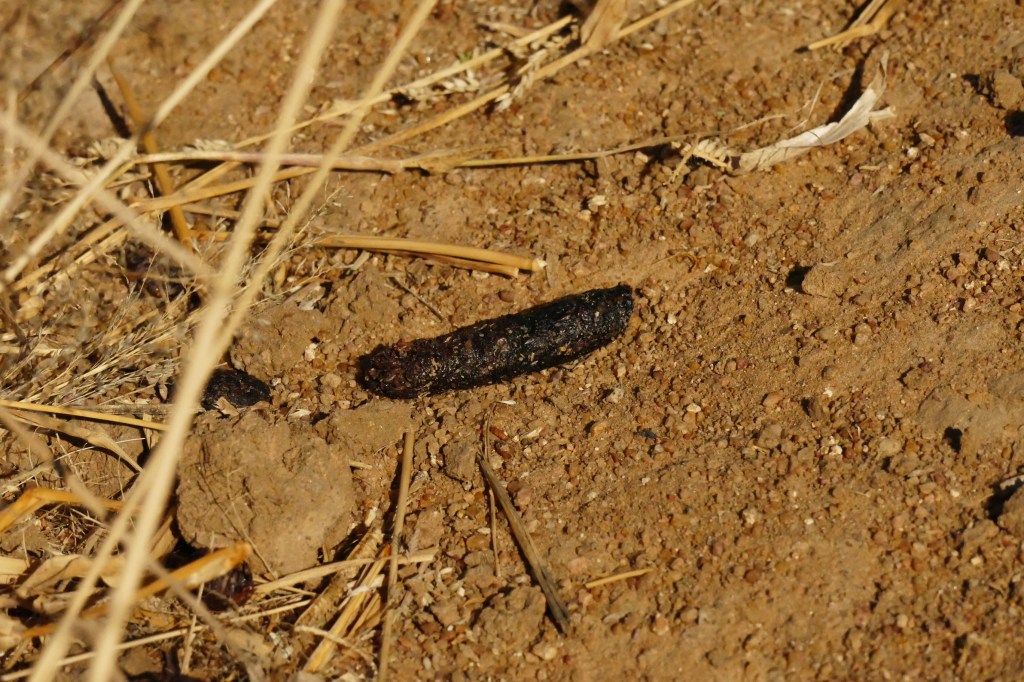
Ants, crickets, termites, grasshoppers, caterpillars, and earwigs are also on the menu, as well as other prey items like frogs, lizards, small snakes, ground birds and the eggs of both birds and reptiles. They are also known to scavenge dumps for edible titbits.
When they find food that is hard to crack, such as big millipedes or eggs, they clasp them with their front paws and throw them behind them to try and break them.
They are very possessive of food, and when they find it, we eat it right away. As social as they are, when it comes to food there is no such a thing as sharing (pups and elderly are the exception).
Did you know?
Banded Mongoose are known to stand up to Lions when they are confronted and threatened. Observations have shown mongoose jumping up and attacking the faeces of Lions that have had them surrounded.
Banded Mongoose have been seen removing ticks from Warthogs in Kenya and Uganda. This symbiotic relationship benefits both species, the Banded Mongoose feed while the warthogs are cleaned.
Often seen in rest camps and other human settlements, where they will scavenge for food. A close friend of mine saw banded mongoose passing through the construction camp in the Limpopo Province on a daily basis, right after lunch as they became used to food scrapes being left behind by people. They even came into the offices to look for food.
When a threat is noticed a sharp alarm call is given and other pack members will scurry away quickly or will stand up on the back legs and scan their surroundings.
They can carry leptospirosis, the world’s most common illness transmitted to humans by animals. It’s a two-phase disease that begins with flu-like symptoms. If untreated, it can cause meningitis, liver damage, pulmonary hemorrhage, renal failure and death.
Mongooses are very fast animals, and, in an encounter with a snake, they can dodge the snake’s strikes easily. When a mongoose hunts a snake, it uses a number of tricks, and when the snake eventually gets tired, it attacks and catches the snake by the back of the neck. The ability of the mongoose as a snake-killer has been highlighted in Rikki-Tikki-Tavi, the story by Rudyard Kipling, in which a mongoose saves its family from the cobra.
(Source: http://animalia.bio/banded-mongoose)
Top speed: 32 km/h.
Nice to Watch

 Sininho´s World
You must be logged in to post a comment.