Cheetah
Acinonyx jubatus
Description, Habitat & Distribution
Lifestyle, Behaviour & Social life
Communication
Diet
Reproduction & Lifestyle
Cheetah or Leopard?
Folktales & Traditional Stories
Description
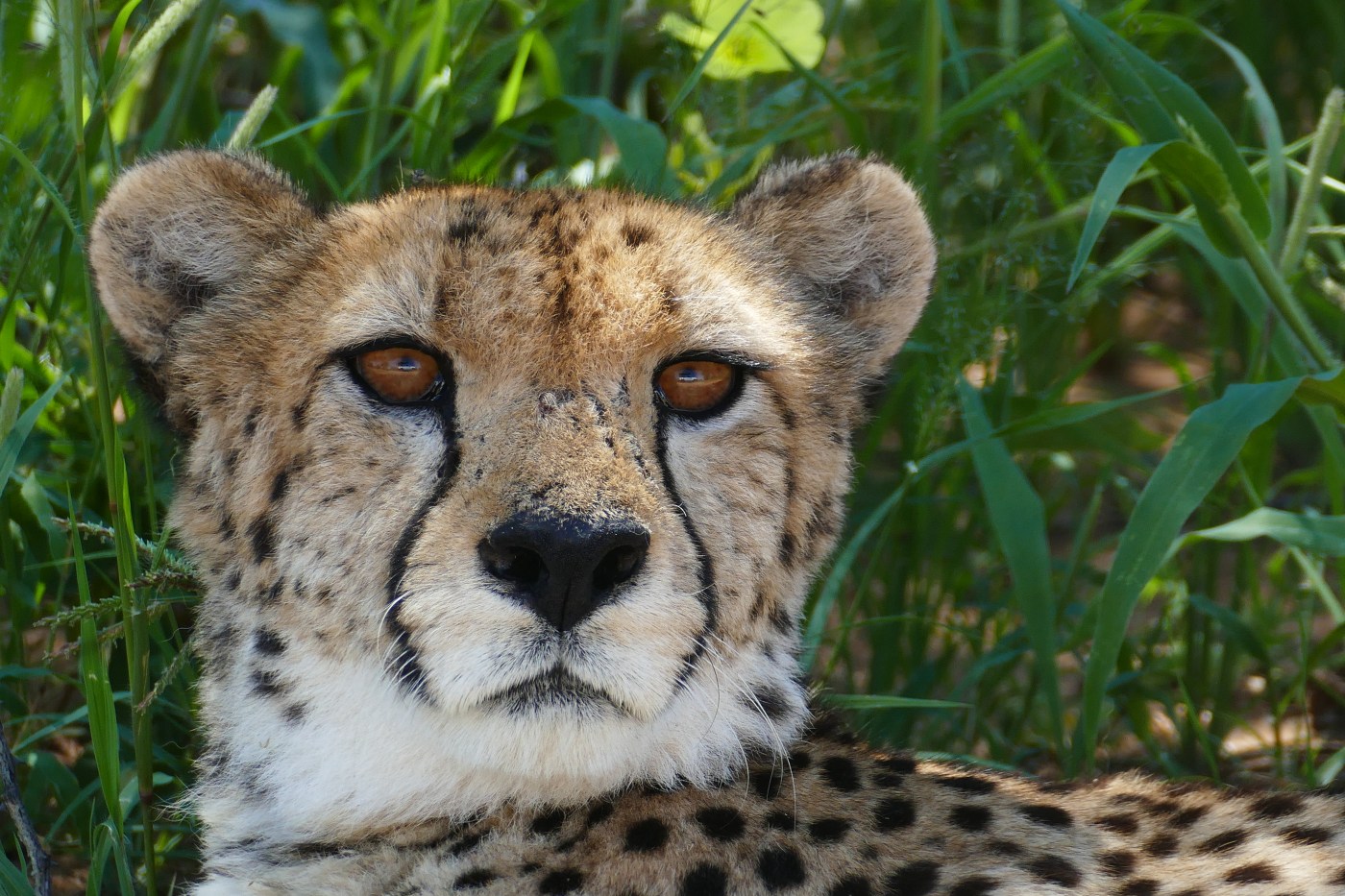
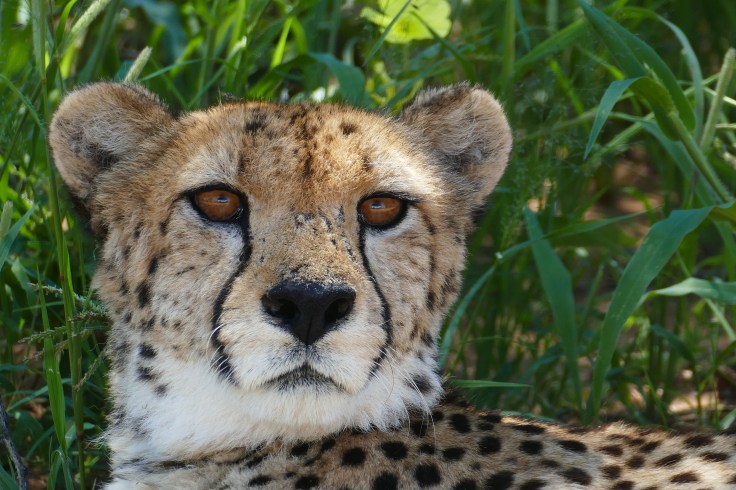
We cheetahs are easily recognisable by our slender, greyhound-like appearance. Our body is of a beautiful tan colour and covered with solid black, round spots. We have a relatively small head, round ears, catching amber-coloured eyes and very prominent black markings running from the inside of the eye to the corner of the mouth. People call them tear-marks. We are diurnal and those black markings help us reflect the sunlight, so we do not get blinded by direct sunlight. But originally, they are the result of an incident that happened years and years ago. If you are interested in the real story, read here.
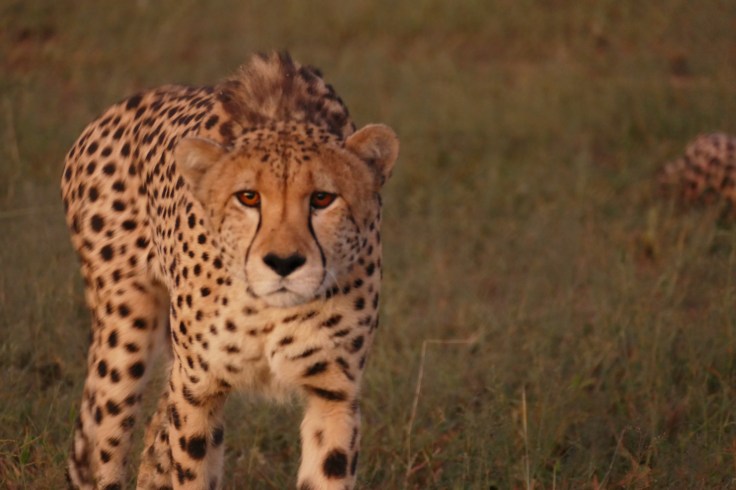
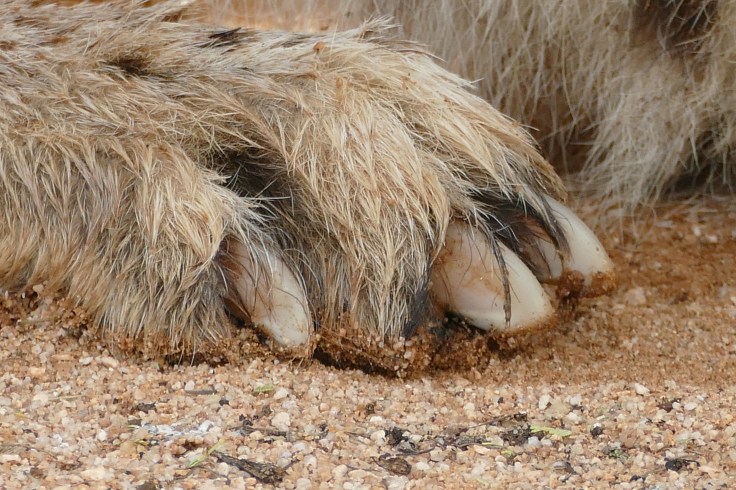
We also have very long legs, longer than all the other big cats. And a long, thick, and flat tail. The tail is – like our body – spotted. Only towards the end, the dots kind of merge together and look more like stripes and our tail-tip is usually white. Everyone of us has a different fur and tail pattern and with this, like a fingerprint. As we are built for speed, our long tail acts as counterweight and rudder and assists to balance in high speed. Our top speed is 110 km/h but we avoid running so fast as it is exhausting. Different to all other cats, we only have semi-retractable claws, which again allows us to speed up quite fast.
Habitat
We live in grasslands, open plains, desert regions and dry forests.
Distribution
Eastern and southern Africa, mainly in Zimbabwe, Angola, Zambia, Botswana, northern South Africa, Malawi, Namibia, and Mozambique.
LIFESTYLE, BEHAVIOUR & SOCIAL LIFE
Solitary & Gregarious
Territorial
Diurnal
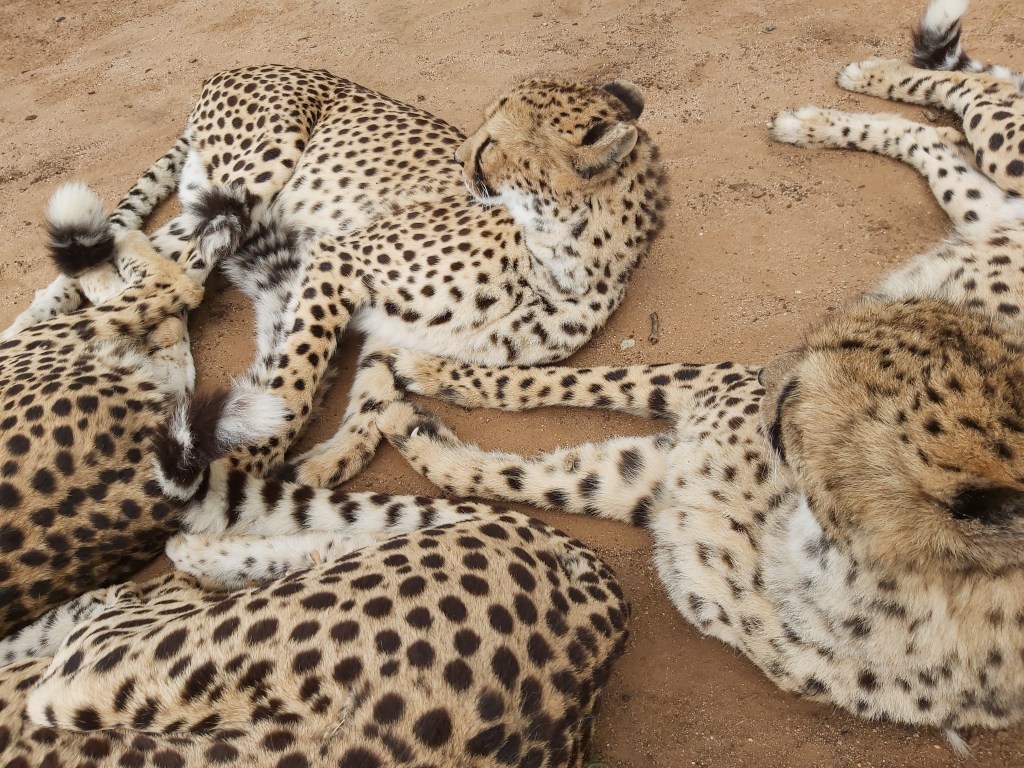
We cheetahs are more gregarious than many other cats, and you find us in three main social groups: a female and their cubs, male ‚coalitions‘ or male and female (but only when we are mating).
Female cheetahs are usually solitary after separating from their mother and littermates, at about 18 months of age. They hunt alone, keeping away from other cheetahs except to mate.
Male coalitions are composed of male siblings that stay together once they left their mom, and they are often seen resting or hunting together. The advantages of a coalition are diverse: Brothers share genes so if they find a female to mate, the genes are passed on in any, irrespective who mates. In addition, the hunting success is increased and so is the vigilance. More eyes see more.
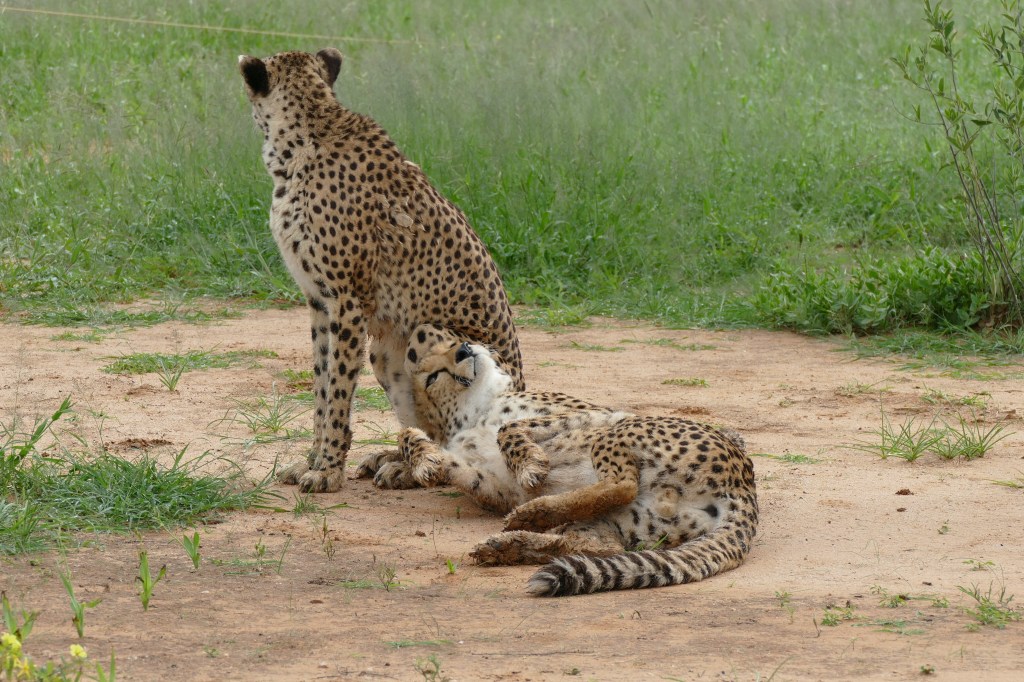
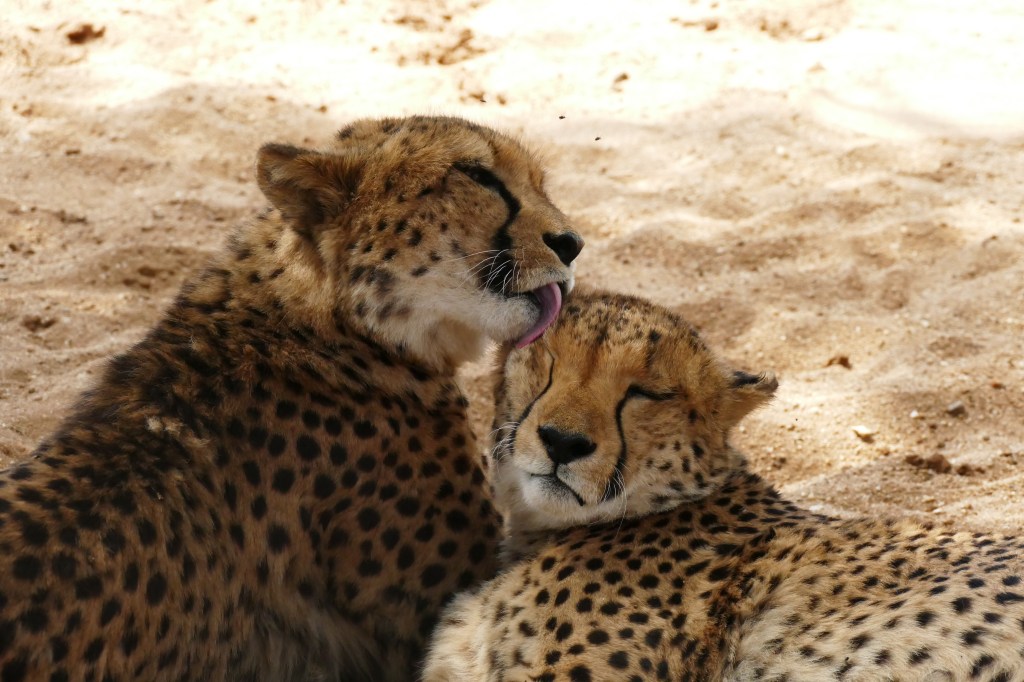
You often see us sitting on a termite mound or any other exposed position. We seek for this elevation to scan for food, other predators, or simply to take a nap. Resting on elevated positions avoids being surprised by other predators, which are Lions, leopards, eagles, and spotted hyenas.
Communication
Like other mammals, we communicate with our voice, facial and body expressions and via scent marking.
Especially our vocal communication is again quite different to other big cats. We have a lot of different calls, cannot roar like our big cousin the lion but – just like your housecat – we can purr, which indicates a friendly and contented mood! Apart from purring we also use chirps (bird-like & high pitched noise, used by a mother to call her cubs, cheetahs greeting each other during courtship), stutter call (used by males when trailing a female in heat or by female asking her cubs to follow), growling/hissing (defence or aggression, often accompanied by a lunge and slap on the ground), or bleating (expressing distress; sound similar to meowing).
We scent-mark mainly to promote ourselves, so that other cheetahs are aware that we are in the area. We do it by urine- or scat-marking or simply by scratching trees, leaving our smell on it. Males would scent-mark to attract females and females would do to show that are in oestrus and looking for a mate.
Diet
Carnivorous
We mainly prey smaller to middle-sized antelopes and wildebeests, guineafowl, duikers, impalas, kudus, gazelles, springboks, ostriches, jackals, hares and even birds. We are especially fond of hoofed creatures. We can go a couple of days without water if needed as we retrieve a lot of moisture from our prey.
Unlike most other cats, we do not attack our prey within springing distance. We quietly sneak up on our prey until we are confident about the attack. This can easily be 60 to 70 metres away. Then we burst out using our tail as a rudder, trip the animal with our paw, and finally suffocate it. We are able to speed up to 110 km/h so do not need to be too close to an animal before the attack starts.
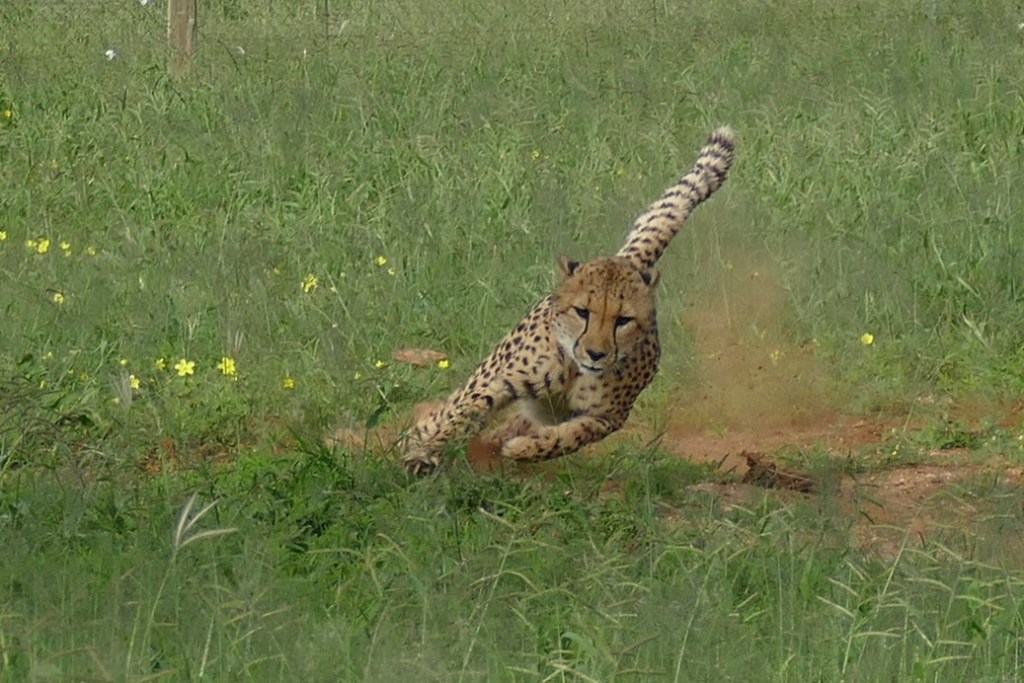
You can imagine that this speedy hunt costs a lot of energy which forces us to rest and cool down before we start eating. Also, as other predators would easily steal our hunt, we first drag it away to a protected place. We then eat quite fast, for the same reason: we are small big cats and at the end of the predator hierarchy and our food can easily be stolen by larger predators, so we rather gulp down their food than eat it properly.at it properly.
Reproduction & Lifecycle
Gestation: 90-98 day
No of young: 3-5
Weaning: 4-6 months
Sexual maturity: ♂ 1 year / ♀ 2 years
Lifespan: 10-12 years
Once the mating took place, the male leaves the female alone and after a gestation period of around 3 months, she will give birth to 3-5 youngs that she will raise by herself. Birth is given in a safe place, a den, a hole in a termite mound or a place in the thick bush. The young ones are helpless and vulnerable in the first months of their life and the mom will frequently move her litter to prevent that the scent of the cubs attracks other predators (lions, hyaenas would happily kill or eat them). For the first three months of our lives, we look amazingly cute, with our baby face and the long hair on our back. And – funny enough – we resemble honeybadgers, an aggressive African mammal species, but this mimicry serves as protection and helps us to survive the first critical months. At the age of 1 ½ to 2 months, the cubs leave the den and start following her mom and the weaning happens at the age of 3-4 months. Time to say good-bye is when the offspring is sub-adult, somewhen in between the age of 18 to 22 months.
Cheetah or Leopard?
We are often confused with leopards, especially by farmers that blame us for so many kills that we have not done, but we have loads of differences to easily distinguish them:
Cheetah
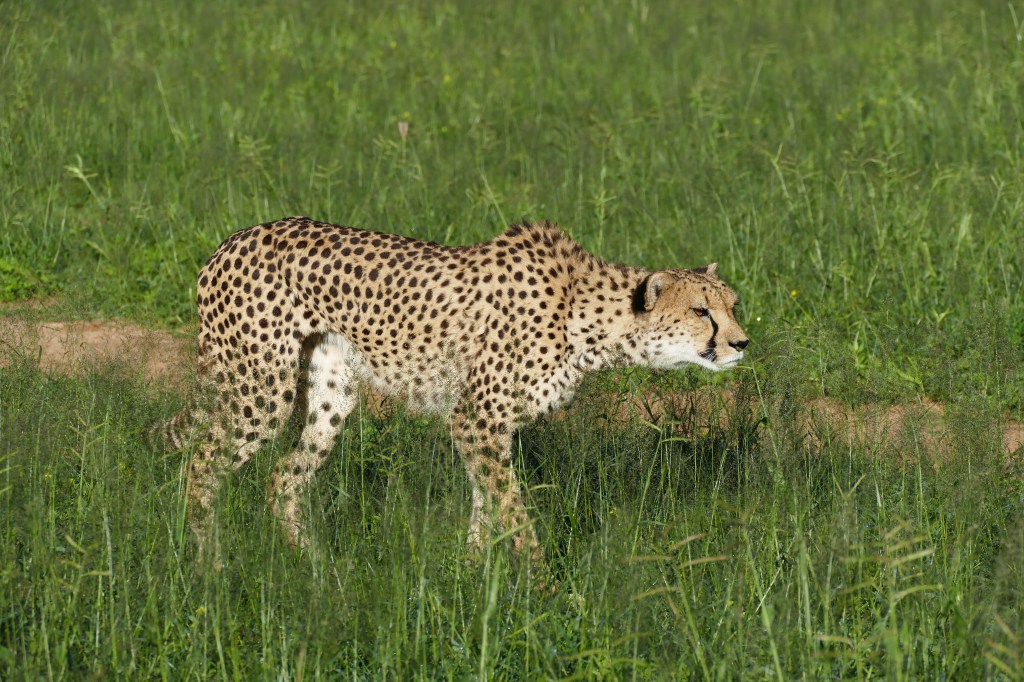
Dots
Black tearmarks
Diurnal
Semi-retractable claws
Slender, tall body
Taller than leopard
Leopard
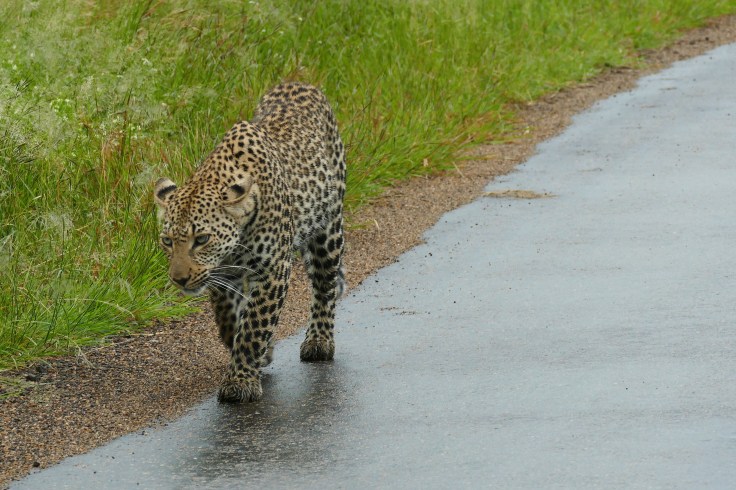
Rosettes
No tearmarks
Nocturnal
Fully-retractable claws
Bulky body
Smaller than cheetah
Did you know?
The name comes from the Hindu word “Chita”, meaning “spotted one”.
The black stripes on our face are called tearmarks. Their function is believed to reflect the sunlight during our day activities and we don’t get blinded by direct sunlight like we do, even in midday. If you are interested in the real story, read here.
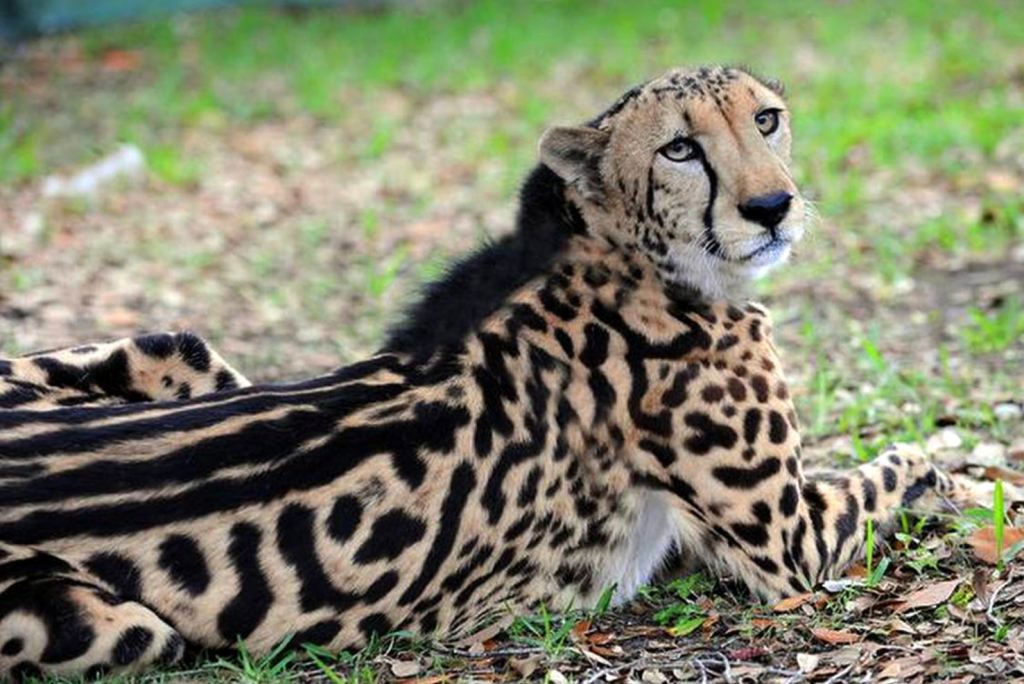
Ever heard of a King Cheetah? ITs markings are so unusual that the king cheetah was once considered a different species. However it is the exact same as the African cheetah, only with a rare mutation that creates a cream-coloured fur marked with large, blotchy spots and dark, wide stripes extending from the neck to the tail.
Top speed: 110 km/h
Folktales & Traditional Stories
How the cheetah got its tearmarks

 Sininho´s World
You must be logged in to post a comment.