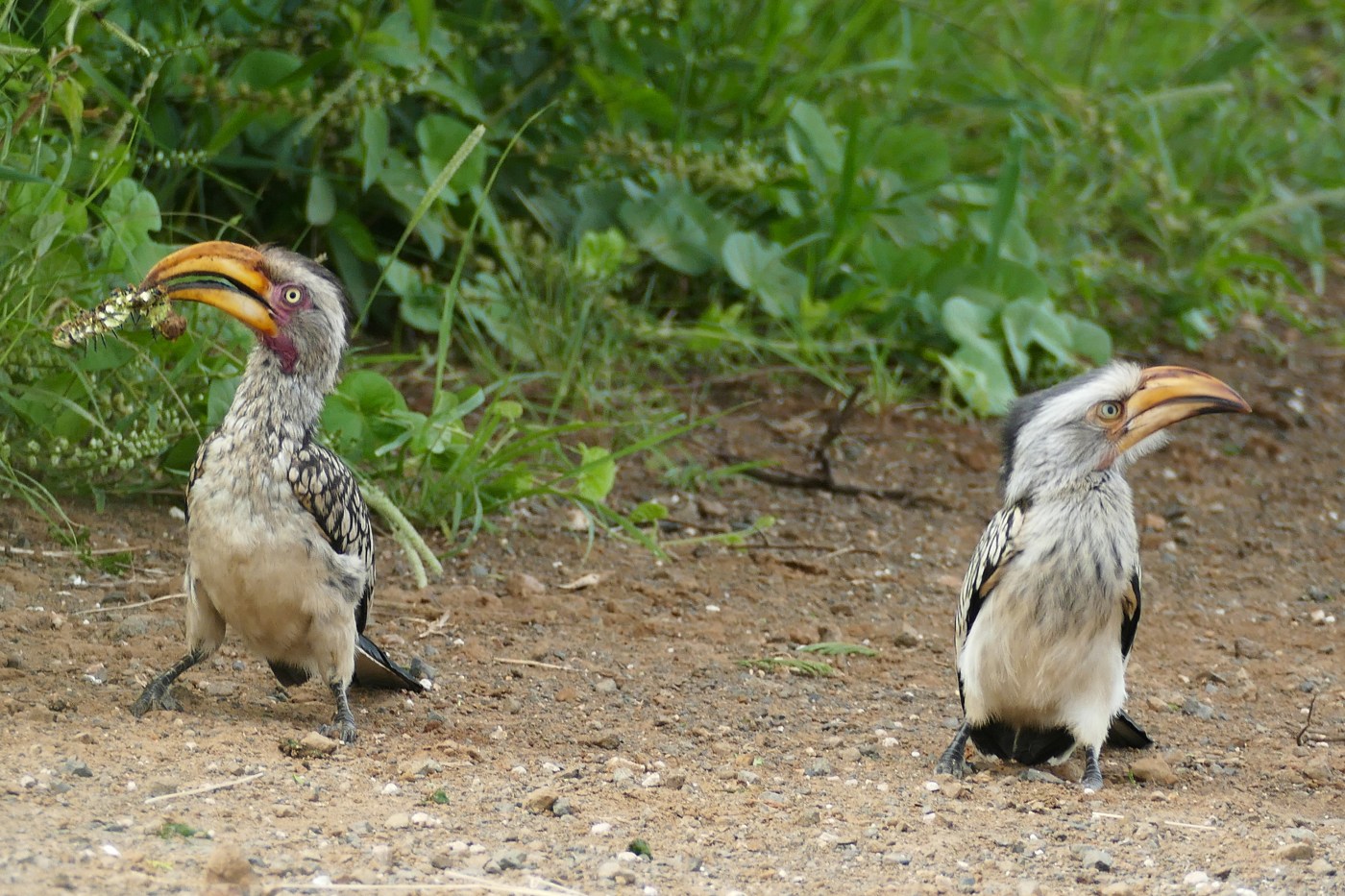
Yellow-billed hornbill
Tockus leucomelas
DESCRIPTION / IDENTIFICATION
Weight (average): 200 g
Length (average): 50 to 60 cm
Wingspan (average): 182-230 cm
Medium sized bird, with a grey head and neck. Back black with a central white stripe. Black flight feathers, wings covered with white spots. Characteristic long, downwards curved, yellow beak (casqued in males).
LIFESTYLE / SOCIAL LIFE
Hornbills are found solitary but usually in pairs or small family groups.
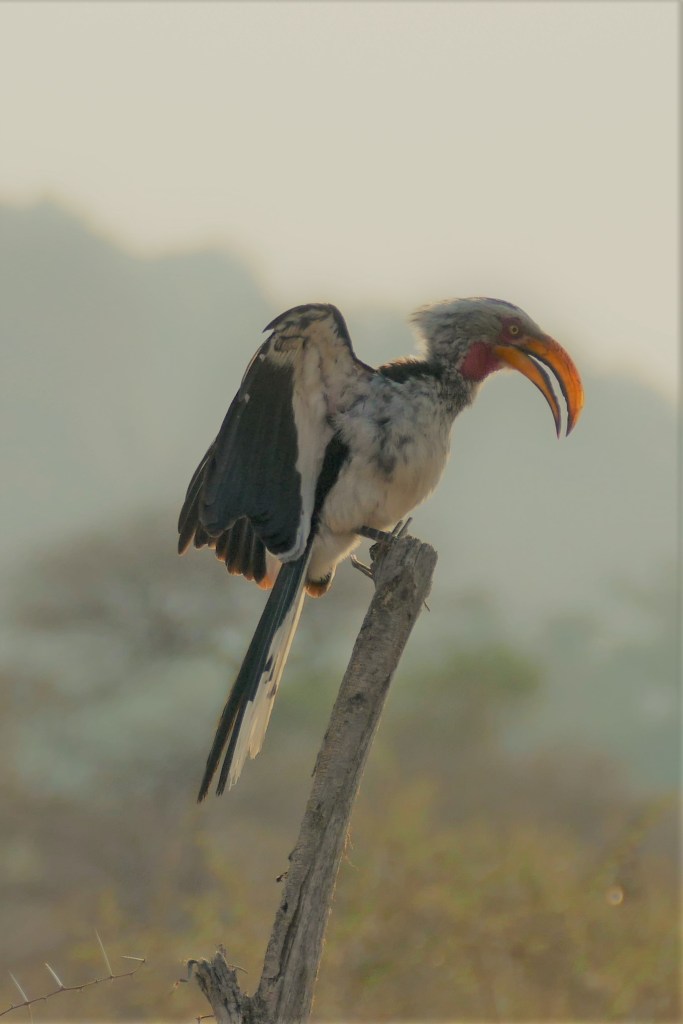
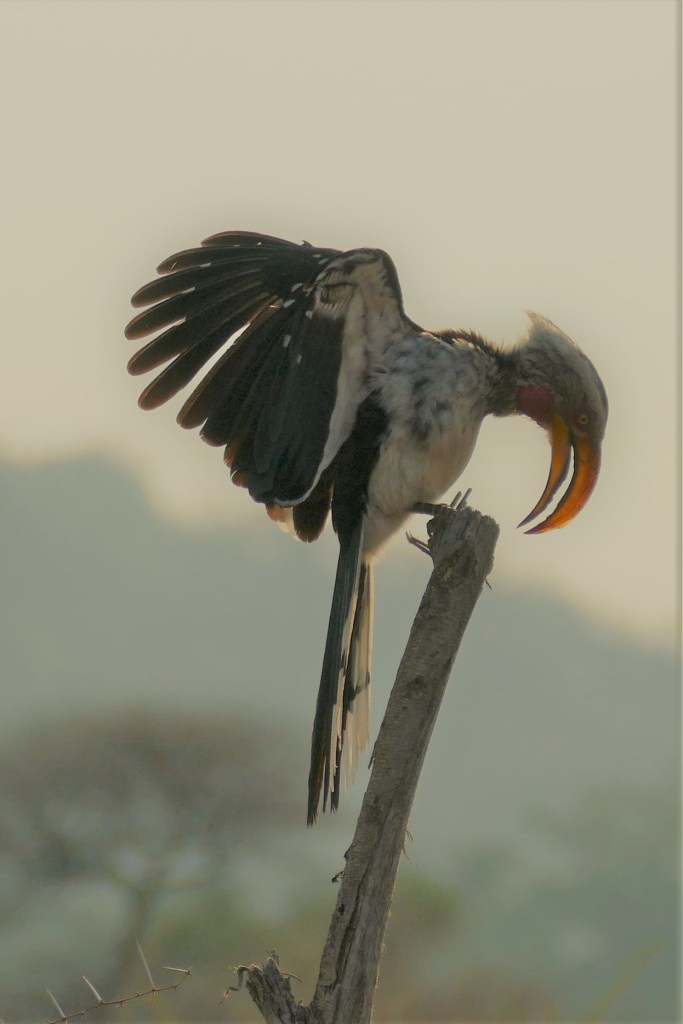
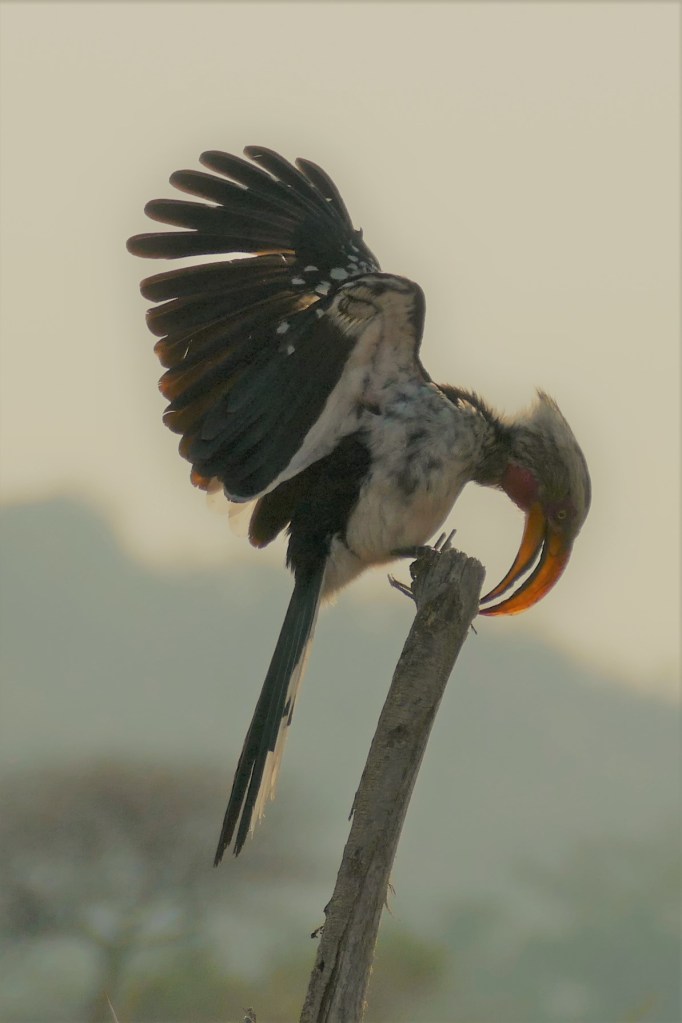
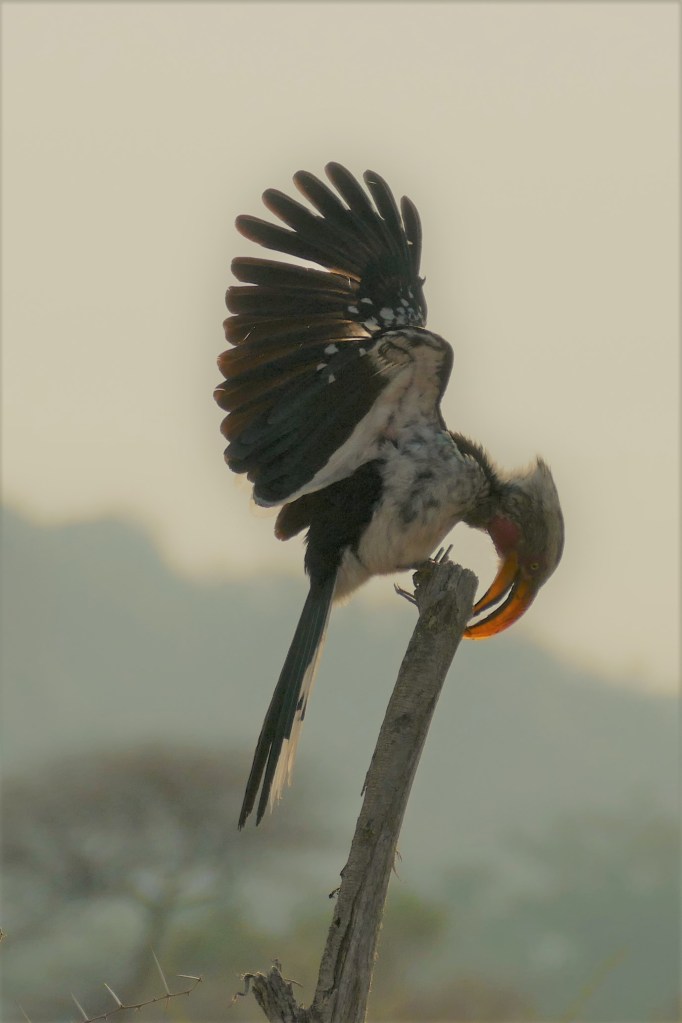
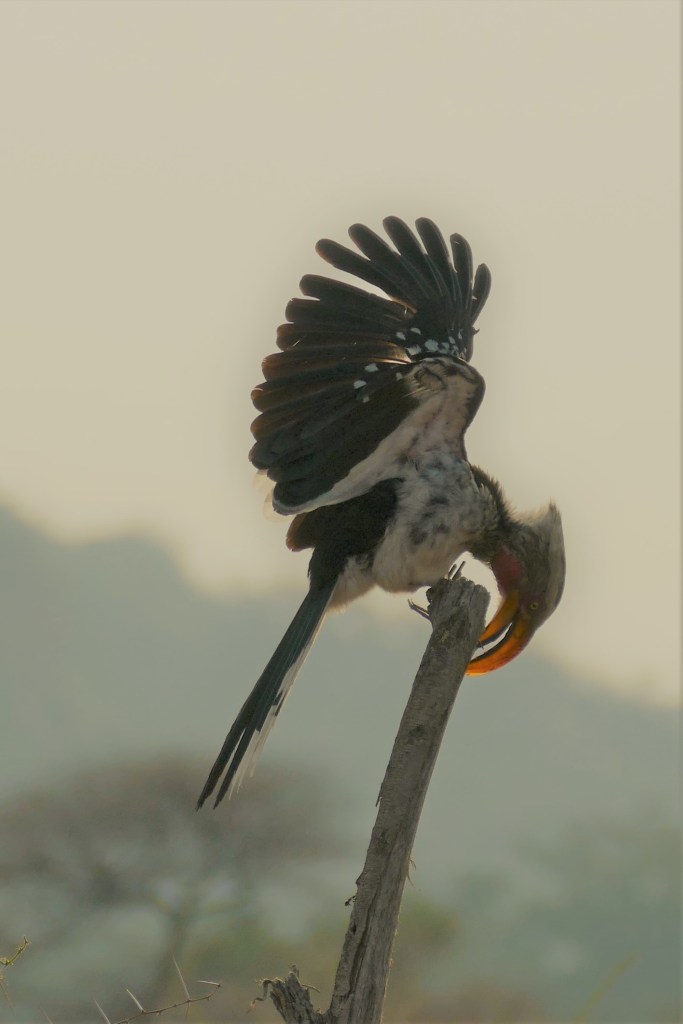
They have a very distinctive clucking call, often heard in a duett by a pair, often accompanied by a typical display behavior: head is bowing down, wings opened towards the sky.
DIET
Omnivorous, Insectiorous
I read they favour dung beetles. When I first started observing them, I saw them mainly feeding on catarpillars (maybe because we had so many this years). Also on their diet are seeds, insects, spiders, lizards, nestling birds, bats and rodents.
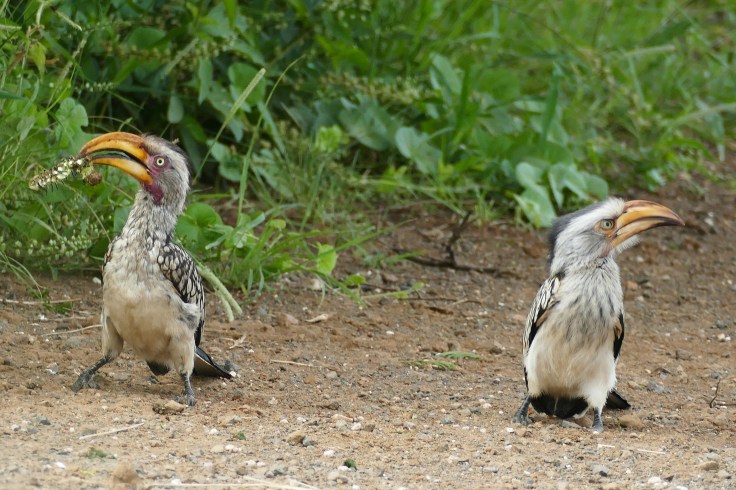
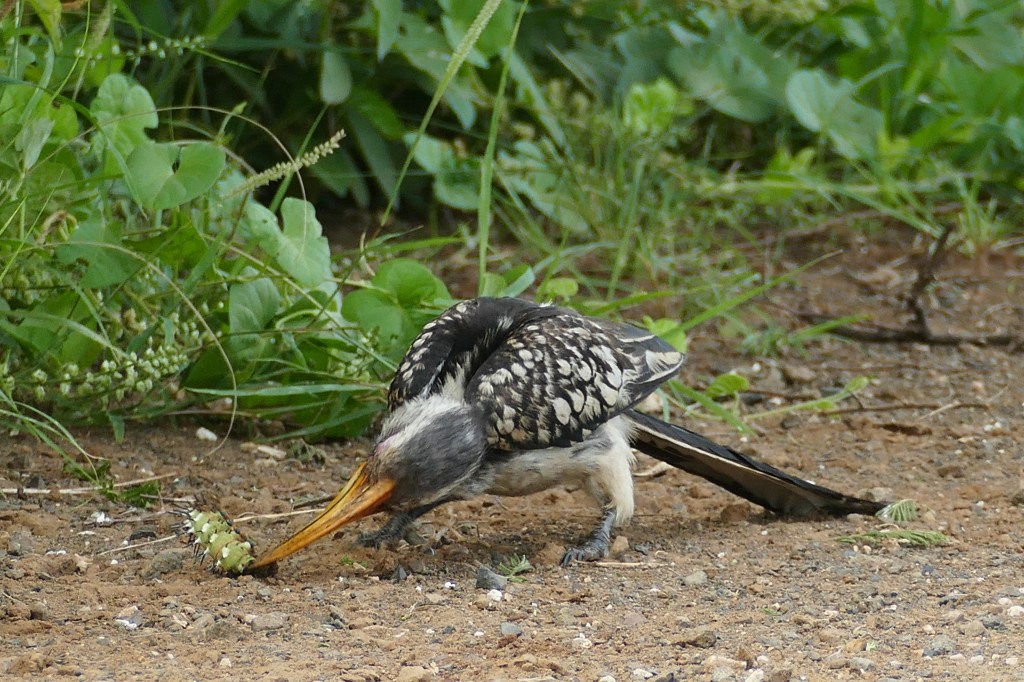
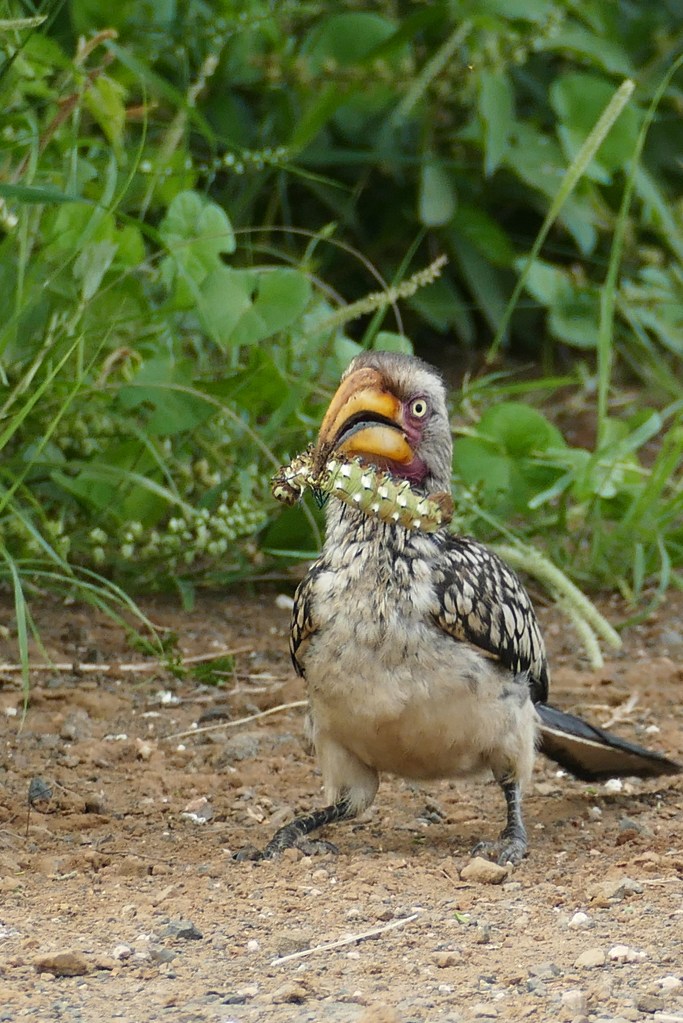
They are often seen sitting on an elevated position, a tree or pole, then diving towards the ground where they mainly forage.
REPRODUCTION AND LIFECYCLE
The female is locked inside a (tree) cavity during incubation period. In this time, she also replaces her plumage. Both makes her very vulnarable and she completely relies on her partner to feed and take care about her. In case the cavity seal is broken by predators, e.g. honeybadgers, she retracts into its narrow chimney.
Incubation: 24 days
Number of eggs: 2-4 (time-lagged by 1 or 2 days)
Lifespan: 20 years (to be confirmed)
Did you know?
Its Zulu name “Umkolwana” means “the little believer” as this bird sits on trees with their heads up, facing the sky as if something is in there. The yellow-billed hornbill is a symbol of faith and the bird of optimism that says “all shall come right in the end” because iven in the biggest drought, the Umkolwana´s beak is never facing earthwards, it is always facing upwards because it believes in a better tomorrow.
Yellow-Billed Hornbills are known to cooperate with mongoose, especially dwarf mongoose. The hornbills benefit from startled insects, the mongoose benefit from additional vigilance. The hornbill is obviously also alarming for raptors, even that raptors are not really predators for themselves. It has been observed that some impatient hornbills even show up early mornings to wake up the mongoose if they take to long to come out.
Some call them “flying banana”, due to their long yellow, curved bills.
 Sininho´s World
You must be logged in to post a comment.