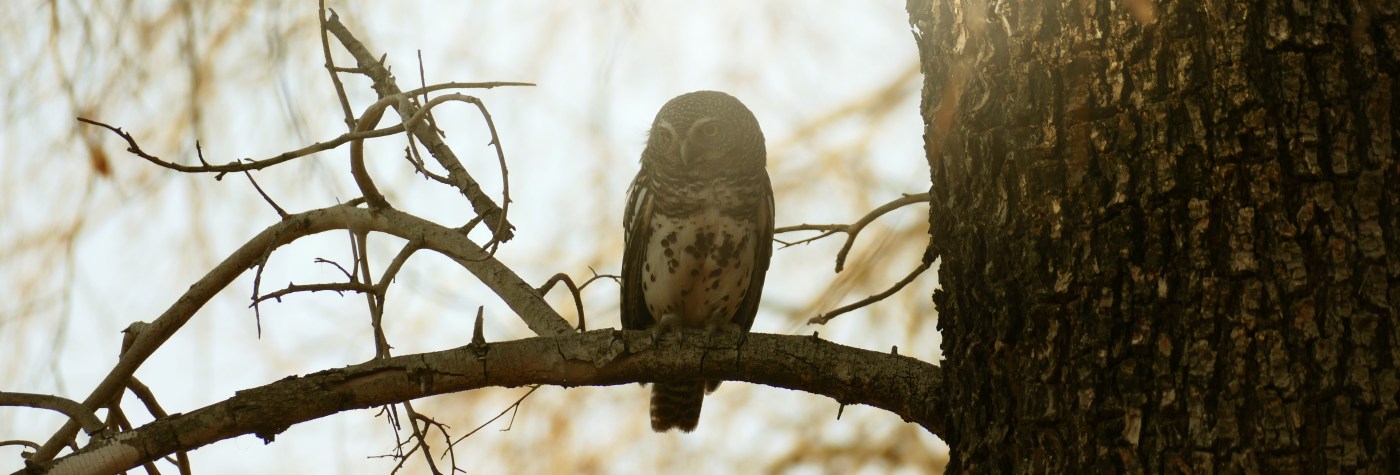
Main Characteristics of Birds
- Feathers (and the ability to fly – in most cases)
- Forelimbs modified into wings
- Hindlimbs adapted for walking, perching or swimming
- Beaks (adapted for their typical feeding behaviour)
- They lay eggs for reproduction
Classification
- Passerines (Passeriformes, Songbirds)
- Smallish birds (exception: crow family)
- Feet adapted for perching: feet have four un-webbed toes: three in front, one behind
- Live on land
- Altricial youngs (naked, no feathers, helpless)
- Relatively bright plumage colors or distinct markings
- Generally diurnal and most active during daylight hours
- Examples: warblers, thrushes, orioles, sparrows, thrashers, finches, larks, tits
- Non-Passerines
- Webbed or semi-webbed feet, or feet that is specially adapted for a purpuse
- Two groups:
- Terrestrial non-passerines: those that frequent ground and water
- Arboreal non-passerines: those that frequent trees
- Any bird that is not classified as passerine or near-passerine
- Examples: Ostrich, flamingo, hamerkop, penguin, guineafowl, ducks, geese, thick-knees, darters, vulture, bustard, heron, egret, falcon, jacana, pigeaons, doves, nightjar;
- Near-Passerines
- Shadow group between passerines and non-passerines
- Tree-dwelling
- Land birds
- Many of them have adapted feet for clinging (“zygodactylous foot”)
- Examples: barbets, coucals, cuckoos, most hornbills, kingfishers, mousebirds, owls, parrots, oxpeckers and wookpeckes.
Common “Bathroom” Behaviour
- Preening: To restore and maintain the feather structure, the bill is used to “groom” the plumage and to distribute a secretion preen oil from the preen gland.
- Scratching: To groom feathers or to counter irritations.
- Shaking: To loosen and discard any material dislodged during preening.
- Bathing: Is a cleaning mechanism for the plumage and to remove ectoparasites. There are different forms:
- Water-bathing
- Sun-bathing
- Dust-bathing
- Anting: Birds “bath” themselves in ants, probably to use the ant´s formic acid to kill parasites or to stimulate the skin.
Bird anatomy

Bird identification criteria
 Sininho´s World
You must be logged in to post a comment.