Dung beetles
Superfamily Scarabaeoidea
Dung beetles are coprophages, animals that feed on faeces (dung), about 72% prefer herbivore dung. I tried to find out the number of different species in the world, but got different information, varying from 5000 to 7000 different species, with over 800 in Southern Africa.
Dung beetles play a vital role in the ecosystem as decomposers. By moving organic waste into the underground, the environment is kept clean and nutrients are returned into the soil. While digging through the ground or burying the feces, soil conditions and plant growth are improved and seed dispersal encouraged.
A lot of internal parasites also nest in dung, e. g. flies. By removing the dung, the eggs of those parasites are destroyed and dung beetles therefore support parasite control.
DESCRIPTION
Dung beetles come in sizes from a few millimetre to about 5 cm.
They also vary in colour from black to grenn to blue to copper. Whereas some look rather dull, others come as if they were polished.
Habitat
Grassland, savannah, desert, forests and farmland and they prefer warm and humid/moisture conditions.
Distribution
Worldwide, except Antarctica.
LIFESTYLE, BEHAVIOUR & SOCIAL LIFE
A few species stay together for a lifetime, which is anyway only up to two years. In this time, dung beetles are mainly busy with looking for dung, and carrying it away for either eating it, or building a nest for their eggs.
Dung beetles can fly and will do so if they have sensed a fresh dung pile. They are therefore good indicators for game. You never know if you find a buffalo herd when following a dung beetle.
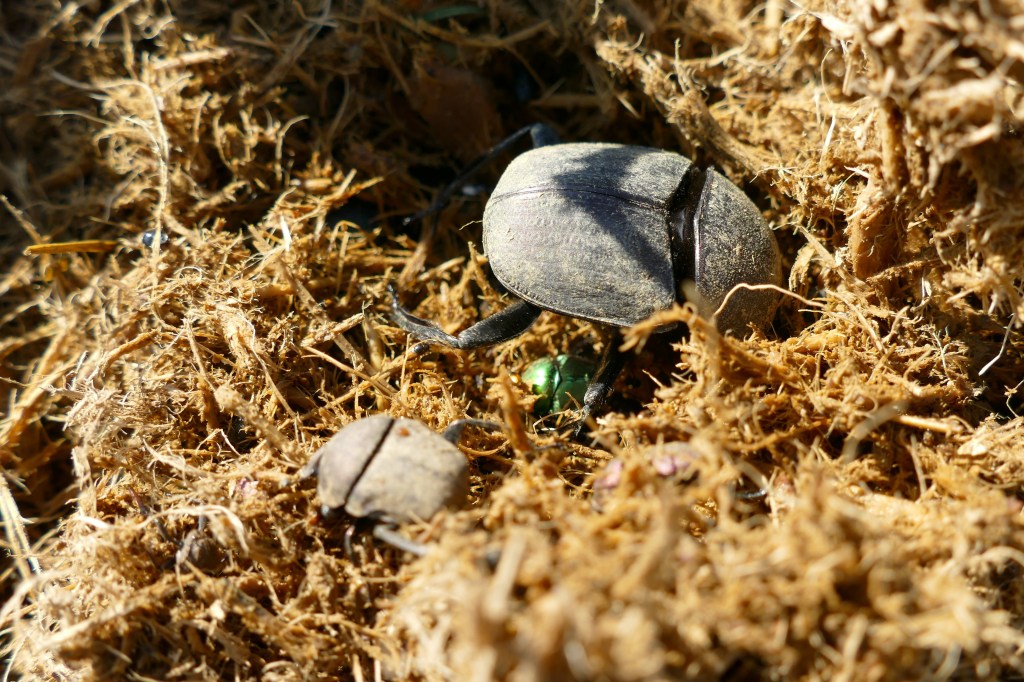
Once dung beetles found a preferably fresh pile, they start carrying a portion of dung away to feed on it or to lay their eggs in it. Some species also use it also as a present nuptial present to the female. I often found elephant or buffalo piles some sort of living: the whole pile was moving up and down from all the different beetles in there, each looking for the best piece to carry away.
REPRODUCTION AND LIFECYCLE
Lifespan: ≈ 2 years
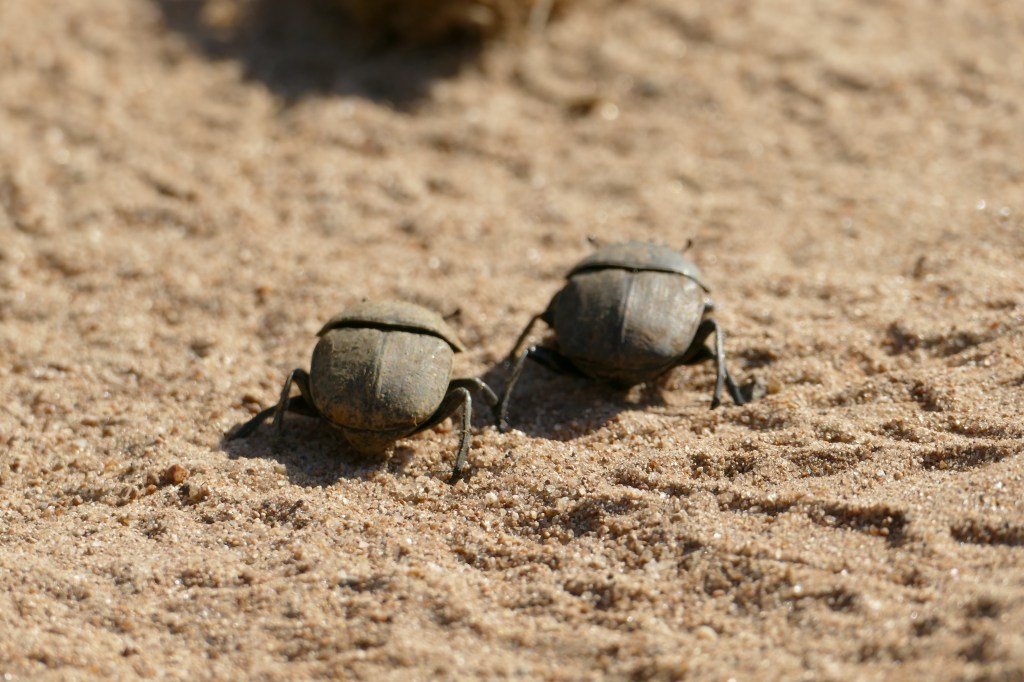
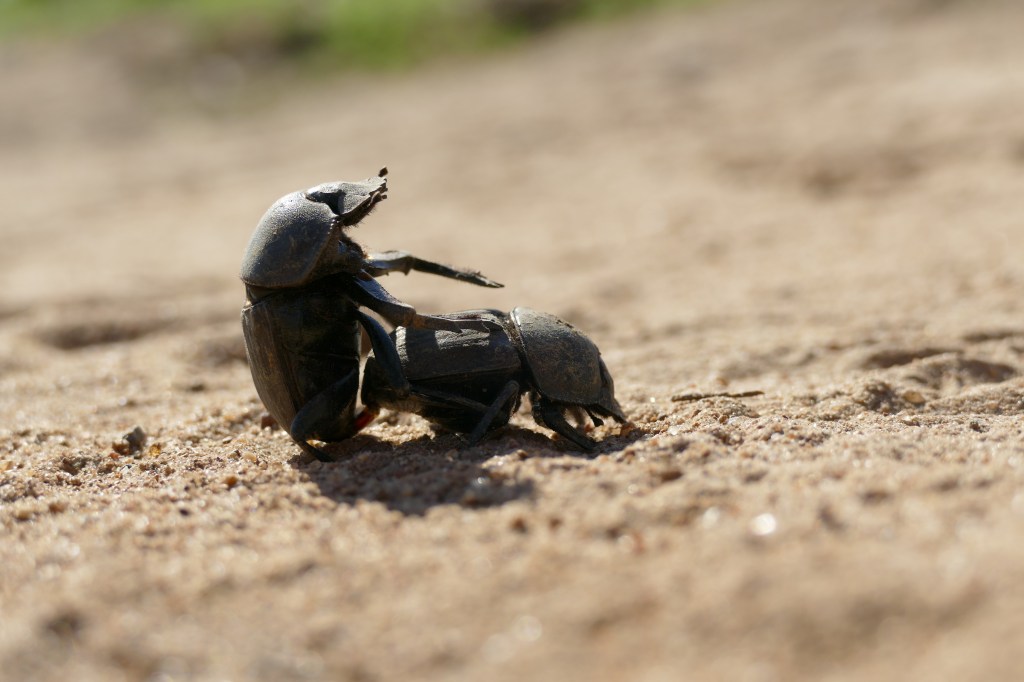
The different types of dung beetles have a slightly different approach in their way of reproduction:
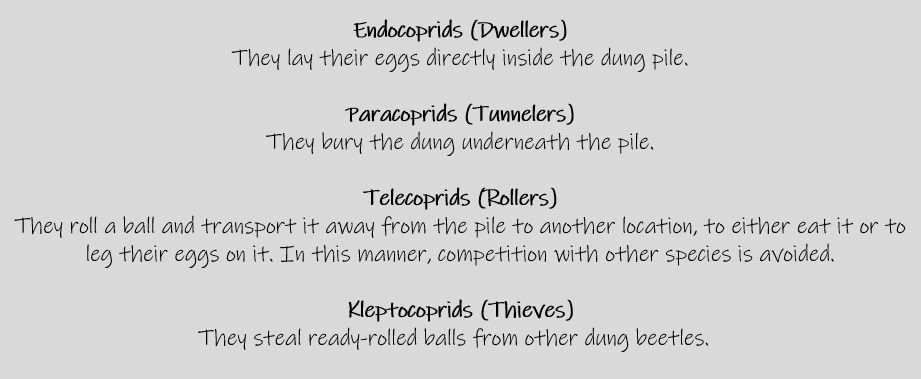
Rollers
will form a ball from the dung and roll it away. In this manner, they avoid competition with the other dung beetles.
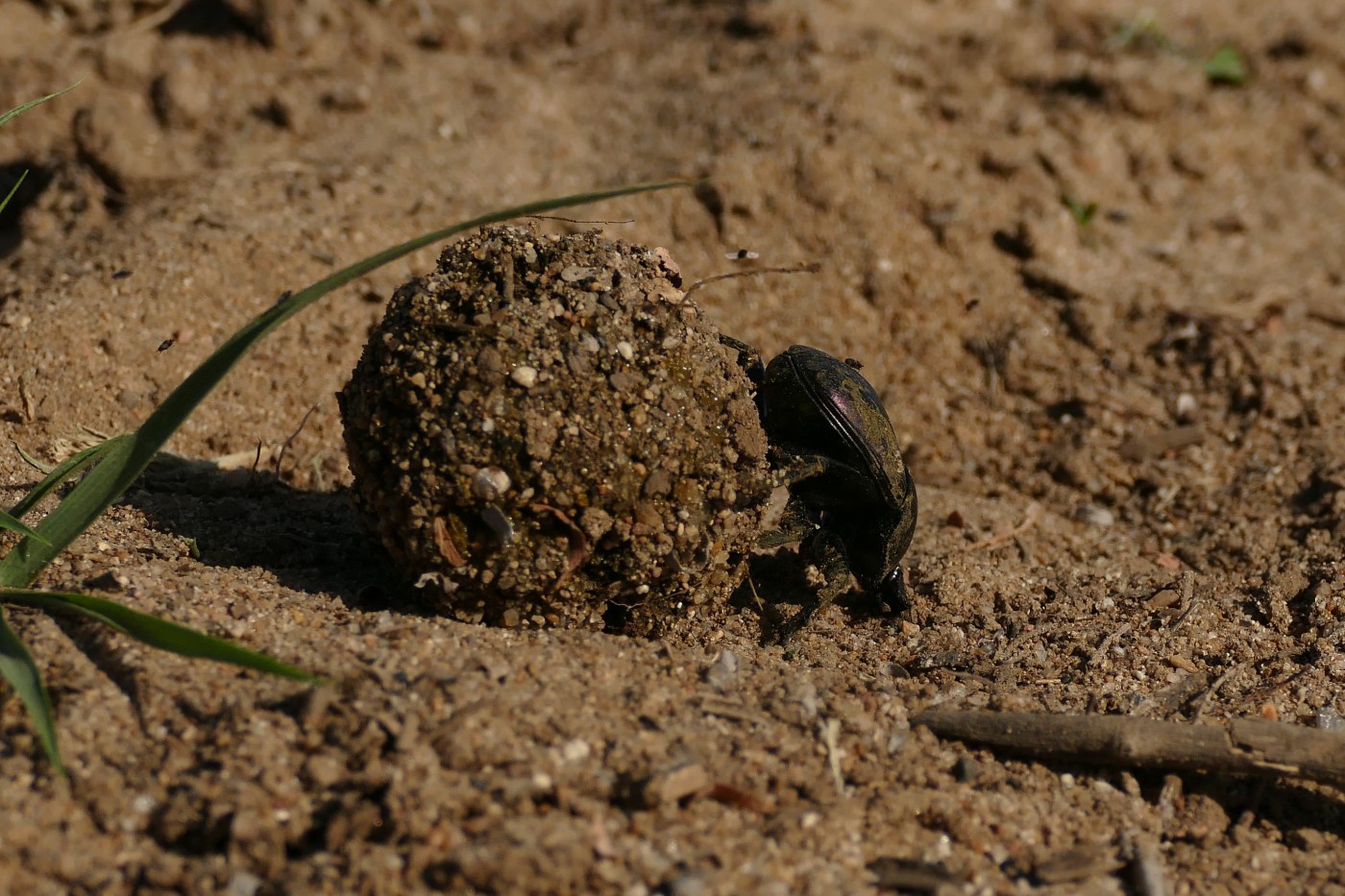
It is very interesting to watch them collecting the dung with their front feet and forming a ball out of it. When satisfied with size and shape, they roll it away to bury it. You sometimes see them coming back with the ball, adding here and there, as if the ball was not not big or round enough.
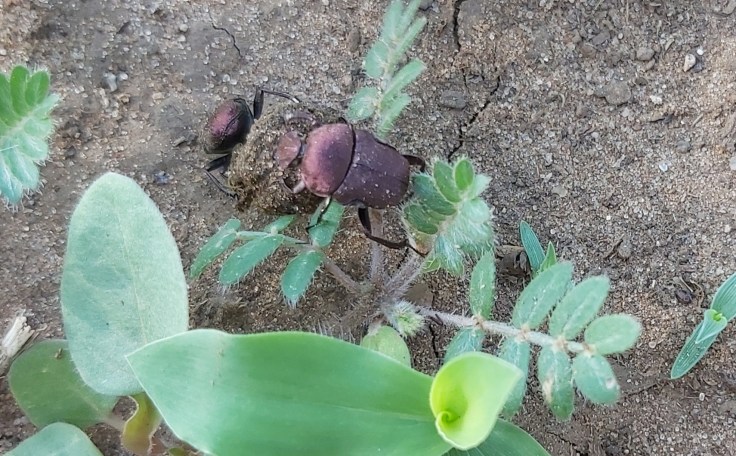
Once they are finally done, the roll it away, usually upside down, their strong back legs on the ball and front legs on the ground.
If you see a dung beetle rolling a ball away from a pile, it appears as if he is on a mission. No stone, no stick, no elevation seems to stop him. For navigation, they use celestrial “landmarks”, such as sun, moon, or even the milky way, and indeed you often see a dung beetle stopping and standing on top of their ball, moving around to keep orientation and to assure he is still on his right way.
The balls will either serve as brood balls, as food ball, or as nuptial ball. Roller pairs will find each other at a dung pile. The male will give his best to roll a nice ball that he offers the female. If she approves it, they roll it away together, with the female on top of the ball and the male pushing it. On their way they must be vigilant and watch out for Kleptoprids, the thieves, as they might come and simply steal their ball. The pair will find a good spot to bury the ball. While the male will leave to build another one and find another partner, the female stays and lays a single egg into the ball. Some dung beetle females will stay with their ball until the larvae hatches, whereas other will simple leave. The larvae will feed on the provided dung ball and will dig their way up to the surface once grown up.
Tunnelers
will simply dig into the pile, and burying a portion of the dung directly underneath its current location. Unusual for insects, both male and female stay with the larvae for around four months, which is when they mature.
Dwellers
are smaller than the other species and will not take any effort to relocate the dung. The simply stay on top of the fresh pile to lay their eggs. The larvae will slowly develop in the dryed-out dung pile.
DIET
Feces. Around 72 % prefer herbivore dung.
DID YOU KNOW?
Dung beetles can fly, but they struggle with landing. To do so, they simply stop flying.
Some species can bury dung 250 times their own mass in one night.
One dung ball can be up to 60 times heavier than the animal itself.
Honeybadgers do not say no to the larvae of the dung beetle. As they are strong diggers with powerful claws, it is no problem to dig the dung balls out and crack them open. Remains can be found during walks.
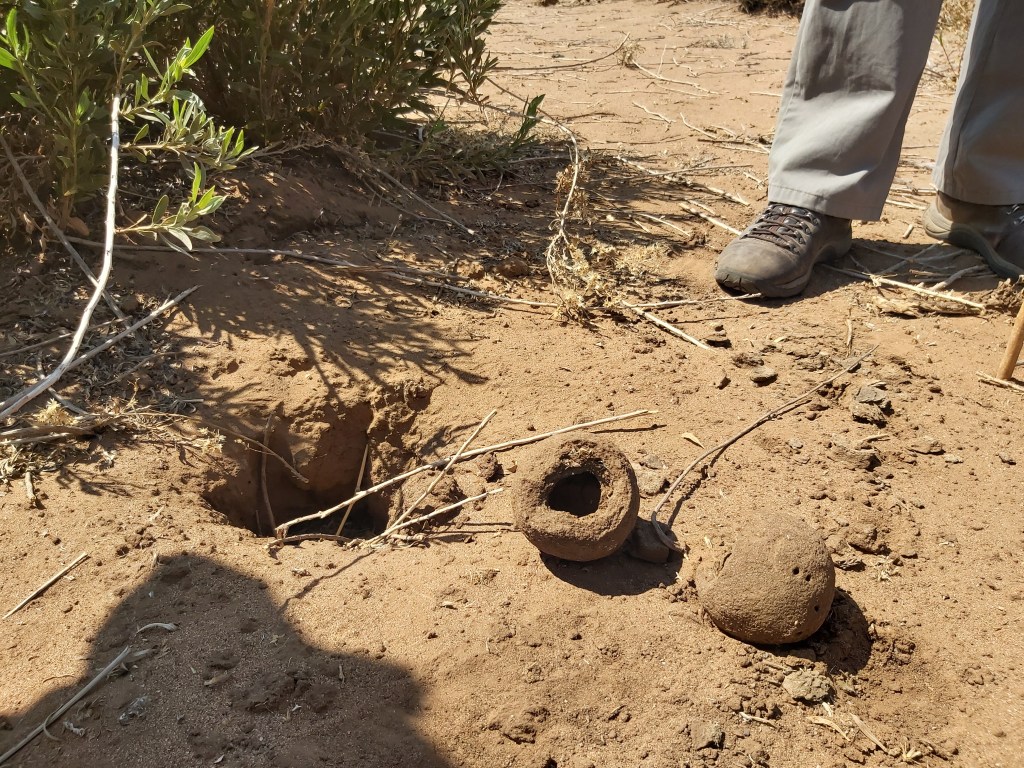
When threatened or tried to pick up, they can release a relatively loud “squeak”.
 Sininho´s World
You must be logged in to post a comment.