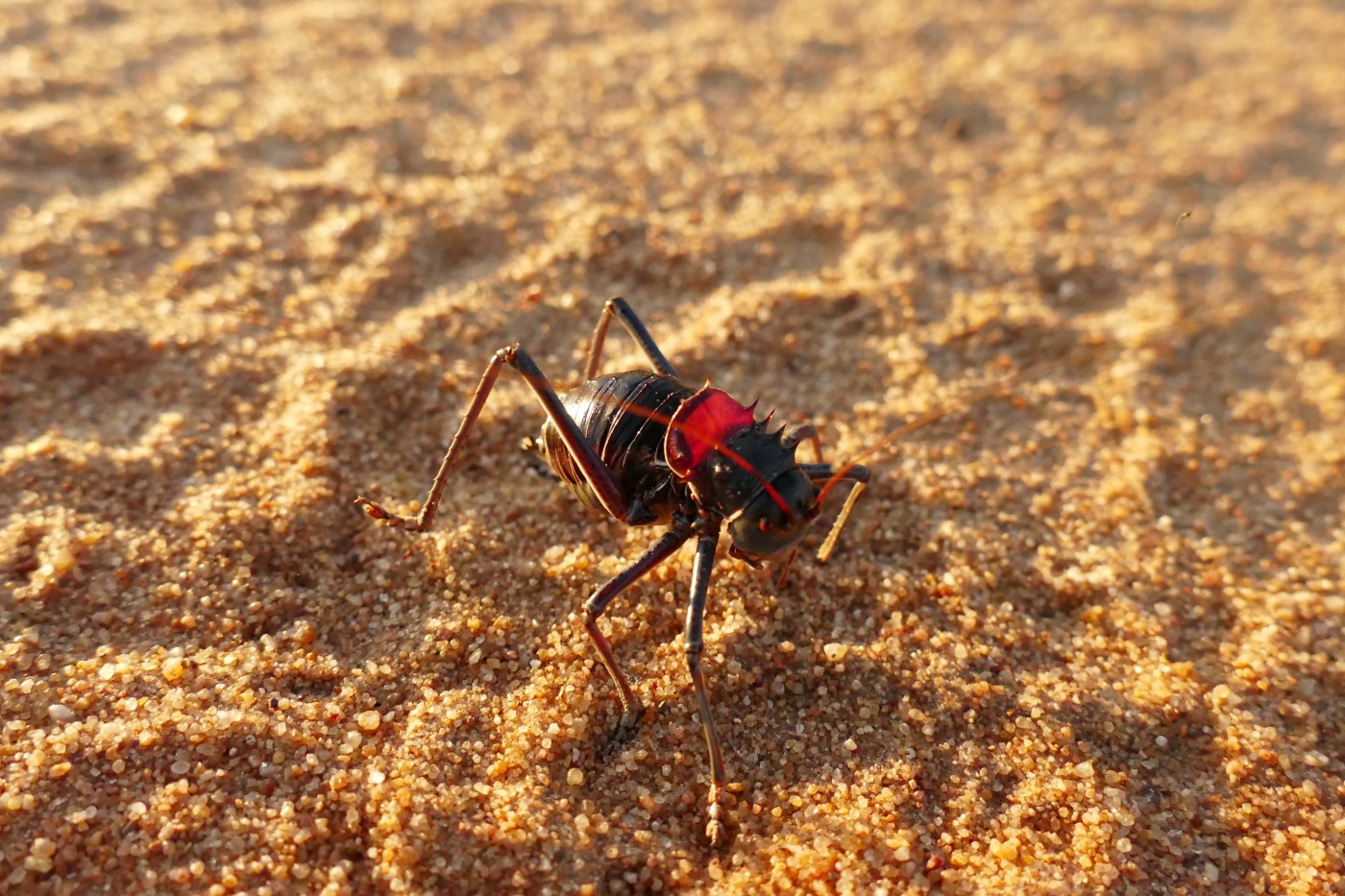
Armoured ground crickets
Acanthoplus discoidalis
DESCRIPTION
Also known as “Armoured Katydid” or “Koringkrieke” (Africaans).
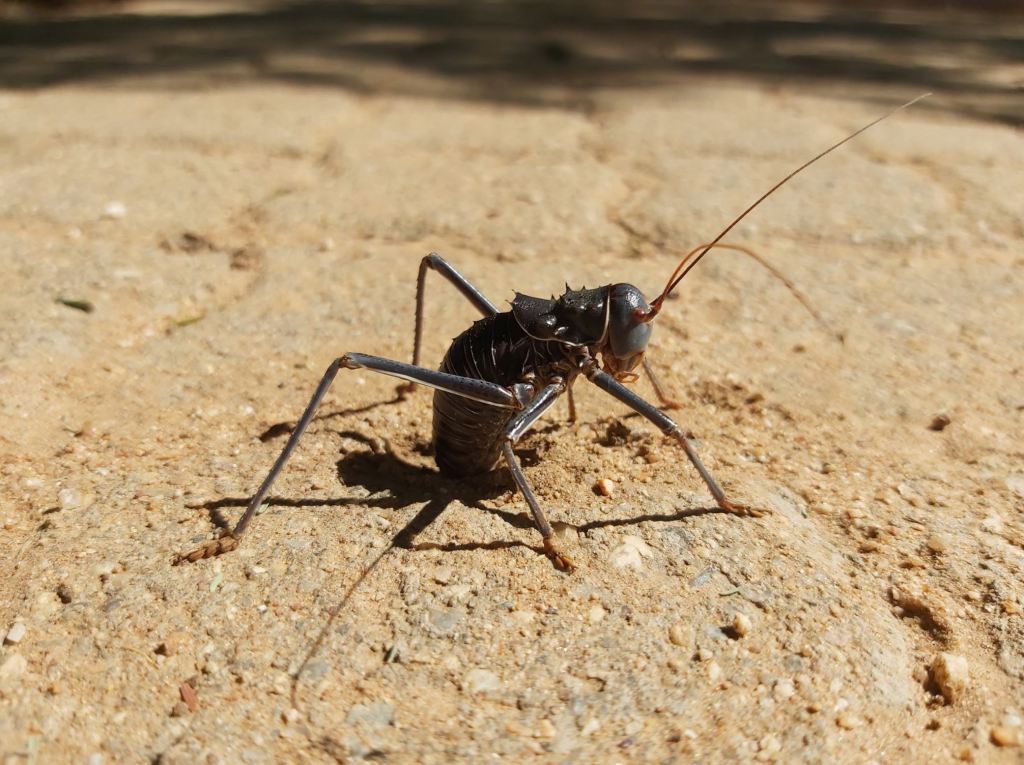
The armoured ground cricket is a largeand flightless cricket with a body size of about 5 cm. They have two long antennaes and carry sharp, conical spines on their back, hence the name “armoured”. Apart from their suit of armour, they have powerful jaws, that can cause painful bites (that I have never experienced personally).
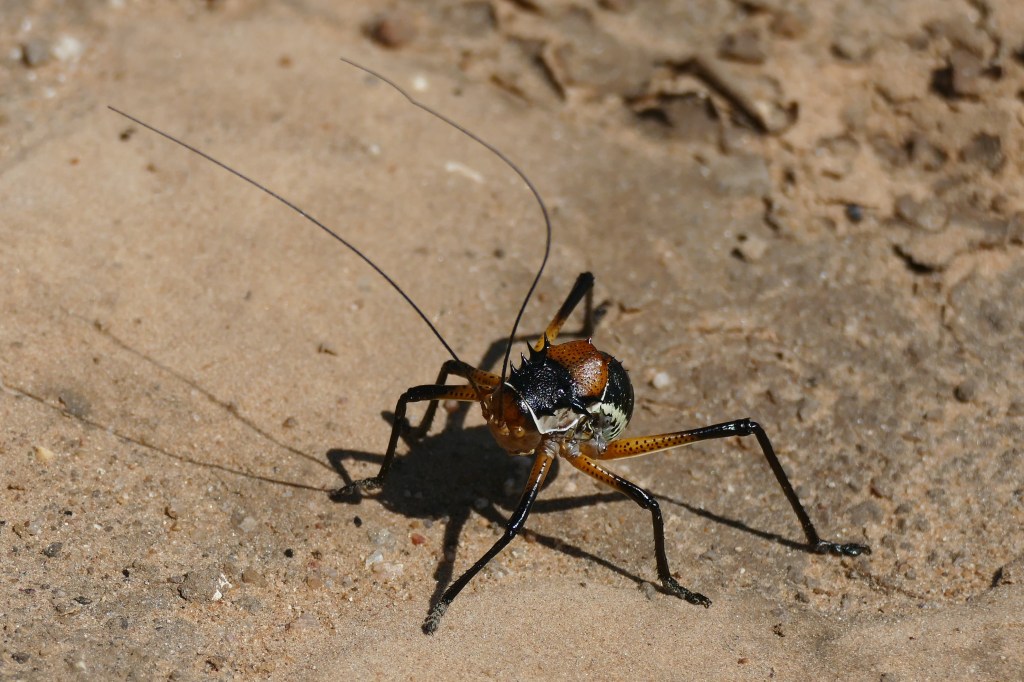
Habitat & distribution
Namibia, Botswana, Zimbabwe, South Africa.
LIFESTYLE & SOCIAL LIFE
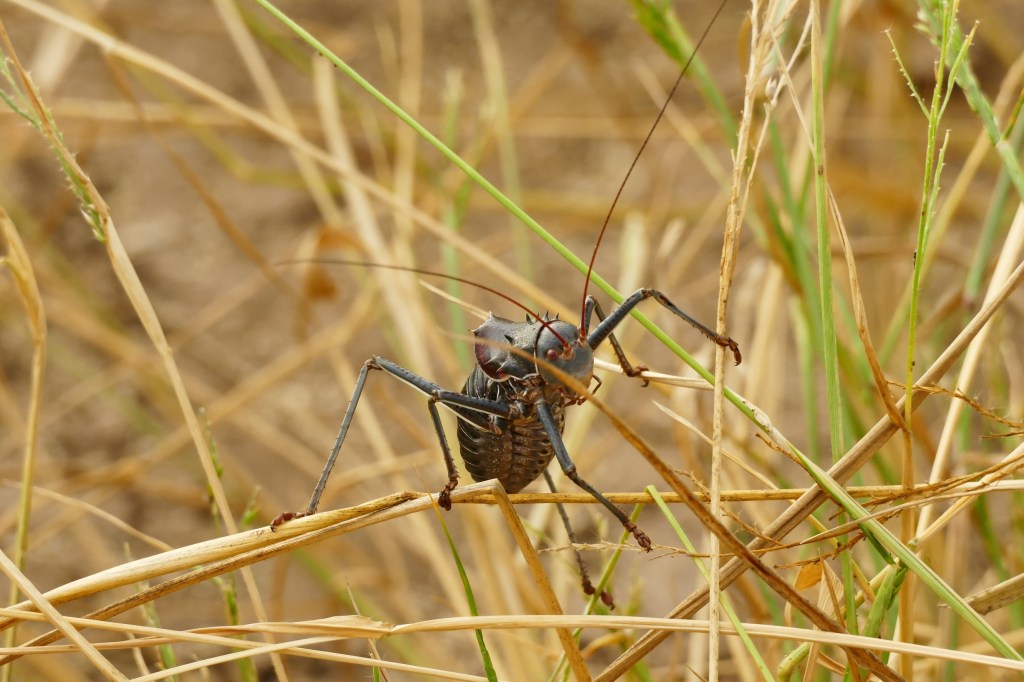
They are seen hanging on grasses or bushes where they feed. When disturbed or threatend, they simply drop to the ground to avoid predation.
DIET
They are omnivorous and especially feed on plants (herbivorous), insects (insectivorous) and bird nestlings.
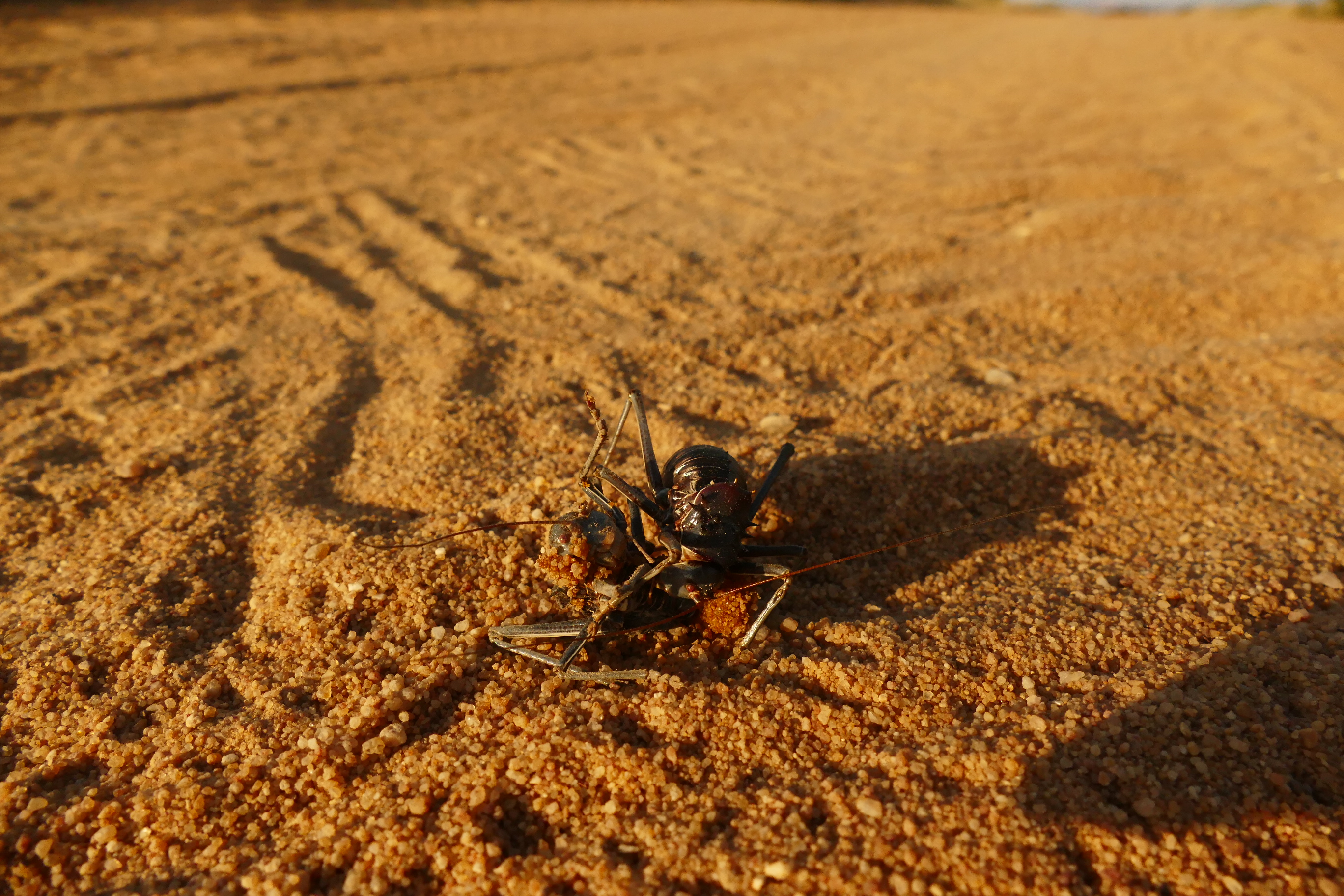
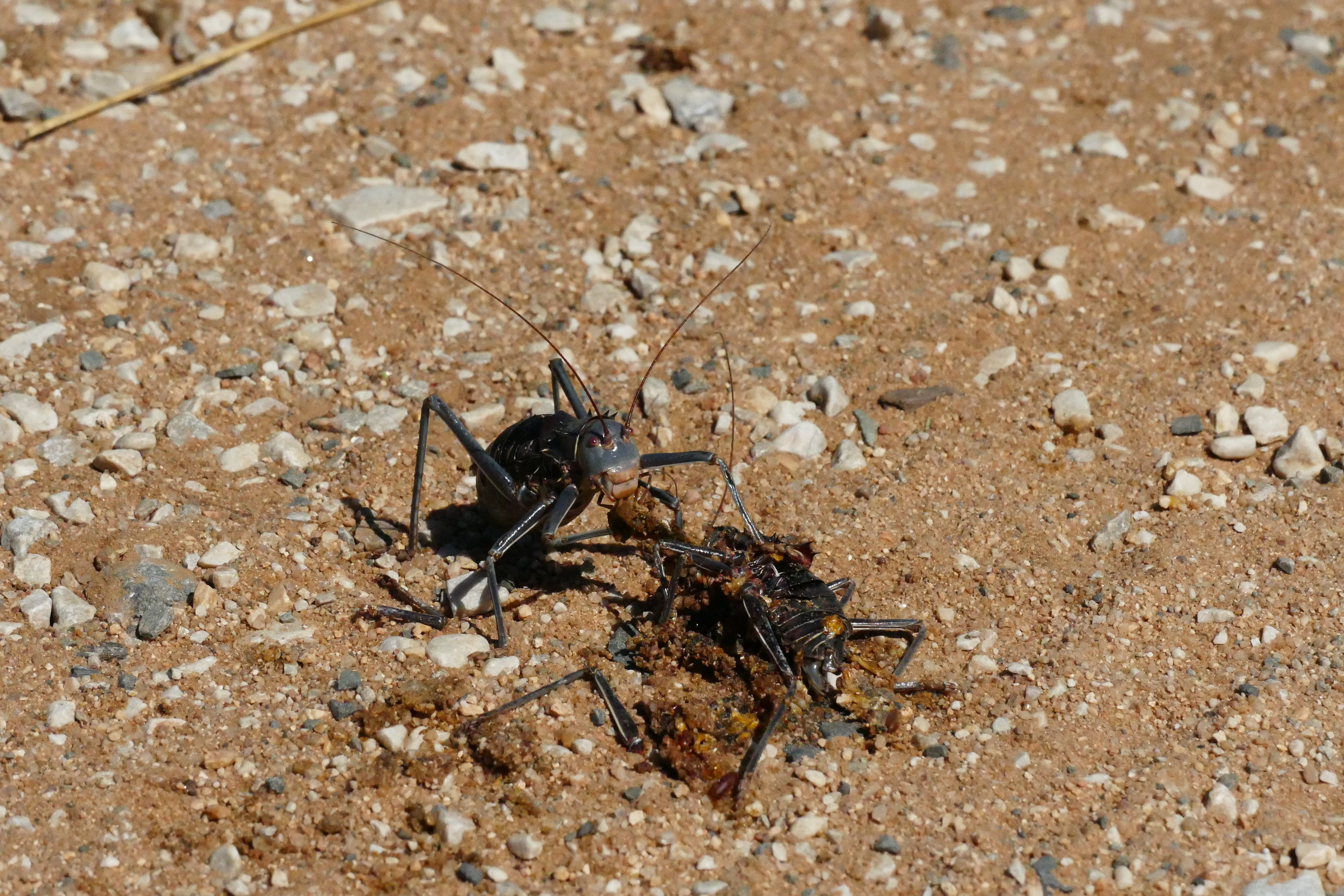
In times when salt and protein is missing in their diet, they tend to be cannibalistic as well and I have seen them feeding on dead red-billed queleas.
REPRODUCTION AND LIFECYCLE
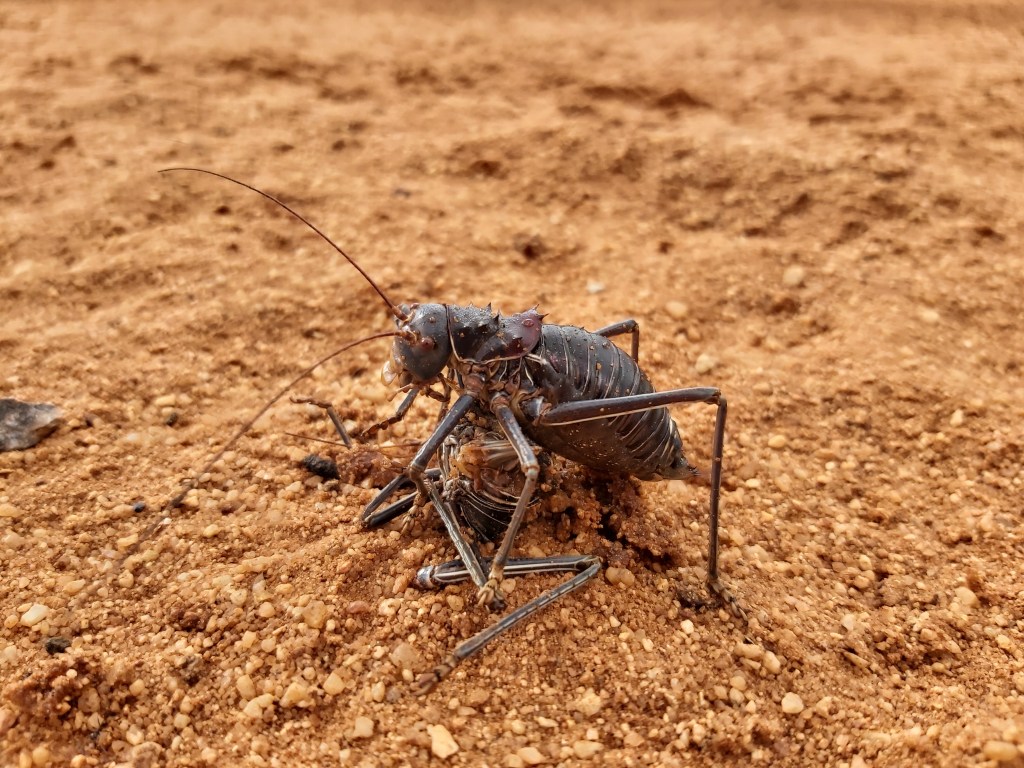
The male starts the courtship process with a stridulation (producing a sound by rubbing body parts together). Once a female is attrackted, the male produces a spermatophore (includes a sperm pouch and a nuptial gift, the spermatophylax) that is presented to the female and she will feed on it during day. The mating process itself lasts from sunset to sunrise. For egg laying, the female, will make a small hole in the soil with its abdomen and places a cluster of eggs into it.
As others of their family, armoured ground crickets go through three stages in their life cycle: egg, nymph, and adult. I had seen them appearing a couple of weeks after the first rainfalls in Namibia, which was in March. Now, coming to mid-May, they start laying their eggs into the ground. When the nights are getting cold now, they might die until next year the cycle starts again.
Did you know?
Armoured ground crickets have a whole repertoire of defence mechanisms: squeeking, streching their legs to appear bigger, biting, their armoured exoskeleton and reflex bleeding (autohaemorrhaging).
They obviously do not taste very good as they have not a lot of predators. The main ones are: Bat-eared fox, Jackals and Kori bustard.
 Sininho´s World
You must be logged in to post a comment.