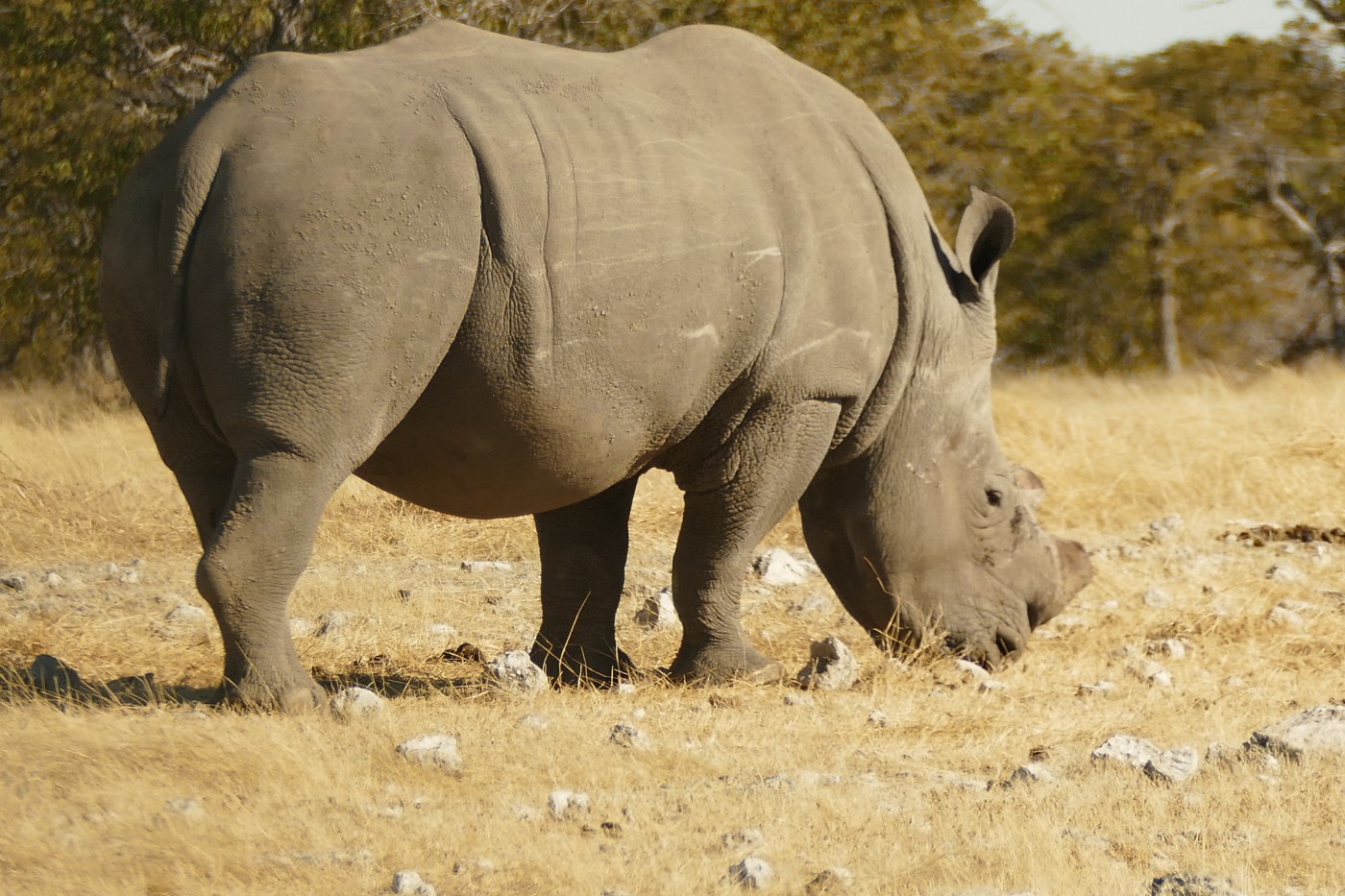
Just as the human body can fall victim to cancer, so can the human mind fall victim to a spiritual cancer that can cause the human being to do things that are shameful, disgusting, fearful and sometimes beautiful. There is something that we call ‘superstition,’ which I view as a cancer of the human mind. Superstition, like all things on this planet, has both a positive and a negative side, and what is most strange about superstition is that it can cross oceans, cross whole continents, and find a home in far away places where it was not born. And there it twines itself around things in that place where it now is, and becomes one with them. One of the ugliest, deadliest and blackest superstitions on Earth is the superstition that the powdered horn of a rhinoceros is an aphrodisiac. I want it to be known by all people who care for animals, that the belief that powdered rhino horn is an aphrodisiac is not an African belief and I will prove it.
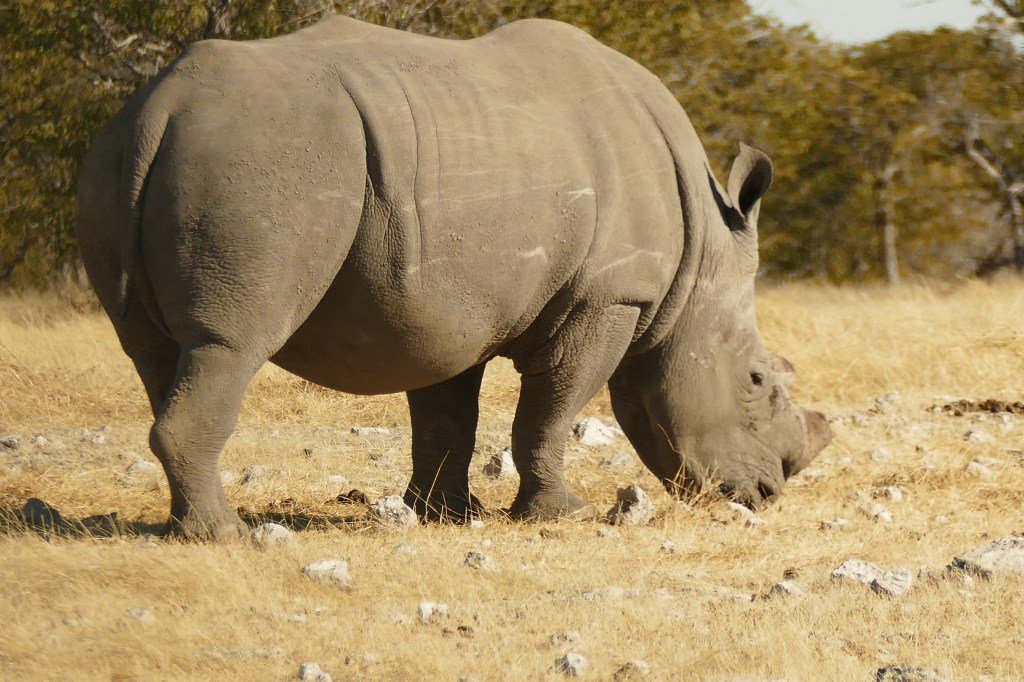
Today the rhino totters on the brink of extinction. A noble animal, once used by our people as a symbol of tenacity, loyalty, endurance and strength, is today being numbered amongst the endangered animals of this world. Africa is not guilty of the belief that rhino horn is an aphrodisiac. It is the people of the Orient who originated this belief that has taken root in Africa and has resulted in the decimation of thousands of these noble animals. I, Credo Mutwa, appeal to all people to raise their voice against the slaughter of the rhino. The rhino must live. The rhino must exist. She is the creature of a thousand fairytales and a thousand stories. She, like the elephant and the hippo, is the symbol of the Great Earth Mother.
The Zulu people were a nation of great traders and they used to trade in ivory and in gold dust with the Portuguese in Mozambique. They used to light great fires on the seashore to attract Portuguese sailing ships. And whenever they were out on a trading expedition, they used to look out for the two kinds of rhino that at this time inhabited Zululand. If they saw the white rhino Ubejana, they knew that the Portuguese would trade well with them at that time. But if they saw the Umkombe, the black rhino (also known as the angry one), they knew that the Portuguese would drive a hard bargain. The Zulus used the rhino as an omen and a symbol of peaceful trading. And in all the ancient fortresses that we see all over southern Africa, fortresses such as the Zimbabwe ruins and other places, archaeologists have found many likenesses of the rhinoceros, the symbol of peaceful trade, of hard work and peaceful co-existence. These rhinoceroses were often carved of wood and then wrapped in finely beaten gold and they were placed outside huts in which trade goods were stored in the great Zimbabwe-type fortresses.
Once more I appeal to the people out there: Please leave the rhinoceros alone! There are powerful aphrodisiacs in Africa. Aphrodisiacs that work. Rhino powder does not work at all. In fact, throughout southern Africa, people of all tribes regard animal horn (whether rhino horn or the horn of any animal) as evil. One of the most terrible things that an African can do is to burn a horn within a homestead. Our people believe that if you burn animal horns near a place where people stay, you are putting a curse upon them (the people that is) so that they should quarrel, be divided, and even kill each other. If you go to the land of the Swazis and also to the land of the Zulus, you will find people saying, whenever they see a family quarrelling and splitting apart, that that family has had an animal horn burnt near its home. Our people believed that the horns of animals could only be used for putting curses upon people, and sometimes for defending themselves against curses.
Our people view a horn in the same light as the Western people view Satanism – it is an object of the blackest and the most dangerous magic. A horn can be used as a container, as an animal horn, but if you powder it then you are accused of creating a black magic substance. If our people originally believed that rhino horn was an aphrodisiac, Africa would not have had the huge population of rhinos of both kinds that the early settlers found when they arrived from Europe. There were rhinos right down in the Cape of Good Hope. There were rhinos all over KwaZuluNatal. There were rhinos in the Free State and also in the former Transvaal. And today they are gone. Today they are one with our dreams, and only place names now give us a glimpse of what once used to be. In an isolated part of the country where there is not even a tree left now, you’ll find a place name such as ‘Renosterkop,’ which means ‘Rhino hill.’ The ‘renoster’ is gone and only the ‘kop’ (the hill) stands there mocking history.
Let Africa live. Let my country survive. Please.
Source: Credo Mutwa
 Sininho´s World
You must be logged in to post a comment.