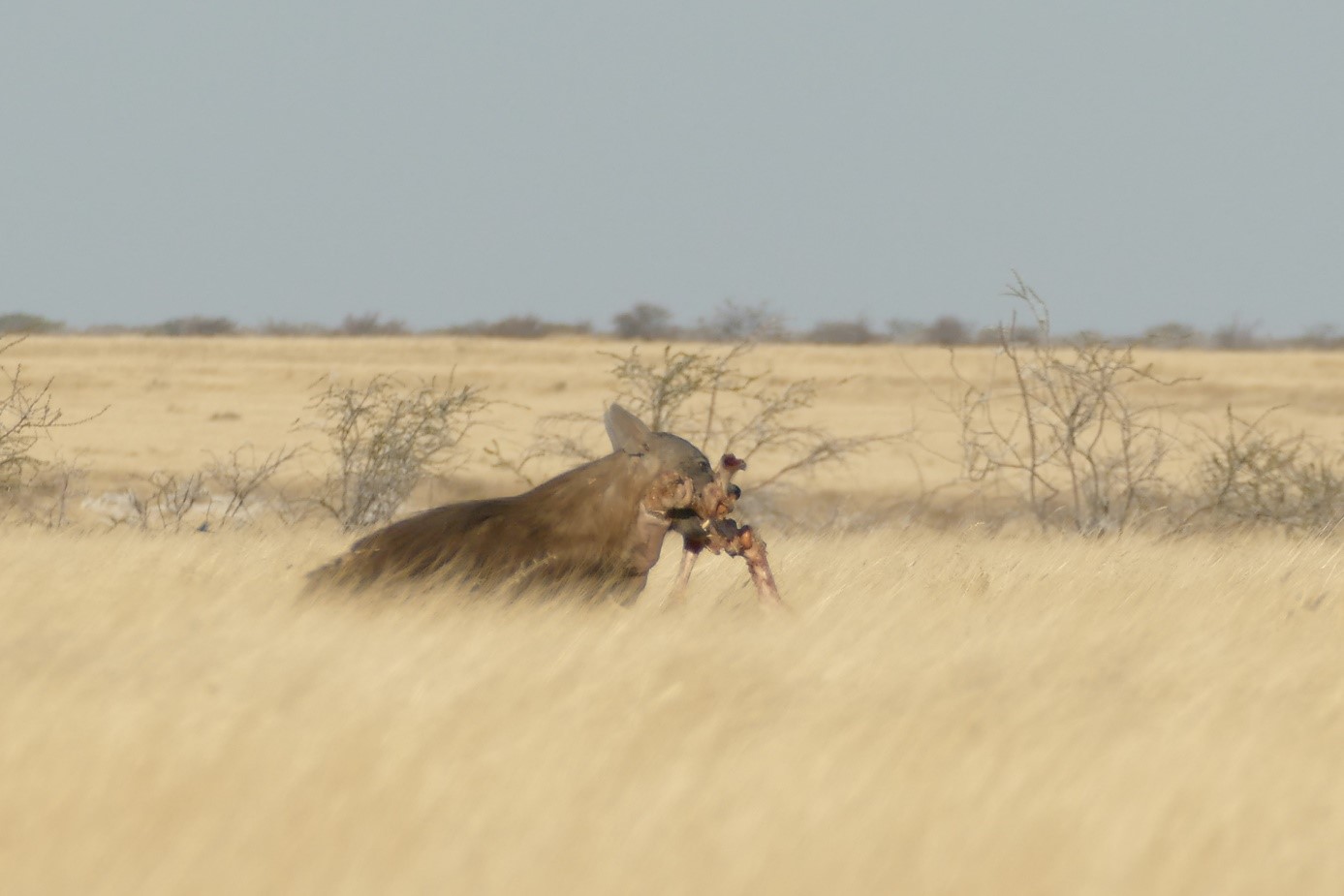
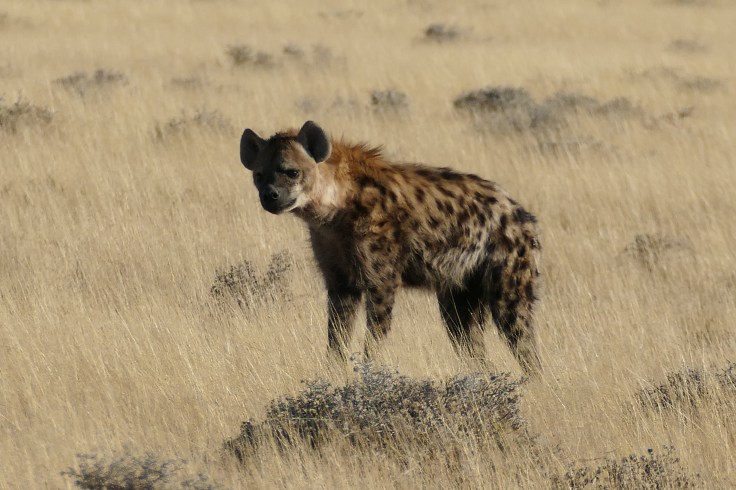
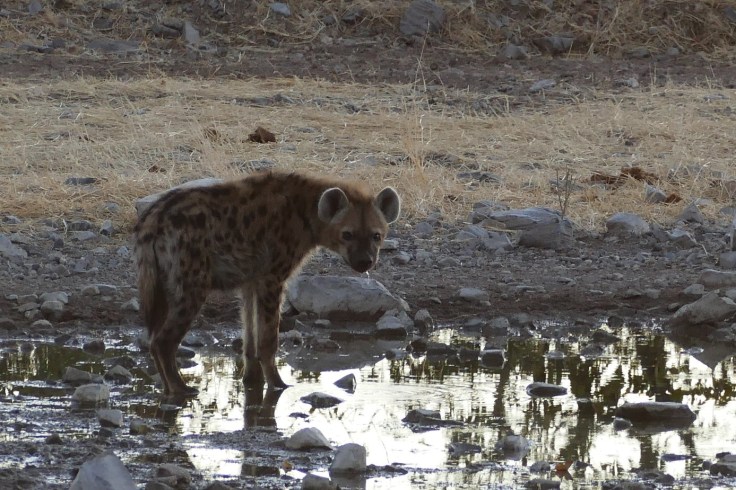
The hyaena is an animal that is both feared and revered in African cultures. But it was also considered very useful to have around the village – as a live waste disposal unit!
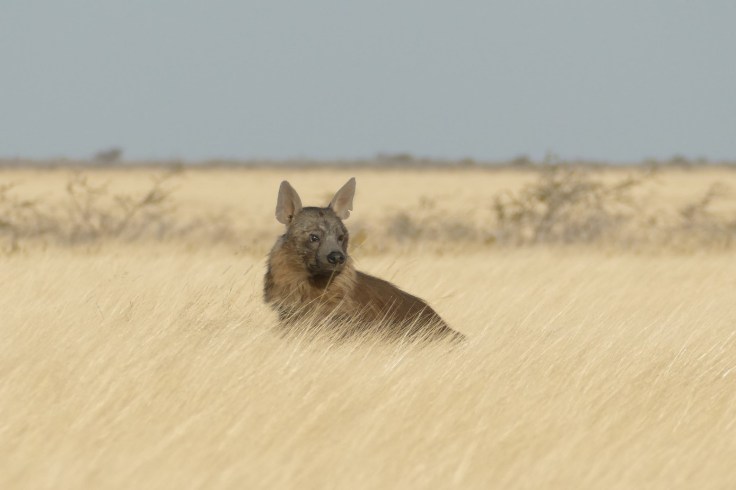
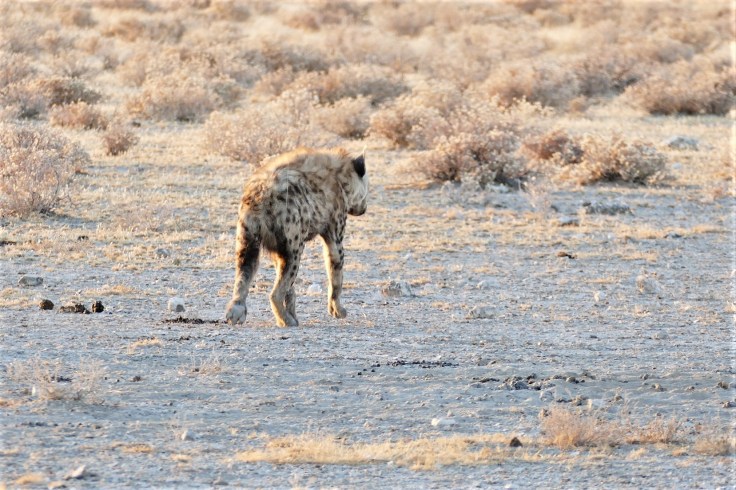
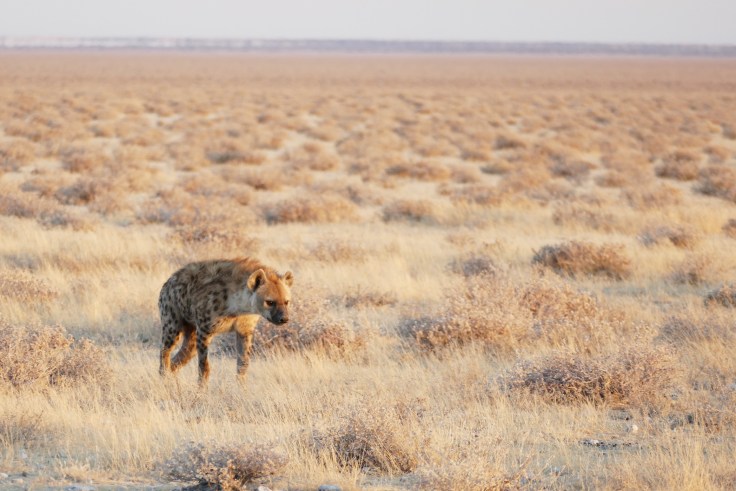
Now my friends, we come to a strange beast to which Africans attached many beliefs. A beast, which was on one hand deeply honoured and revered, and on the other hand was held in ritual contempt as the very symbol of everything that is cowardly and treacherous. This is Thembisi, the hyaena. And these strange attitudes of reverence mixed with contempt were applied to all hyaenas, regardless of whether spotted or brown. Again and again in African mythology, the hyaena plays the part of the treacherous trickster, the hyaena plays the part of the deceiver who leads other animals straight into trouble or who robs them of their food or other precious things. But at the same time the hyaena is loved by black people, and it was one of the several kinds of wild animal that our people lured into their villages in order to keep those great villages clean.
Many people do not realise that our people sometimes faced exactly the same problem that modern people face in their communities. And they often used to solve these problems by in-spanning the powers of nature. Now, I wish you to imagine, honourable one, a typical Zulu military kraal, a great village consisting of several hundred beehive-shaped grass huts. Some of the military kraals that our kings built in Zululand used to accommodate over fifty thousand people of both sexes and all ages. Some of the kraals that King Shaka built could accommodate five regiments of warriors and their families, as well as servants and other hangers-on. Even more spectacular were the villages that the Batswana people used to build – villages such as the huge ruined village of Gadidtshweni. This incredible community was in actual fact a city, so many were the huts that formed its granaries, cattle pens, goat pens and sheepfolds. It was a fully-fledged city.
Now, in cities, people eat food, and so generate waste. And in olden days this refuse consisted firstly of white wood ash, which our women recycled and mixed with sand and clay to form the floors of the huts and the little walls of mud that surrounded these huts. Then there was rubbish in the form of bones, food scraps and heaps of maize porridge leftovers. For these our people used to enlist the power of scavenging, wild animals in keeping their villages clean. They threw those food scraps, bones and remains of corn cakes and so on into a gully outside the village. There were special gullies that were used as dumps for food scraps.
Now hyaenas love to chew animal bones, hyaenas love to dispose of what people throw away from their meat dinners. And in ancient times hyaenas were allowed to prowl around the village at night and, right up to the days of the Second World War and even today, you still come across villages in Ethiopia that still practise this ancient African custom.
Hyaenas, spotted hyaenas as well as brown hyaenas, are also enlisted in the disposal of dead animals such as village dogs that have died of old age. In the land of the Zulus, in the villages of King Shaka, there were usually fifty or more hyaenas, which were kept and treated well, and which roamed the interior of the great village at will, disposing of any scraps that had been thrown away. In fact, after the great King Shaka had been murdered by his half brothers, the murderers left Shaka’s corpse lying out in the open. They had hoped that the village’s hyaenas would consume the remains of the mighty king. They were trying to dispose of the evidence, like many other murderers have done since. But what the murderers forgot was that a hyaena develops loyalty towards someone who feeds it, like any dog. And the hyaenas in Shaka’s village refused to devour Shaka’s corpse.
And there is something else that is believed about the hyaena. It is that it rarely touches something or someone who is still breathing, no matter how faintly. And it is this that makes many Zulu storytellers believe that Shaka was still alive when he was buried by his frightened wives, on the day following the assault upon his person.
Source: Credo Mutwa
 Sininho´s World
You must be logged in to post a comment.