African Elephant
Loxodonda africana
Description, Habitat & Distribution
Lifestyle, Behaviour & Social life
Communication
Diet
Reproduction & Lifestyle
Did you know?
Folktale Stories s & Traditional Beliefs
Description
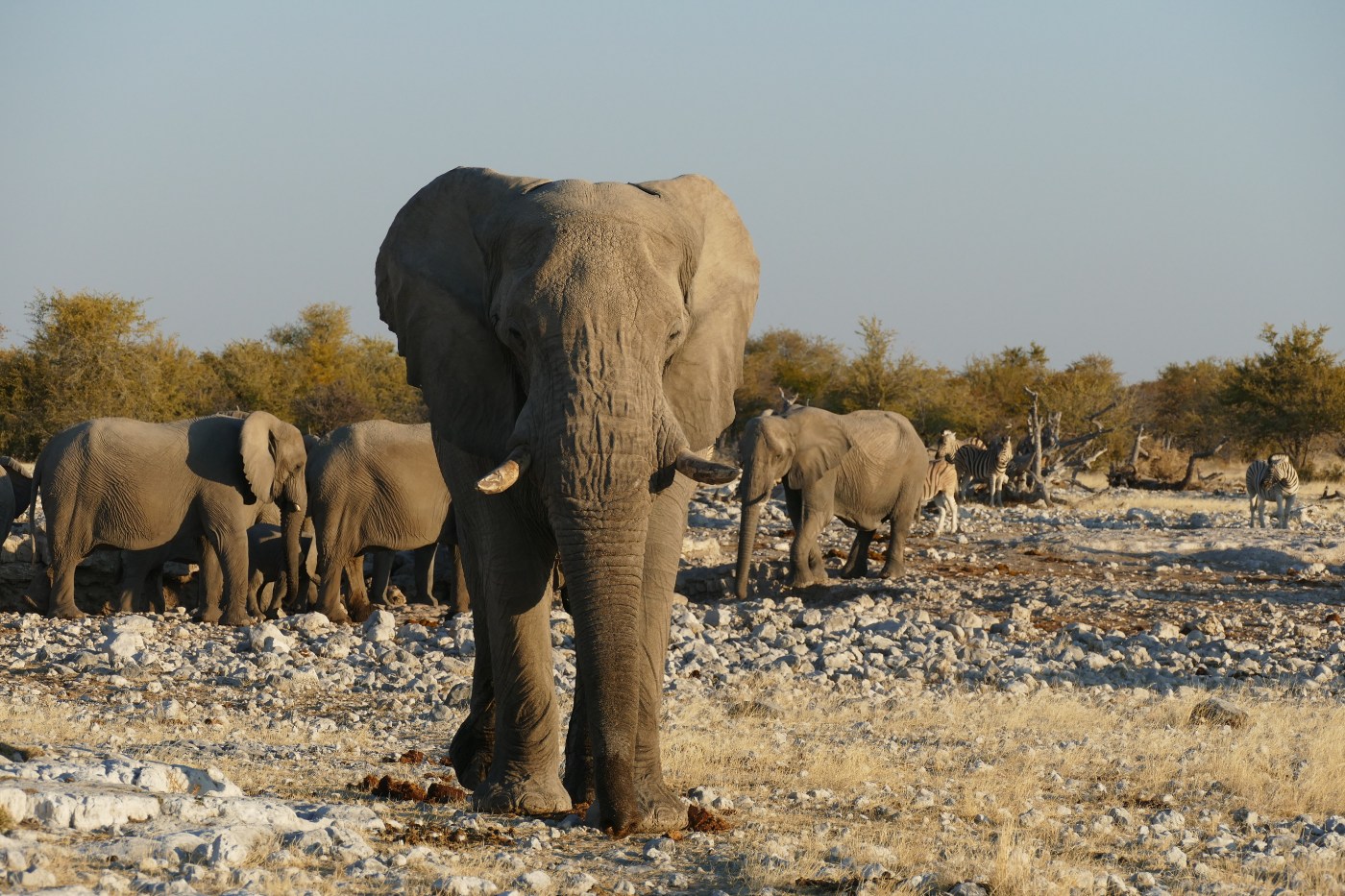
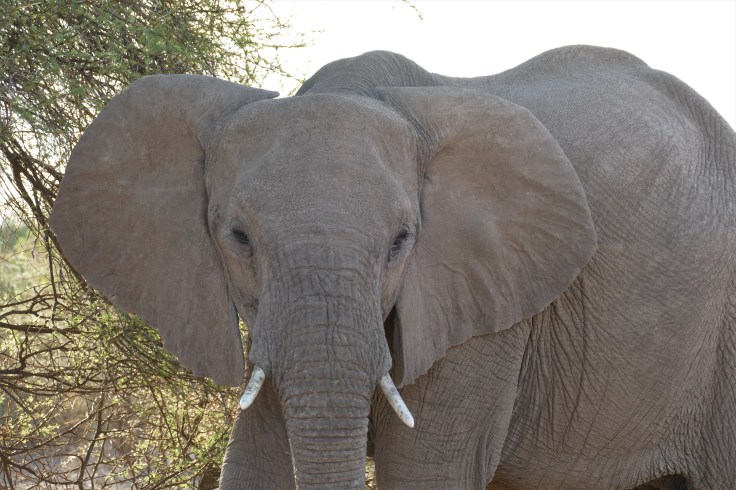
The largest land mammal is greyish in colour, sometimes towards brownish, which relates to its affection to mud-bathing. Elephants have columnar legs, parse and coarse body hair, a huge head with wide, flat ears, a long trunk and two whitish tusks that can grow up to 3.50 m.
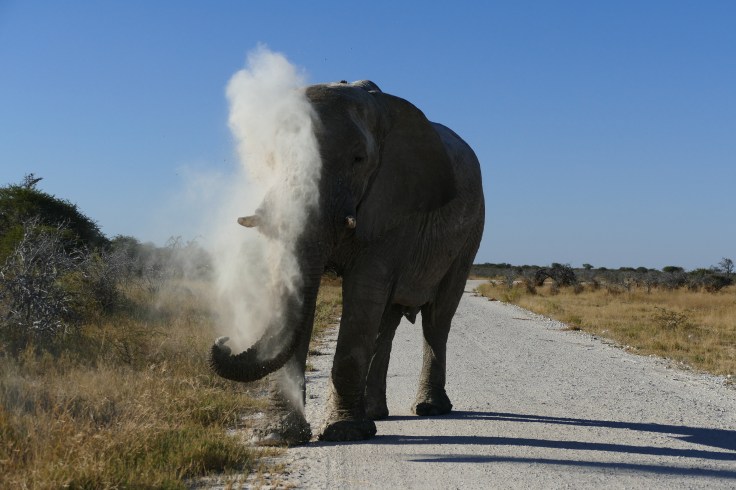
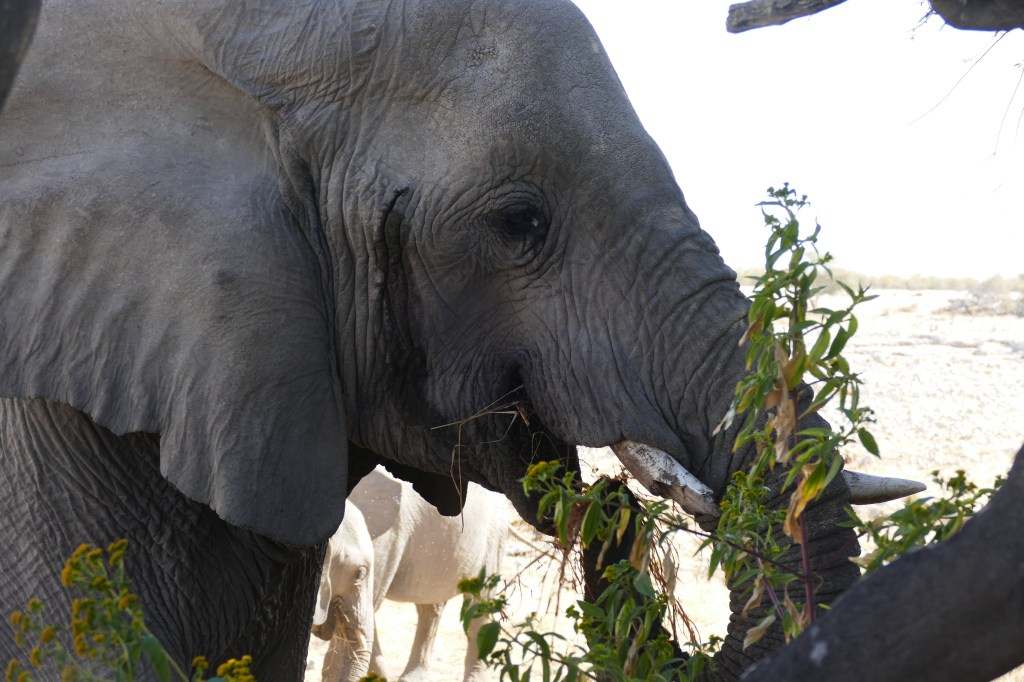
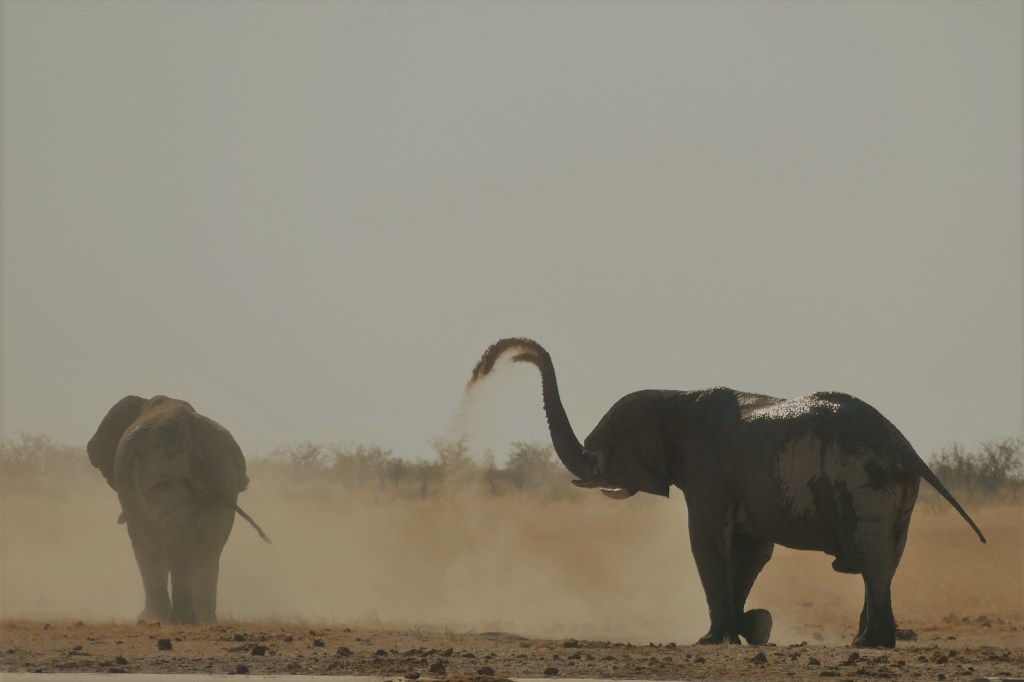
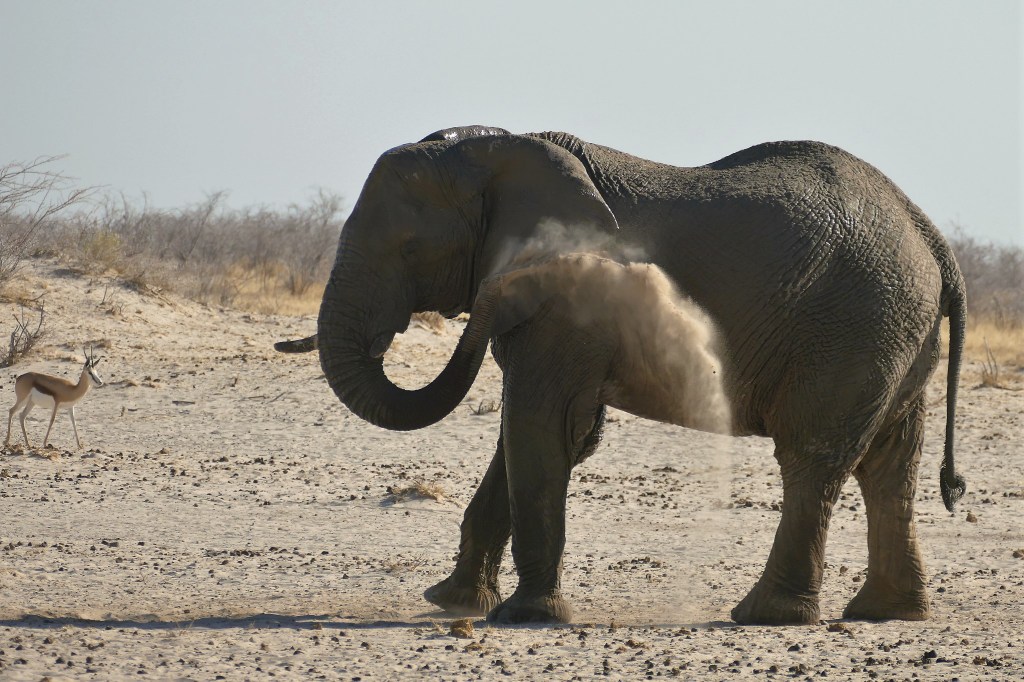
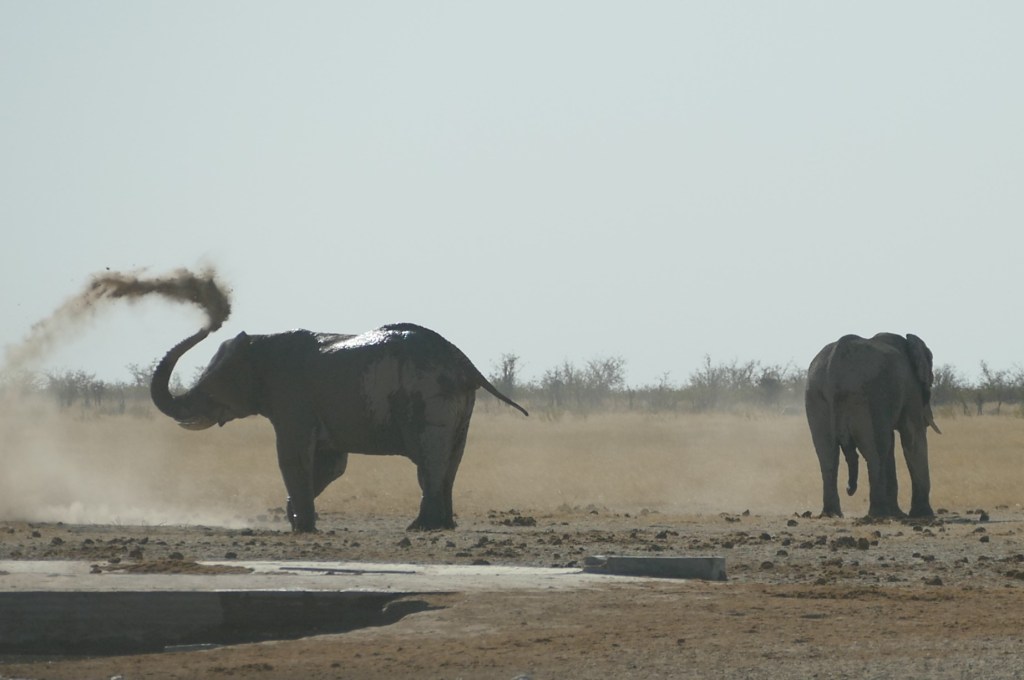
Their trunks are very dexterous and enormously powerful and used for picking up things, tear down trees, drinking, sucking in dust/sand to blow it on its body, and communication, such as touch and smell.
Tusks are used for digging, peeling bark from trees and defence weapons. Tusks never stop growing and elephants have a “favoured” one that they use more than the other one.
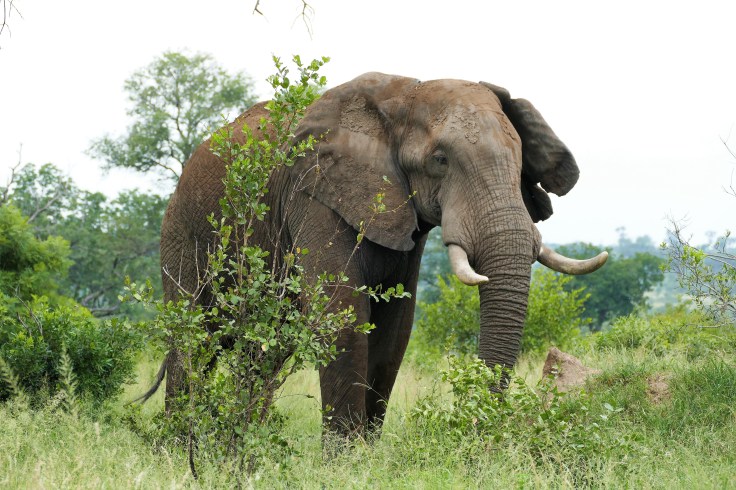
Sexual dimorphism
African elephants show sexual dimorphism in weight and shoulder height by the age of 20 years, due to the rapid early growth of males. By the age 25, males are double the weight of females; however, both sexes continue to grow throughout their lives.
The male’s head is broader between the eyes and forehead, whereas the female’s forehead forms a sharper angle.
Habitat
Savanna, rain forest, woodland, scrub forest, occasionally deserts, and beaches.
Distribution
Central and southern Africa.
Lifestyle, Behaviour & Social Life
Gregarious
Non-territorial
Diurnal
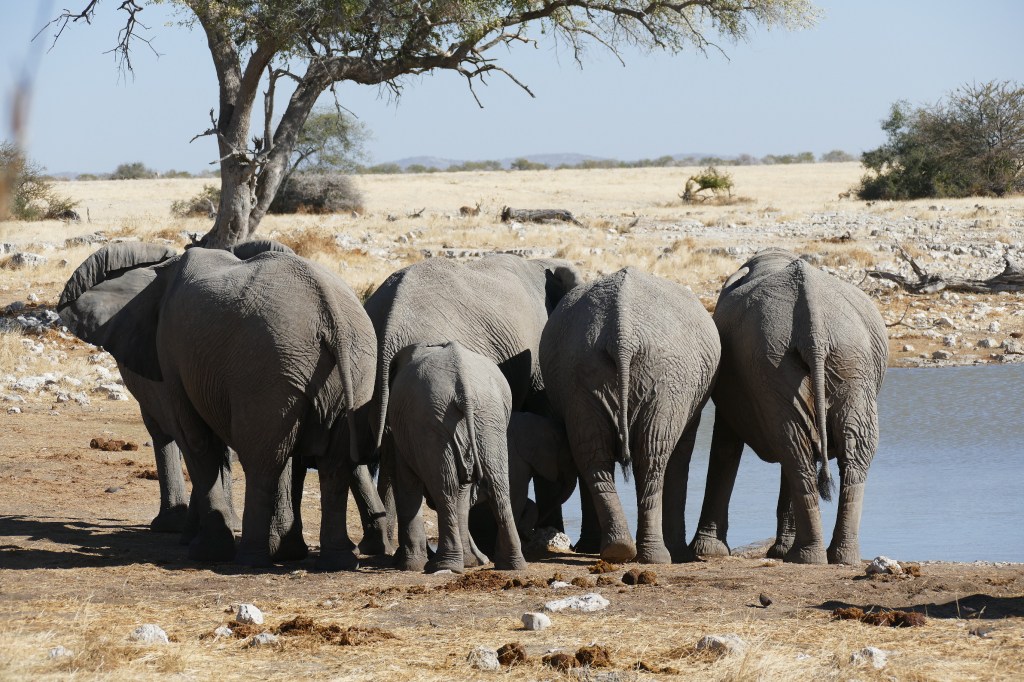
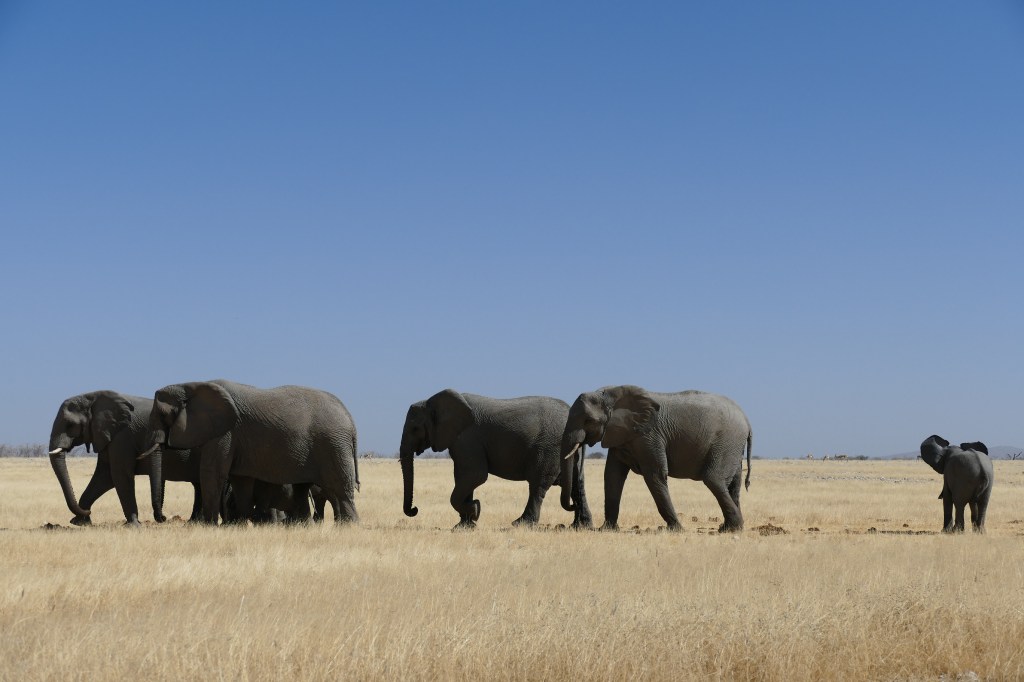
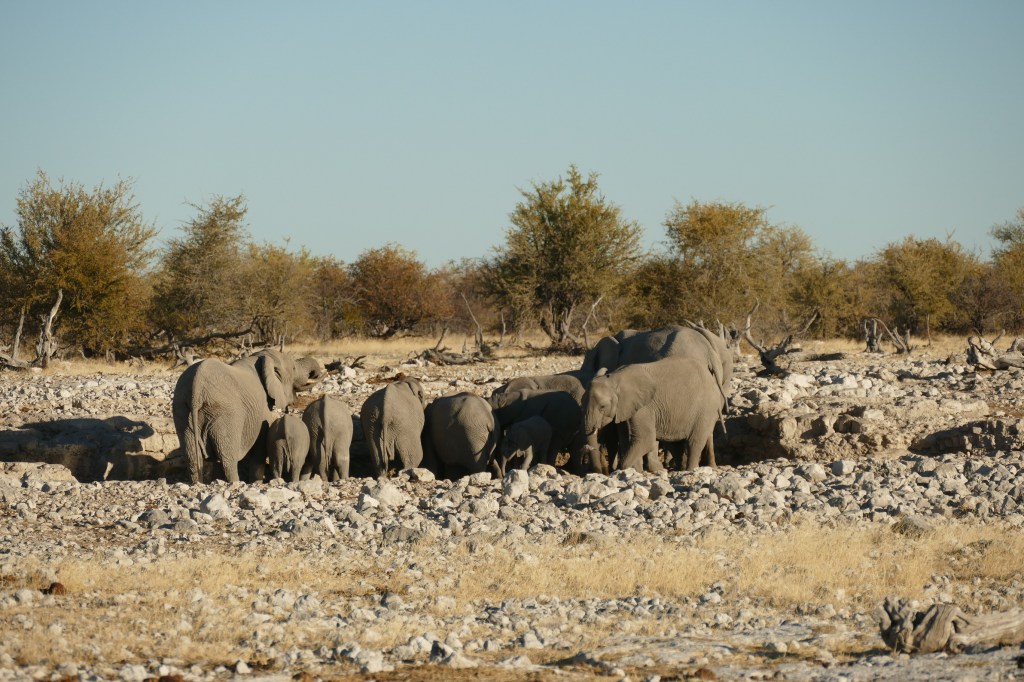
Elephants are gregarious and live in matriarchal groups with a basic unit of closely related adult females with their young of various ages, led by the oldest one. If food sources are limited, groups might be split up into smaller units. Young males leave the group when adolescent (gen pool dispersion). They then roam around singly or sometimes form small bachelor groups.
A group is called a herd or parade of elephants.
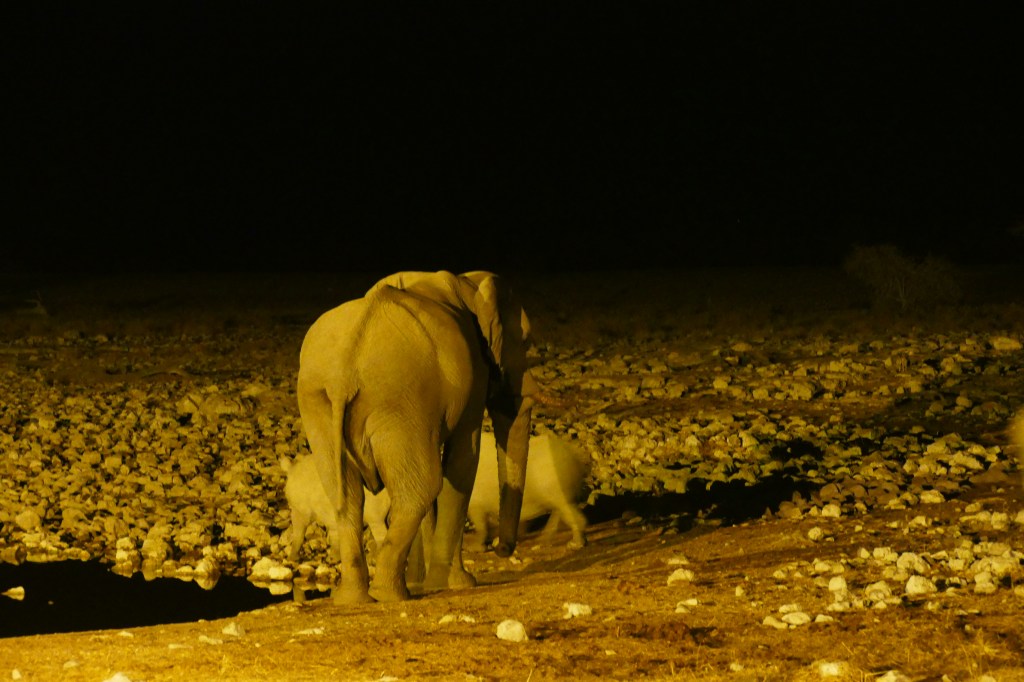
Elephants are diurnal but can sometimes be seen at waterholes in the evenings and at night as well.
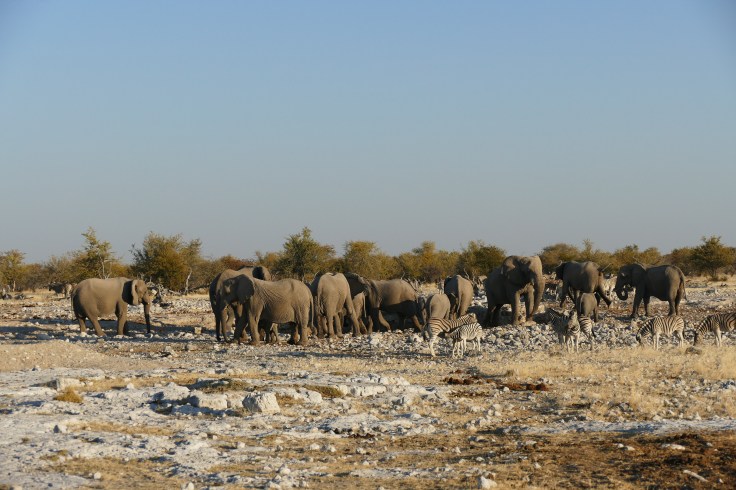
To fit their need of up to 150 kg of food per day and spend up to three-quarters of their day foraging. Due to their fast and inefficient digestive system, half of this may leave the body undigested (up to 150 kg of dung daily!), providing a good food source for other animals, e.g. baboons and birds but also play a vital role in the seed dispersal and fertilization.
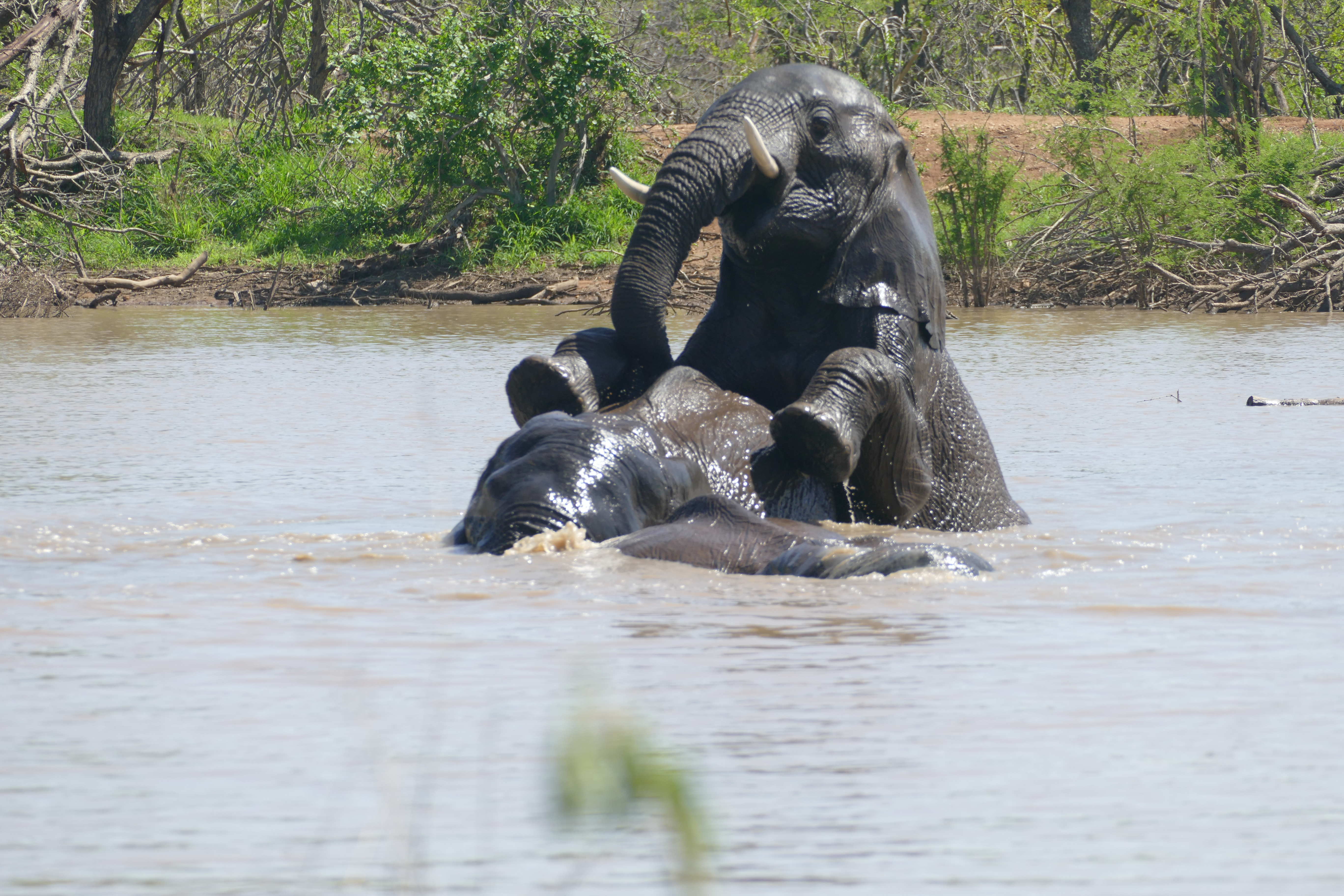
On average it will drink 70-90 litres a day and if possible, an elephant goes to water at least once daily, not only to quench their thirst, but also to bathe and wallow in mud (which serves as parasite protection and to cool down). When in water, they often behave like children, they dive (with their trunk used as snorkle), chase each other, or even dip each other under water.
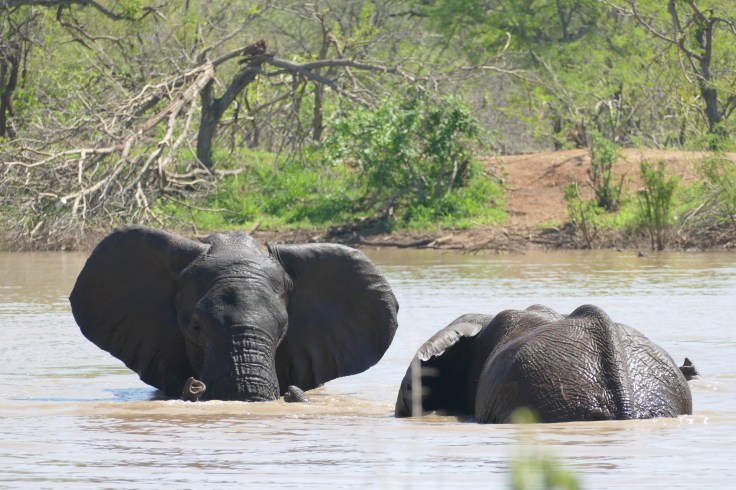
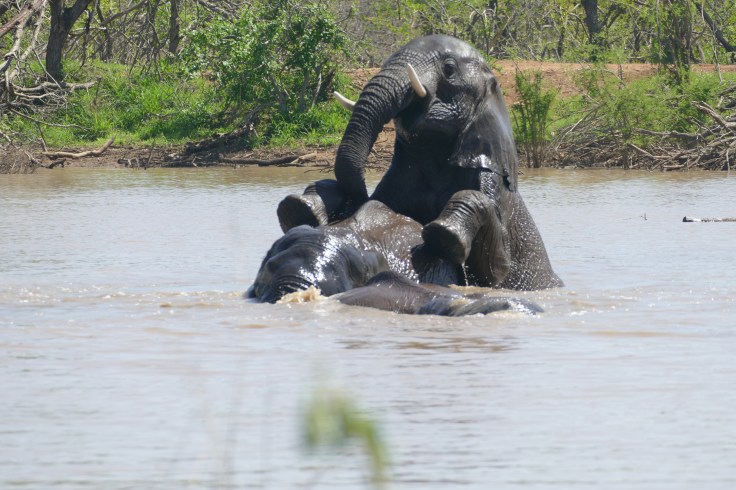
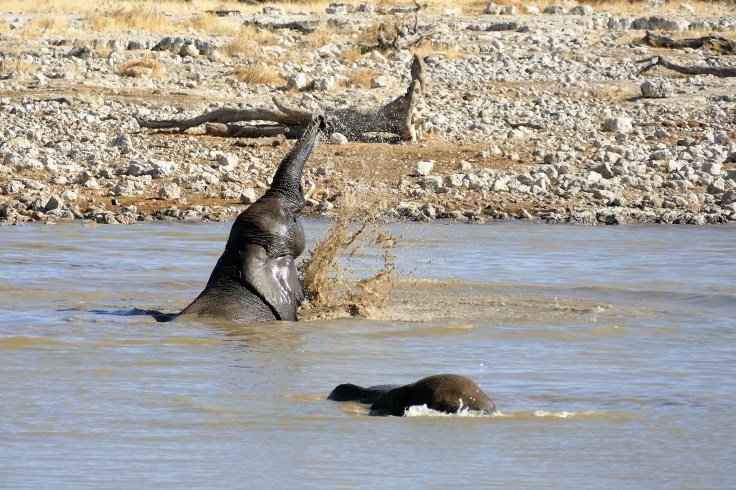
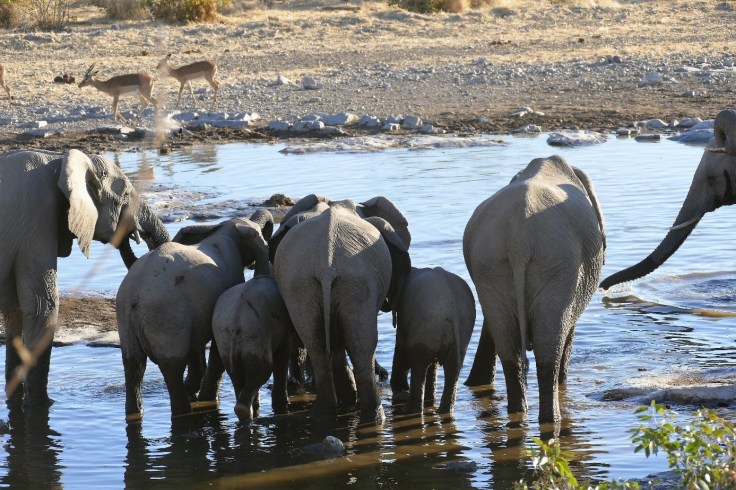
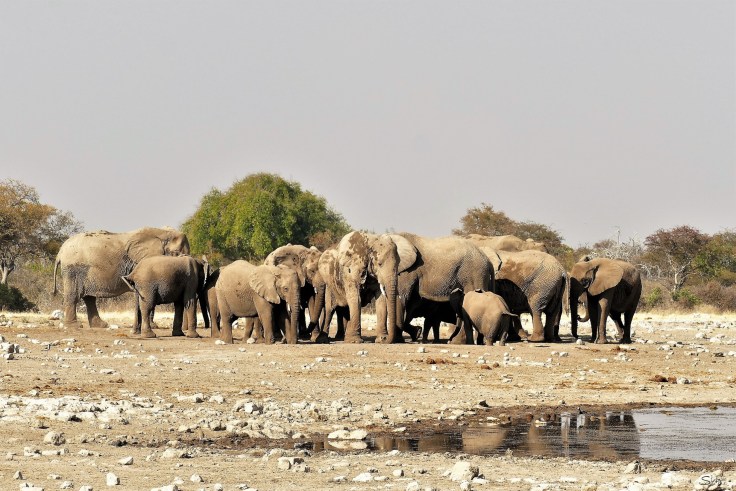
Elephants have around 150,000 muscle units in their trunk and it is used for feeding, drinking (it can contain up to 8 litres of water), digging or as a snorkel when swimming. They also use their feet or a combination of feet and trunk to rip out bulbs or stomps.
Elephants are usually peaceful but can become extremely aggressive if in musth, sick, injured, harrassed or when having youngs.
Fake-Feeding
When suspicious (e.g. when humans encounter them), they often start fake-feeding and we could see different methods in different individuals: some just do as if they eat but do not have any grass picked up, others took a bit of grass or branches and let it fall before it reached the mouth, another one (my favourite) ripped out whole bunches but instead of bringing it to the mouth, he through it beside his body.
Real aggression is shown by raising the head and trunk, extension of ears, trumpeting and kicking the ground to produce clouds of dust. They also shake heads. They often first bluff. If an attack is meant seriously, the elephant curls its trunk under the chin and holds its ears back. Seriously meant attacks shall not be underestimated. Elephants run faster than humans and are much stronger. One tourist hid behind a mopane tree with a trunk 60 cm thick and was injured when a charging elephant bull smashed the tree down.
Musth, pronounced ‘must’, is when males experience increases in testosterone levels of a factor of 60 or more. The changes prepare them for competing for females and make them much more aggressive. The condition is more pronounced in Asian elephants, and can last for up to 60 days. Elephants in musth carry their heads and ears higher than normal, make a characteristic rumbling sound, secretion from the glands runs down their face, and continuous urine is dribbling down their back legs. A bull elephant in musth can be extremely dangerous to anything that gets in his way.
Elephants are known to be able to develop strong and intimate bonds between friends and family members. They can form lifelong friendships and will often only move in the same groups for their entire life. Elephants are also known to mourn the death of a loved one, and have even been seen grieving over stillborn calves, or baby elephants who do not survive the first few months of life. Family groups have even been known to return to the locations where friends or family members died, touching the carcass or bones, and linger around for some time.
There is also plenty of truth in the saying that “Elephants never forget” which helps them to forge long term relationships. Elephants need excellent memory skills in order to survive in the wild and can recognise a previous companion or family member by the scent of their urine alone.
Antipredator behaviour
Once a predator is spotted, vocal signals (e.g. trumpeting) are given and the whole group will take part in any defense. Defence or threat displays are: trumpeting, head raised or lowered, head shaking or nodding, ear spreading, and erect posture.
Communication
Sound (Vocal)|Touch (Tactile)|Scent (Olfactury)|Visual
I always get goose-pimples when hearing an elephant rumble. It is one of the most beautiful sounds and goes deep under the skin and into the stomach. Apart from rumbling, their sounds also include snorts, barks, grunts, trumpets, cries, and even imitated sounds.
Groups stay in contact with loud (120 decibel) calls at very low frequencies (1 to 35 hertz). They also use infrasound (sounds that are at a frequency inaudible to humans) calls which can be heard up to 14 km away and just like in humans and other animals, each individuum has a unique voice.
The different calls may sound identical to us, but might differ slightly in regards of the context used. A trumpet for example can warn the herd of a potential danger, but is also used as a greeting in case to friends meet . Teenagers also trumpet while playing and running around. A rumble is best known as a “let´s go” sign and can be observed when a herd enjoys a waterhole, when suddenly a rumble is heard and the matriarch slowly makes her way further on. But again, rumbling is also used as a family greeting sound, a comforting sound for youngs, a begging sound from youngs, and so on.
Elephants can also communicate through seismic waves – sounds that create vibrations in the ground – which they may detect through their bones and sensitive feet.
Another very important sense is their smell, that they use to pick up information about other elephants and their environment. For example, a male can tell when a female is ready to mate from the chemical signs she leaves in her urine and faeces. This, combined with the characteristic calls of that time, ensures that all the local males will know when the time is right to compete for her affections.
Once you stay a bit longer with an elephant herd, you will not only hear them communicating, but also see them touching each other quite often. Elephants are extremely tactile animals and they purposefully touch one another using their trunk, ears, tusks, feet, tail, and even their entire body and can be playful, care-taking, exploratory, aggressive, defensive, affiliative, or sexual.
Depending upon how their tusks are employed, elephants may use them to poke another aggressively, to gently lift a baby from a mud wallow, or to express solidarity during a greeting ceremony. Ears are rubbed against another affectionately or in play, or their tails to swat another with force or to gently check for the presence of a calf.
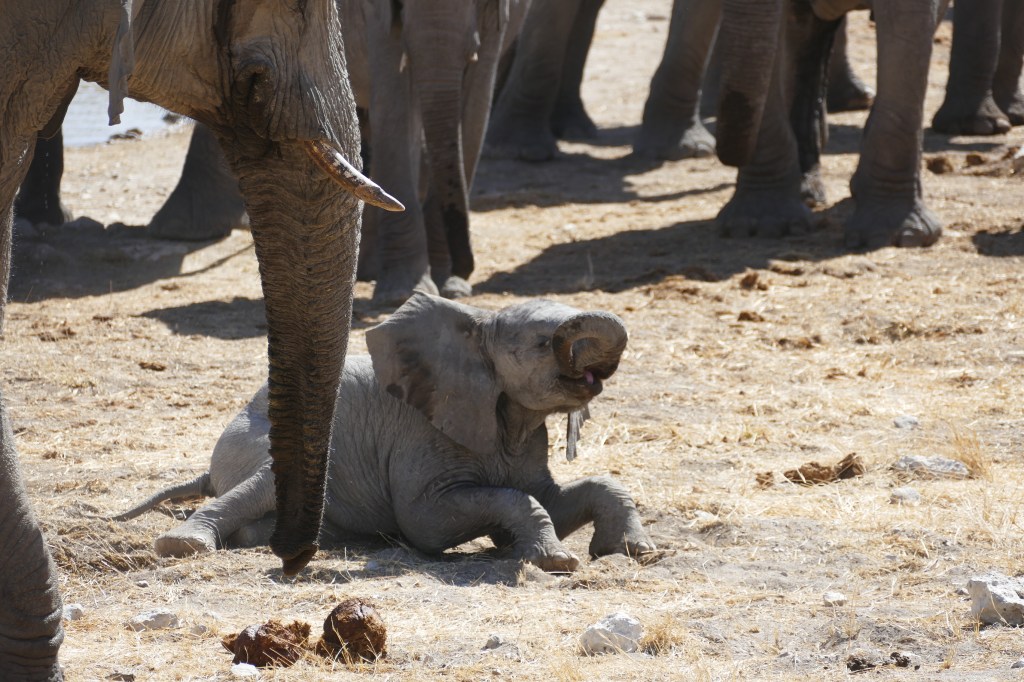
An elephants’ trunk may be used to caress, reassure or assist a calf, to explore the genitals, mouth or temporal glands of a family member, to touch or explore the body of a dead elephant, to touch or push another in play. In more aggressive or defensive contexts an elephant may use its trunk to slap or to block, or to reach out to another for reassurance when facing a predator. In sexual contexts elephants use their trunks to explore, to test or to control the movements of another.
Elephants use their feet to kick aggressively or playfully, or to explore, caress or assist in an affiliative situation. And an elephant may use its entire head and body to aggressively push or ram another, to rub sensuously against another in a friendly manner or to drive a female in a sexual context.
More information on elephant communication: https://www.nationalgeographic.com/news/2014/5/what-elephant-calls-mean/
Reproduction & Lifecycle
Gestation: 22 months
No of young: 1
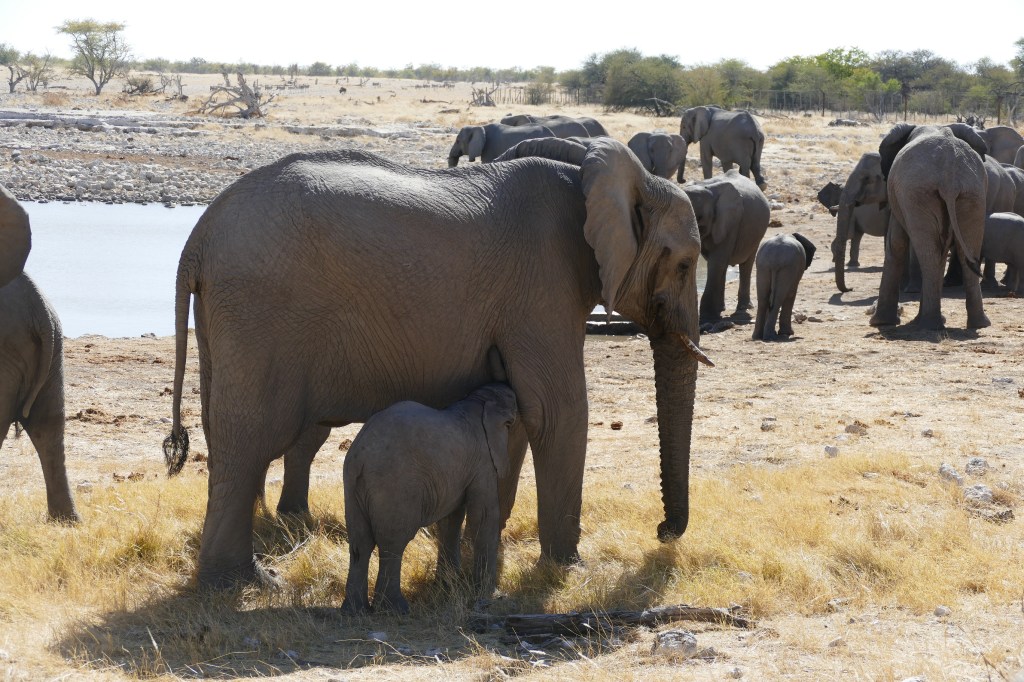
Weaning: 6 to 18 months, although they may continue nursing for over 6 years.
Sexual maturity: 10 – 12 years
Lifespan: 60 – 70 years
Elephants have no particular breeding season and breed once every 3-9 years and will give birth to an average of four calves in their lifetime.
By the scent in female urine and genital area, males will smell if a female is in estrus and ready to mate. During the courtship process, bulls approach females and attempts to use their trunk to stroke her and they will put up a fight in order to mate, by chasing the females if they retreat.
After successful mating and a gestation period of 22 months, cows give birth to one single calf. Other adult females of the herd attend during birth of a new member, although mutual suckling is not practiced, and attempts are repelled (orphaned elephant babies make an exception). Only 20 minutes after being born, elephant calves can stand. They can walk within 1 hour and keep up with the herd after two days only. This important survival technique means that herds of elephants can keep migrating to find food and water to thrive. Offspring are completely dependent on their mother’s milk until they are weaned at four months but continue to occasionally drink their mother’s milk for up to six years. Calves are defended with life and especially when approacing elephants, watch out for either youngs or males in musth. Both shall be taken with caution. As calm and slow as they often are, an annoyed, running and charging elephant is one of the most intimidating and dangerous things to experience.
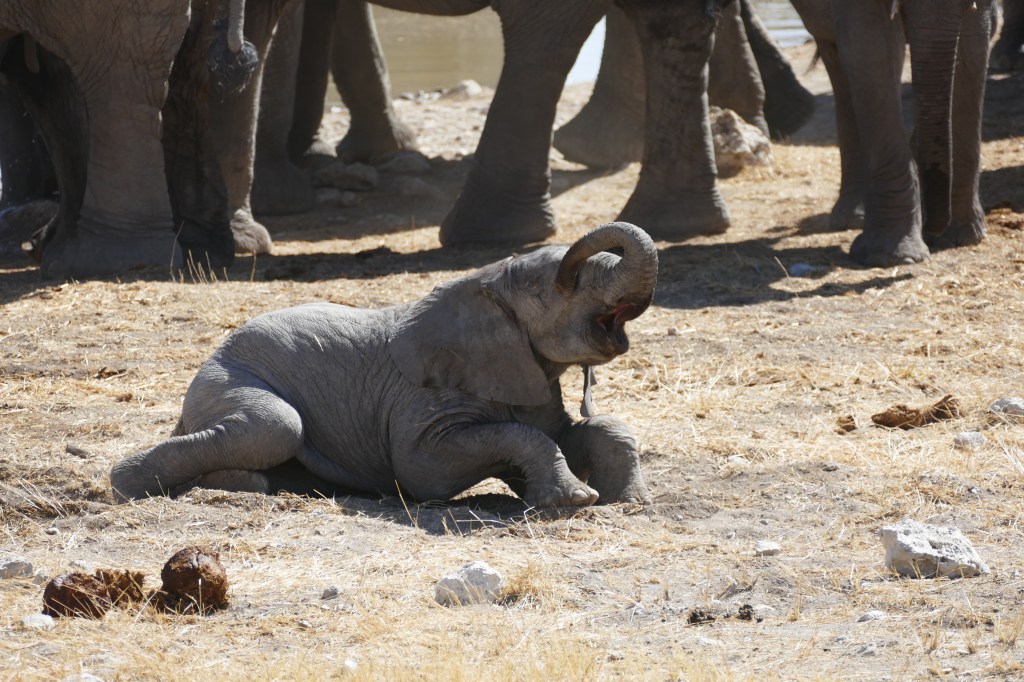
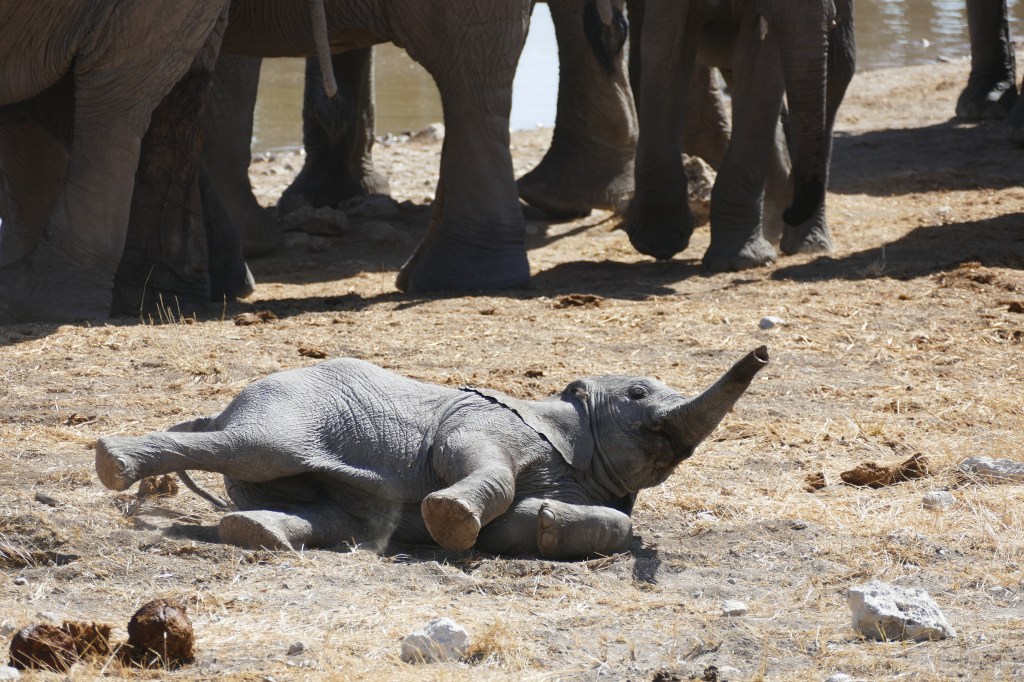
Elephant babies are the funniest things, especially during their first year when they are curious, clumsy, and fully unaware of what to do with and how to control their trunk.
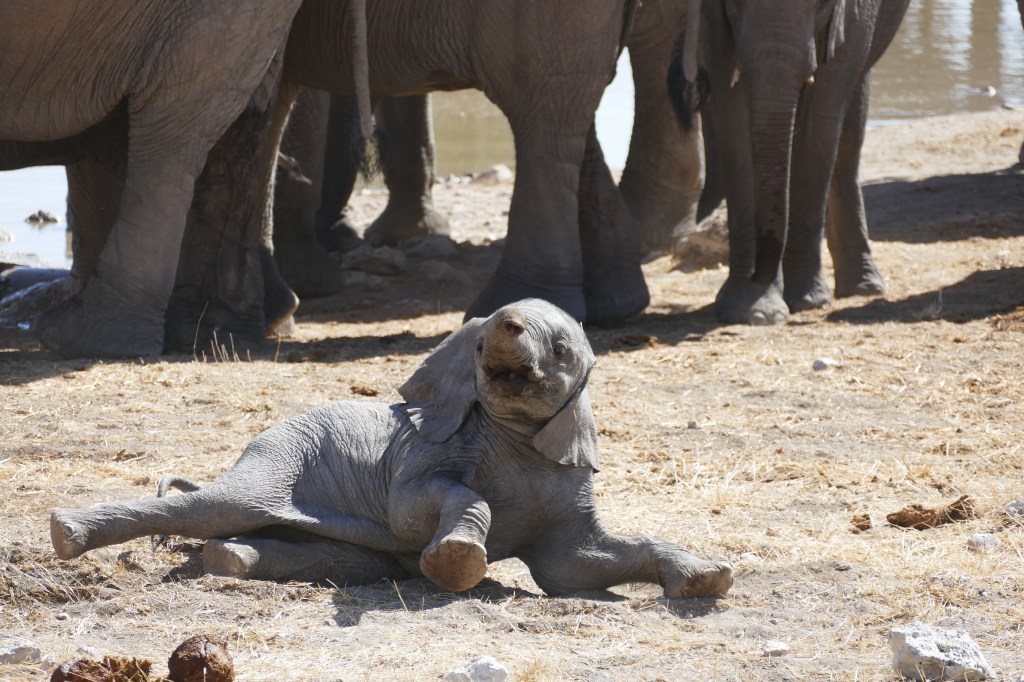
Raising and teaching the young ones is a group task. Much like human babies, elephants learn their behaviour from parents and older family member, including how to put their trunks to good use and young ones are often seen imitating their mother and others.
Males leave the group as teenagers or young adolescents, at an age between 10 and 18 (gen pool dispersion) and roam around solitary or in small bachelor groups, whereas females stay in their native group.
At birth, calves have four small developing molars which they will lose at about two years old. Throughout their life, elephants have six sets of molars and as a tooth wears out through relentless grinding, another pushes forward to replace it. Once the sixth set is worn down, they cannot process food anymore and literally starve to death.
Diet
Herbivorous (Mixed feeder)
Elephants are both grazers and browsers and on their menu are grasses, small plants, bushes, fruit, twigs, tree bark, and roots. They eat between 150 and 170 kg daily and are quite aggressive eaters that often leave a path of destruction, with bark stripped-off trees or shrubs and ripped-out the ground or even trees broken down. To satisfy their needs, they spend nearly 14 hours a day foraging.
The trunk is a fusion of the nose and upper lip and with around 150.000 muscle units it is an elephant’s most versatile tool, used for breathing, smelling, touching, grasping, eating, suck up water and producing sound. They also often use their feet or a combination of feet and trunk to rip out bulbs or stomps or even become acrobatic and stand on their hind legs to reach high-laying branches and leaves.
Elephants are fast digesters, which means that half of their food passes the body undigested. To fit their need of up to 150 kg of food per day and can spend up to three-quarters of their day foraging. Due to their fast and inefficient digestive system, half of this may leave the body undigested (up to 150 kg of dung daily!), providing a good food source for other animals, e.g. baboons and birds but also play a vital role in the seed dispersal and fertilization.
Did you know?
Elephants will often perish in the same location, which gave rise to the notion of elephant graveyards. As elephants age their teeth will wear down and they will then move into areas with softer folliage to wear the last set of teeth down slower. These graveyards are therefore often located in areas close to water with soft vegetation.
Their trunks are a fusion of the nose and upper lip. They are very dexterous and enormously powerful and used for: picking up things, tear down trees, drinking, sucking in dust/sand to blow it on its body, communication (touch and smell).
An average male elephant consumes between 100 and 200 kg of food a day and about 200 litres of water.
Tusks are used for digging, chiselling bark from trees and defence weapons. Tusks never stop growing and elephants have a “favoured” tusk they use more than the other one.
Elephant dung can be used to termine/estimate the age of an elephant: When older, the teeth cannot grow any longer and at one point, chewing is not so good any more and nutritions cannot be taken in > dung shows more unchewed material.
Seriously meant attacks shall not be underestimated. Elephants run faster than humans and much stronger. One tourist hid behind a mopane tree with a trunk 60 cm thick and was injured when a charging elephant bull smashed the tree down.
Elephants show an apparent fascination for elephant bones and ivory, picking them up, carrying them around and scattering them over a wide area. It is unknown why.
Elephants are frightened of honeybees and give a specific alarm rumble when they hear angry bees.
Elephants do not carry ticks which is due to the lack of sebaceous glands with sebum in their skin (tick attractant).
A group is called a herd or parade of elephants.
The smoke of burnt elephant dung can be used as insect repellent.
The elephant’s temporal lobe (the area of the brain associated with memory) is larger and denser than that of people – hence the saying ‘elephants never forget’.
More African elephants are being poached than are being born: Around 55 African elephants a day are being killed for their ivory tusks. This means more African elephants are now being poached than are being born. Around 90% of African elephants have been wiped out in the past century – largely due to the ivory trade – leaving an estimated 415,000 wild elephants alive today.
In most cultures the elephant represents strength, power, wisdom, loyalty, patience.
The word “Elephant” is actually latin for “huge Arch”?
An elephant´s intestines are about 18 metres long and its heart can weigh up to 27 kilograms.
There are two sub-species of the African elephant: The savanna (bush) elephant (Loxodonta africana) and the forest elephant (Loxodonta africana cyclotis).
Top speed: 40 km/h.
Folktale Stories & Traditional Beliefs
The elephant’s tusks are called wisdom sticks by local cultures and it is believed that they allow the animal to see into the future which allows them to know where and when they will die.
Hunters have long believed that an elephant without tusks will immediately attack and kill an adulterer, it is therefore extremely important to choose your safari companions very carefully.
African mythology depicts the elephant as the wise chief who can objectively settle the disputes of other animals, which has resulted in its symbolic meanings of strength, power and wisdom.
How the Elephant got his Tusks
Why the Elephant has a Trunk
References
The Behaviour Guide to African Mammals, Richard Despard Estes
https://www.mpalalive.org
https://animaldiversity.org
https://www.elephantvoices.org
https://wwf.panda.org

 Sininho´s World
You must be logged in to post a comment.