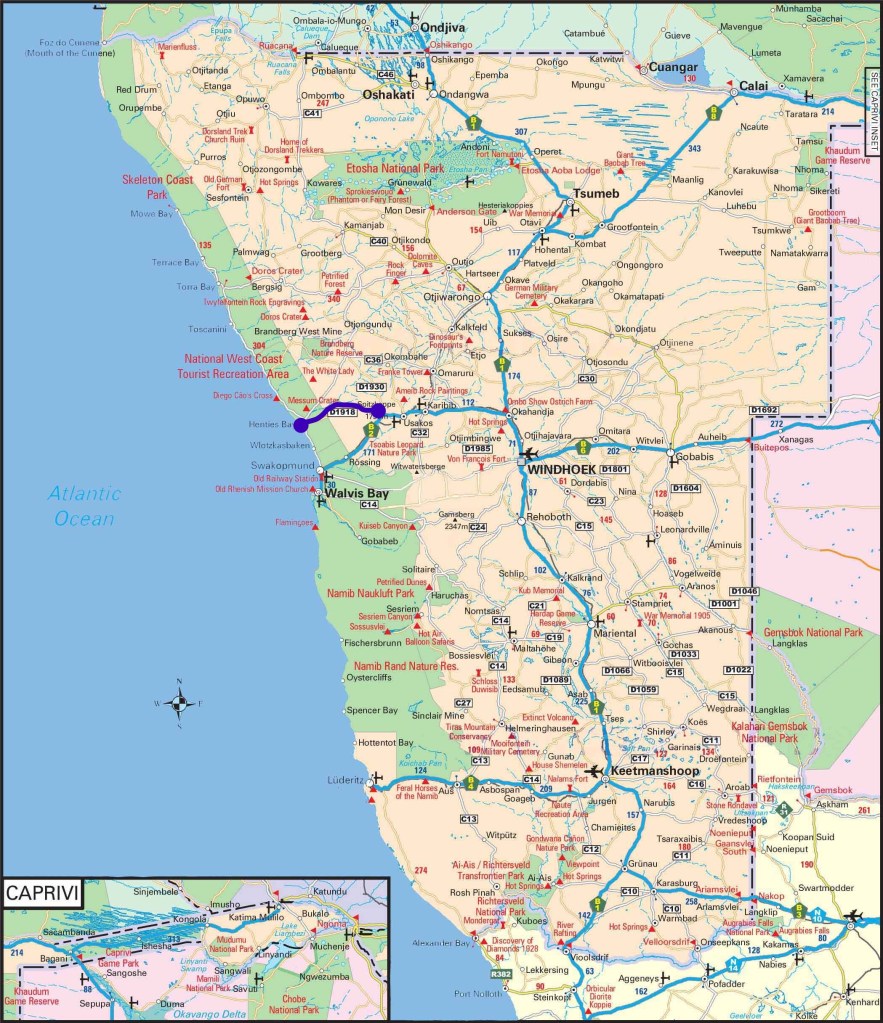
It is only about 110 km from Hentiesbaai to Spitzkoppe, but as usual it took much longer as the assumed 1. 5 hours. Especially the first metres took dramatically long, but for a good reason. Rubbish along the roads always annoyed me. It is not a Namibian problem of course, but here it becomes very obvious while in the cities and areas I know from Germany we are already so used to our unnatural, artificial, and dirty environment, that we hardly recognize. But Namibia still has these “untouched” areas. With only about three residents per square kilometre, population density is quite low and international tourism is – due to COVID 19 – currently not existent. You can drive for hours without meeting another car or even see a village. In some areas it was so barren and deserted that I wondered if there was a person here, ever, which was actually a nice thought because this would mean that nature can live untouched and without too much human impact that usually is a bit destructive … but reality catches up quickly!
There is hardly a kilometre on which something is reflecting on the roadside or fluttering in the fence. Plastic and glass bottles, plastic bags, tyres, fenders, exhaust pipes, even whole cars (okay, car skeletons), or carton boxes. On the dunes in Sossusvlei, in the mountains of the Namtib Naukluft Park, even in the Etosha National Park I found rubbish laying and flying around.
For today I was not willing to only drive past it and, as already done a couple of times before, started collecting it. At the last supermarket, I had taken some carton boxes to store my food shopping and firewood and one of those would perfectly do as a waste bin. I decided to stop for every single item I can find on the next five kilometres, but frustrating enough the box was full already after 500 metres.
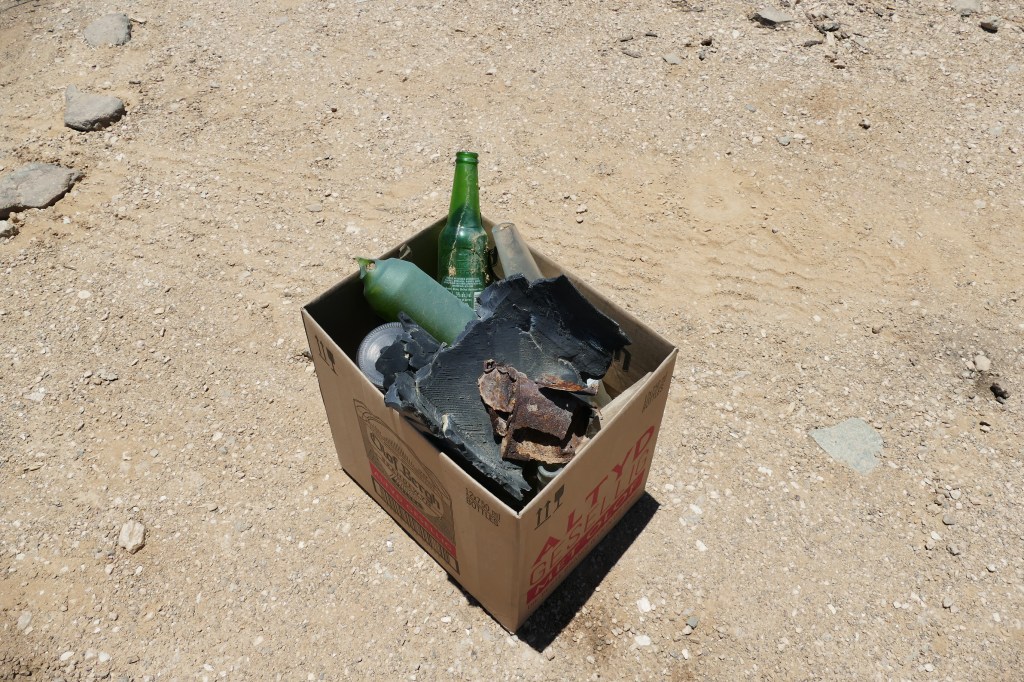
I do not understand why this is necessary and it makes me incredibly sad to see us humans being that ignorant towards our environment. If we can bring it, why can´t we take it back with us?
—————
NO ROCK PAINTINGS
I had read about some rock paintings on the way, just before Spitzkoppe, and of course wanted to see them. I left the main road and turned onto the only visible “side street” that actually looked more like a seldomly traveled path than a road.
No signs led the way, and it was often not clear if I rather go left or right, although I had an idea about the vague direction. But finally, I made it and reached the end of the “road” where I found myself at the bottom of a little hill with a prominent rock formation. That should be it, shouldn´t it? I walked around, I walked in, I walked a bit up the hill, but apart from some 20th century graffities white and dassie urine marks there was no indication of life here …
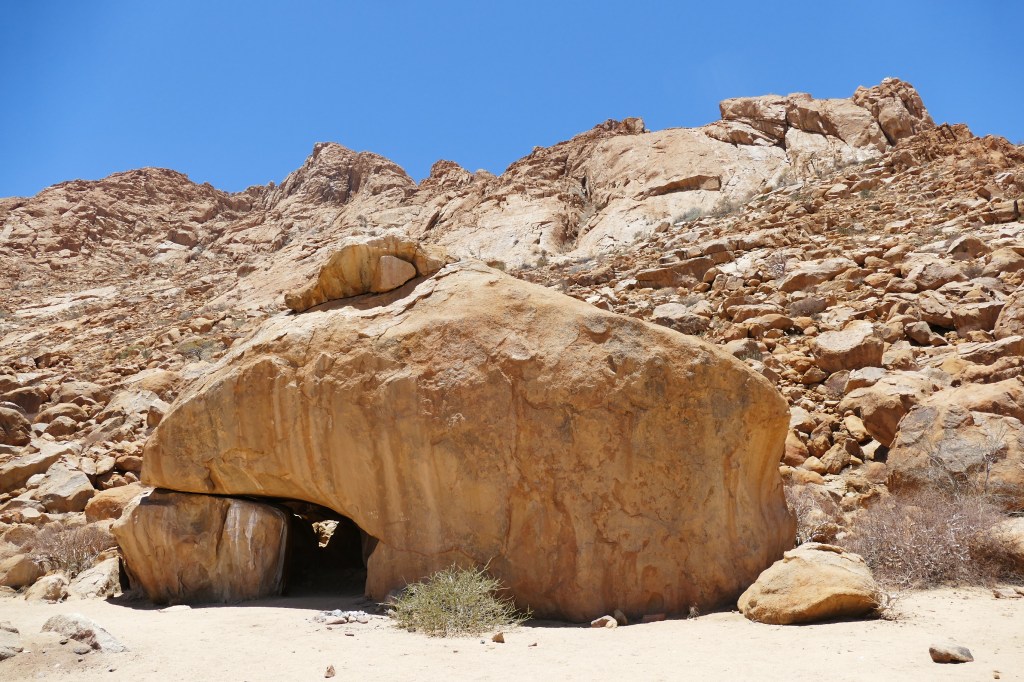
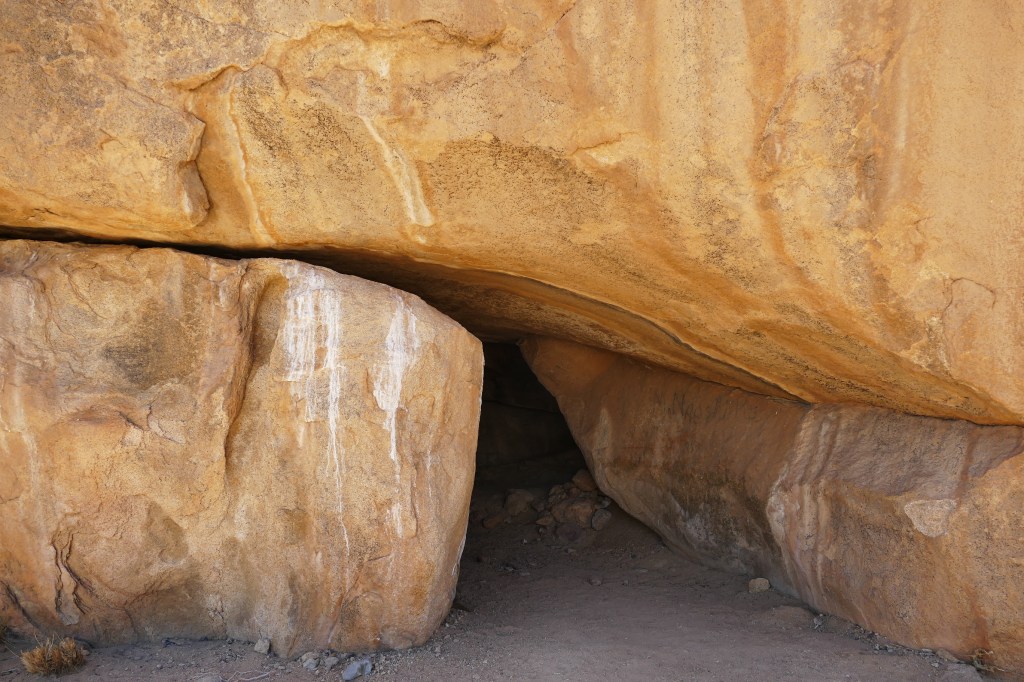
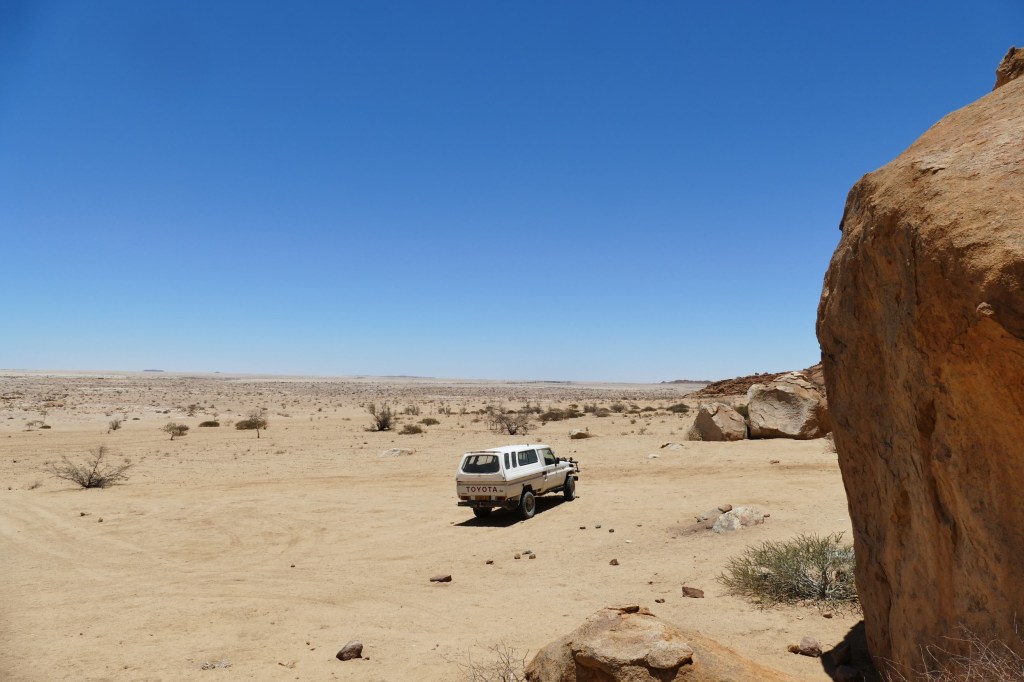
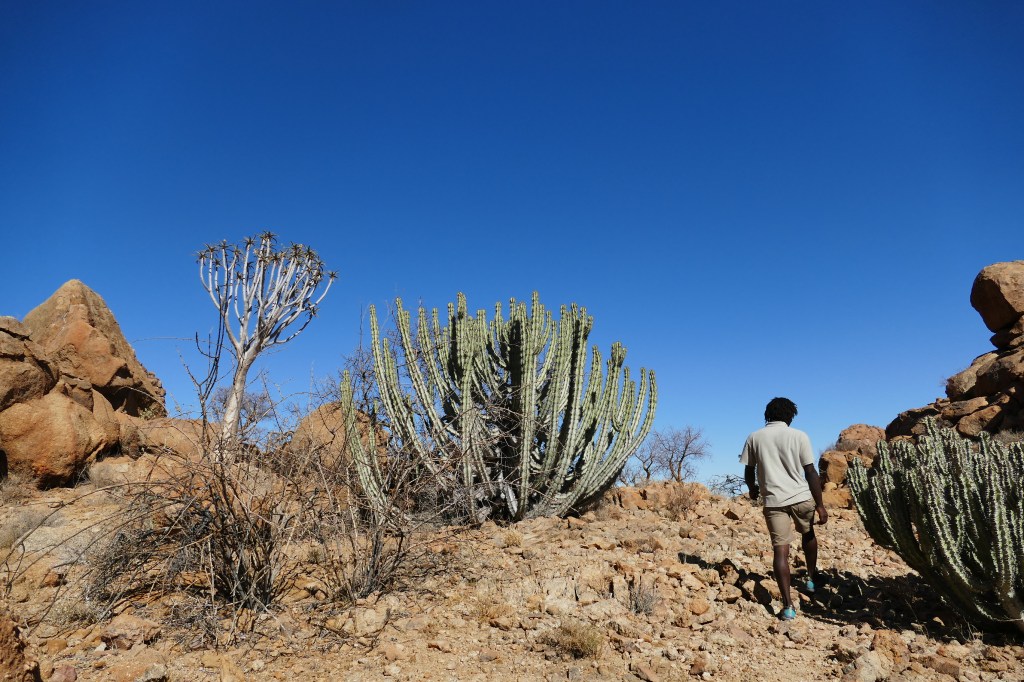
It was a bit disappointing I must confess, but still I loved the landscape and view, and used the opportunity to have a closer look to this beautiful plant that I had seen before but never stopped for it, the Giftboom.
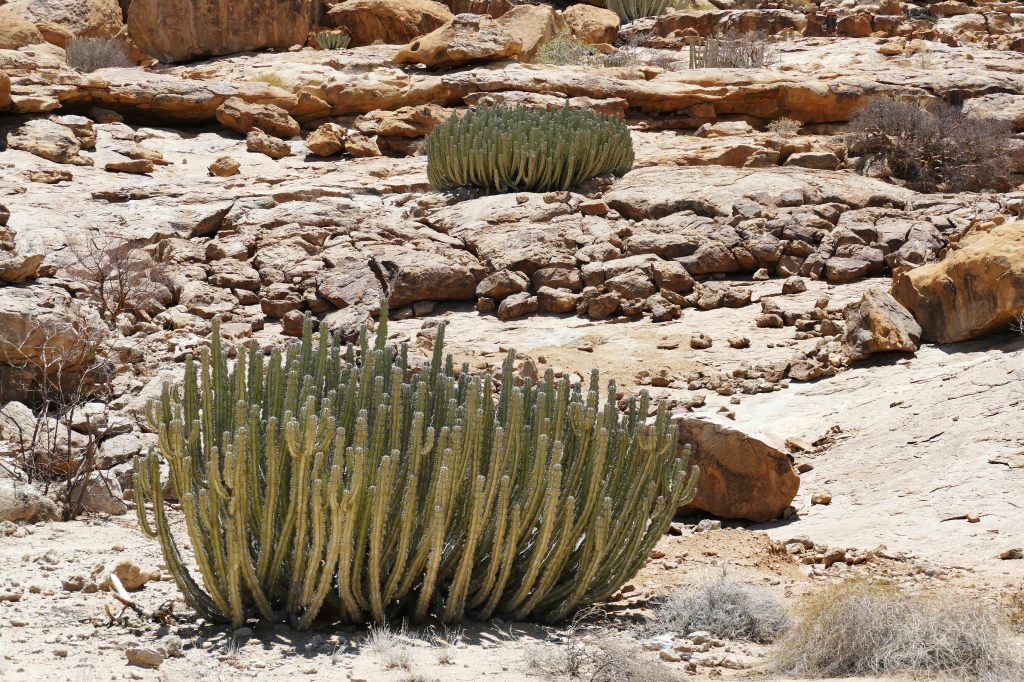
Euphorbia virosa is one of the most poionous euphorbia plants that occurs in Namibia and its milky sap therefore used as an arrow poison by the Bushmen/San. This is why it is also called ‘Gifboom’ in Afrikaans.
—————
SPITZKOPPE
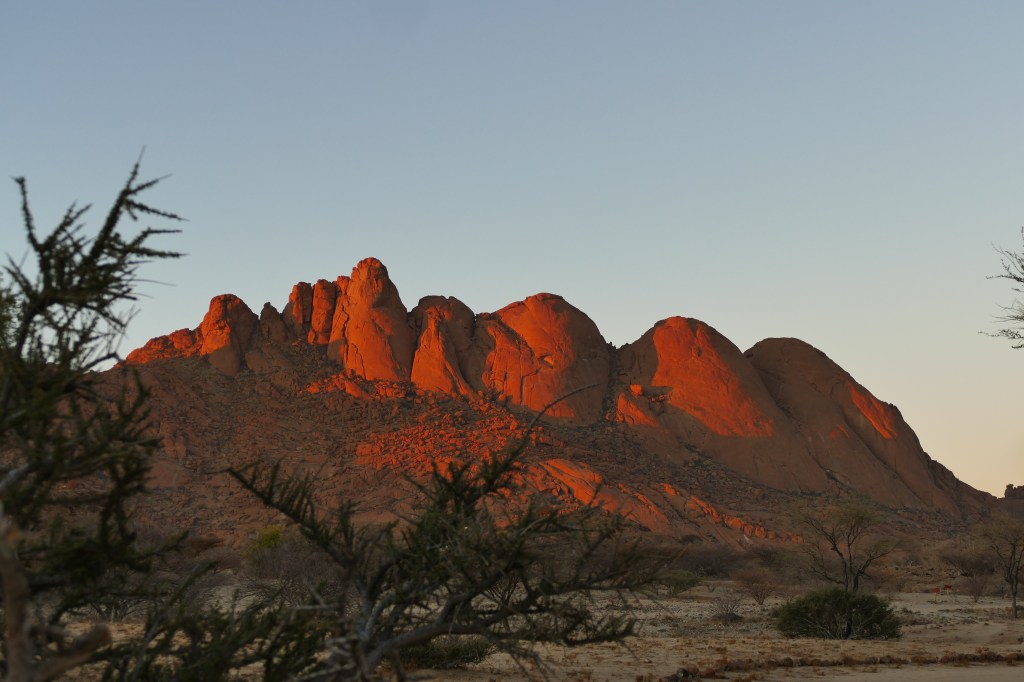
I arrived at Spitzkoppe in the afternoon. What a beautiful mountain formation! Protruding 700 meters from the flat landscape by which it is surrounded, it can´t be overseen from far away.
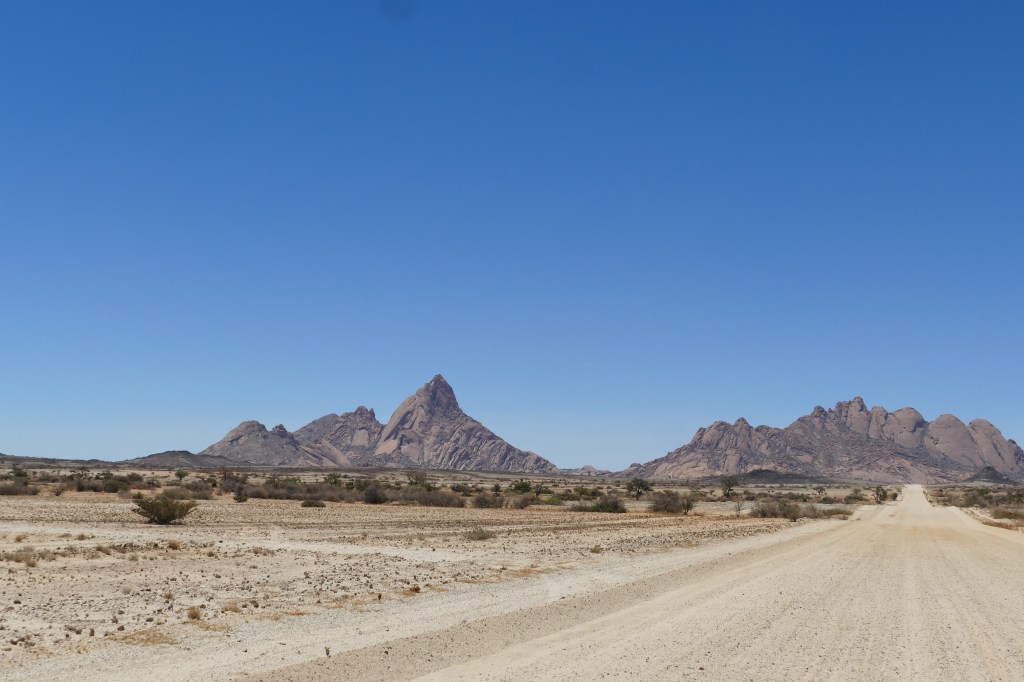
| The Spitzkoppe (from German for “pointed dome”; also referred to as Spitzkop, Groot Spitzkop, or the “Matterhorn of Namibia”) is a group of bald granite peaks or inselbergs located between Usakos and Swakopmund in the Namib desert of Namibia. The granite is more than 120 million years old and the highest outcrop rises about 1,728 metres (5,669 ft) above sea level. The peaks stand out dramatically from the flat surrounding plains. The highest peak is about 670 m above the floor of the desert below. A minor peak – the Little Spitzkoppe – lies nearby at an elevation of 1,584 m (5,197 ft). Other prominences stretch out into a range known as the Pontok Mountains, or “Black Spitzkoppe”. Many examples of Bushmen artwork can be seen painted on the rock in the Spitzkoppe area. The Spitzkoppe Mountains were also the filming location for 2001: A Space Odyssey in the “Dawn of Man” sequences. |
Still, it most impressed me in the evening, when the setting sun dips the granite mountain into a stunning dark red colouration.
Of course, you can´t visit the area without at least taking a walk to and on it, so I booked for a guided tour the next day, and it was worth it!
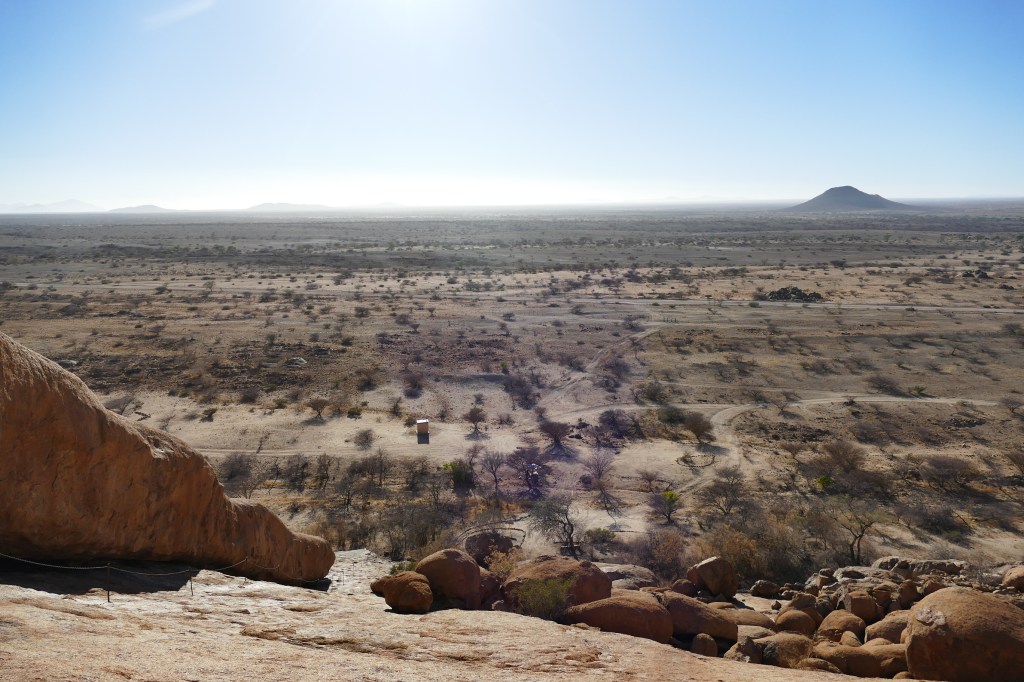
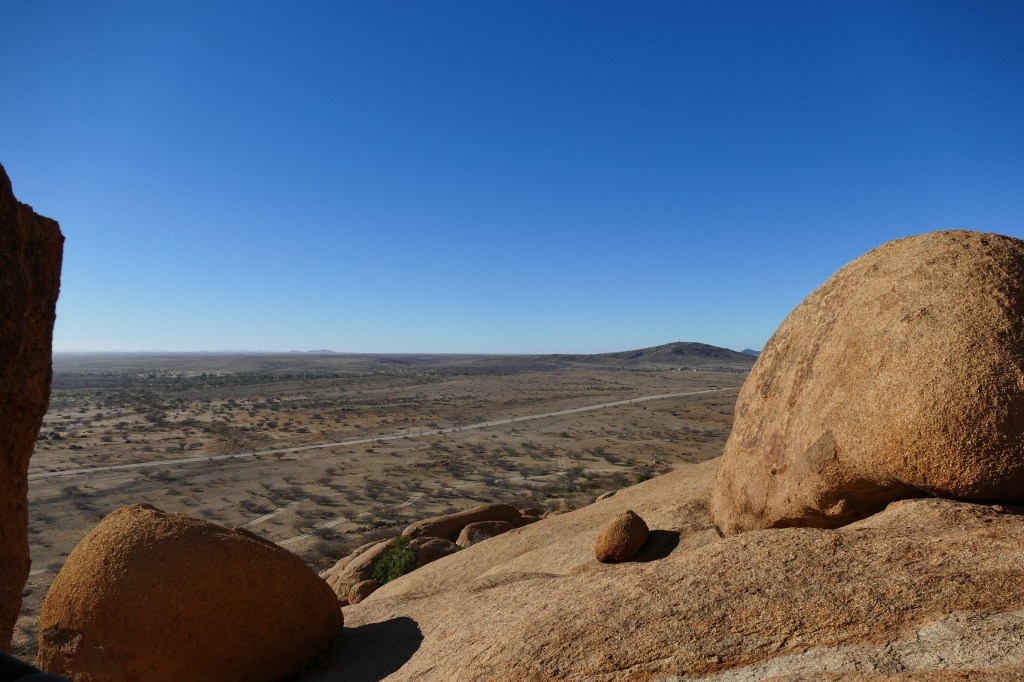
The first ascent seemed fair but only 10 minutes later I found myself sweaty and heavily breathing on top of the massive rock. Nevertheless, the view was worth it!! My guide thought the same and we had a quick stop to enjoy the world from above (I rather guess he heard me panting so thought to better give me a short break 😊).
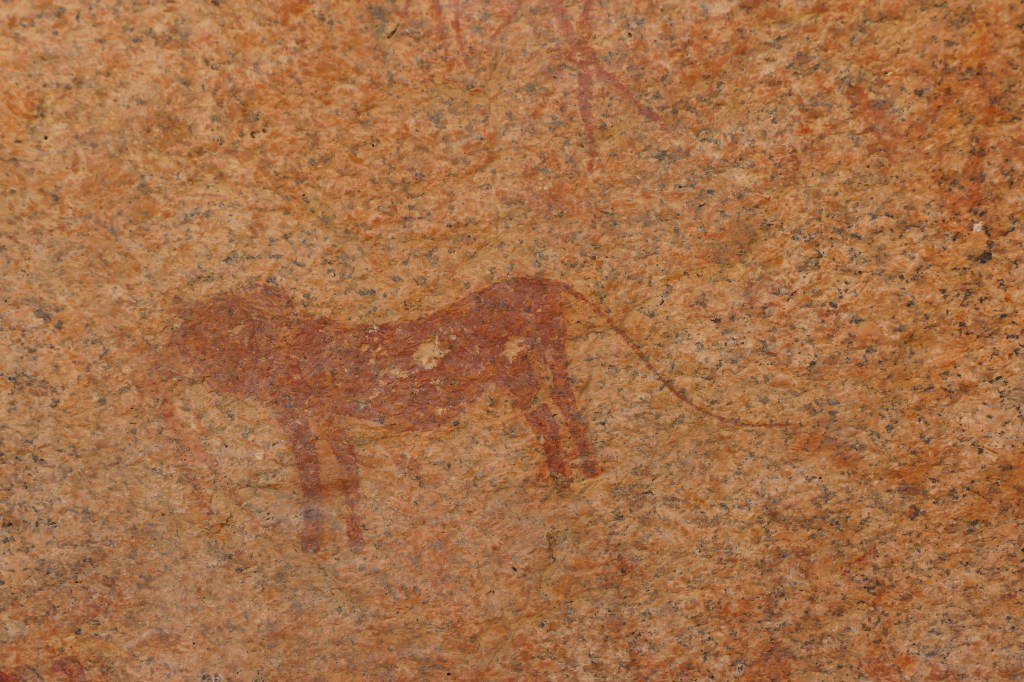
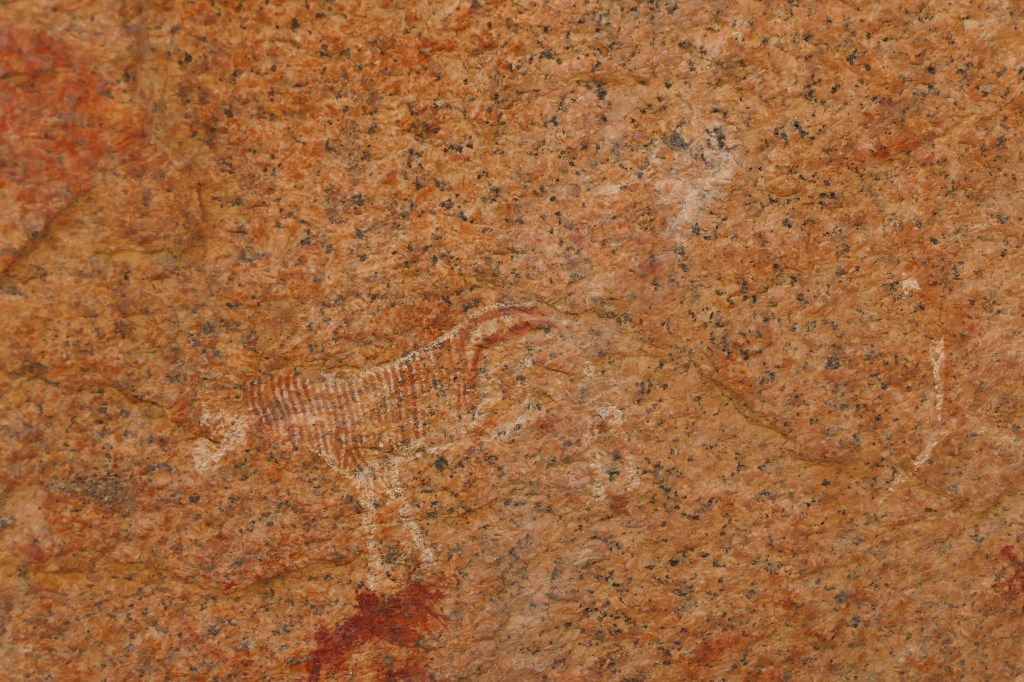
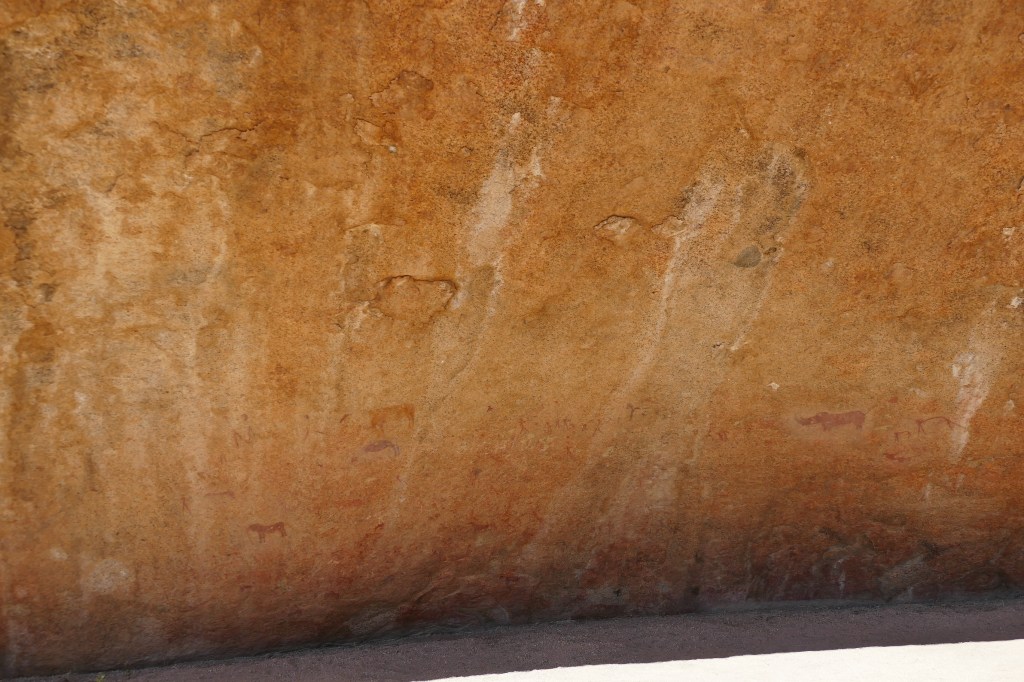
At the “Bushmen´s paradise” I was introduced to my first rock paintings and was amazed by the information I got.
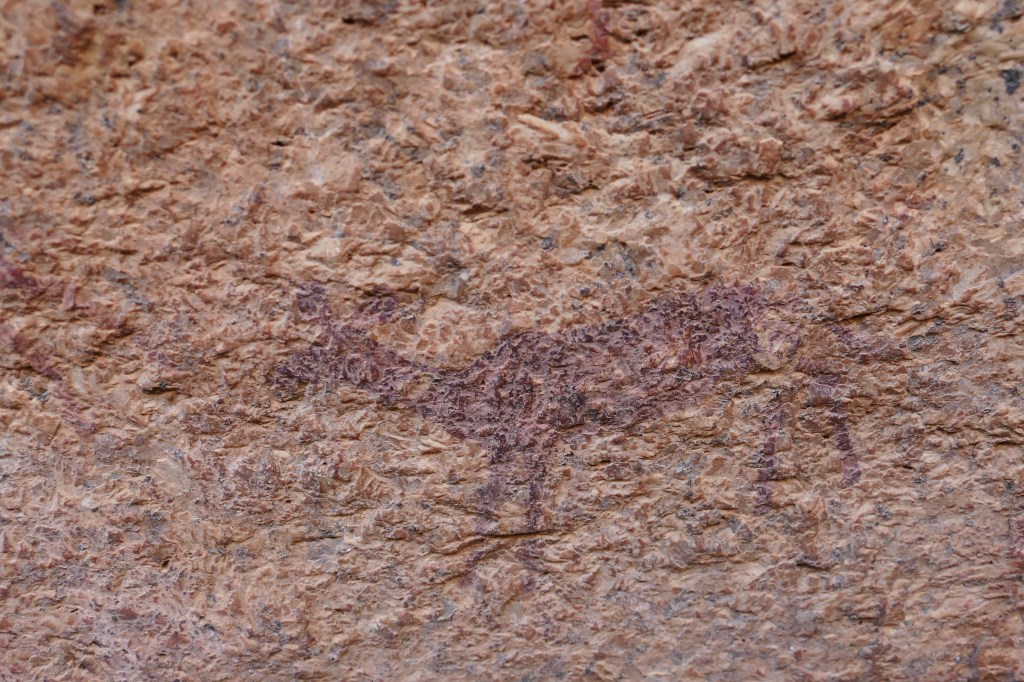
Some of the paintings date back 2000 to 4000 years and they were an important communication tool for the bushmen. Wherever they lived, they left their stories behind on the rocks of their shelter. The paintings inform others about the animals that lived here, but also if they left and where they went to. It is very similar to today´s road or road advertisments signs, only that you first have to find the signs (the bushmen lived in small caves that were not so obvious on the mountains).
The bushmen only used few colours and simple shapes, but how impressive is it that even today we kind of understand the message?We easily can identify the animals, the illustrated situations, and even the symbolic. That to me is the power of simplicity. We can use so many words today, but still we often do not understand each other whereas with a few symbols people in the past were able to transmit all information they needed to survive. Now the use of smileys and other symbols makes much more sense to me 😂
Two images I saw left me with a lot of questions: the images of the black and white rhino.
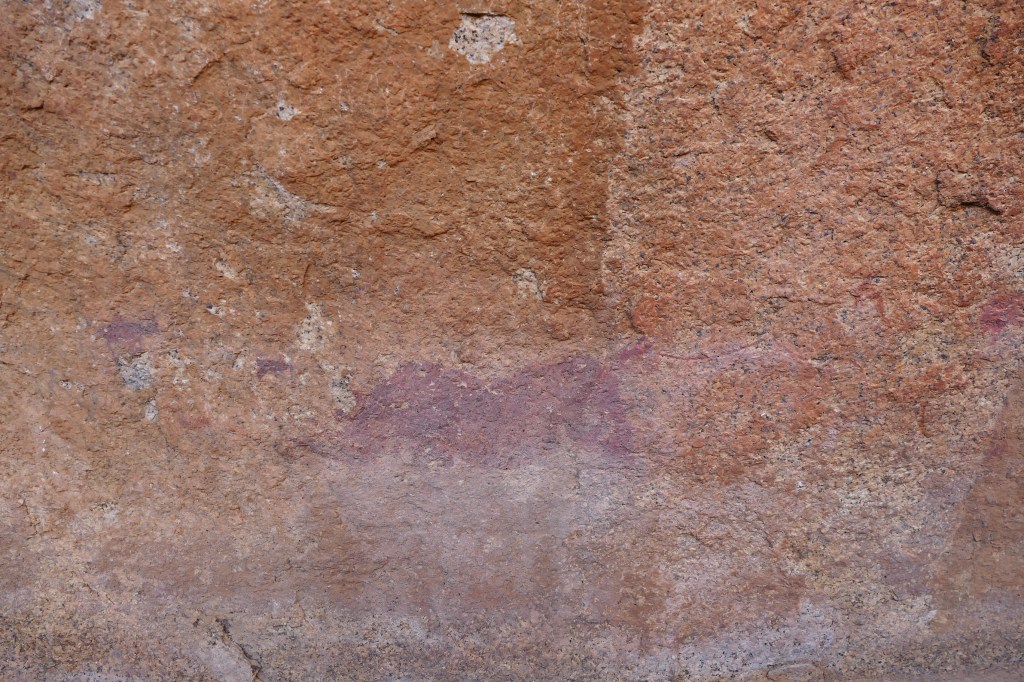
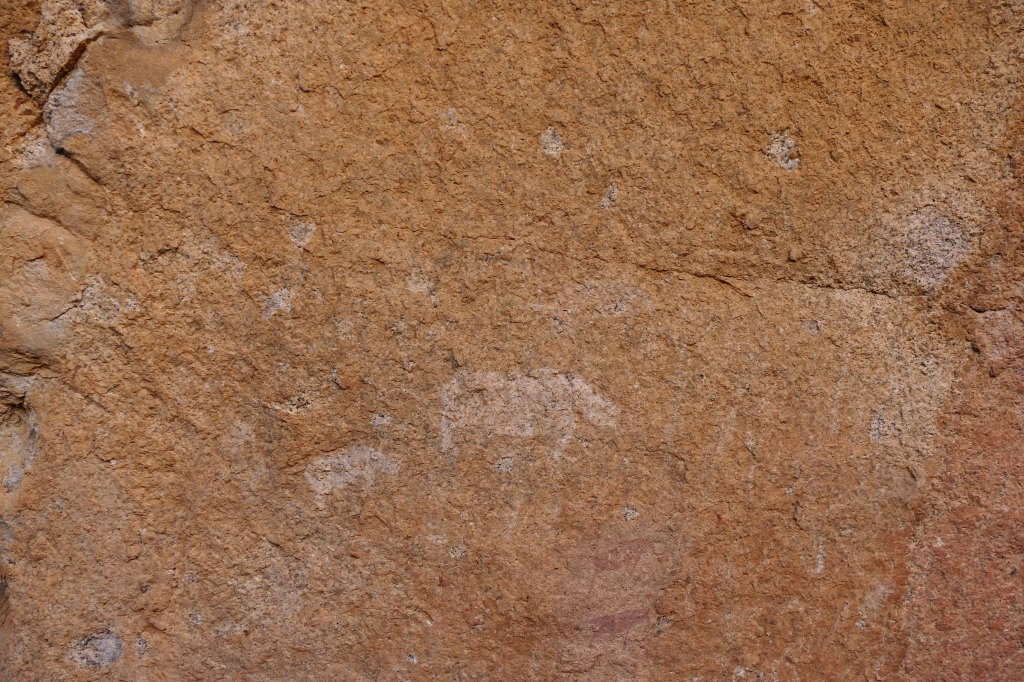
Although both rhino species are grey, even today we still refer to the “Black rhino” (Hook-lipped rhino) and “White rhino” (Square-lipped rhino). It is said that years (if not decades) ago the latter was referred to as rhino with a “wijde lip” and that apperantly the English mistook the word “wijde” (meaning wide) for “white”. If you ever go on a safari, I assume that this is the story you will definitely hear about the rhinos.
But now I stumble across these paintings that were created prior to any European colonialization, and already a differentiation is made between the two rhino species …
I tried to discuss this with my knowledgable guide but due to a language issue I was not able to formulate my question in a way he could understand so I gave up after the fourth time. I still have not solved my question but the most logical answer to me seems the fact that White rhinos are usually diurnal whereas the Black rhinos are active at night so obviously the nocturnal animal would appear darker than its grey relative during sunshine. But if that is the correct hypothesis?
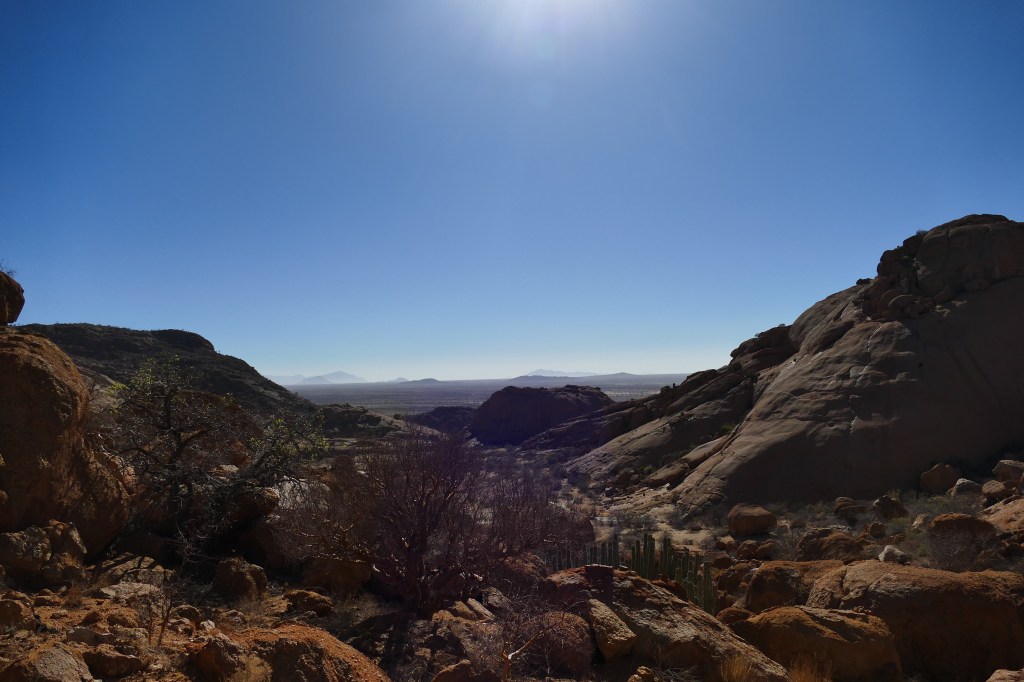
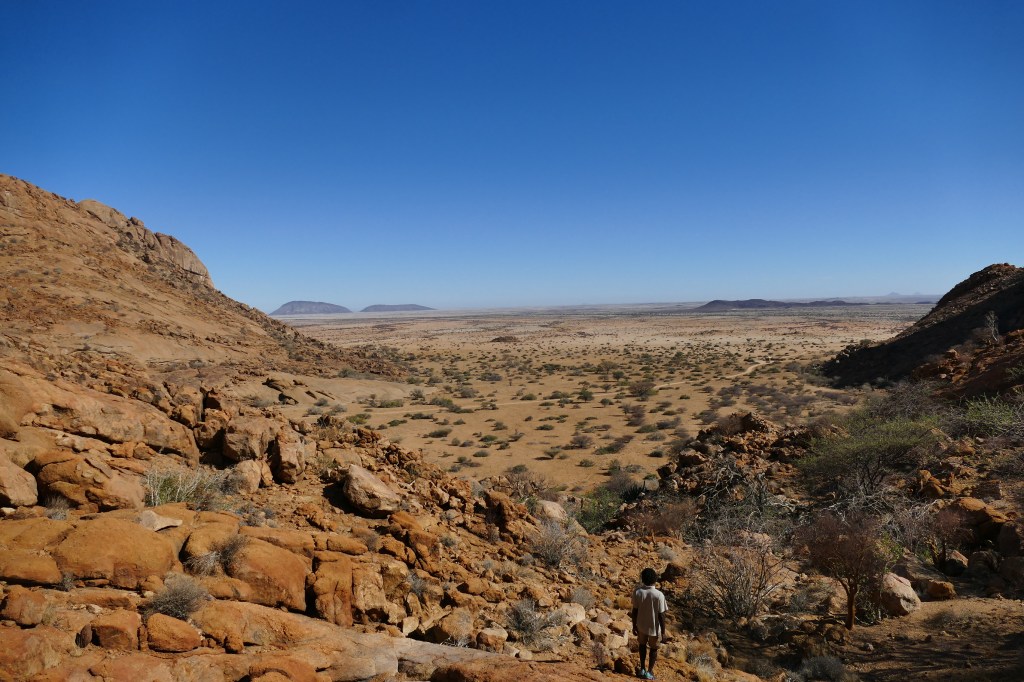
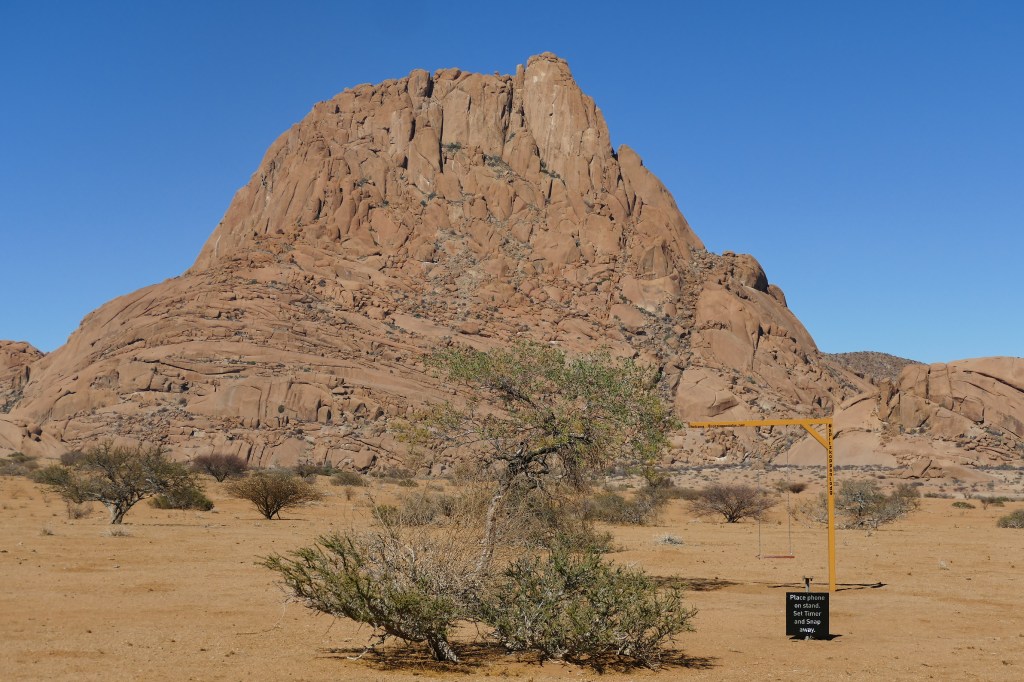
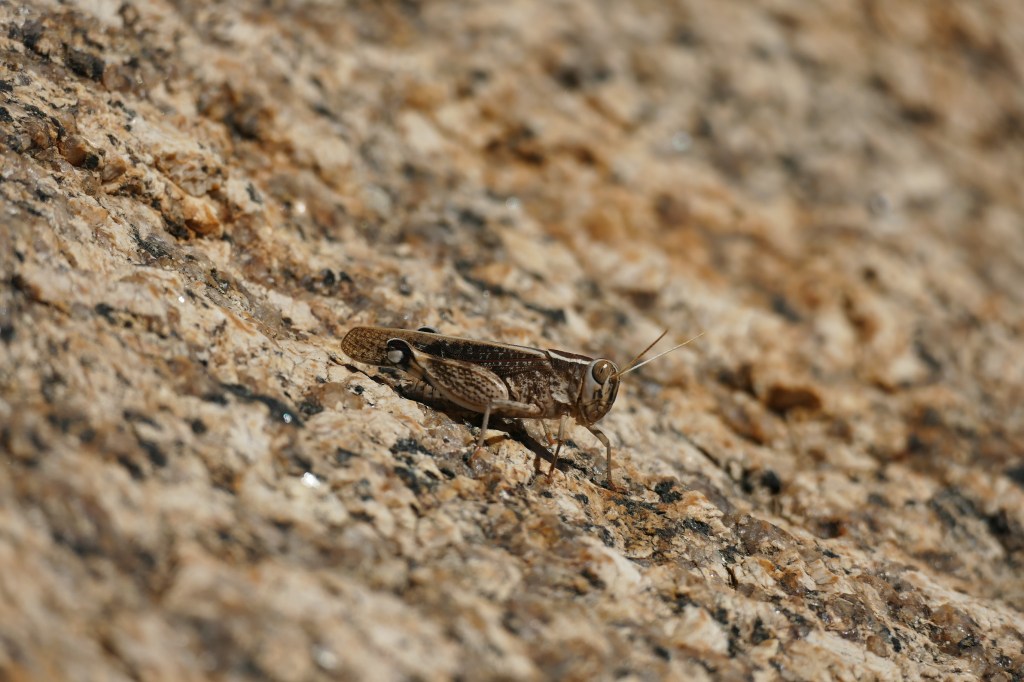
Camping at Spitzkoppe
The Spitzkoppe and Pontok mountains are within a protected area and can be visited for a small entrance fee.
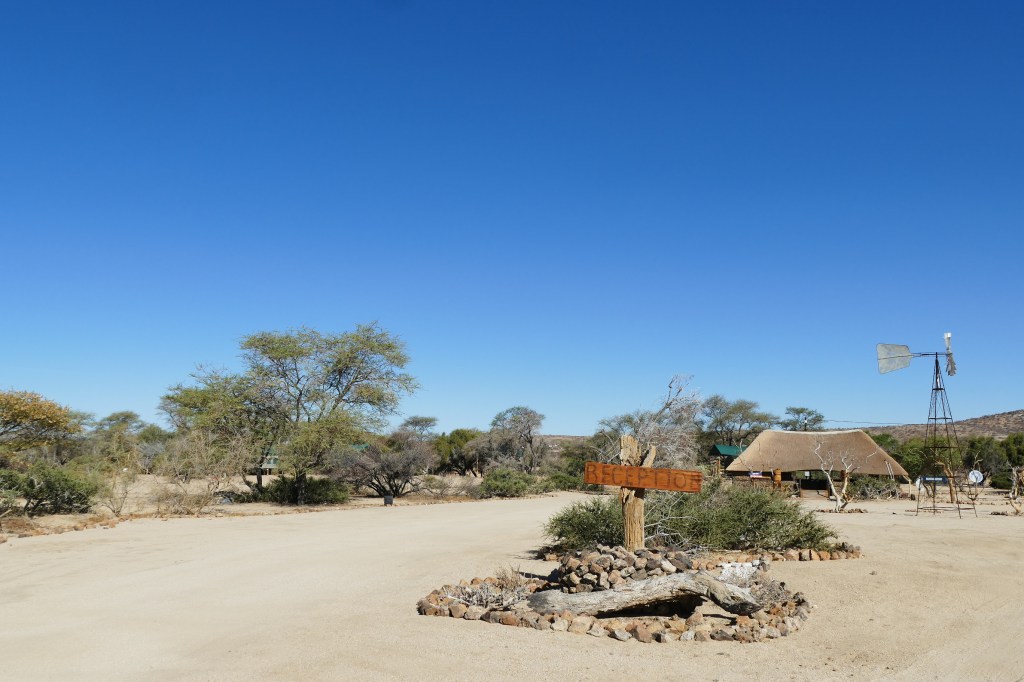
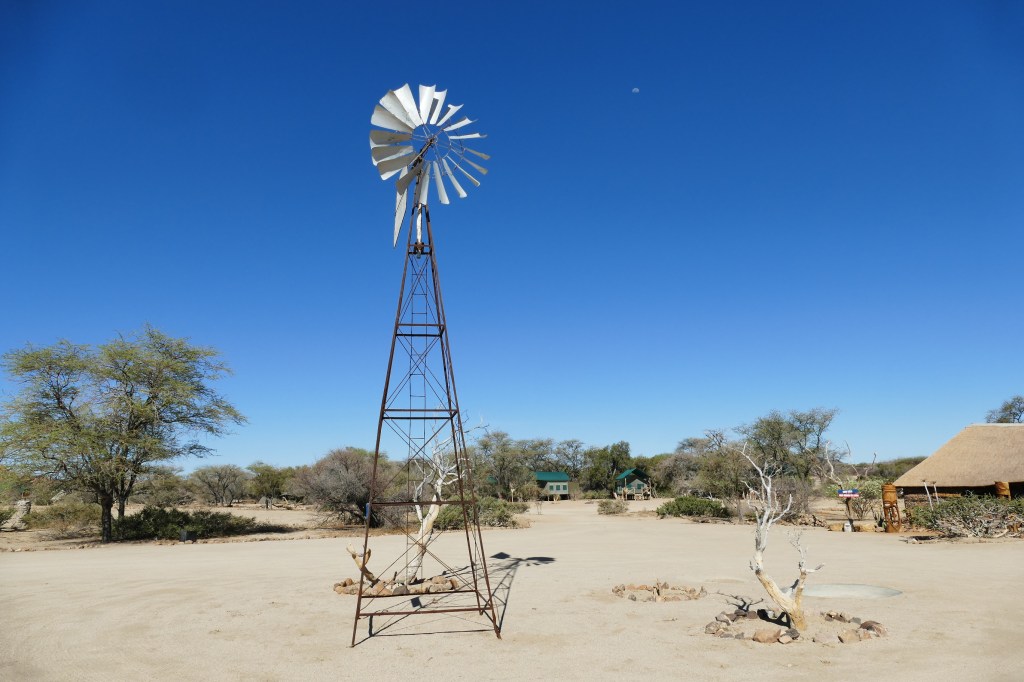
I identified two campsites, one within the “Spitzkoppe park” (you need to pay the entry fee for the protected area plus campsite fee) and one just outside. I visited both and must say that the one within (Spitzkoppe Community Camp) is more remote and offers a pure outdoor experience, but still my decision fell on the other one (Spitzkoppe Tented Camp and Campsite), that is about 1 km beeline away. I simply found the staff extremely friendly and appreciated a toilet right beside the camp spot. The location is pretty nice, quiet, and clean.
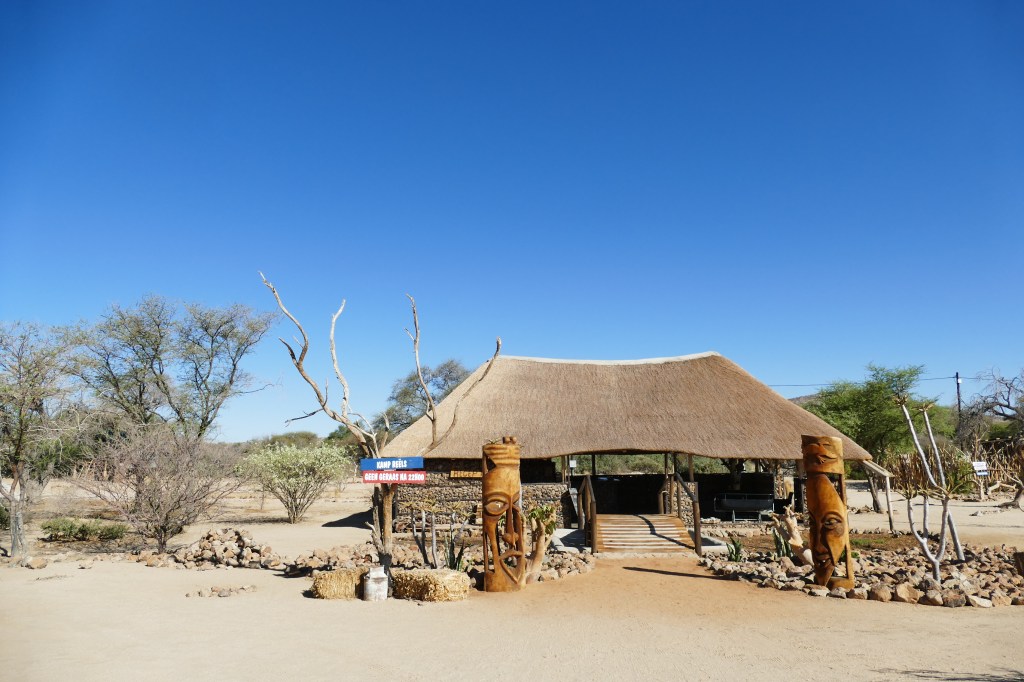
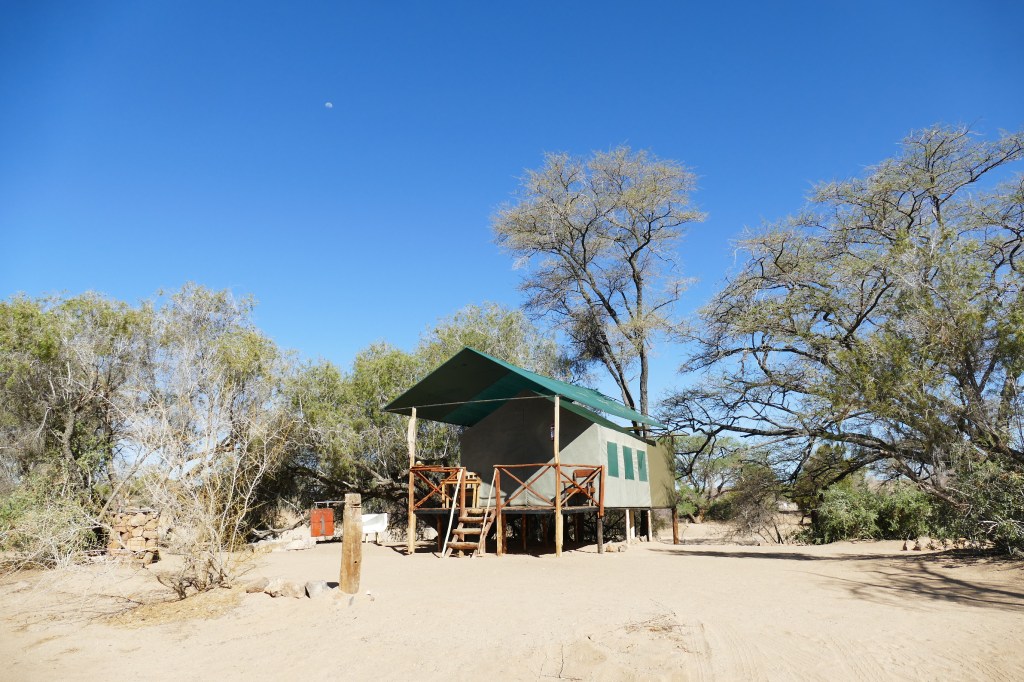
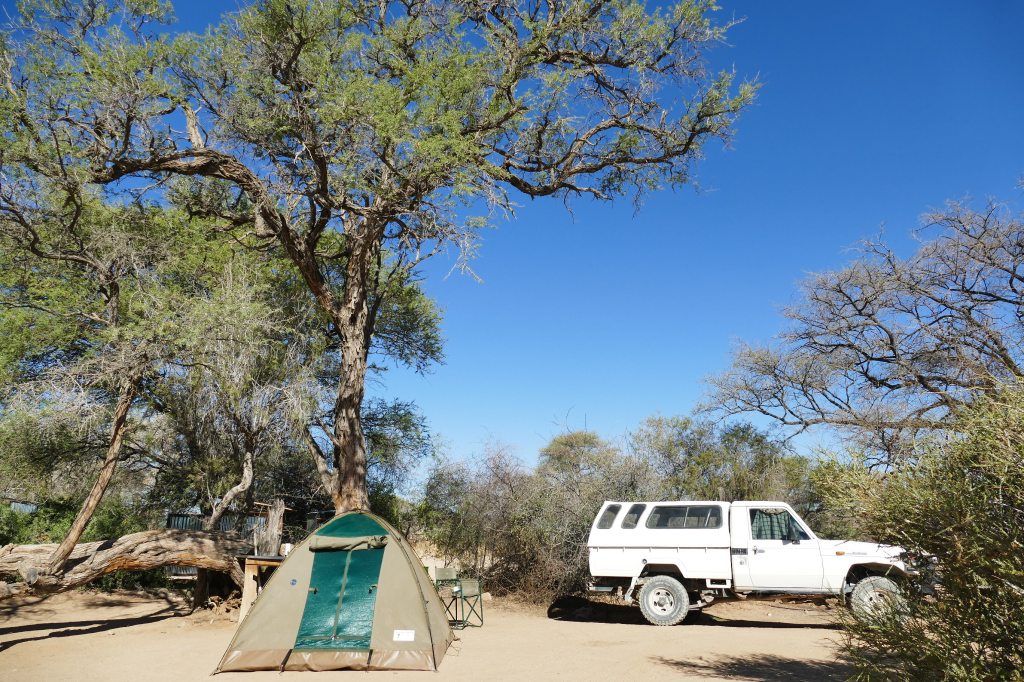
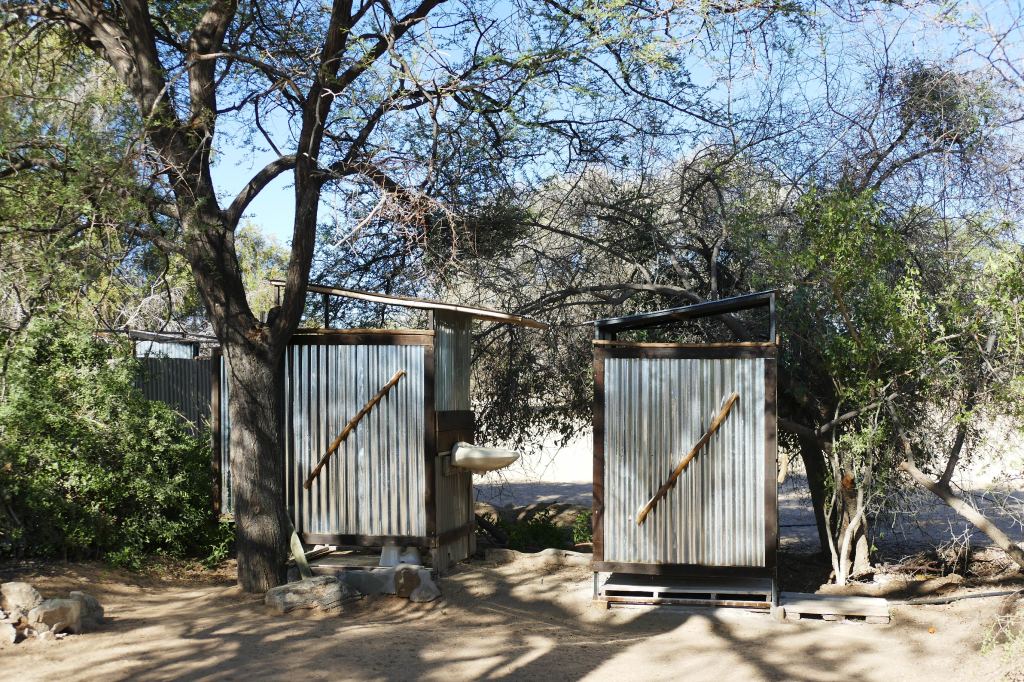
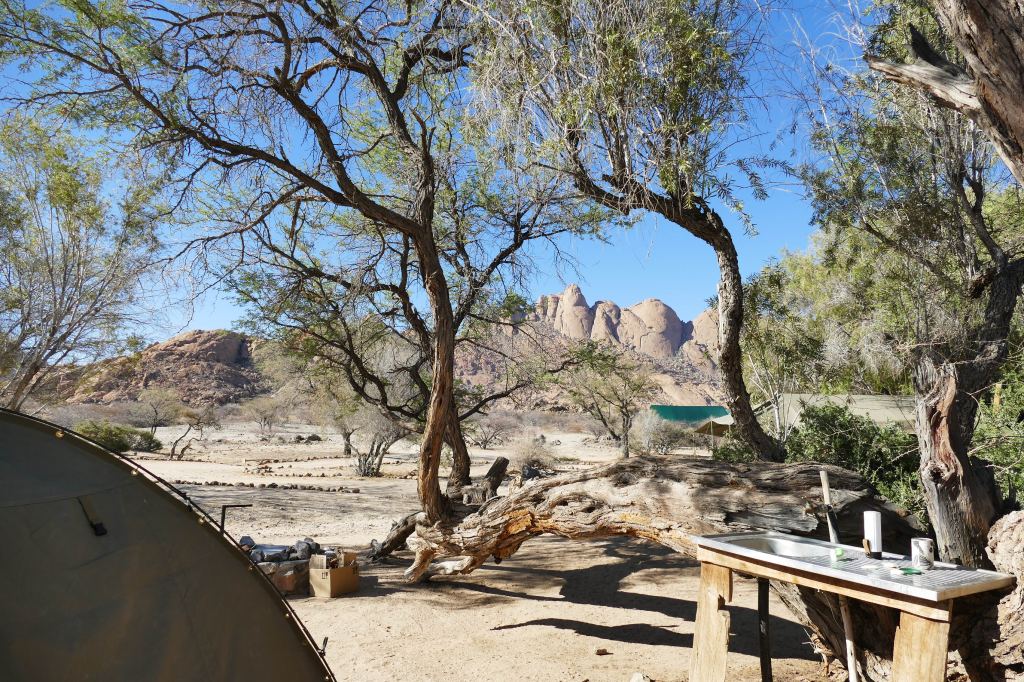
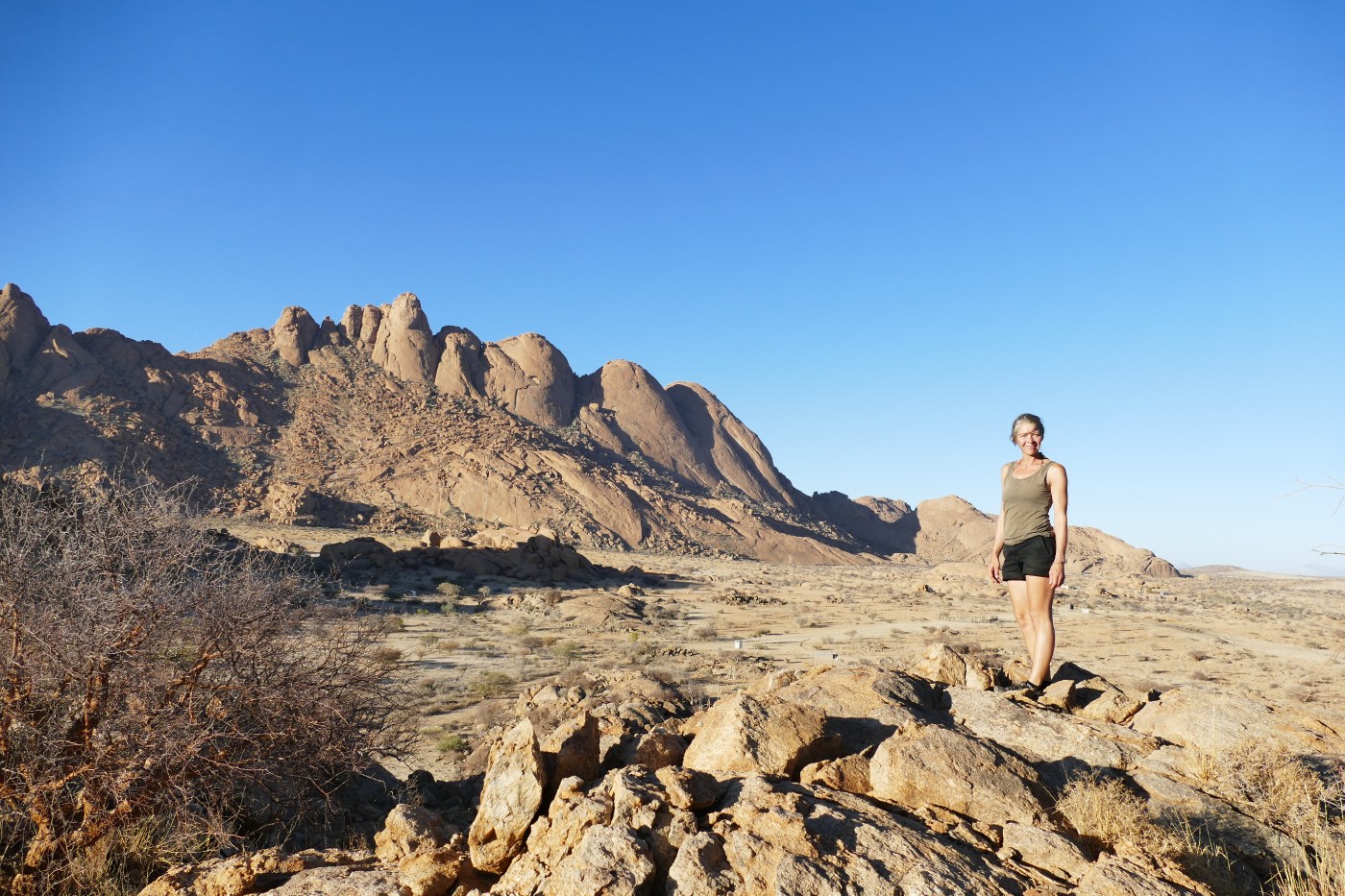
I especially enjoyed the view on the mountain that is exceptionally beautiful from a little hill about a 15 minutes walk away.
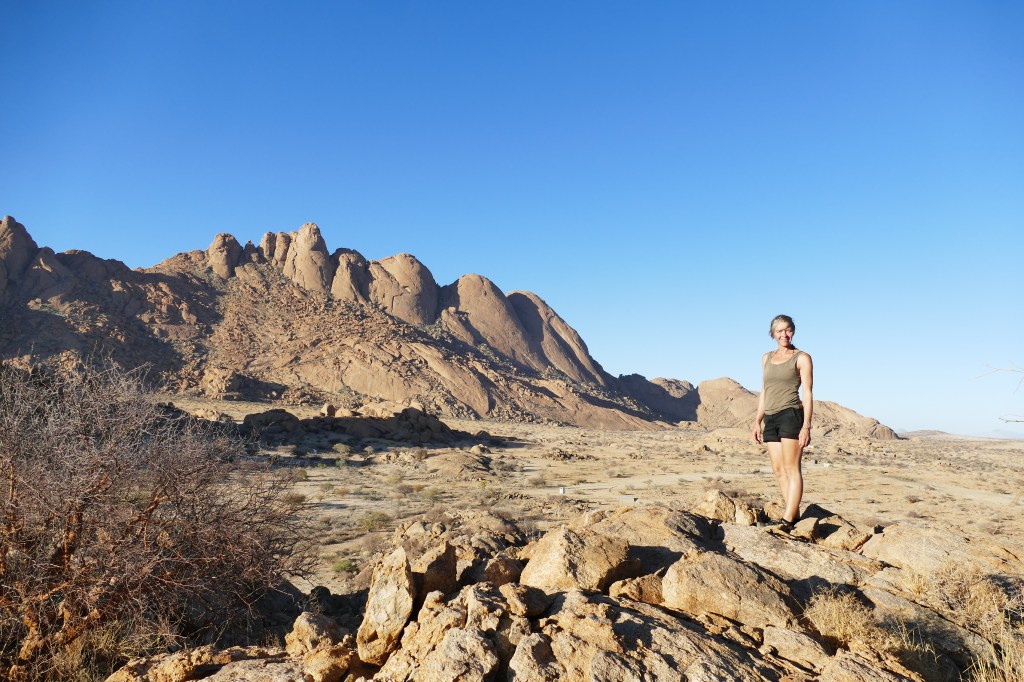
I liked this place a lot, not only for the view, and I decided to extend my stay. Being on the road nearly every day is tiring and I felt the need to slow down a bit and this was just the right place! Instead of rushing through Namibia, it was time to appreciate the moment, to reorganize myself, do the washing, read a book, or see what small creature I share the environment with 🙂
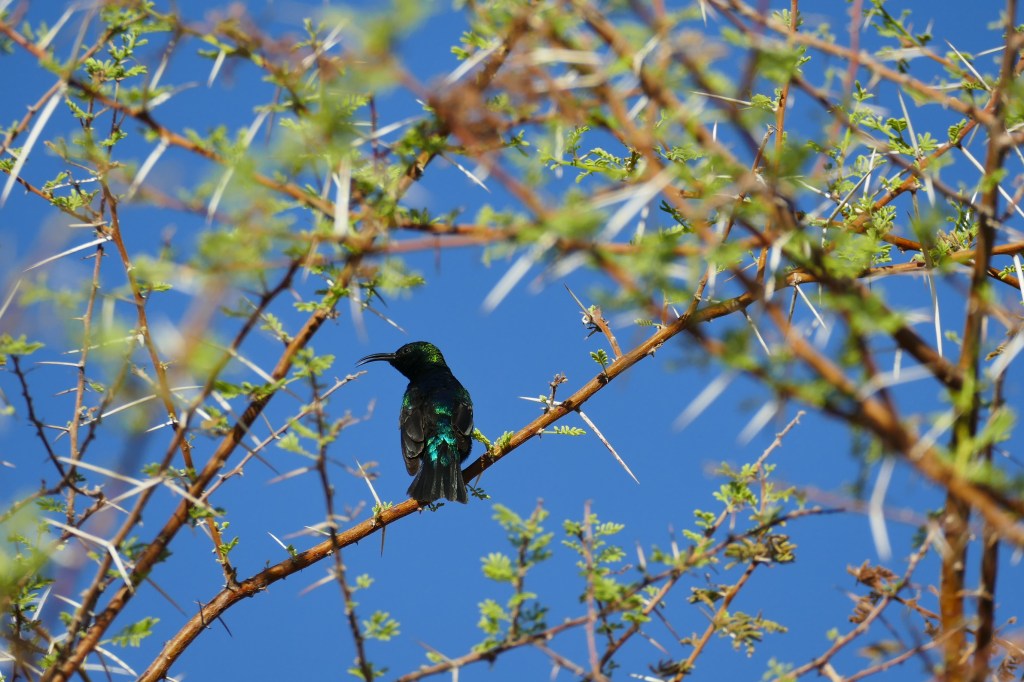
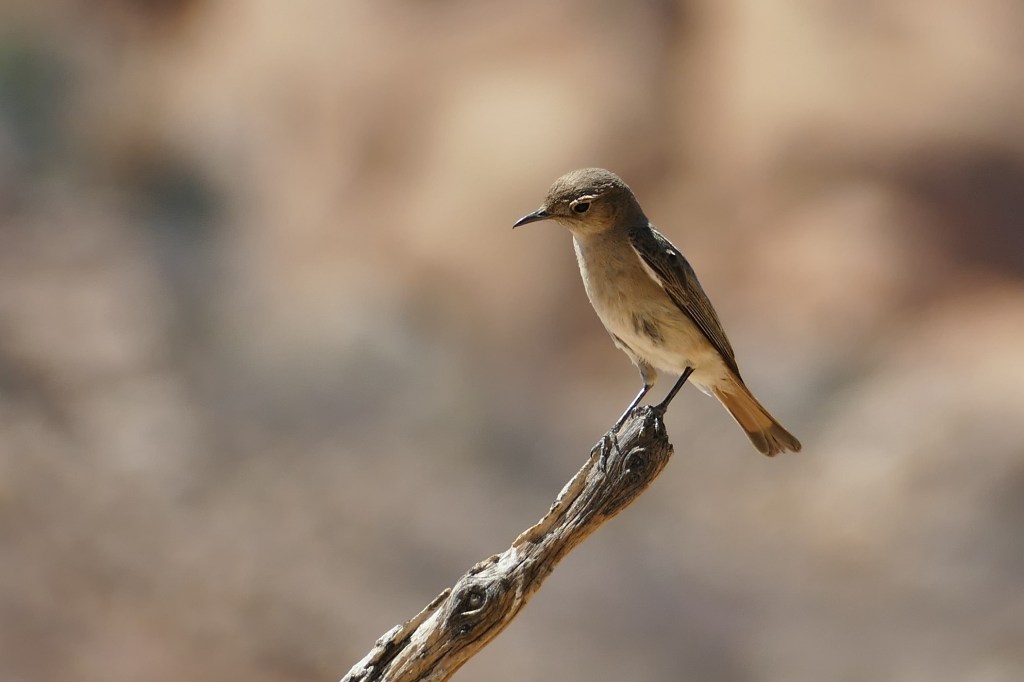
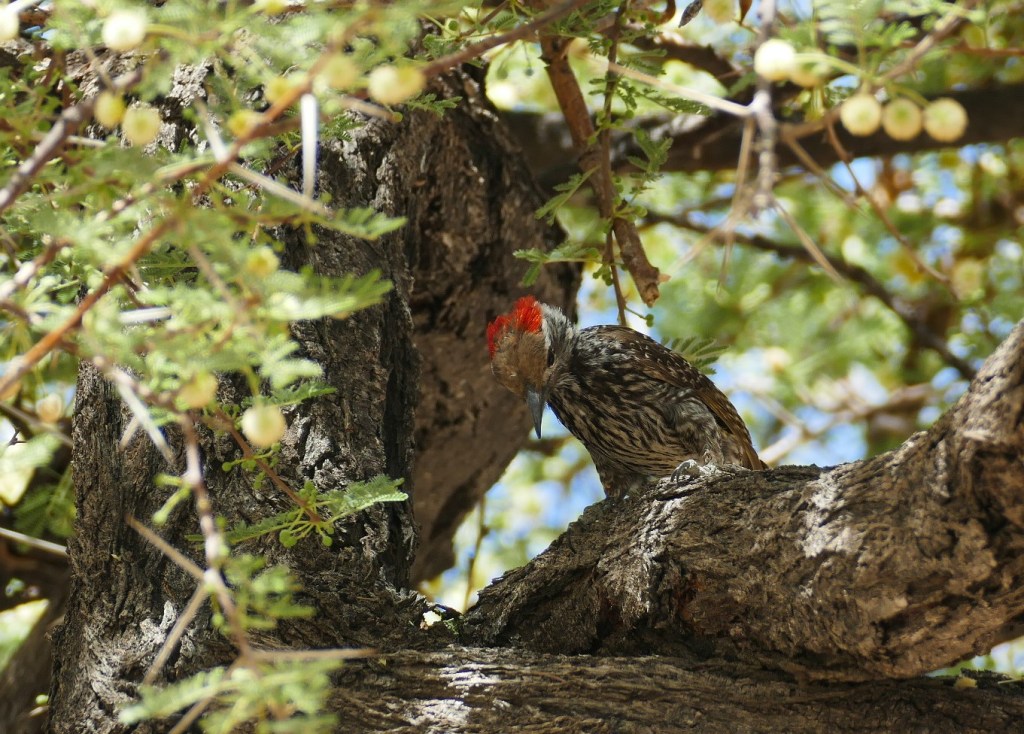
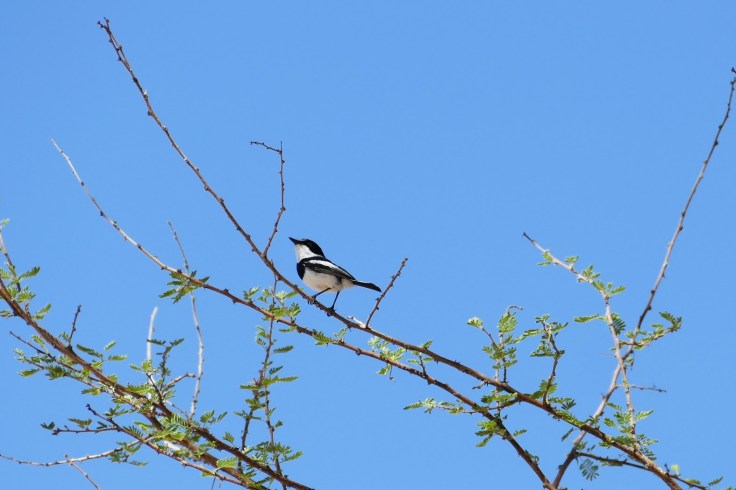
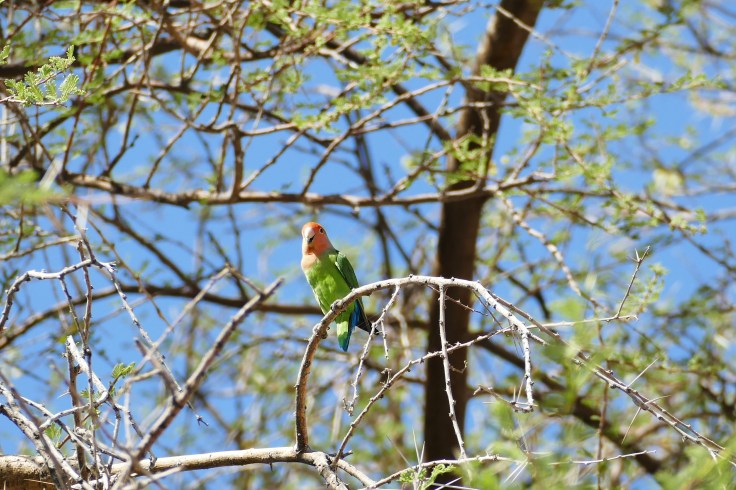
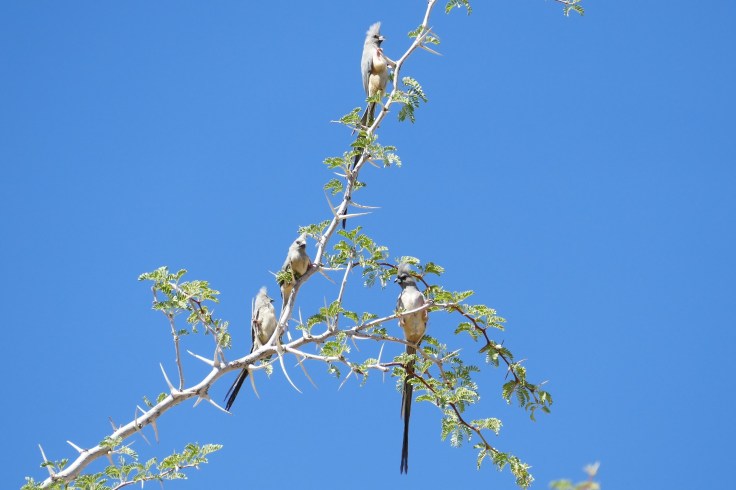
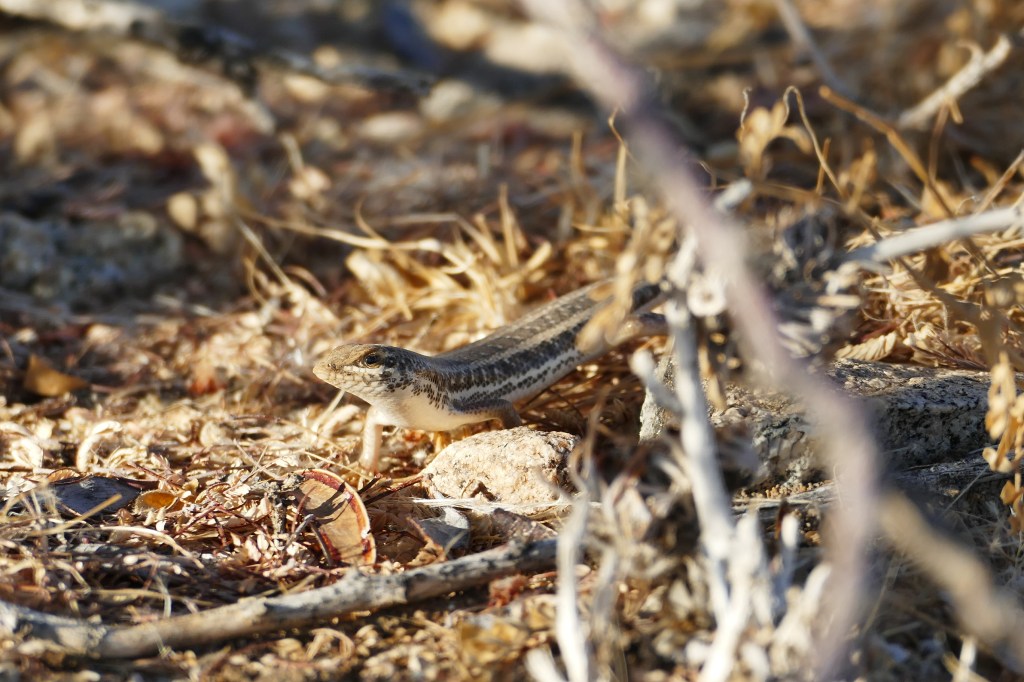
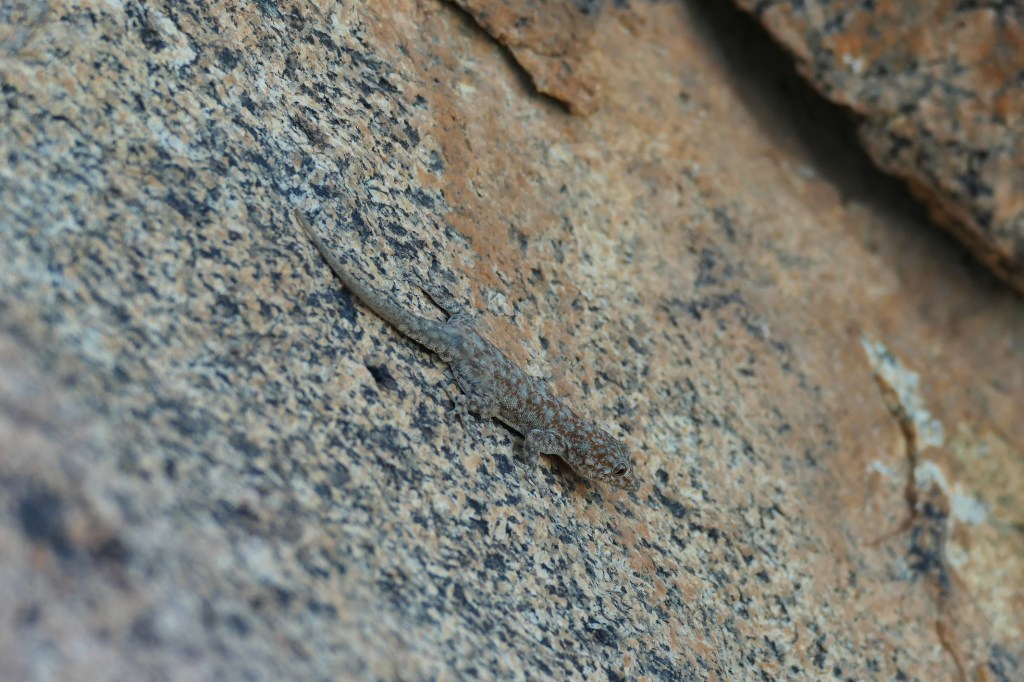
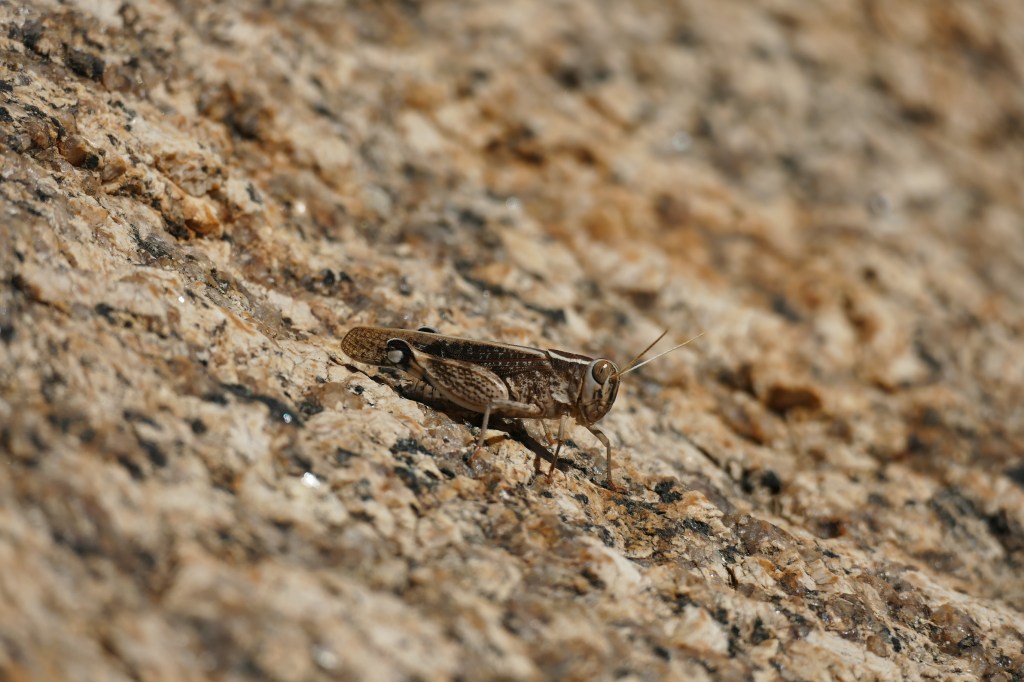
Spitzkoppe is definitely a must and I can only recommend it! Although there is no real village closeby (“just” a local community), it provides plenty options for quality time and activities. It is perfect for walks, hikes or to explore the local wildlife in form of plants and (mostly small) animals. Or just sit around, enjoy the view, the birdlife, or the pool. And of course it allows for an excursion into the past, into a time where a hunter-and-gather culture had adapted to the harsh environment and developed a form of communication that is hard to imagine for us that we are spoiled with mobile phones, internet, and all kind of social media platforms.
Good night,
Sininho
 Sininho´s World
You must be logged in to post a comment.