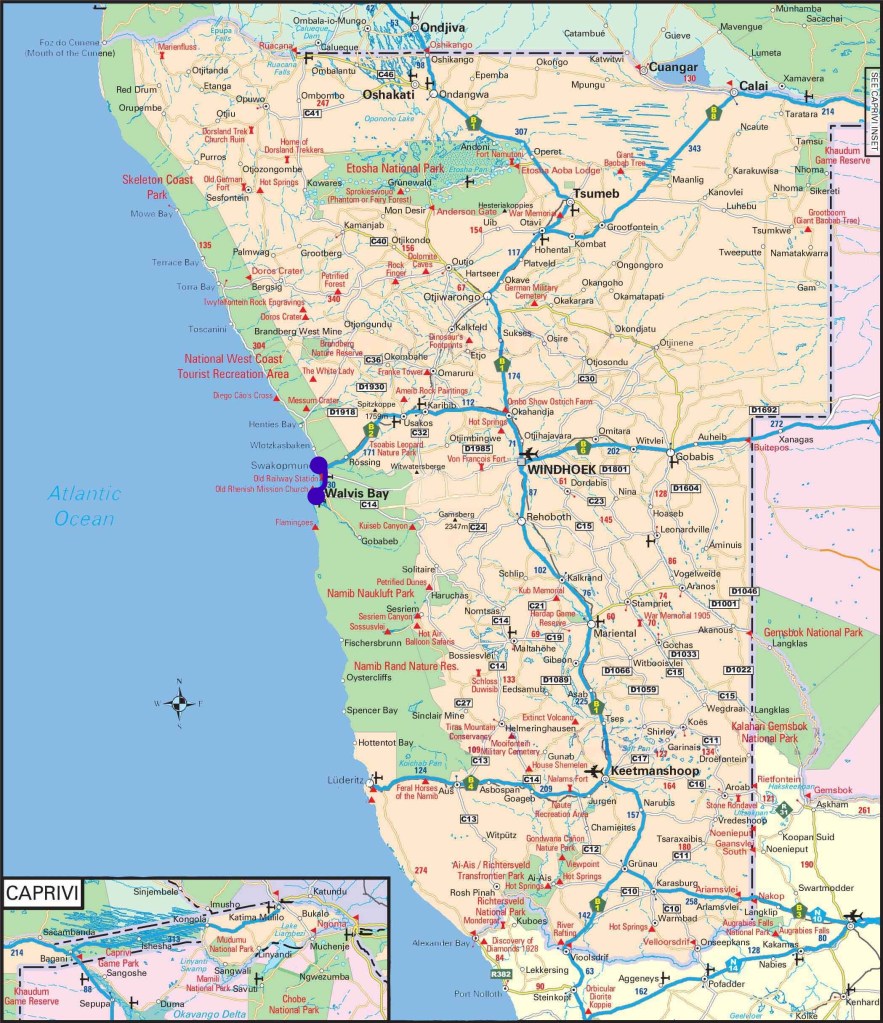
It´s just a 30 km drive to Swakopmund, or “Swakop”, from Walvis bay and at arrival, I immediately notice, it is cold and windy, but in fact I am happy about this change!
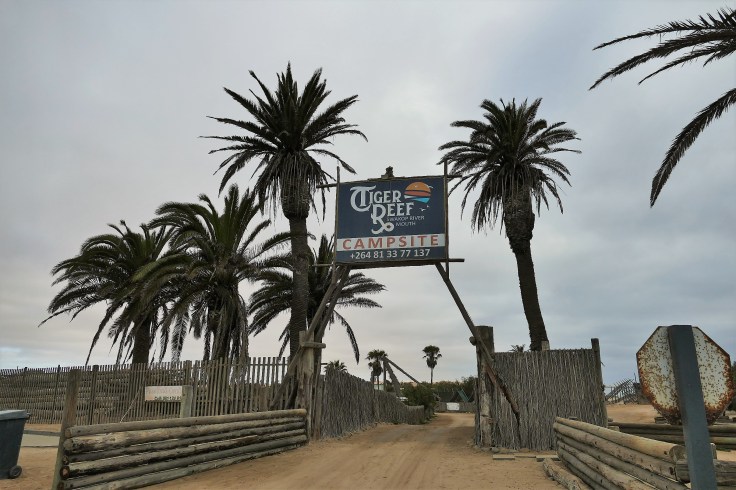
The village offers plenty options for either campsites or rooms, but I eventually decided to stay at the “Tiger Reef Campsite”, at the far end of town and just 100 m from the beach. The place is not too fancy and really nothing special, but it is clean and has a wind-protected and roofed spot for the tent which with the chilly breeze is a blessing.
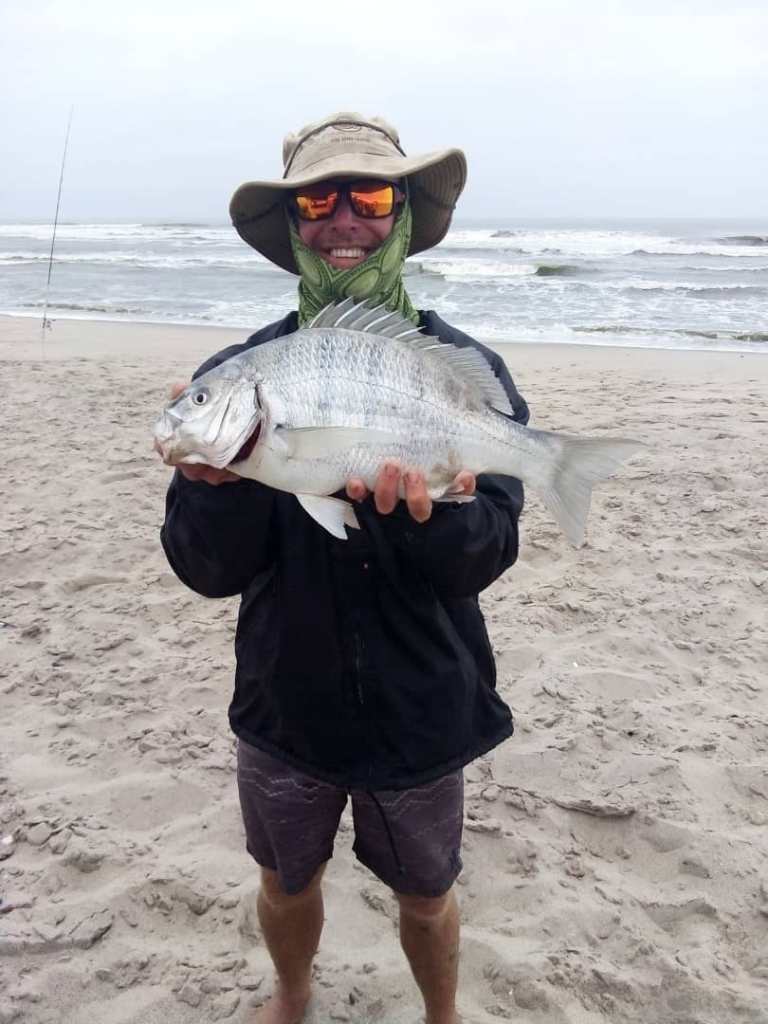
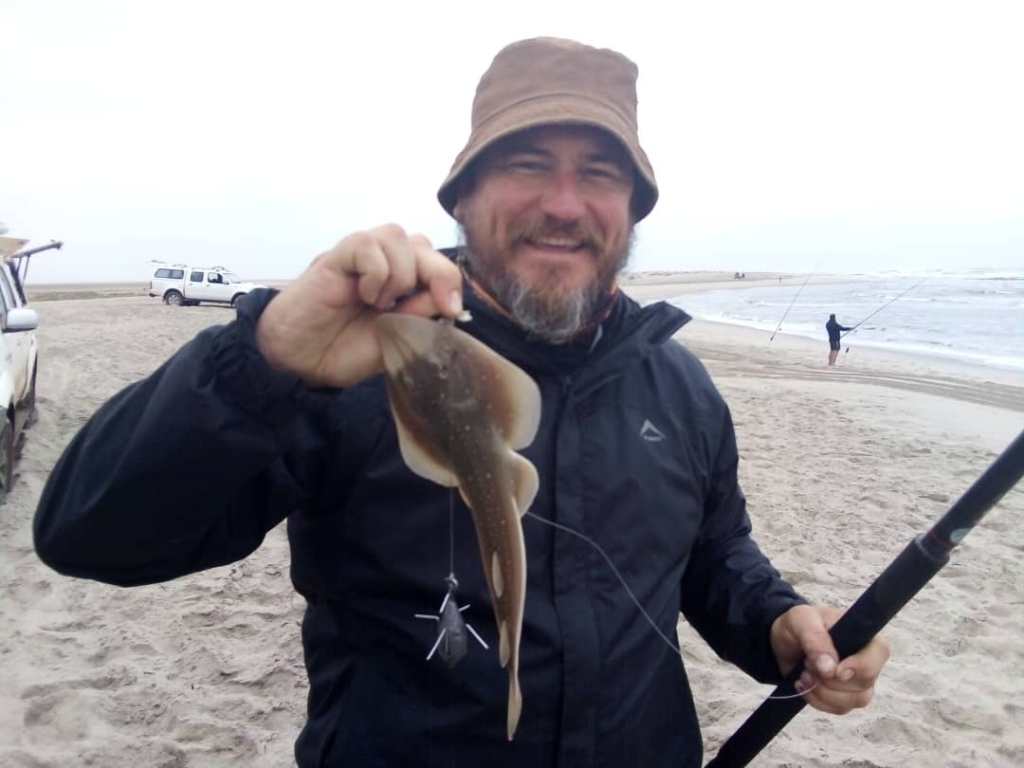
After putting up my tent, I just quickly went for a beach walk and to get a feeling for the village, but a proper “city tour” was rather planned for another time. When I came back, my only neighbours invited me for a beer and it was actually nice to have some company and on top get some travelling recommendations. These guys came all the way from the Western Cape in South Africa for vacation and fishing, but stranded here due to a motorbike break-down. Promised to bring some fish for a fish-curry but then got stuck again with the locals and I was left only with the pictures of dinner 😂
Swakopmund
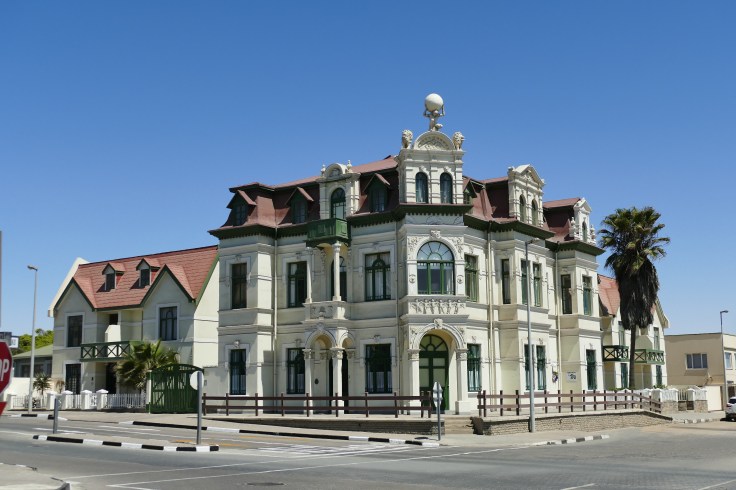
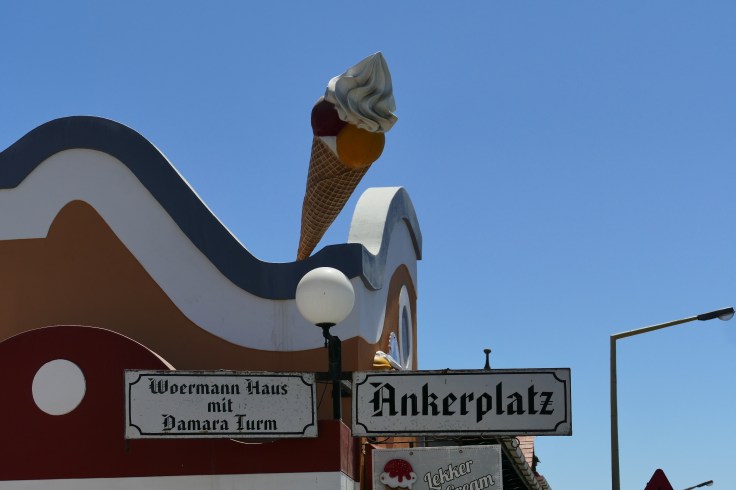
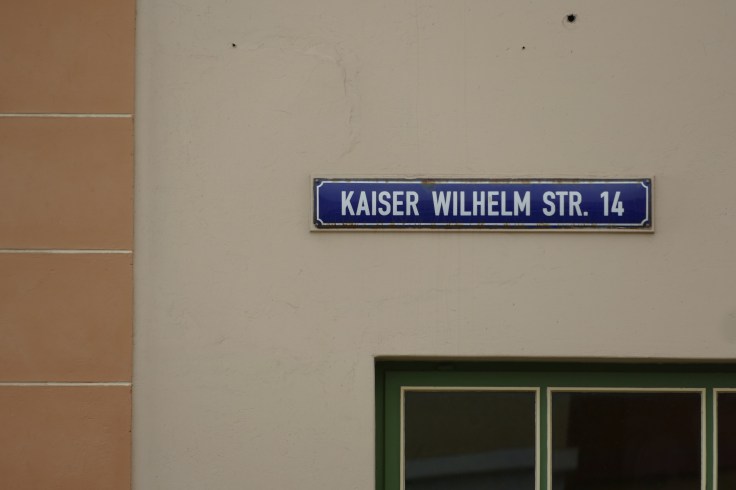
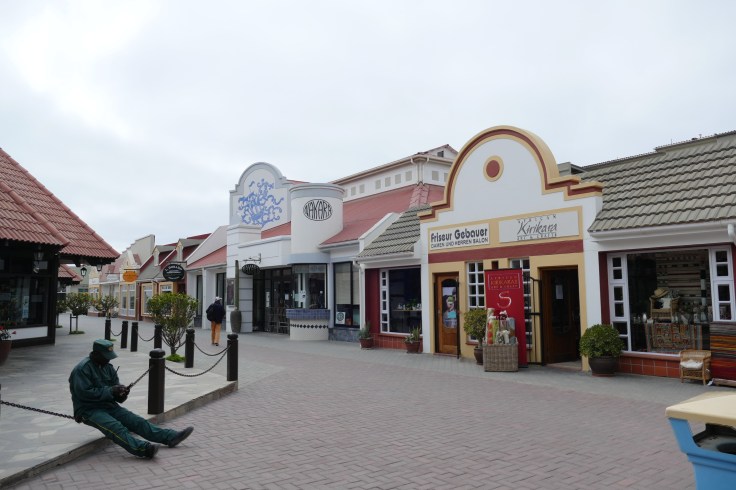
Somebody recently said that if I want to travel Namibia, I must see Swakopmund, because it is such a German village! “Interesting”, I thought, “why should I go to Africa to see a German-styled village?”. But anyway, I assume that this exactly is the experience!
Swakopmund was founded in 1892 as main harbour for the Imperial German colony.
Where does the name come from? Nama word ”Tsoakhaub” can be translated as ”excrement opening” which was offensive but accurate description of the waters of Swakop River at the time of coming down in floods carrying masses of mud, sand, pieces of vegetation and animal corpses. The masses of dirty and muddy water were emptied into the ocean and the indigenous name described it very well. The Nama name was changed to ”Swachaub” and with proclamation of Swakopmund as independent district in 1896 the present way of writing came into use. (Source: https://www.namibweb.com)
Swakop is the country’s biggest coastal town and a popular holiday destination for both tourists and locals that are looking to escape the heat of the interior or to have a little adventure like sand-boarding or -skiing, quad biking, parasailing, camel riding, and much more.
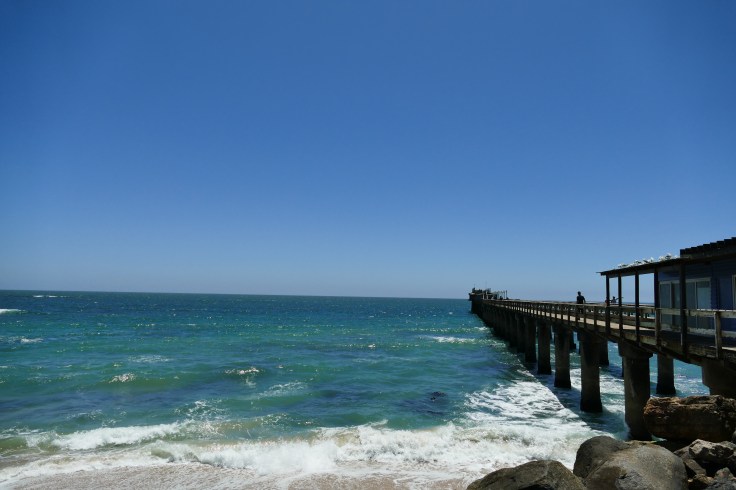
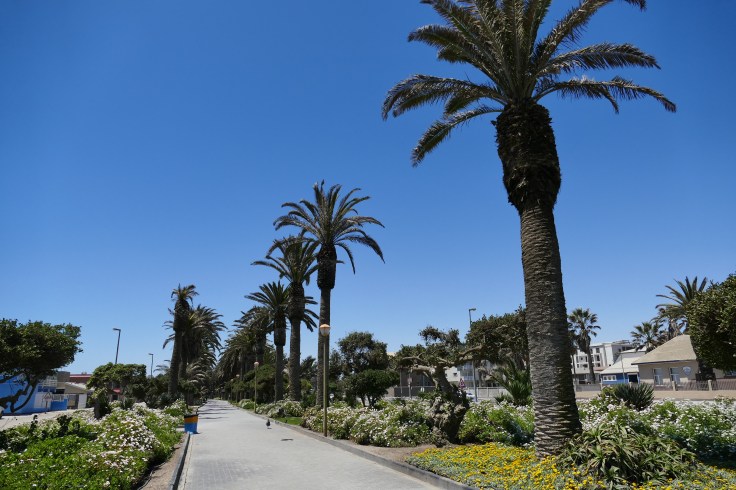
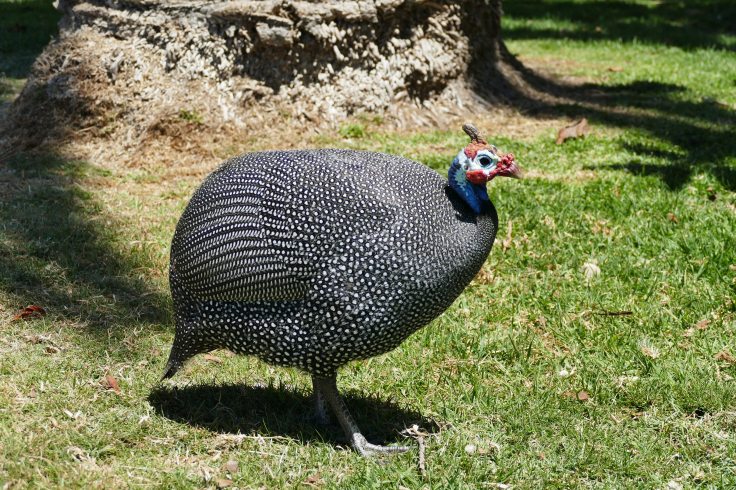
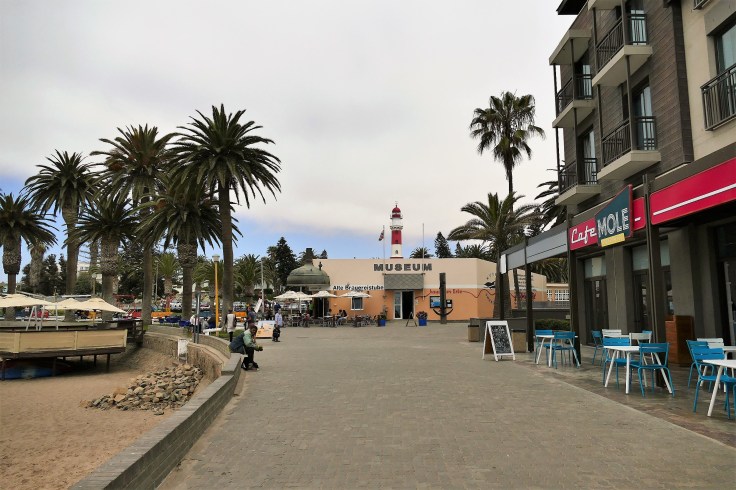
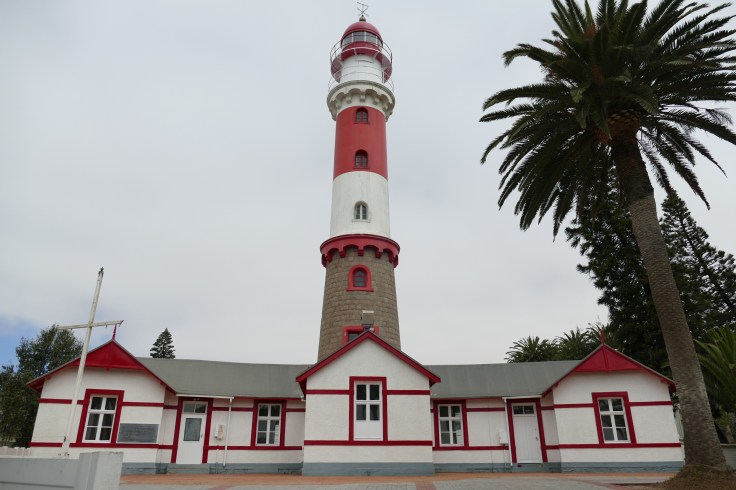
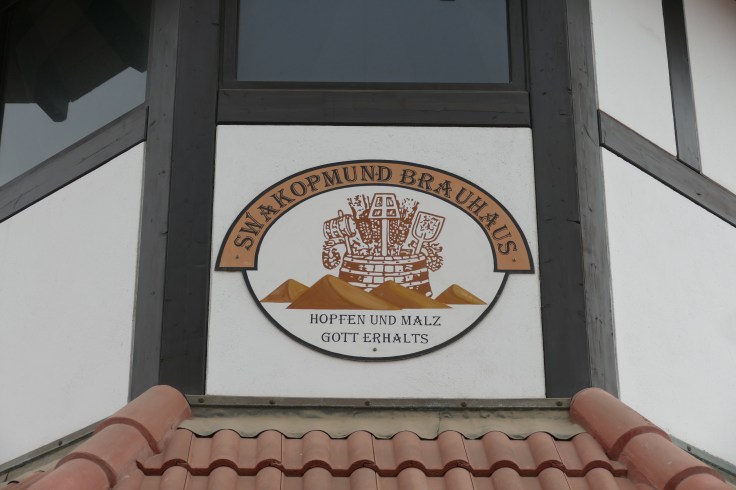
I start my tour right at the campsite, strolling along the beach towards the pier where the Jetty 1905 restaurant offers food and drinks with an amazing view. Then further to the mole, the light house and from there in the “city centre” where the German heritage can´t be overseen!
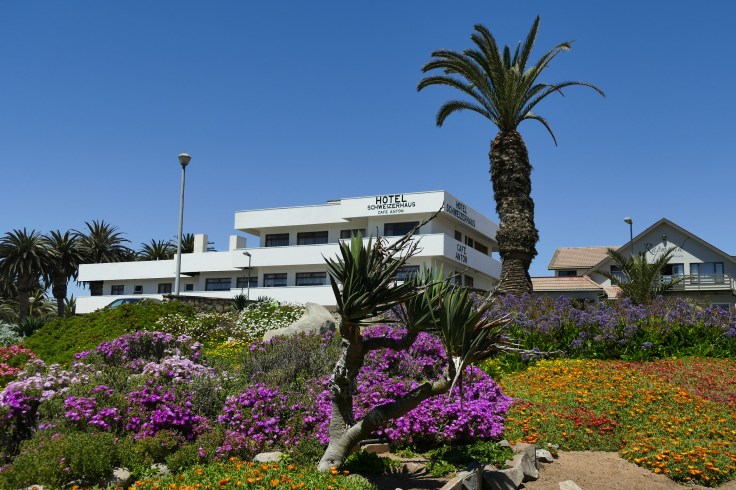
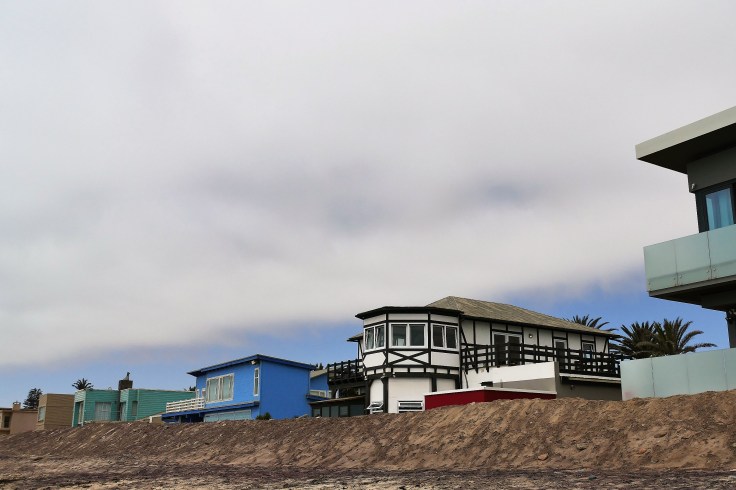
The next morning, I had booked in for the Living Desert Tour, one of the specialities here in Swakop and a must!
Living Desert Tour
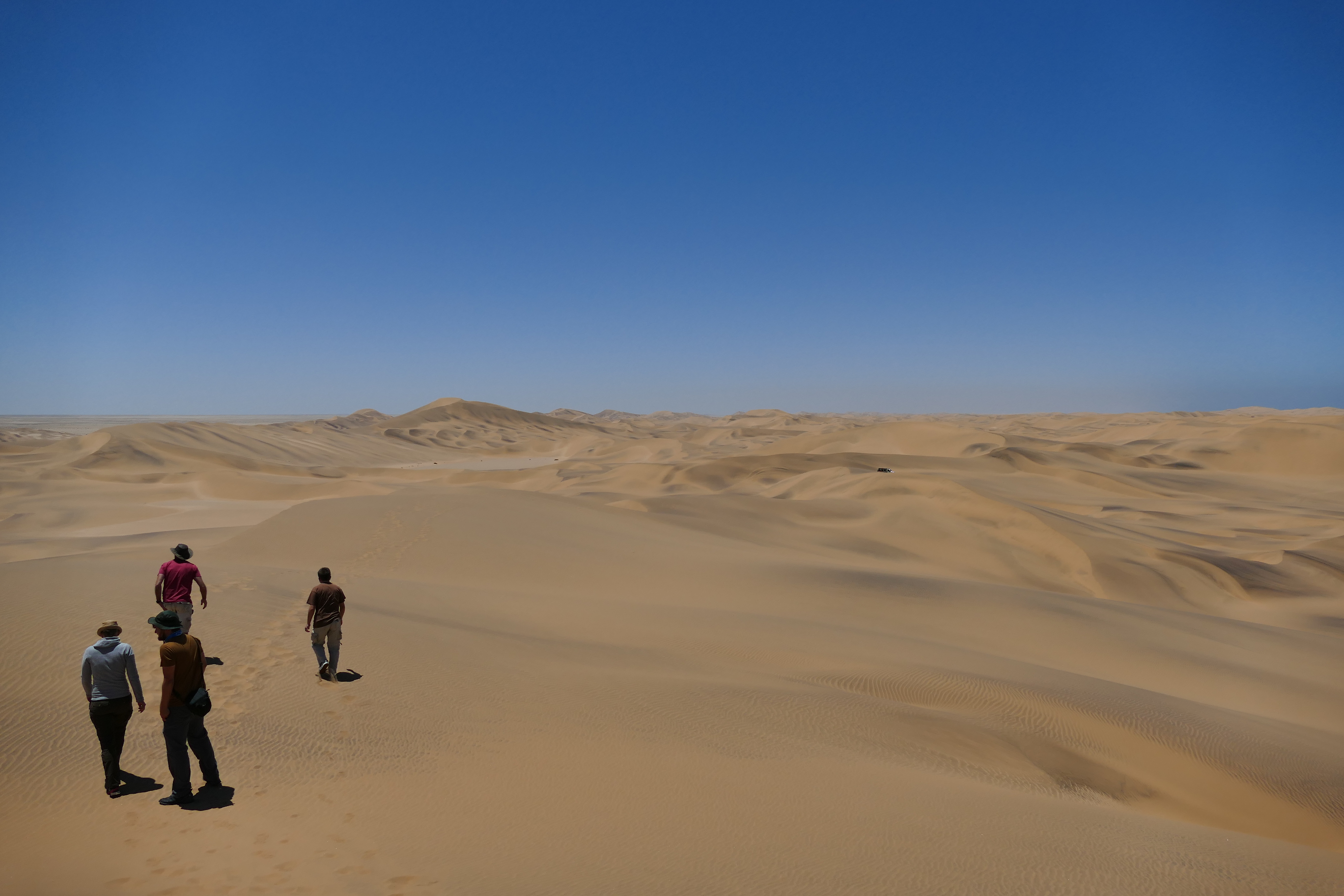
Only a handful of companies offer the tours into the dunes of the Namib desert that starts just outside Swakop, and I assume they are pretty much the same. I selected the first that showed up, Chris Nel (https://www.livingdesertnamibia.com), and did not regret it. With great energy and a good sense of humour Chris welcomed us four guests and it was immediately clear that the tour will be fun!
I had been extremely looking forward to this experience and to learn about the hidden life on, in and under the sand. I had so many questions. What creatures are able to survive in this harsh environment? And what do they eat? How do they get water? How do plants grow here? All these questions would be answered today 😊
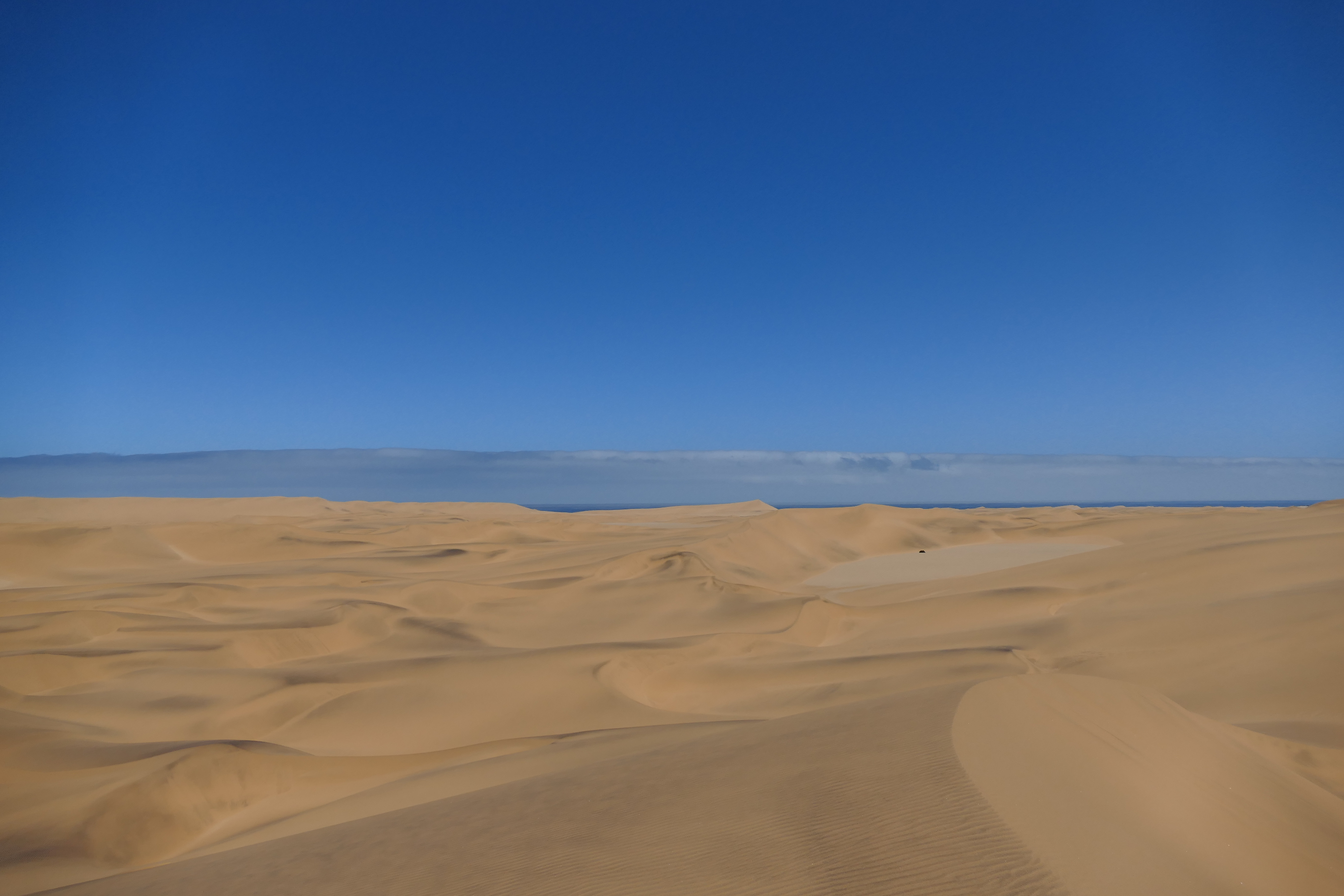
Chris did an amazing job in answering all those questions. We learnt not only about the obvious life, like the oryx that is often seen walking in the desert, but especially about the smaller creatures, and mainly about the desert´s complete ecosystem. It starts with the base, the sand. Sand is not only sand. I did not notice first, but the dunes have different colours. From whitish to yellow, to reddish and black, and even into purple. Sand itself is created by erosion and slowly gets smaller and smaller until it becomes the fine or coarse-grained sand we know.
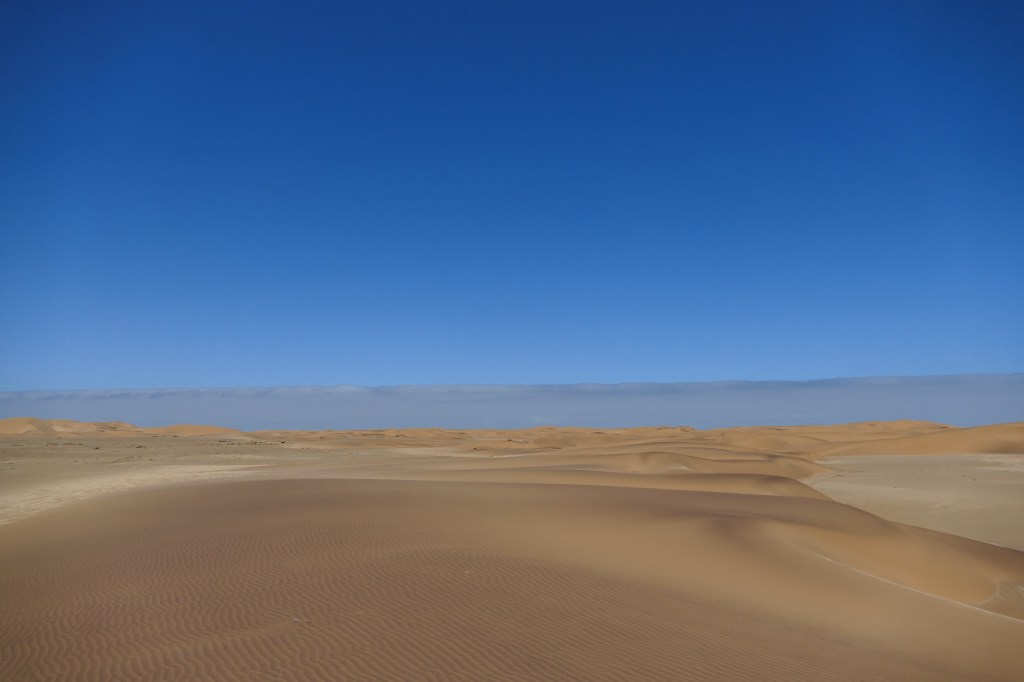
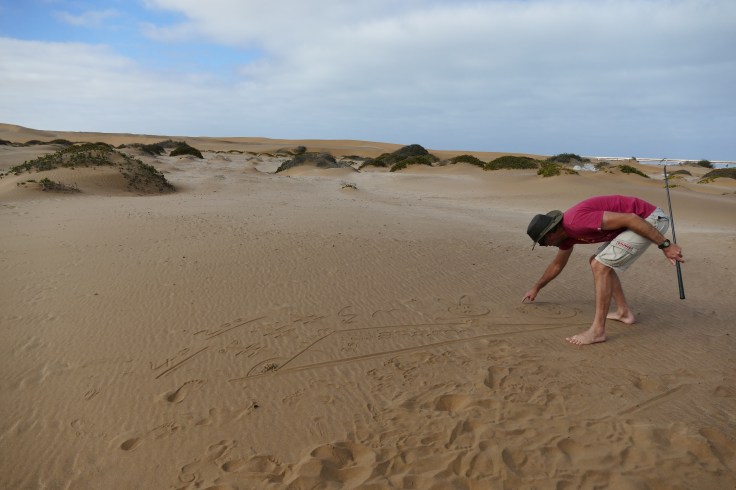
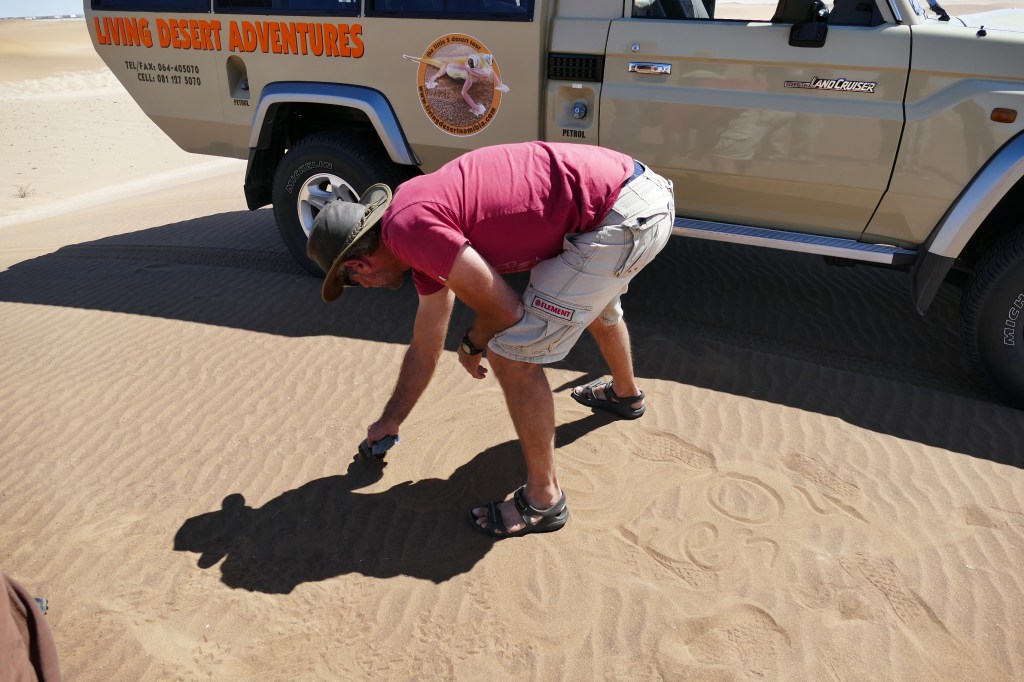
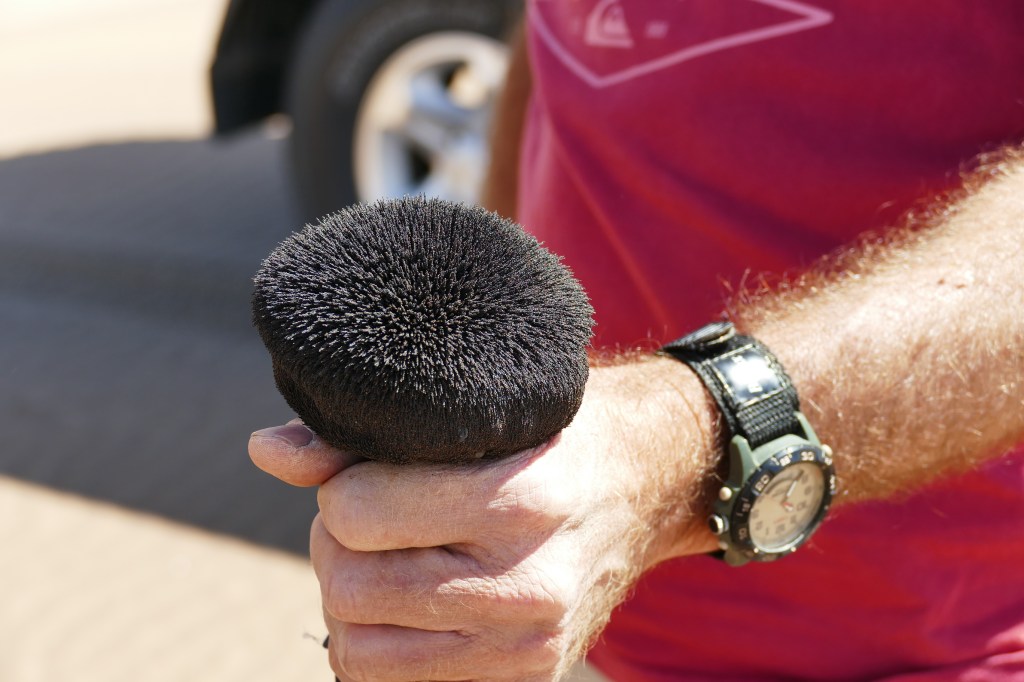
The colouration is mainly defined by the type of rocks from where it comes from and by the minerals in it. We all were stunned when Chris demonstrated the magnetic properties of the black magnetite layer:
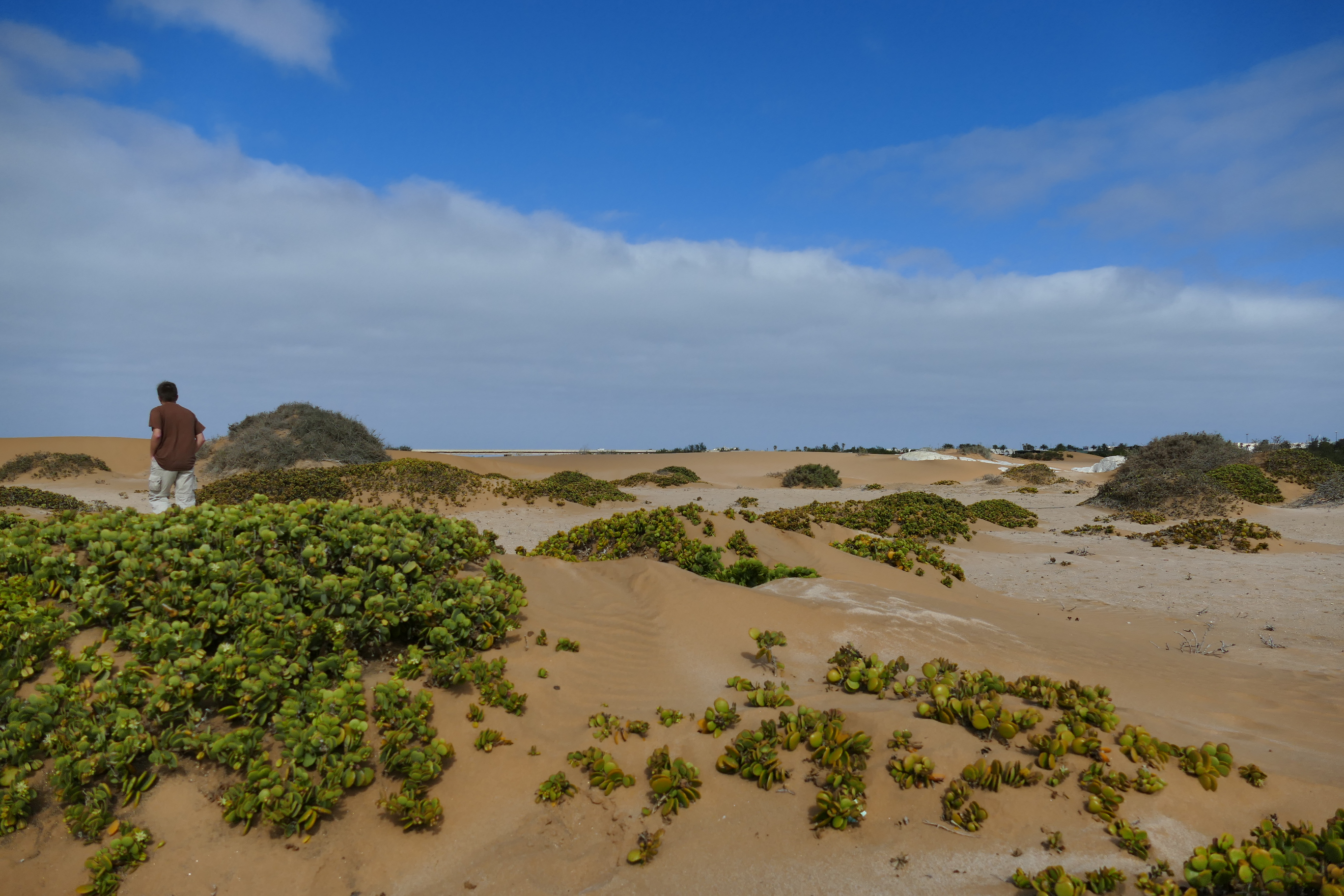
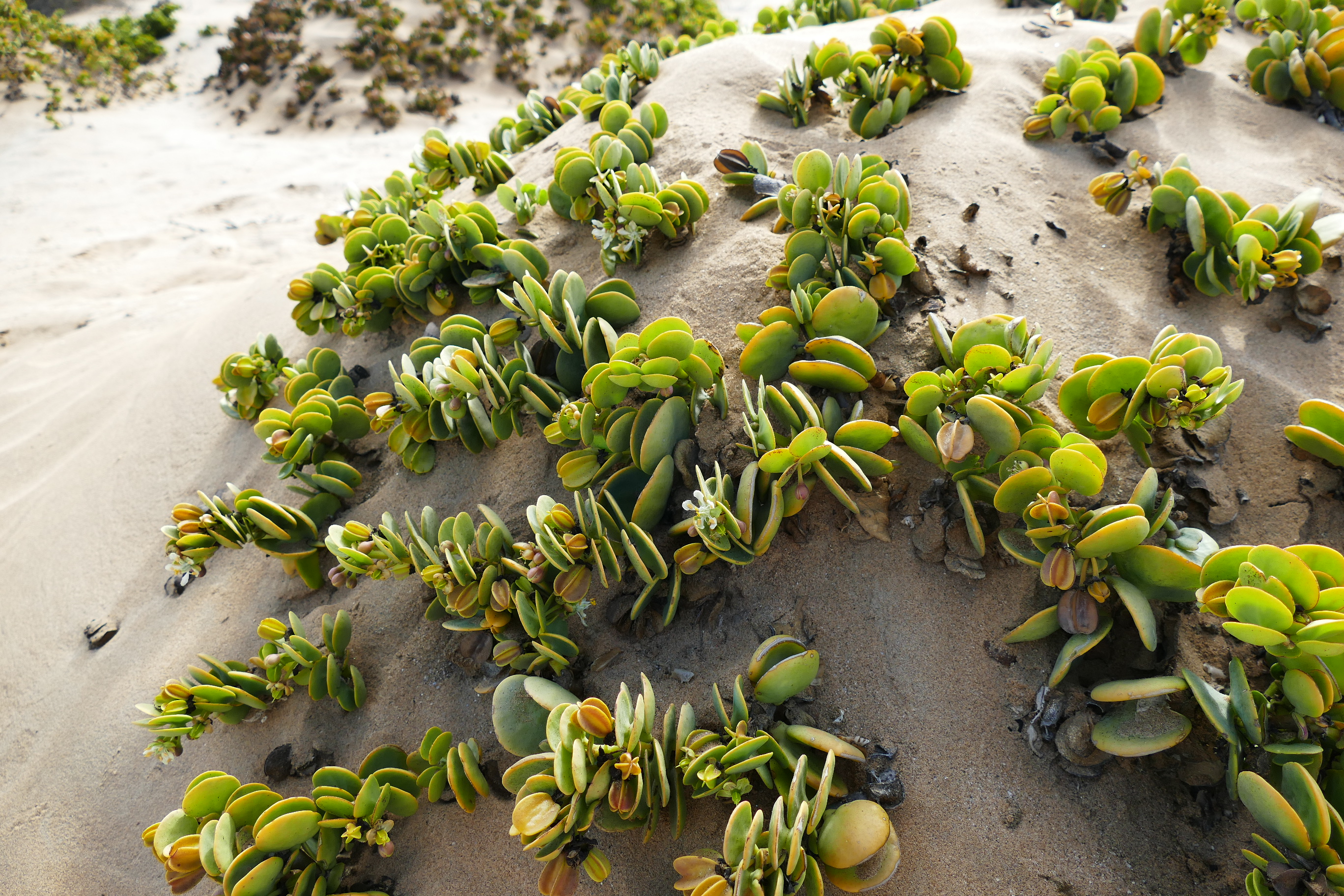
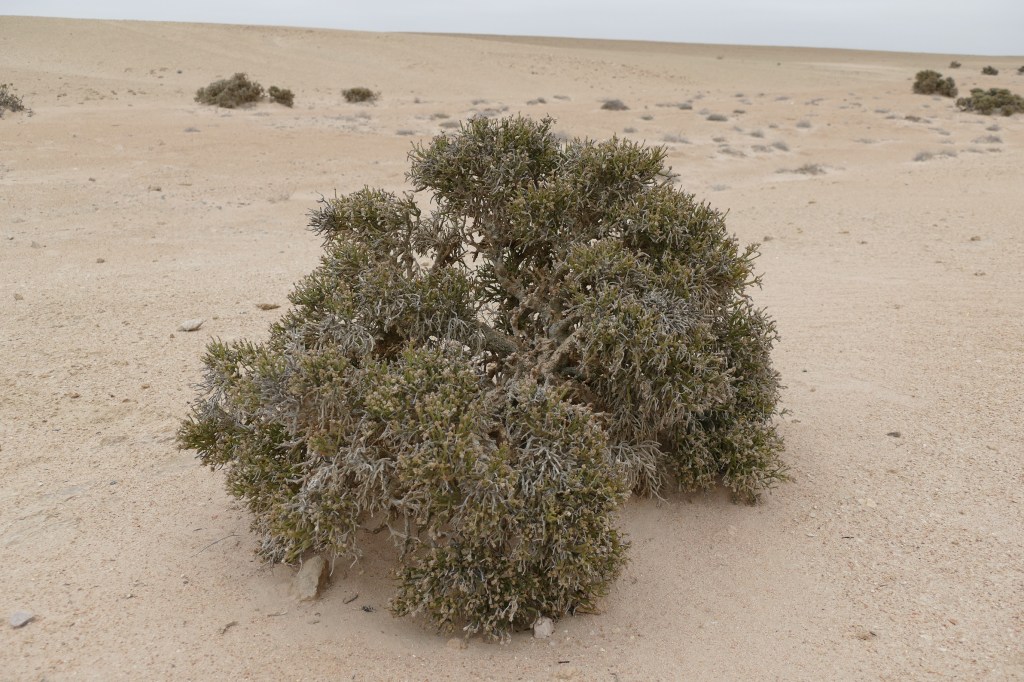
We were introduced to some plants that over time have adapted to the harsh conditions and clearly dominating in this area is the endemic Dollar bush (Zygophyllum stapffii), a leaf succulent. It only grows from the central Namib north into southern Angola. It got its name from the round leaves that resemble coins and these leaves are the survival feature of this plant: during the day they position themselves in a way that the surface limits the exposure to the sun, and therefore the evaporation of water. In the evening and during the night (or on overcast days), the leaves will fully open during the colder and more moisture parts of the day, collecting every single drop of water that floats in the air.
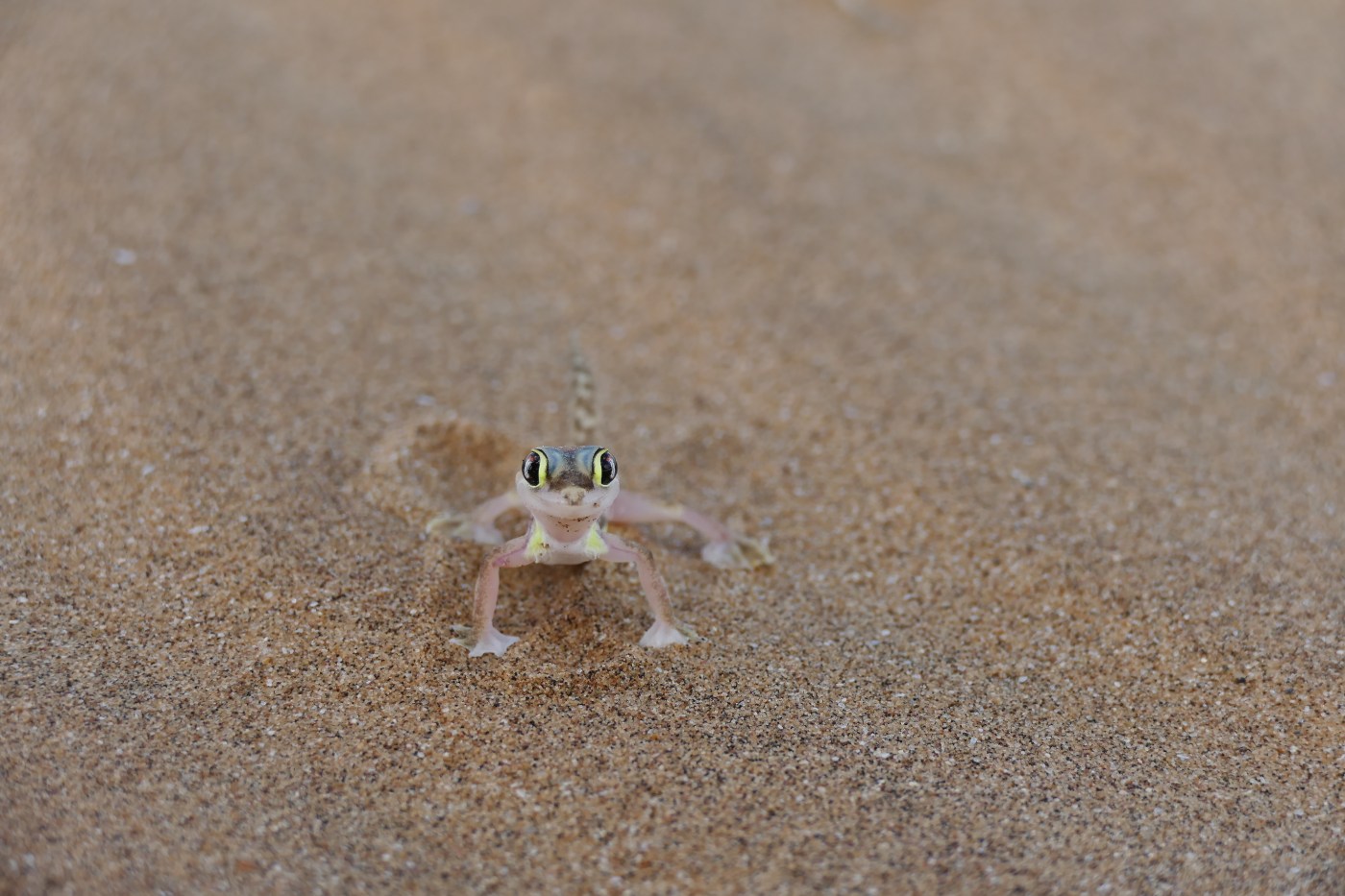
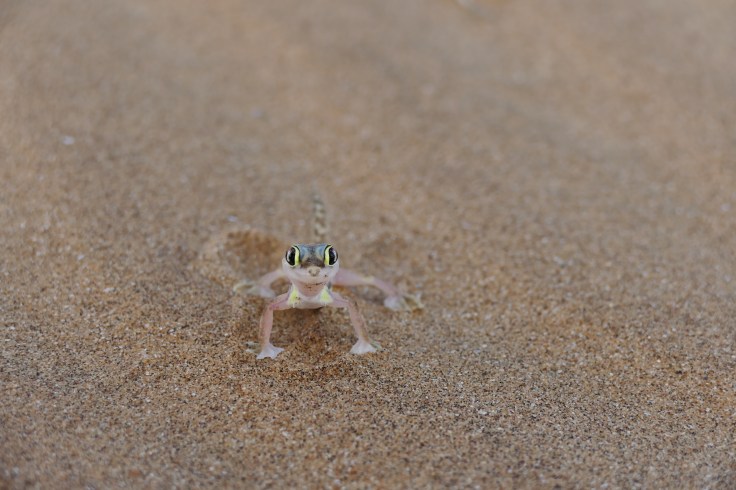
One of most striking creatures of the Namib desert is definitely the friendly-looking Namib dune gecko, a highly adapted reptile that is endemic to this part of the world. Most of the moisture it retrieves from its prey, insects like crickets, spiders and grasshoppers, but on top, it has learnt to extract moisture from the constant fog that especially appears from the evenings to the mornings: the large eyeballs are used to condense the moisture and once drops have accumulated, the gecko licks its eyes with its tongue.
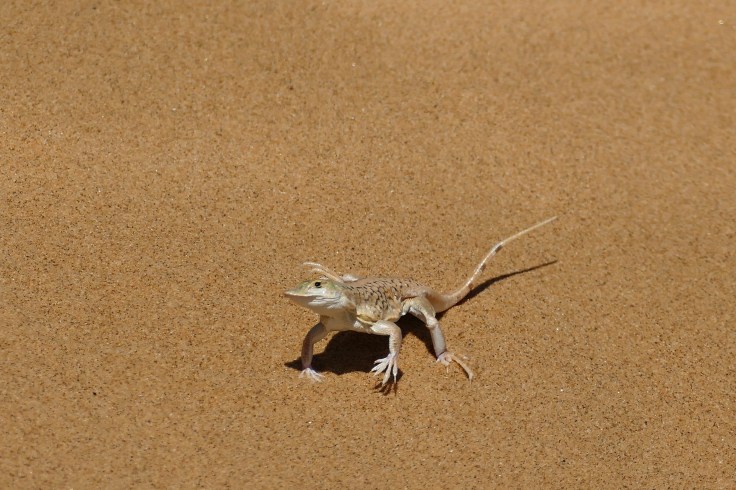
Another endemic reptile is the Shovel-Snouted Lizard. In comparison to the Dune gecko, this guy is diurnal. They are fast and can be seen running up and down the dunes in search for prey, also insects. The day temperatures in the desert are high and to prevent the body from overheating and the feet from burning, this reptile performs a unique thermal “dance” (also known as the “Namib quickstep”) by lifting a front leg and opposite hind leg lift on an alternate basis.
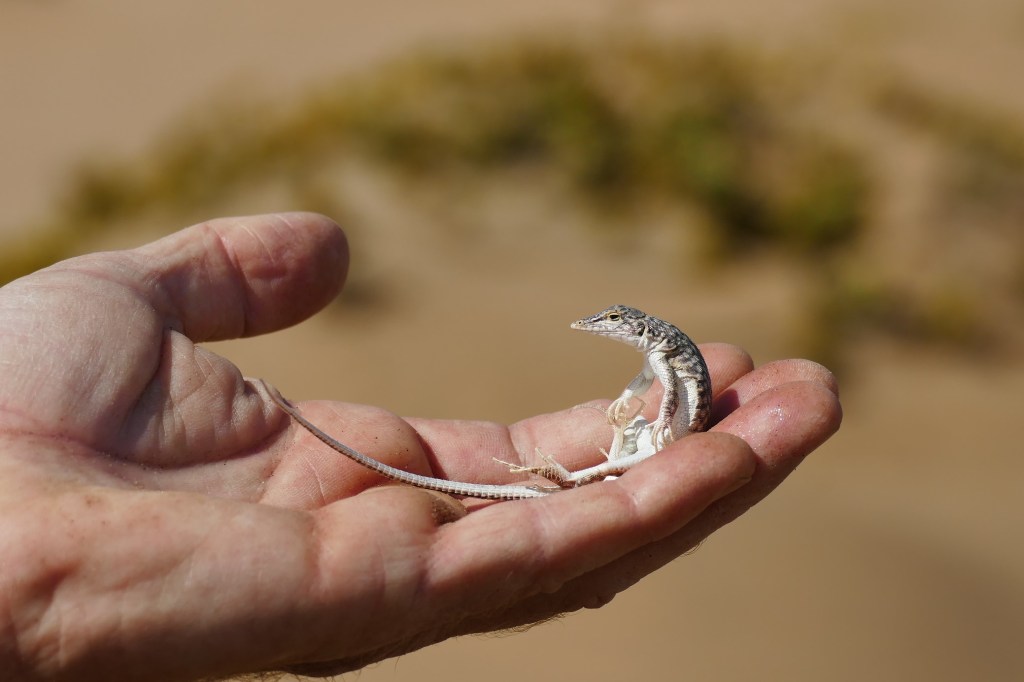
One more four-legged reptile crossed our way: the Reticulated Desert Lizard, a fast little thing that wsa a bit nervous first but calmed down after some belly massage. It is easily recognisable by its long pointed nose and speckled gray/blue body coloration.
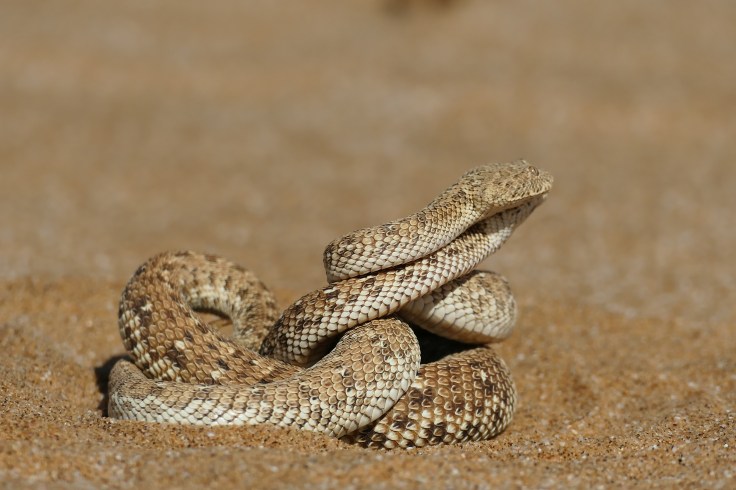
Sidewinder snakes made our day! They are not so easy to find and we got TWO of them, heavily involved in their mating procedure. I had always thought they were bigger, but with a size of only about 25 to 30 cm one of the smallest adder species in the world and therefore also called “dwarf adder”. The name “sidewinder” comes from their sidewinding movement on the slippery sand surface and as this keeps most of the body off the sand, it is a tool to prevent overheating. Their eyes are on top of the head which allows them to burrow under the sand and still keep its eyes out surveying the surrounding area for prey. This makes it hard for us to see them or even step on them which should be avoided as their cytotoxic venom is not deadly but can inflict a nasty and extremely painful bite.
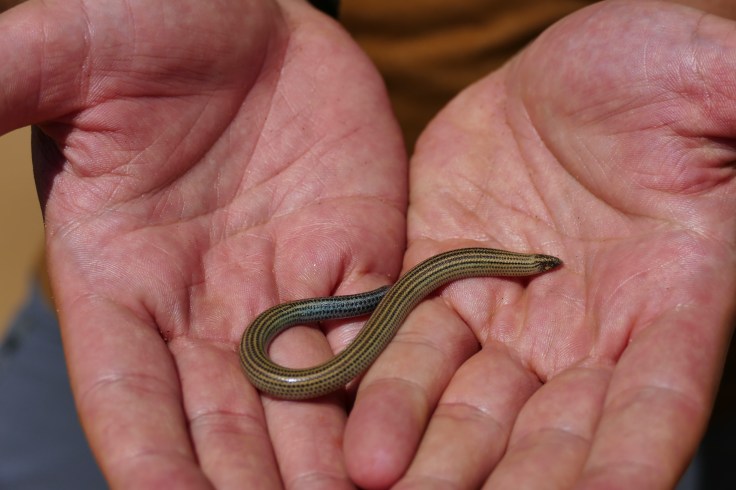
Another rather hidden creature is the Fitzsimon’s Burrowing Skink, a reptile that resembles a snake but is a legless burrowing lizard with highly adapted scales that allow the lizard to move through the sand with very little friction and indeed, when we released it back in the sand it was gone in an eye-blink and without leaving any trace.
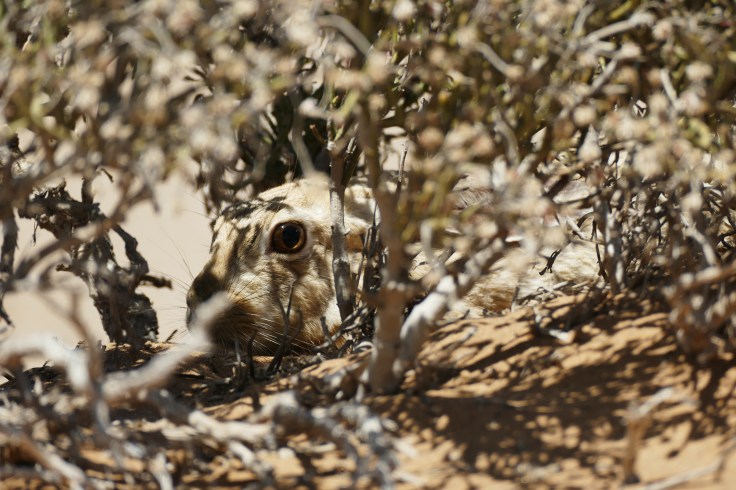
While searching for Chameleons, which we unfortunately did not find, this hare came to our attention. It was hiding underneath a bush and obviously not so happy with our presence so we did not stress it any further and rather left it alone.
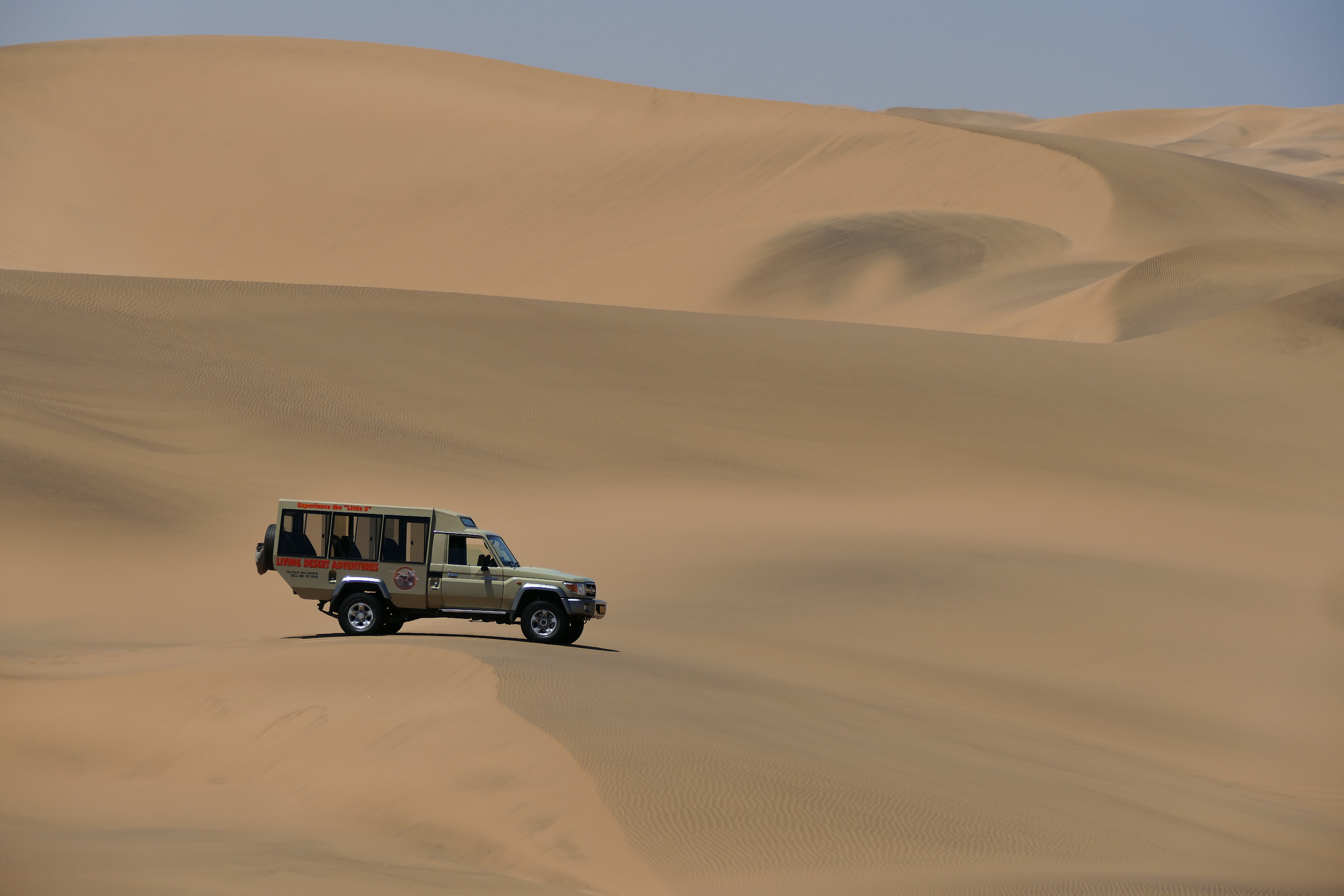
The Namib desert is indeed a fascinating world by itself. But while on a first glance it appears as a lifeless habitat, diving into it opens a specialised and unique habitat with a highly adapted ecosystem and a great variety of endemic animal and plant species.
Welwitschia Drive
The Welwitschia Drive starts just a couple of kilometres outside Swakopmund and is a route through the desert. Thirteen numbered stone beacons are set up at specific points of interests and they give a short but appropriate explanation about the sensitive habitat or historic happenings.
How to get there: First purchase a permit at the NWR office to enter the Welwitschia Drive that is part of the Namib-Naukluft National Park. Then follow the B2 in direction to Windhoek, turn on the C 28 and then left onto the D1991 where after some 100 metres the first beacon appears.
I did not visit all the beacons as sometimes it was not clear to me whether it was allowed to leave the main road, but the ones I could find were impressive enough.
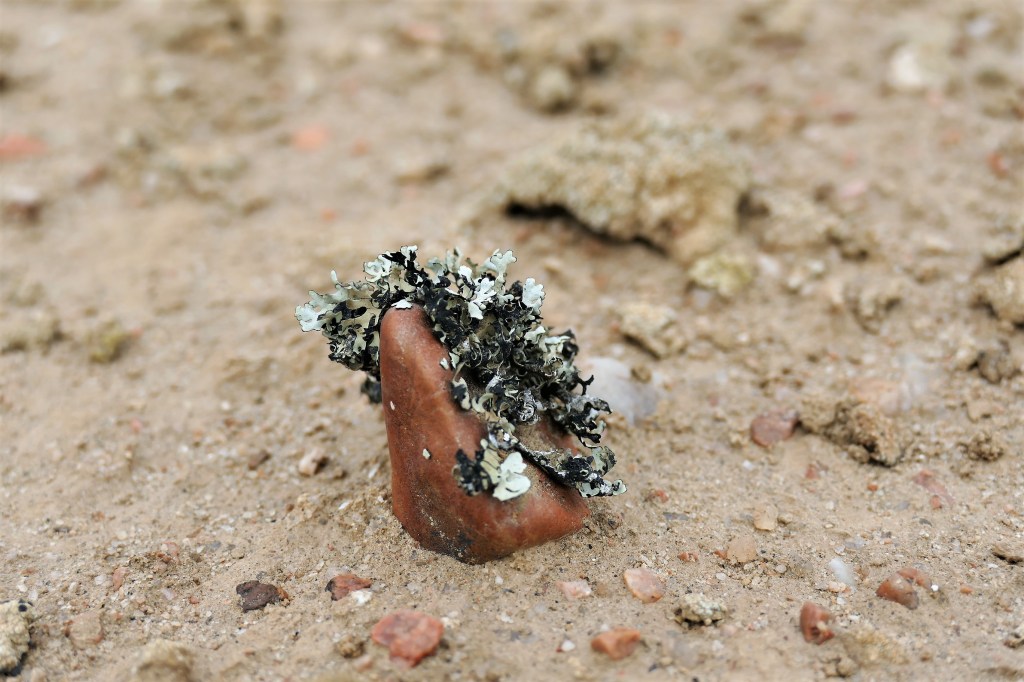
1 Lichen field
Look carefully at the ground to see these small ‘plants’, which are in fact the result of a symbiotic relationship (ie: a mutually beneficial relationship between two organisms, each depending on the other for its survival) between an alga, producing food by photosynthesis, and a fungus, providing a physical structure. If you look closely, you’ll see many different types of lichen. Some are thought to be hundreds of years old, and all are exceedingly fragile and vulnerable. (http://www.namibia-travel-guide.com)
2 Drought-resistant bushes
Two types of bush found all over the Namib are the dollar bush, so called because its leaves are the size of a dollar coin, and the ink bush. Both can survive without rain for years. (http://www.namibia-travel-guide.com)
3 Tracks of ox-wagons
Although made decades ago, these are still visible here, showing clearly the damage that can so easily be done to the lichen fields by driving over them. (http://www.namibia-travel-guide.com)
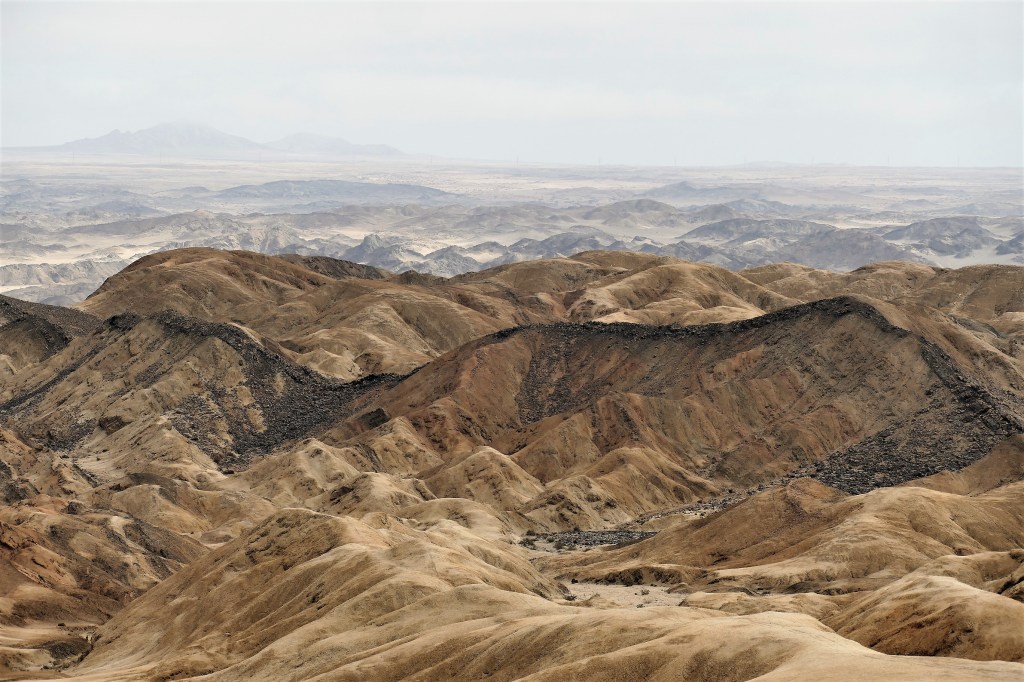
4 The moonscape
This is an unusual and spectacular view, usually called the moonscape, looking over a landscape formed by the valleys of the Swakop River. It is best seen in the slanting light of early morning or late afternoon. (http://www.namibia-travel-guide.com)
5 More lichen fields
These remarkable plants can extract all their moisture requirements from the air. To simulate the dramatic effect that a morning fog can have, simply sprinkle a little water on one and watch carefully for a few minutes. (http://www.namibia-travel-guide.com)
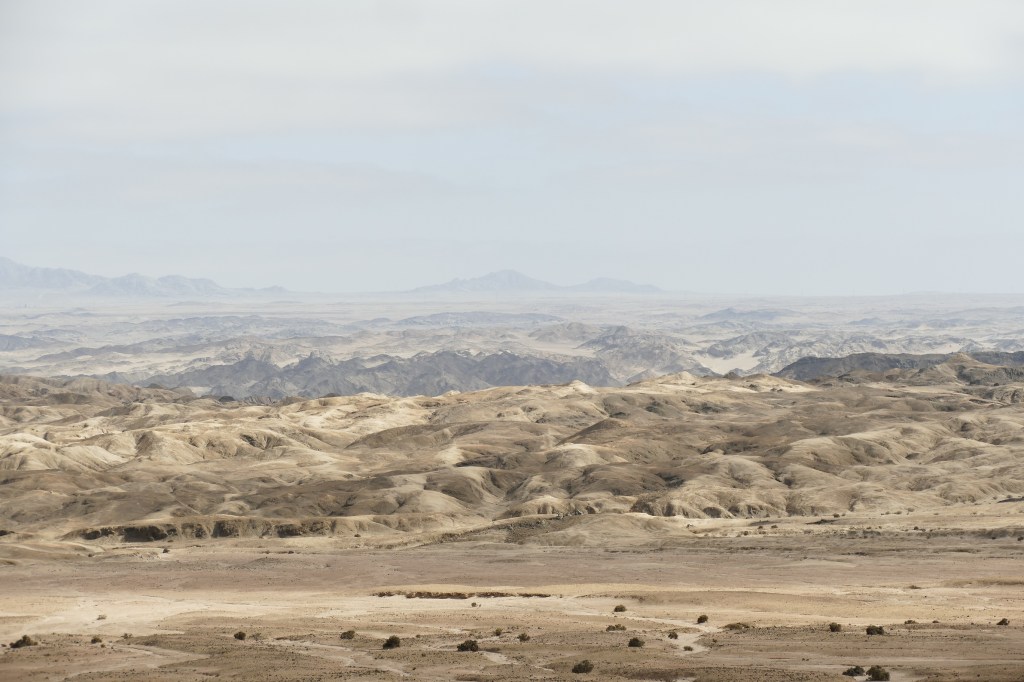
6 More moon landscape
7 Old South African camp
This is the site of an old military camp, occupied for just a few days during World War I. (http://www.namibia-travel-guide.com)
8 Turn left at this marker to visit the next few beacons.
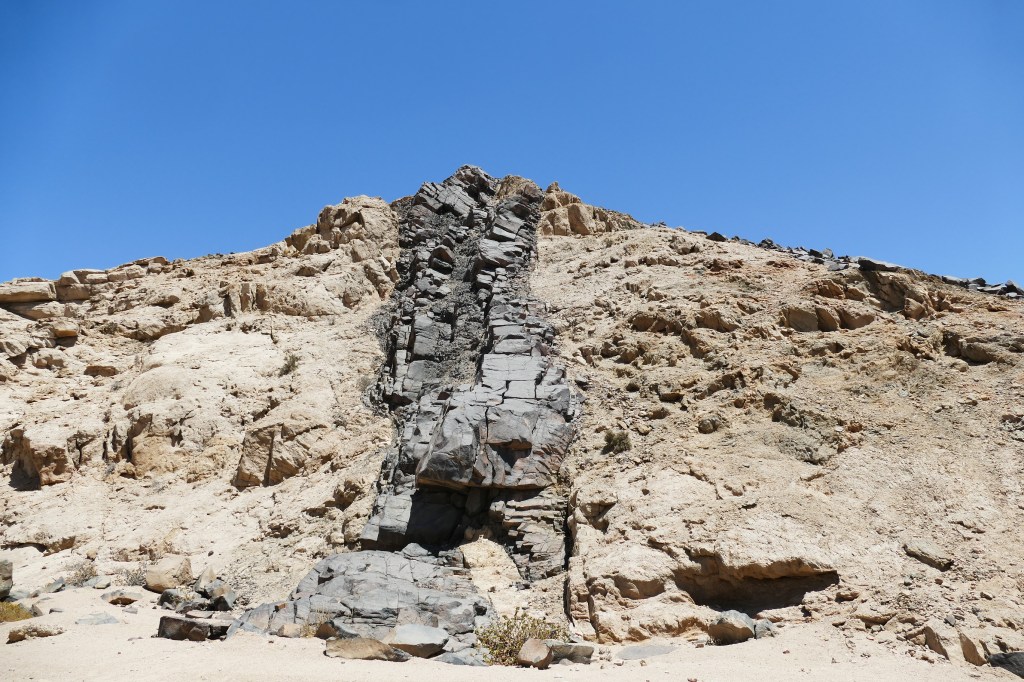
9 A dolorite dyke
These dark strips of rock, which are a common feature of this part of the Namib, were formed when molten lava welled up through cracks in the existing grey granite. After cooling it formed dark, hard bands of rock which resisted erosion more than the granite – and thus has formed the spine of many ridges in the area. (http://www.namibia-travel-guide.com)
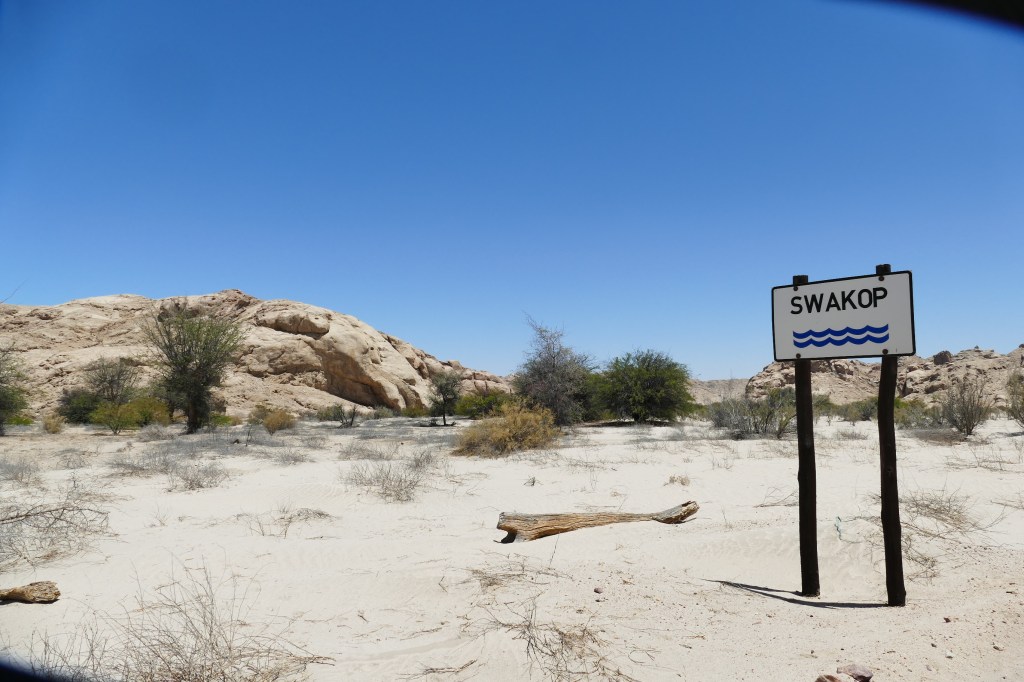
10 The Swakop River Valley
Picnicking in the riverbed, with a profusion of tall trees around, you might find it difficult to believe that you are in a desert. It could be said that you’re not – after all, this rich vegetation is not made up of desert adapted species. It includes wild tamarisk (Tamarix usurious), and anaboom (Acacia albida), better known for its occurrence in the humid Zambezi valley almost 1,000 miles east – sustained by underground water percolating through the sands beneath your feet. (http://www.namibia-travel-guide.com)
11 Welwitschia flats
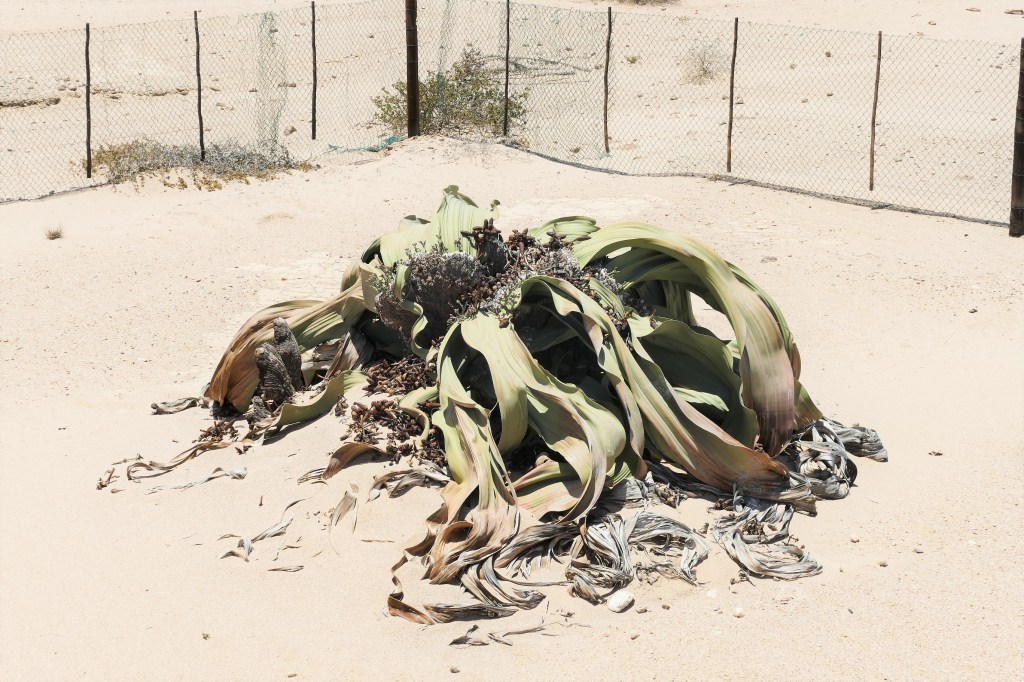
This barren, open expanse of gravel and sand is home to the Namib’s most celebrated plant, the endemic Welwitschia mirabilis. These plants are found only in the Namib, and at just a few locations which suit their highly adapted biology. (http://www.namibia-travel-guide.com)
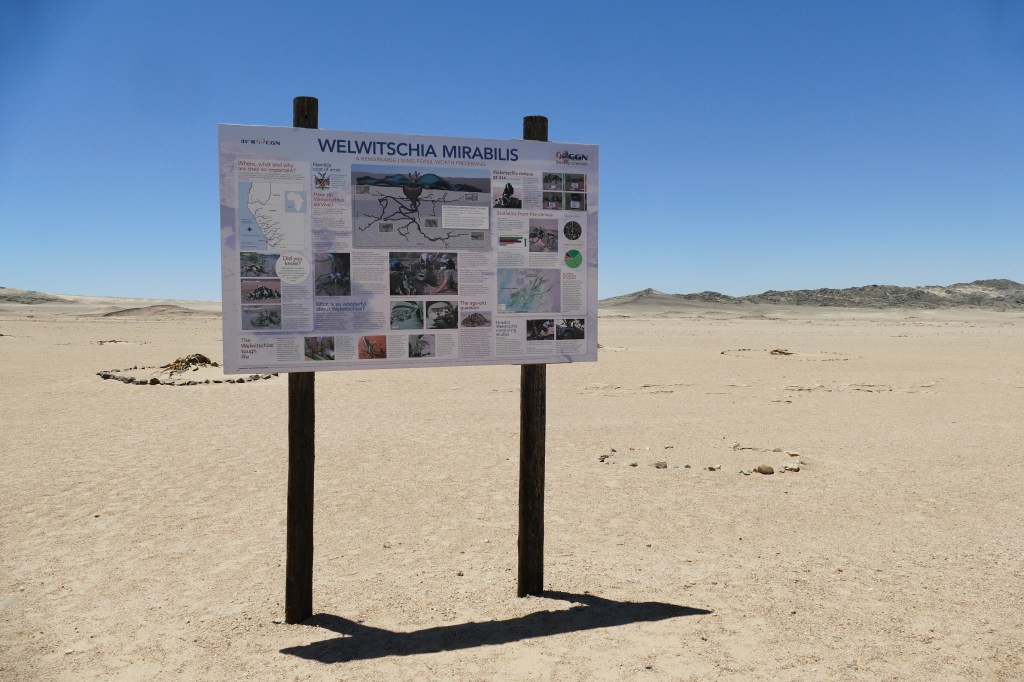
12 The big welwitschia
This beacon marks the end of the trail, and one of the largest Welwitschia mirabilis known – estimated at over 1,500 years old. (http://www.namibia-travel-guide.com)
13 Old mine workings
On the way back to Swakopmund, continue straight past beacon 8, without turning right. Where the road joins route C28 to Swakopmund, marked by this final beacon, is one of the desert’s old mine workings. In the 1950s iron ore was mined by hand here. Now it is just another reminder of the park’s chequered past. (http://www.namibia-travel-guide.com)
Indeed a very different world here in and around Swakop. The Ocean that keeps the air foggy, fresh and cool, the sand dunes with its exceptional ecosystem, and the German-styled charme of the the village itself. Definitely worth a visit!
Good night,
Sininho
 Sininho´s World
You must be logged in to post a comment.