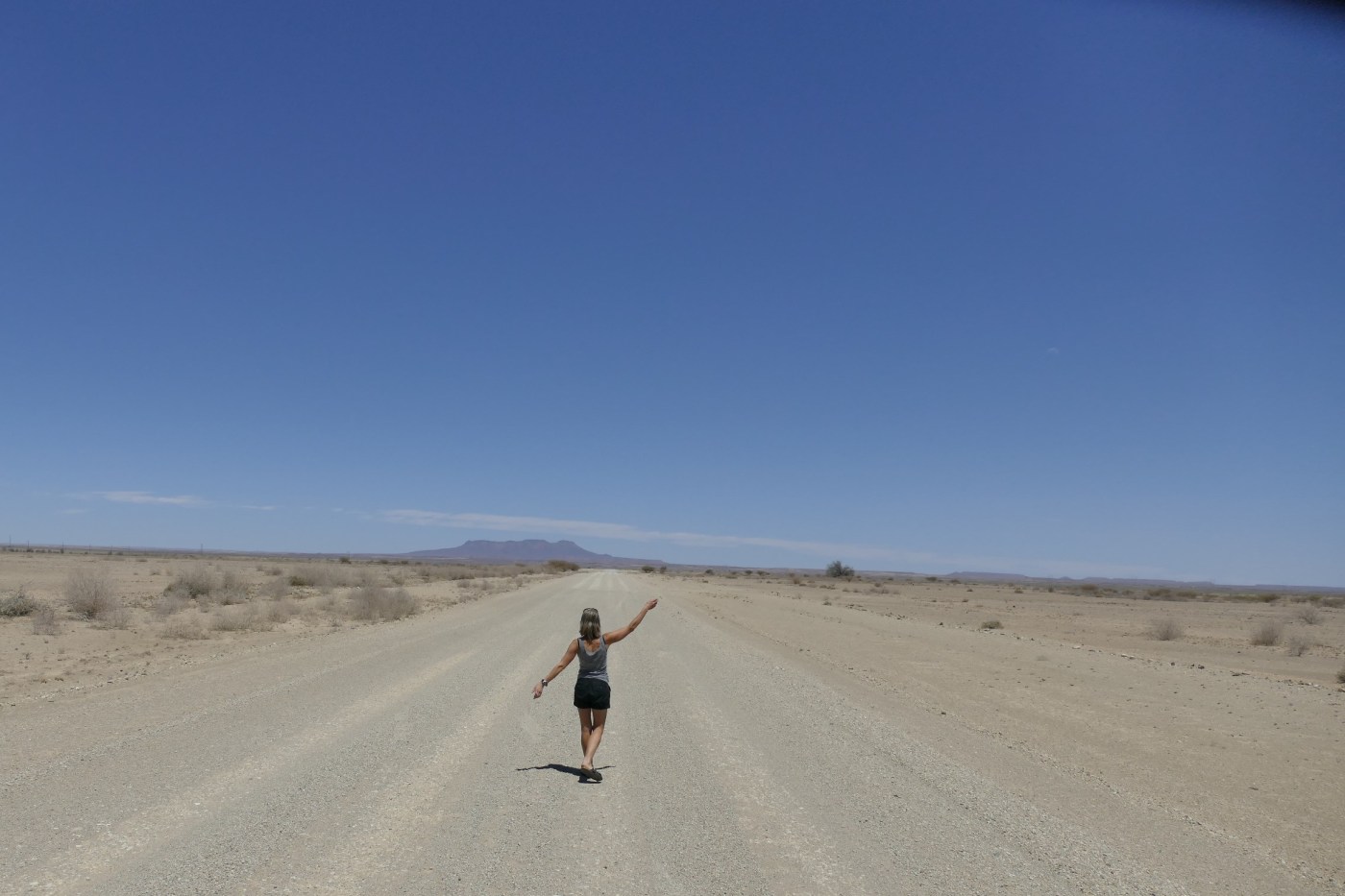
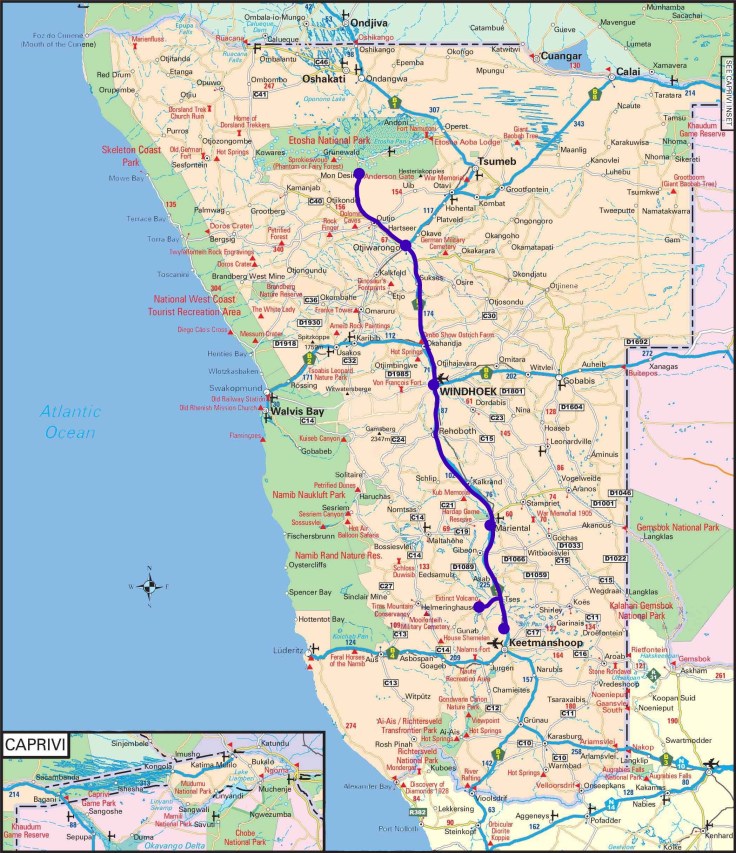
I made my way down South. The roads are long, straight, and seem to be endless. The dry savannah landscape is not providing a lot of change, which does not mean it gets boring, but a bit tiring over time. I had stopped in Otjiwarongo and Windhoek where I met some friends and visited a Tourism Expo, and now arrived in Keetmanshoop.
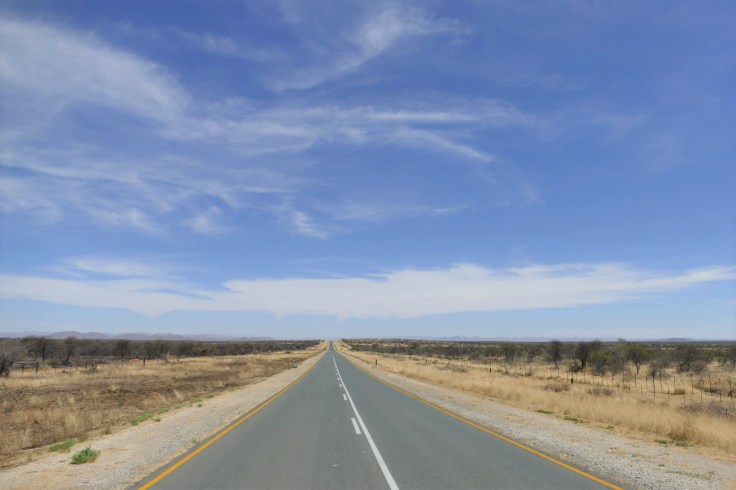
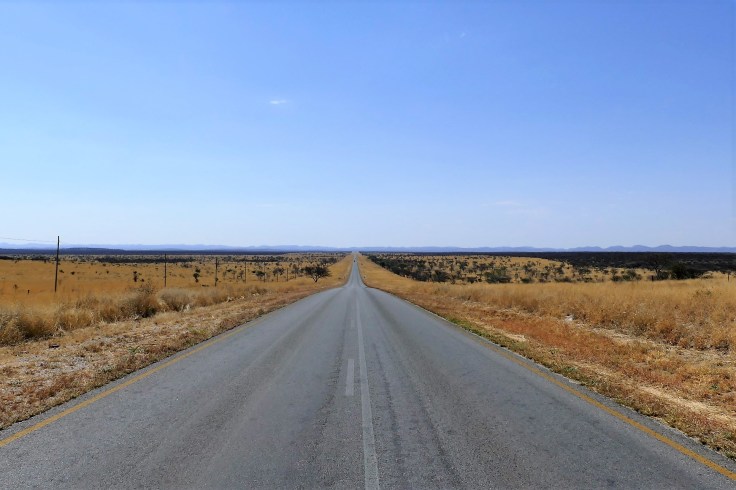
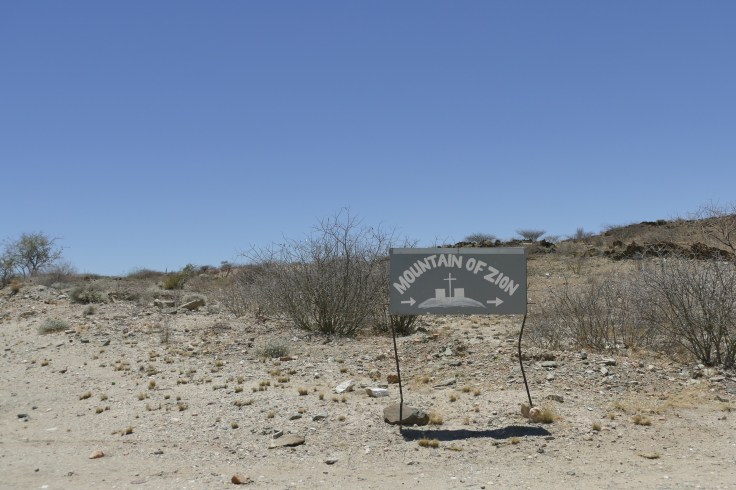
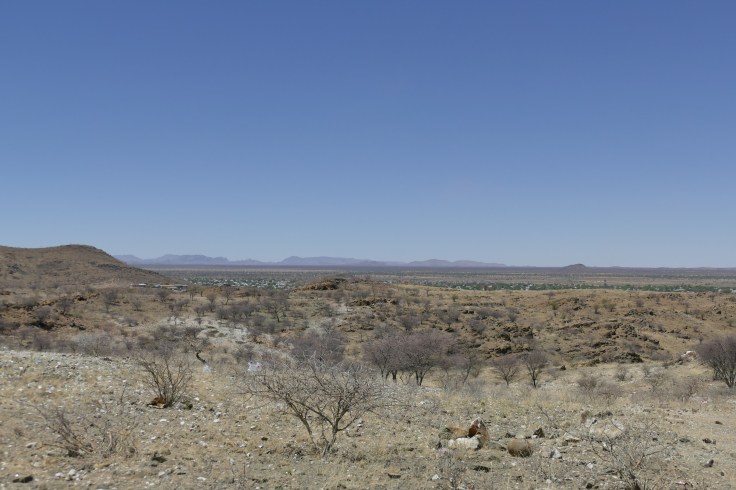
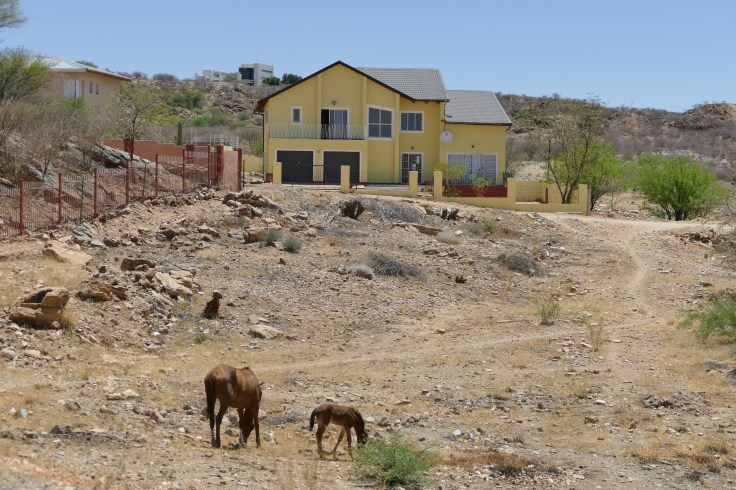
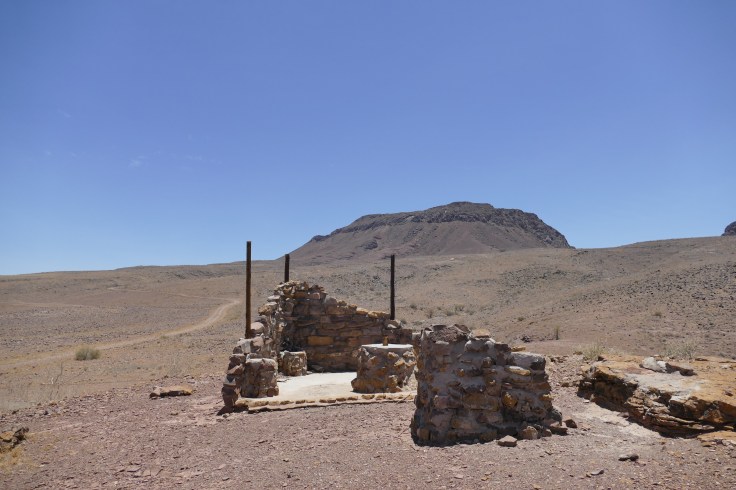
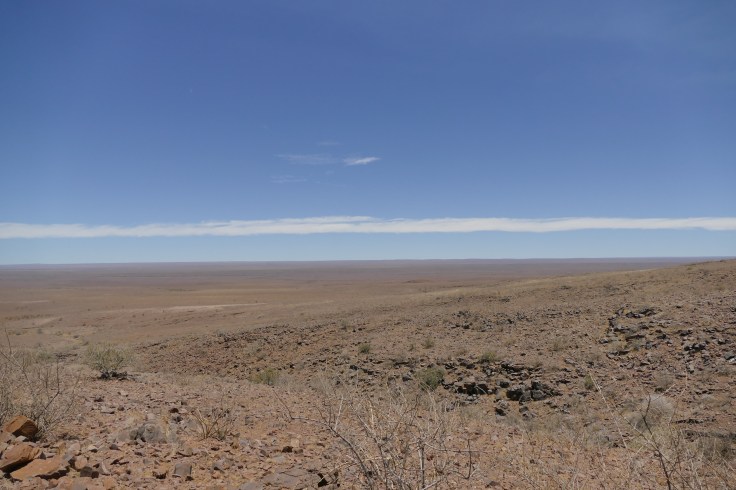
The villages and towns I pass are small, sometimes you are out before you realise you were in, and most of them are a mixture between basic and “proper” houses as we know them. From time to time a sign announces something interesting and I have enough time for small detours. The ‘Mountain of Zion’ for example. Nothing special, but at least a good view point and a good reason to step out for a bit.

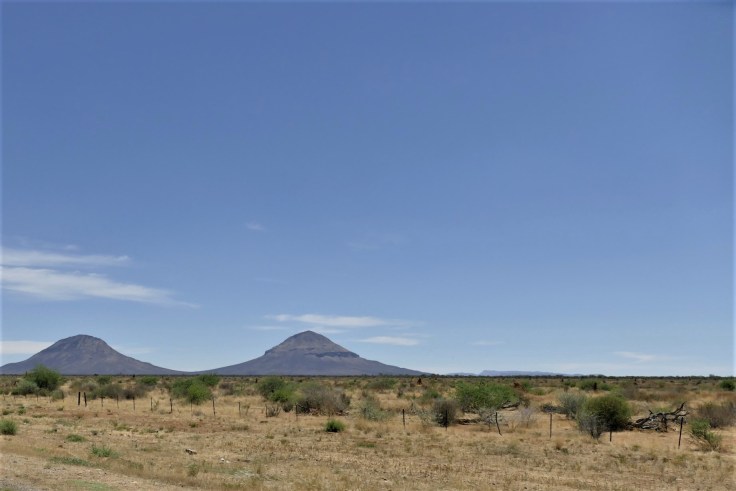
Inbetween Marienthal and Keetmanshoop, a mountain breaks the flat landscape. This is Brukkaros mountain, an extinct volcano.
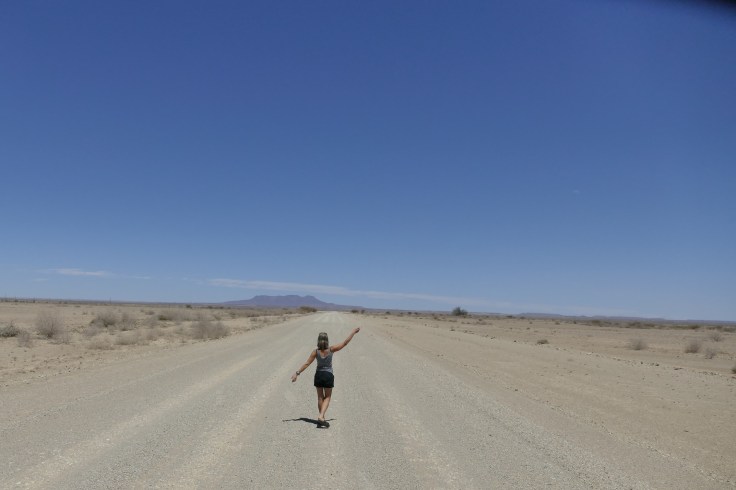
Brukkaros Mountain
It was formed about 80 million years ago when a magma pipe came in contact with ground water. This caused a series of volcanic explosions, forming the 650 m high mountain with a 2km-wide crater.
I unfortunately arrived in the middle of the day, had no idea how long the way takes up to the crater, the sun was burning mercilessly, and I was the only one there, so decided to not walk up this time. Camping is allowed although the campsites look a bit abandoned but if I hadn’t booked into another location already, this would have definitely been my night camp! With no light pollution, the night sky must be stunning out there, not to talk about the sunrise or sunset, and of course the silence up here. I can’t wait to come back!
How to get there?
82 km north of Keetmanshoop or 150 km south of Marienthal turn turn towards Berseba at Tses and just before you arrive in town, signs will lead the way towards Brukkaros which is another 10 km drive.
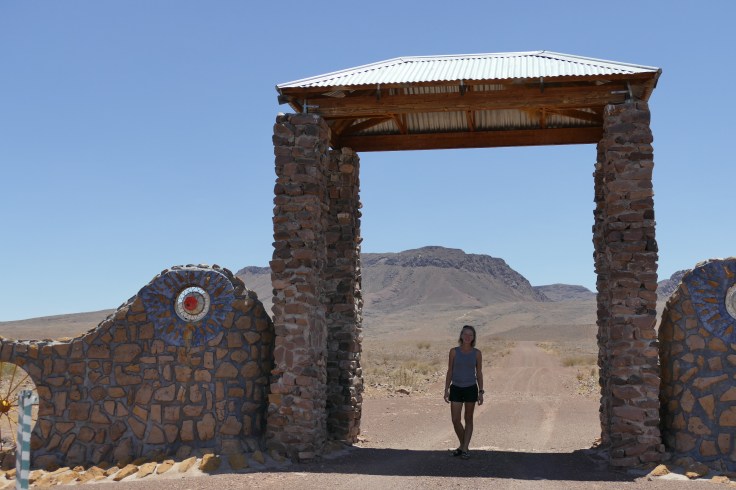
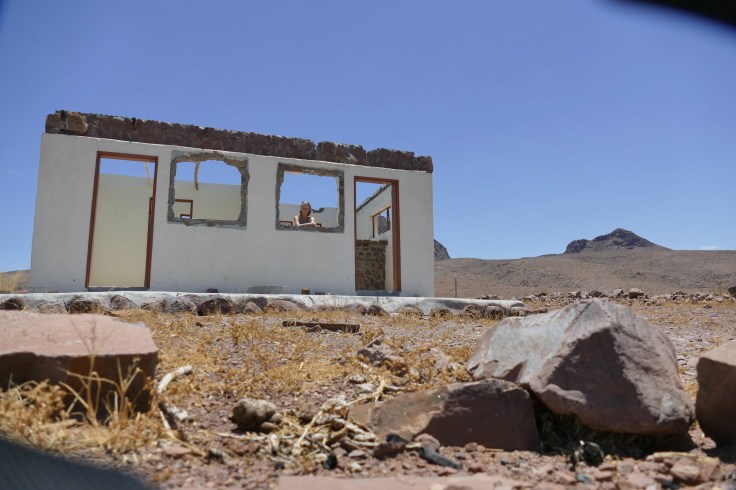
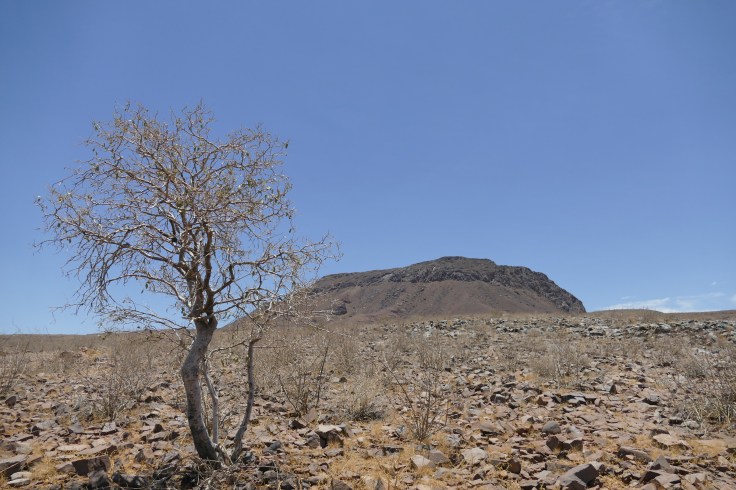
Garas Park Rest Camp
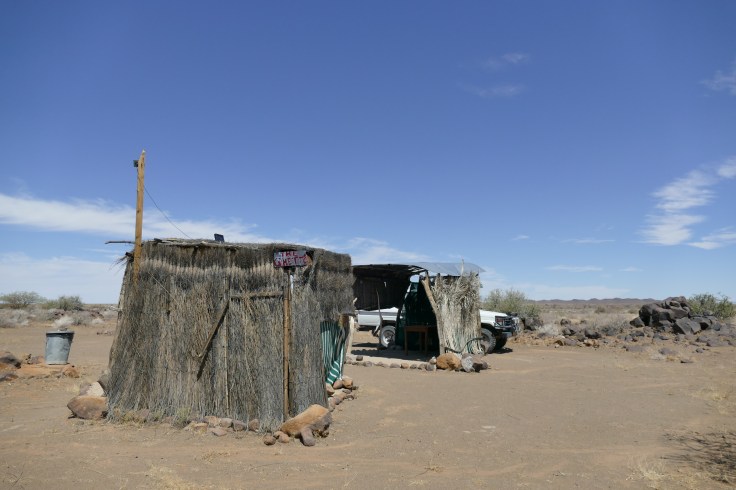
The quiet campsite just outside Keetmanshoop is situated right beside the road but still far enough to not be disturbed by any traffic (that anyway is not too extensive at the moment). Metal sculptures decorate the facility and they actually fit in quite nicely.
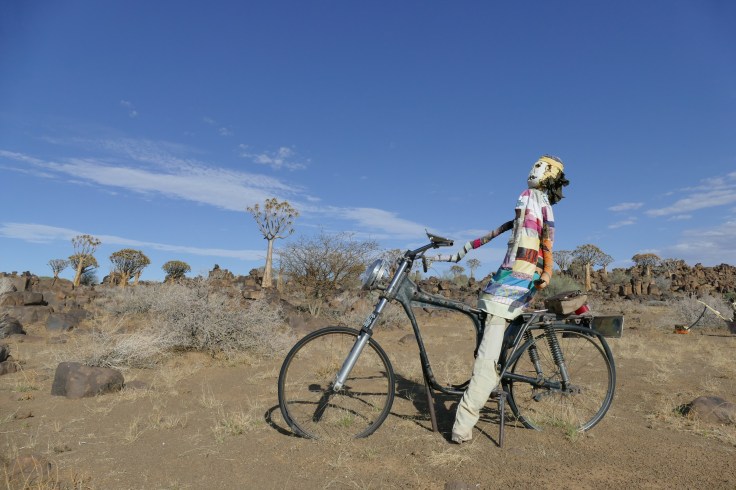
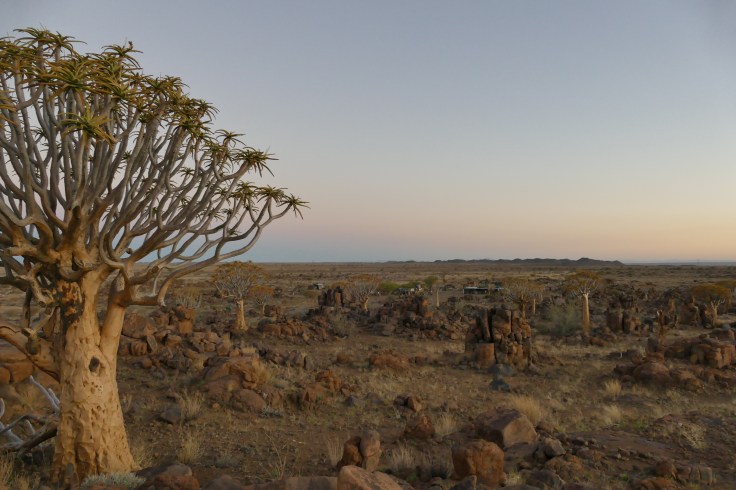
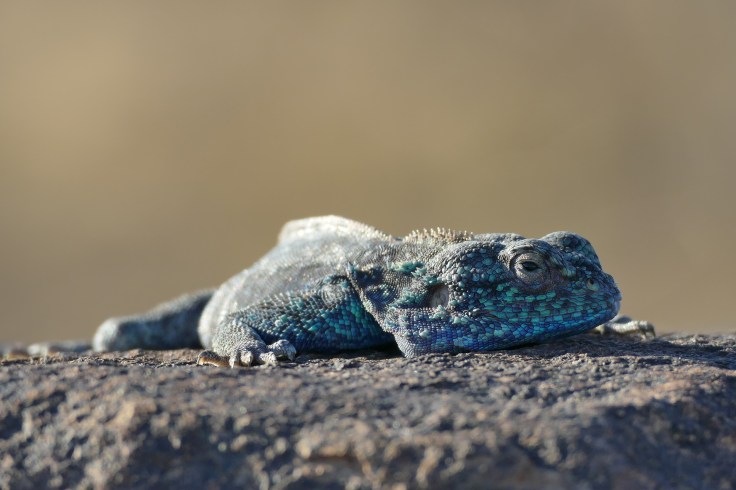
A perfect spot to relax, but also host of one of the endemic plant species of the southern African desert, the succulent Quiver tree (Aloe dichotoma). Like the famous Baobab, it looks like a tree upside down, and creates such a special atmosphere on the rocky outcrops where it grows.
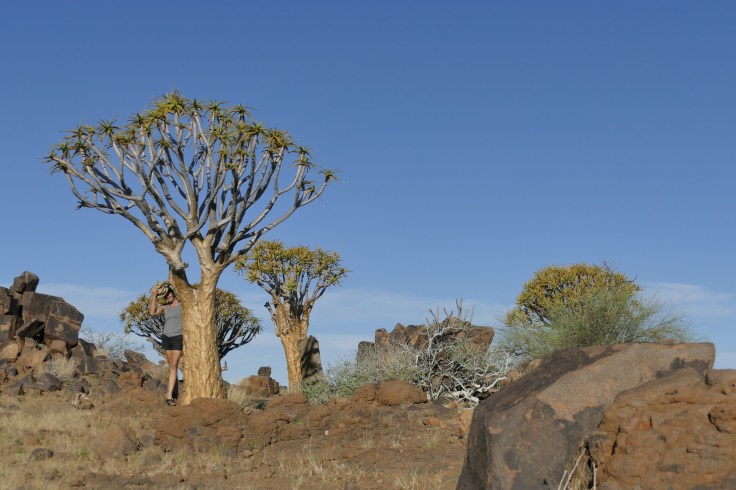
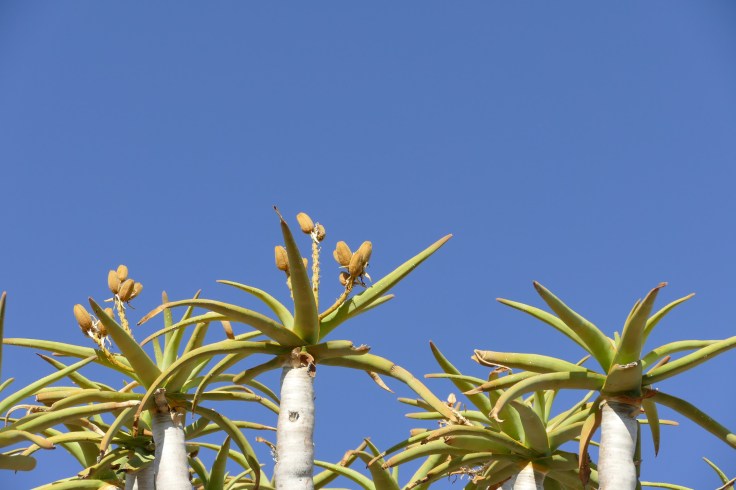

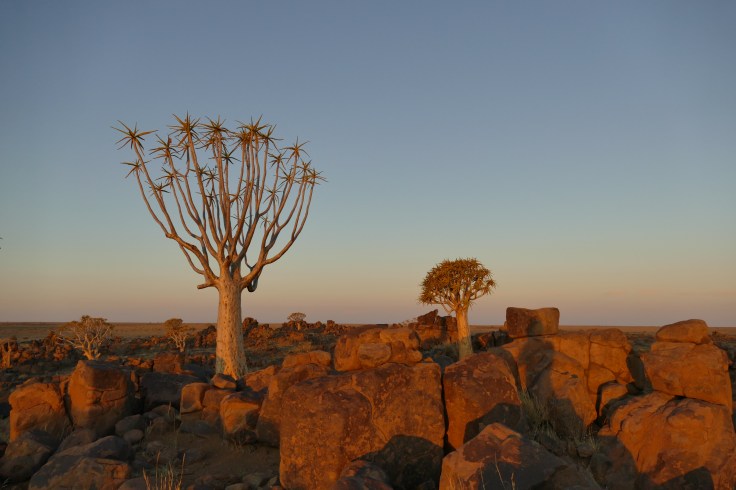
It got its name from the San people, that used the trunk and branches as a storage for their arrows. Furthermore, the hollow trunk has cooling properties and was used as refrigerator.
In the middle of these magnificent trees that are said to hold the spirits who have died without a proper burial, inhaling the air and the wonderful warm colours that embrace the world, it is a good time to let go and simply BE for a moment.
Good night,
Sininho
 Sininho´s World
You must be logged in to post a comment.