I am in the Etosha Park for nearly three months now and most of the time only focussed on work or the animals in here. Of course I was amazed by the landscape, the open plains, the different vegetation types and the pan, but I never really informed me about its history.
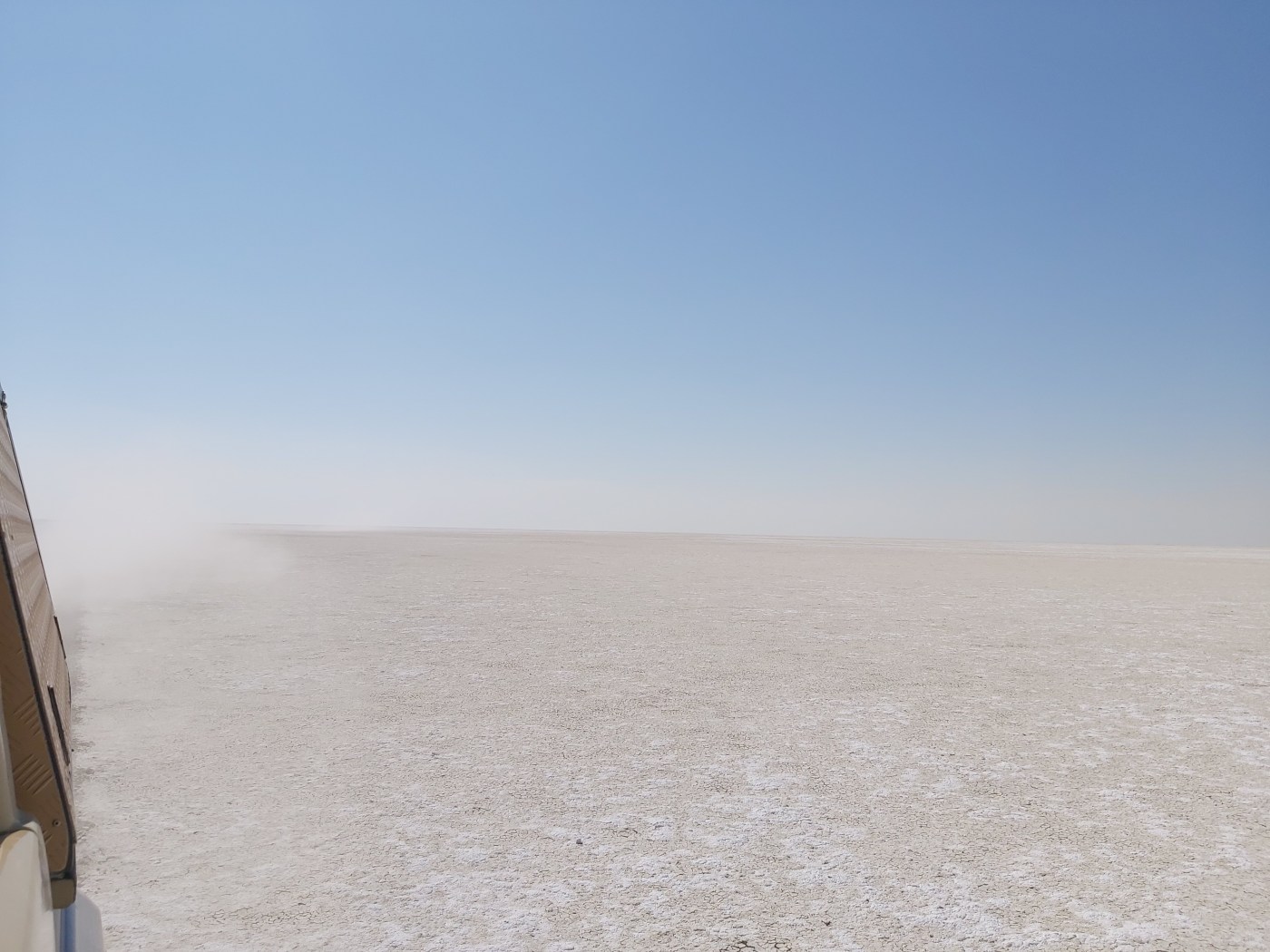
At the beginning of July, during my first week here in the park as a volunteer, I had joined the “operation de-collaring” of wildebeest and zebra (remember “my first month in Etosha”?), which gave me the unique opportunity to see places that are not accessible to tourists and one day, it led us deep into the Etosha Pan. Not too deep, but enough.
Although I had seen the pan from a viewpoint during my vacation in June, this was a totally different experience. Seeing the pan it or being in cannot be compared. To be surrounded by white, to be exposed to the heat, to feel the desolation and the merciless conditions … this is a once-in-a-lifetime experience and I am happy that I can return to a more or less airconditioned car.
| A San legend tells that the Etosha salty depression was formed because in the past a small village was destroyed and all its inhabitants were killed except one woman who wept so much for mourning that her tears formed an immense salty lake that, when dried up, formed today’s expanse of salt crystals. Source: https://www.exploring-africa.com In Ndonga or Oshivambo language, Etosha translates to “Great White Place”. |
For a long time – until 10 to 12 million years ago – the pan was fed with water by the Kunene river but due to climate changes as well as movement and rise of the tectonic plate, the river changed its course the Atlantic Ocean and the lake was damned to dry out and only left the saltpan that it is today.
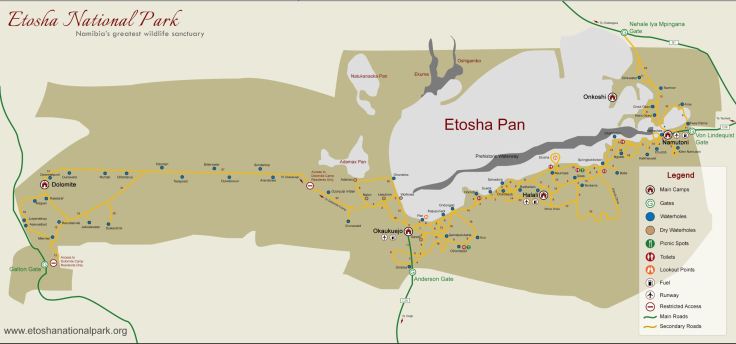
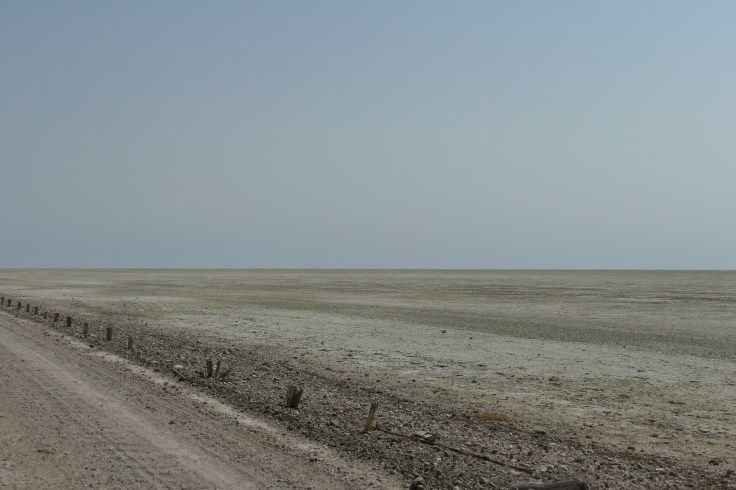
The Etosha Pan is the largest salt pan in Africa and the central part of the Etosha National Park. It covers nearly 4800 km2, which is about 23% of the parks 22.000 km2, and it is approximately 110 km by 60 km at its widest point. The pan itself is not accessible for tourists but the road from Okaukuejo to Namutoni leads along it and the “Pan lookout” allows to at least get an idea of what the pan feels.
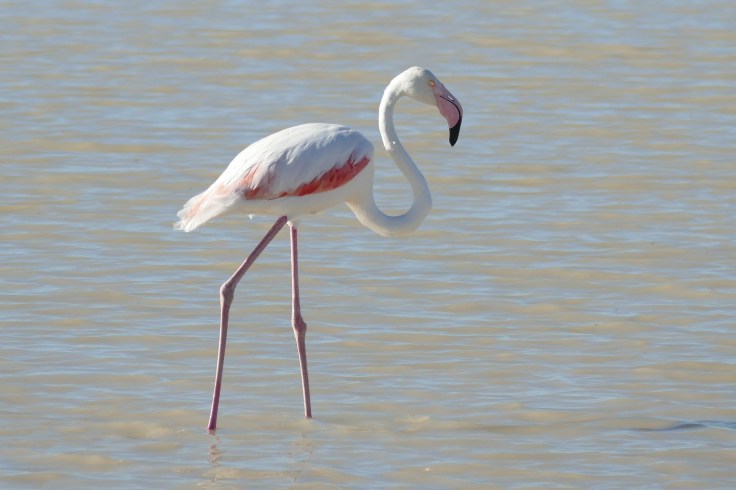
It partially fills with water after good rains during the wet season, attracting all kind of animals and birds as well as flocks of flamingos that migrate to breed.
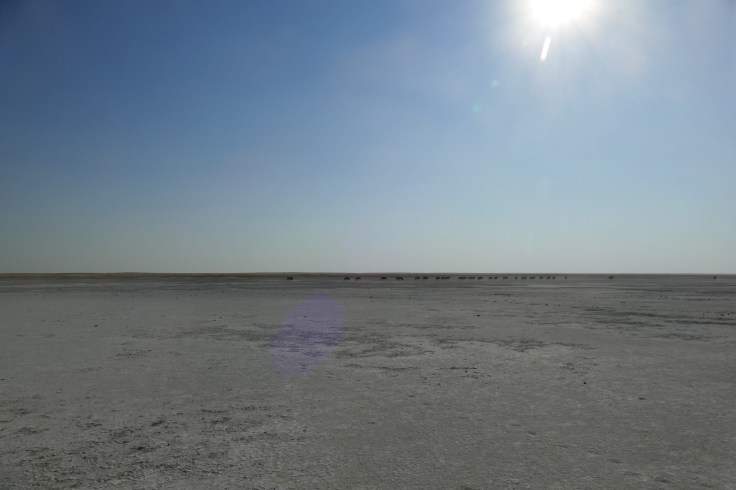
Although it can turn into an oasis, most of the time and especially in the dry season, it is a desolate, salty, arid area.
The view is endless, the salty soil cracked into hexagonal shaped pieces. A few hoof prints are still visible from the times when the rain had transformed this area into a muddy place some months before and spooky game paths lead deeper into the pan. The heat is unbearable, and even with sunglasses my eyes soon start itching due to the brightness.
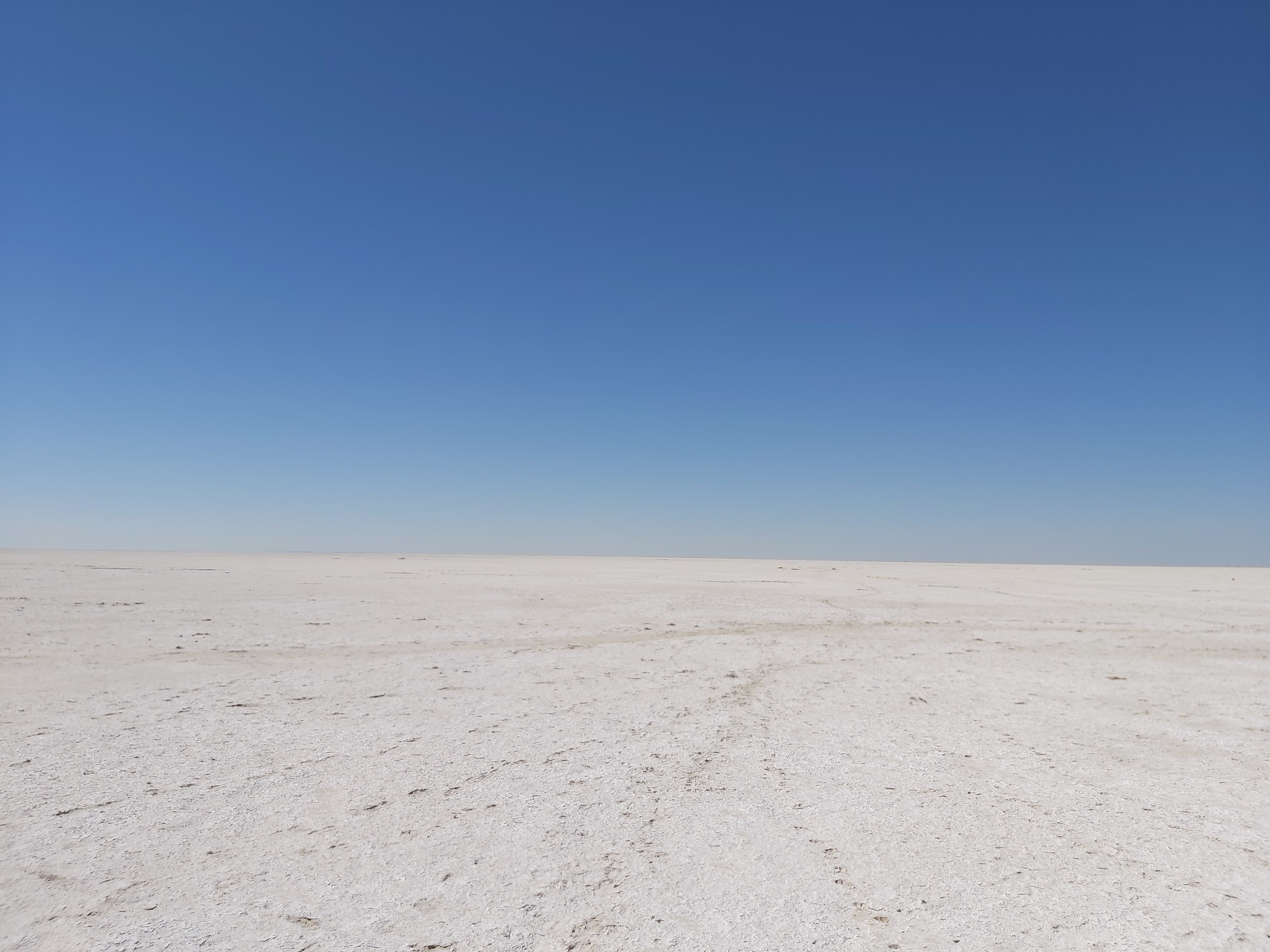
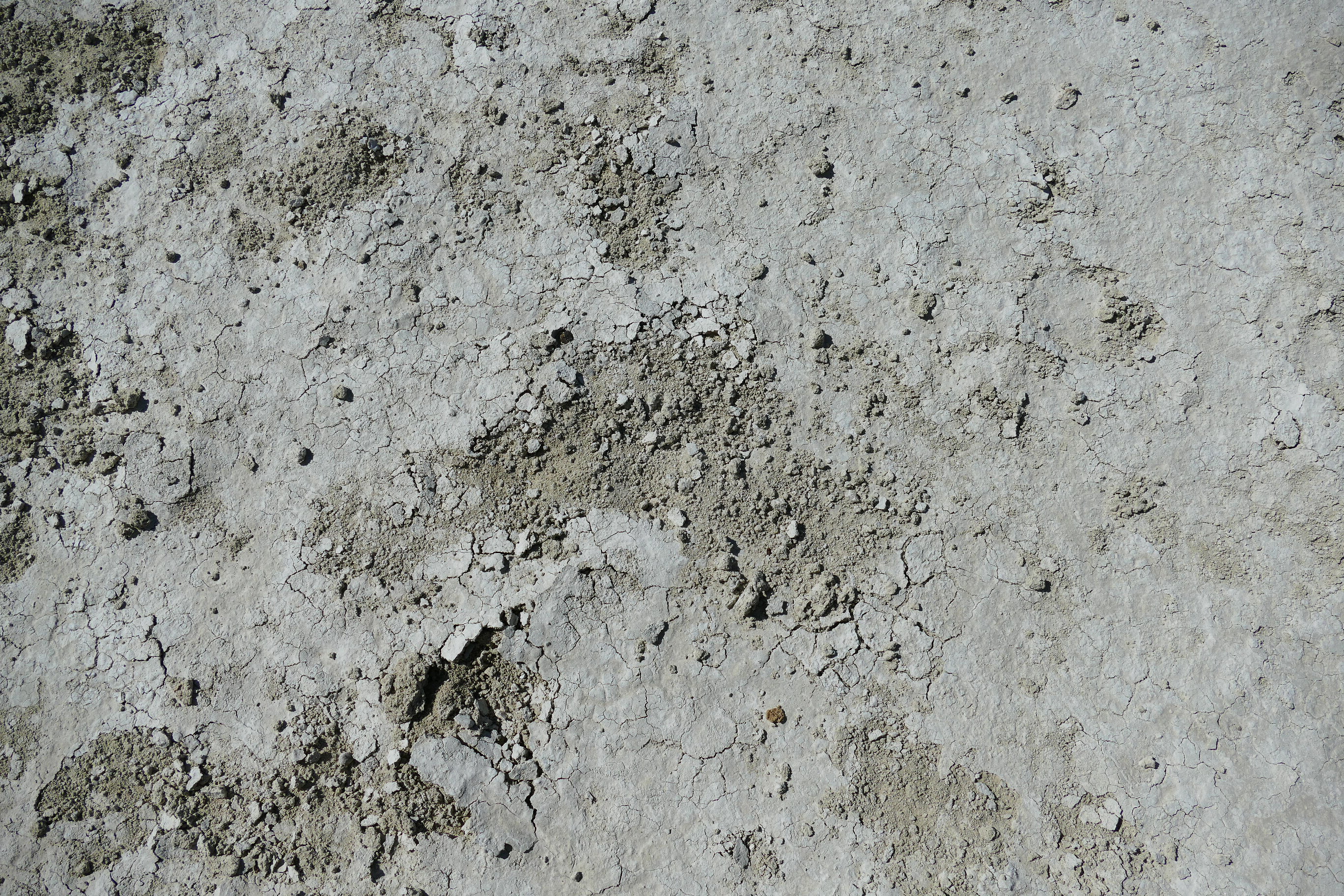
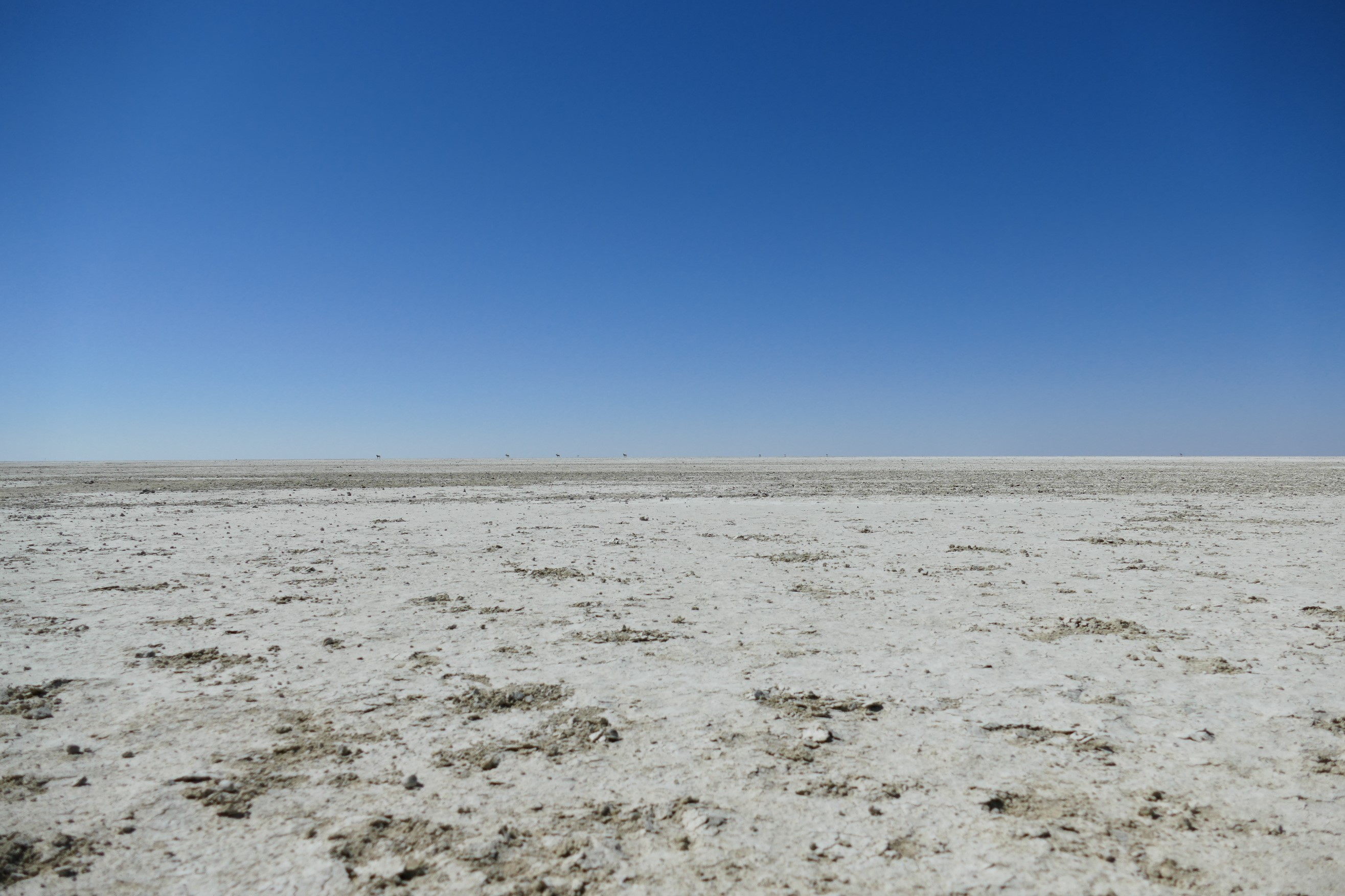
Vegetation is scarce and the water, if any, turns salty. Temperatures easily rise to 50°C (in summer up to 60°C)! I had the impression we reached that already and that I will deflagrate like a vampire in the sun if I only step out of the car!
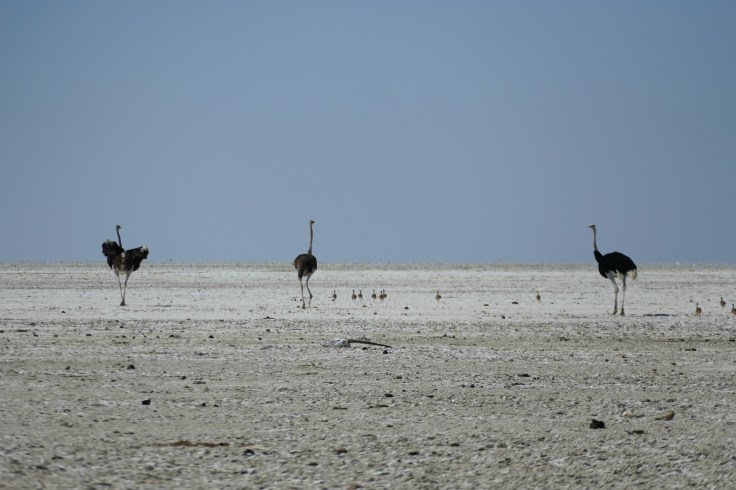
As “empty” and hostile as the pan looks from far, a closer look reveals that some species have adapted to survive out there: Algae, grasses, small shrubs, bugs, and even mammals (as the previously mentioned game paths proof).
I have seen some ostriches, jackals, gemsbok (oryx), and wildebeest out here and I have no idea how they deal with these harsh conditions. I am deeply impressed by their ability to survive out here.
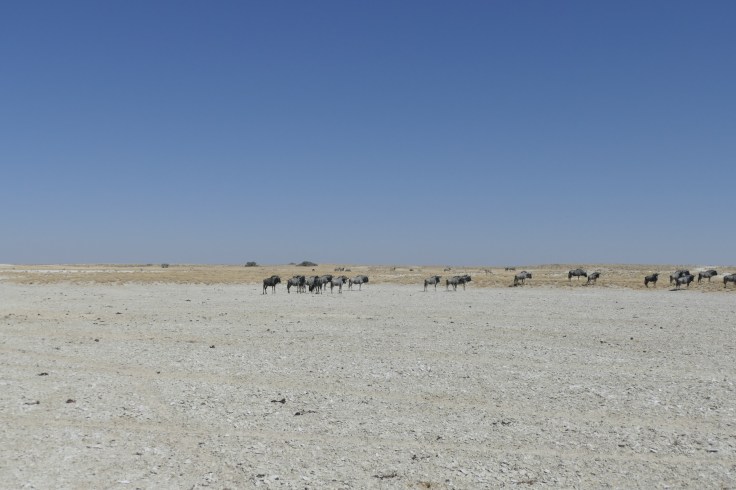
One speciality that comes with the pan are Etosha´s White Giants. I had never heard of them before I saw them in person. Once, on my way from Okaukuejo (central Etosha) to Namutoni (eastern Etosha), these exceptionally coloured elephants crossed my way.
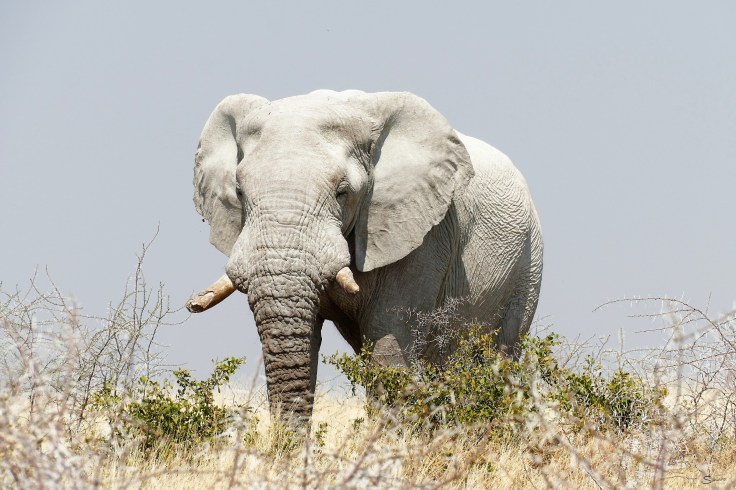
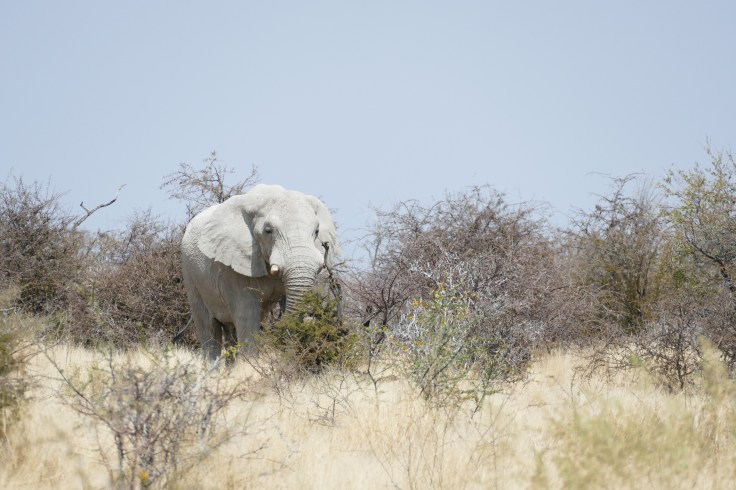
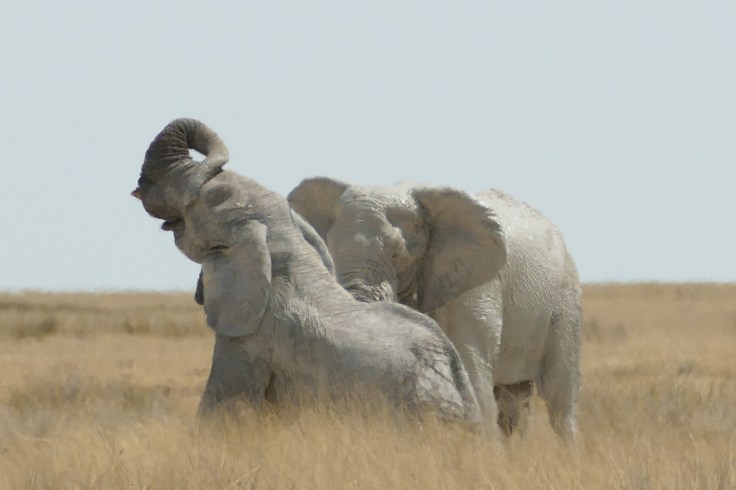
Why do they look so different? The answers lies in one of their favourite habits: Elephants love mud-bathing. I personally think they simply enjoy playing in the mud, but it also serves as sun-protection and to cool down on hot days (so mainly everyday …). From the colouration of an elephant you can literally guess where he (or she) took the last body treatment.
The greyish colour in these guys is typical for those who took a mud-bath close to the pan itself. The soil in the pan does not allow a lot of plants to grow but the blue-green algae is well adapted to it and animals using the waterholes close to the pan are dipped into the special colour that the algae creates in the water.
The Etosha Pan …indeed a fascinating and unique place!
Good night,
Sininho
 Sininho´s World
You must be logged in to post a comment.