I did not expect a lot when I went to the waterhole in the later afternoon. I had made myself comfortable when I noticed some vultures on a tree. Haven´t seen them around here and as they are usually a sign for a successful hunt, I intensively screened the surrounding.
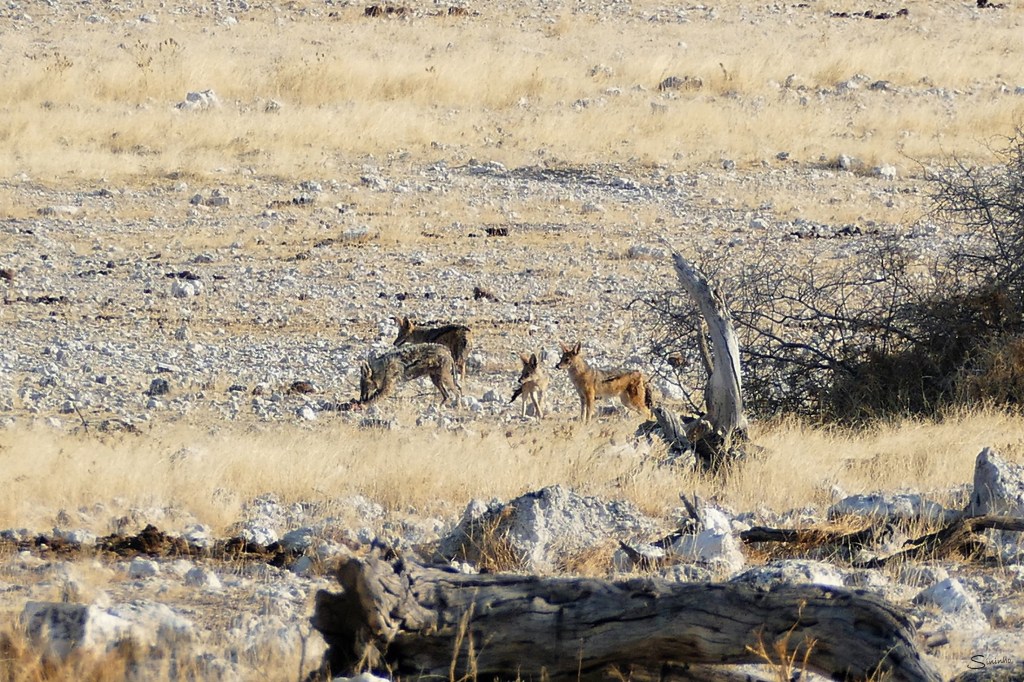
A lot of Black-back jackals were running around in the distance as well as Pied crows and a pair of Tawny eagles. Suspicious!
A closer look at the Jackals showed that they had got hold of a proper piece of meat. And then, just some meters more left, I saw it. A lion´s head behind a bush. Bingo!
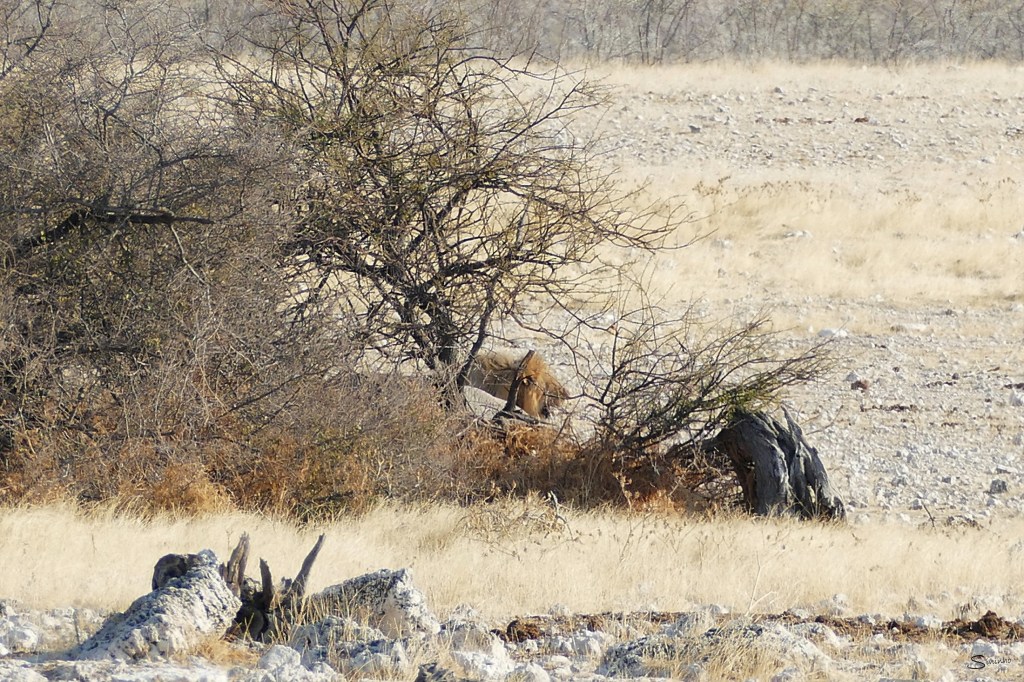
It was a bit unfortunate with the thicket in front of them, but that is nothing we can influence. The lion did not seem to make a move soon but then something else made her way to the waterhole. A lioness.
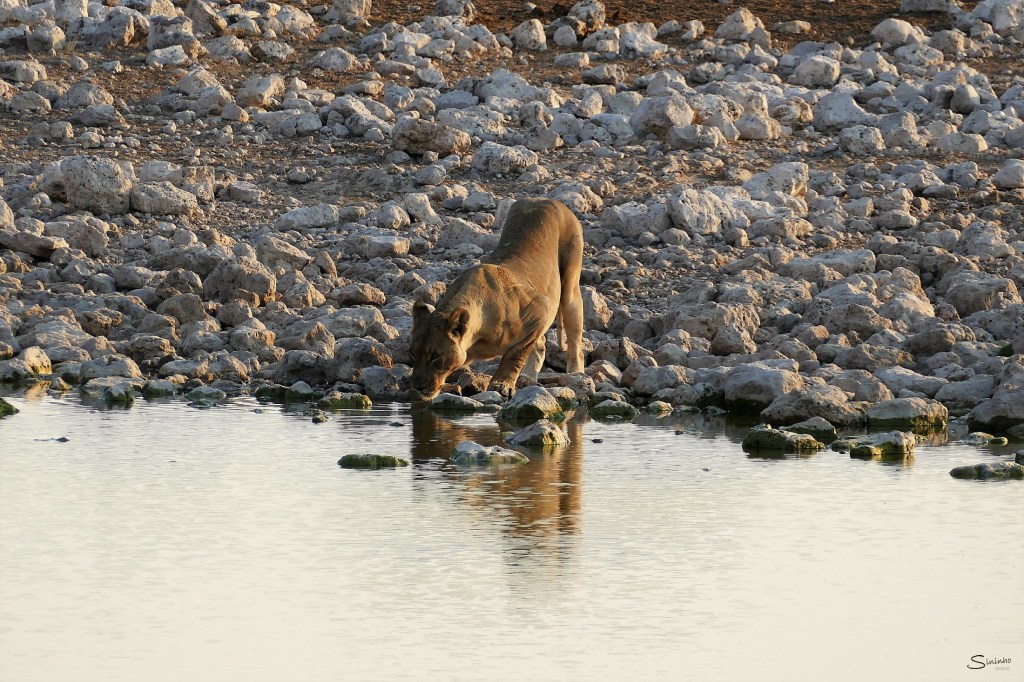
Oh, I love these moments when I know that Lions are around, and I was already looking forward to the night to hear them roar. And they did! As usual, I made my way back to the waterhole as soon as they started, in hope to see them again but when I arrived, “only” some Black rhinos were around as well as Giraffes and the latter clearly showed that the big cats could not be far. Giraffes are a good indication for predators around and if they stare in one direction, you can be sure that something is going on there, and only minutes later, I noticed some movement on the ground, just in front of them. A Spotted hyena. Although they are no danger for the tall mammals, especially not when alone, it is a special sighting to see them so close together.
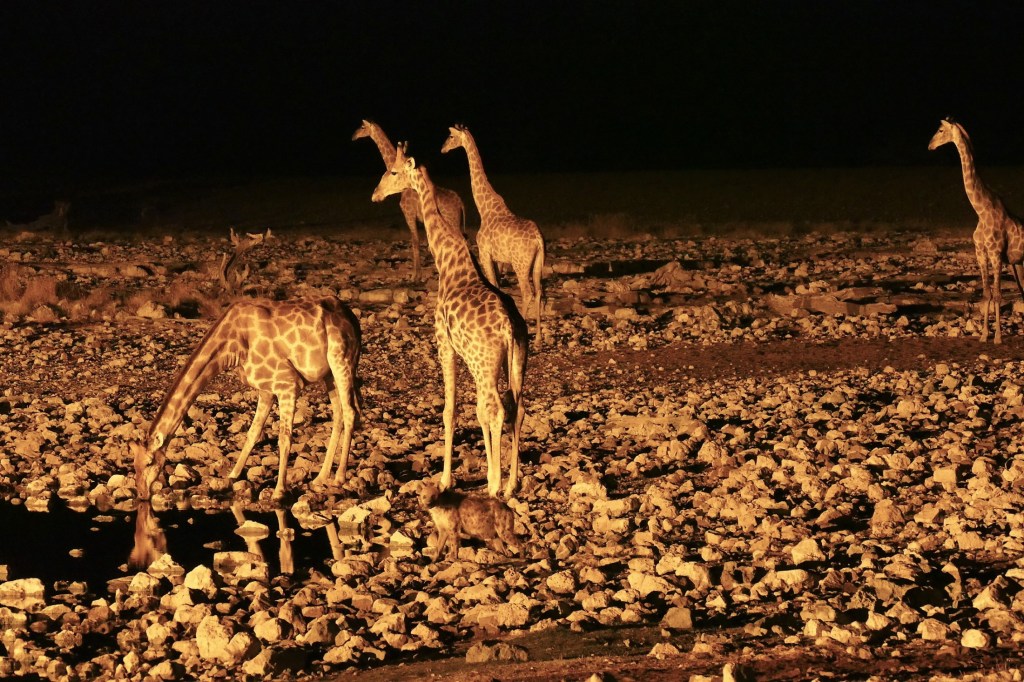
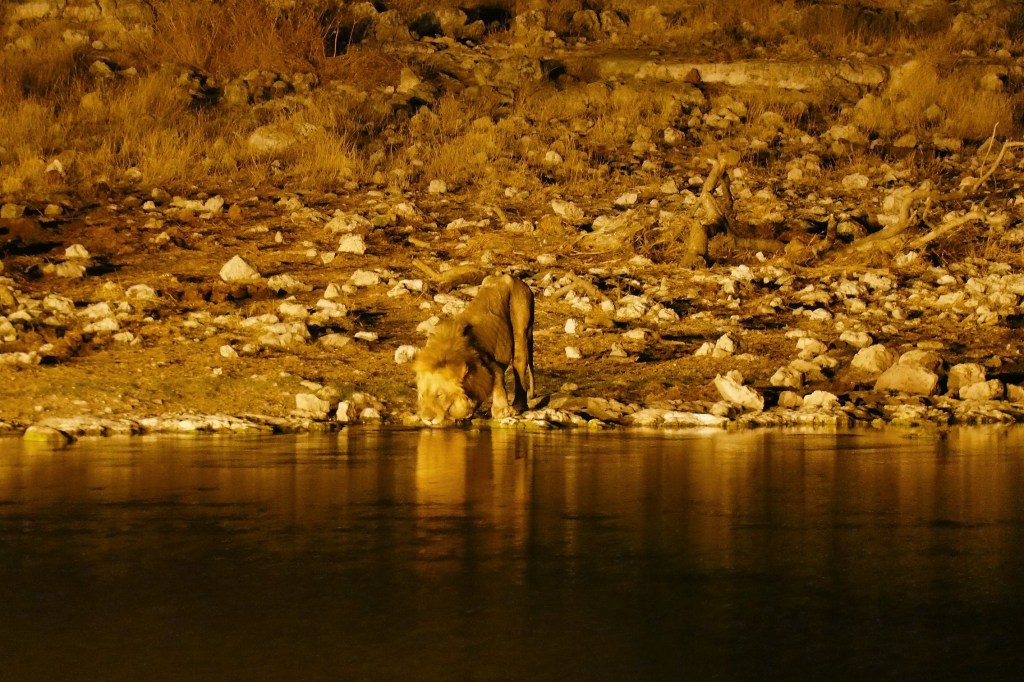
After around an hour, eventually one of the lions showed up to drink, and shortly after another one came along. The second one did not look well at all. Considering his wabbly walk, his back legs did not seem okay and hip bones were clearly visible. Shortly after he disappeared in the dark, a weak roar could be heard. Poor thing. I hope he makes it through the night and the next days, but he does not really look like ☹ ☹
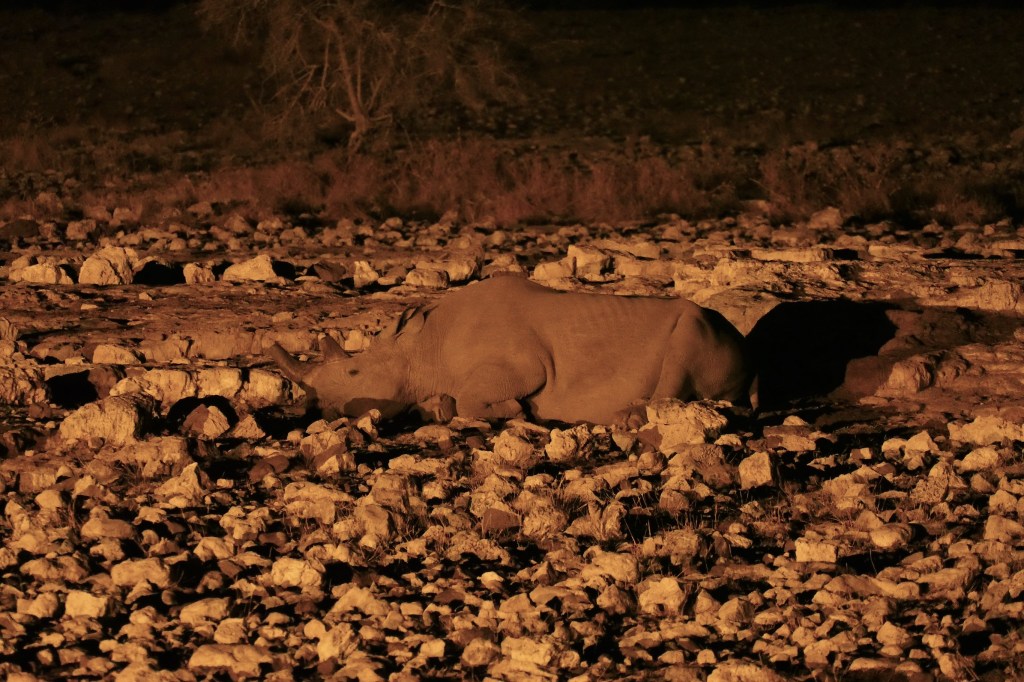
A period of silence started and even the Rhinos were calm and obviously asleep. To our all delight one of these ancient mammals had selected his bed right in front of the wall that separates us from the “wild” outside.
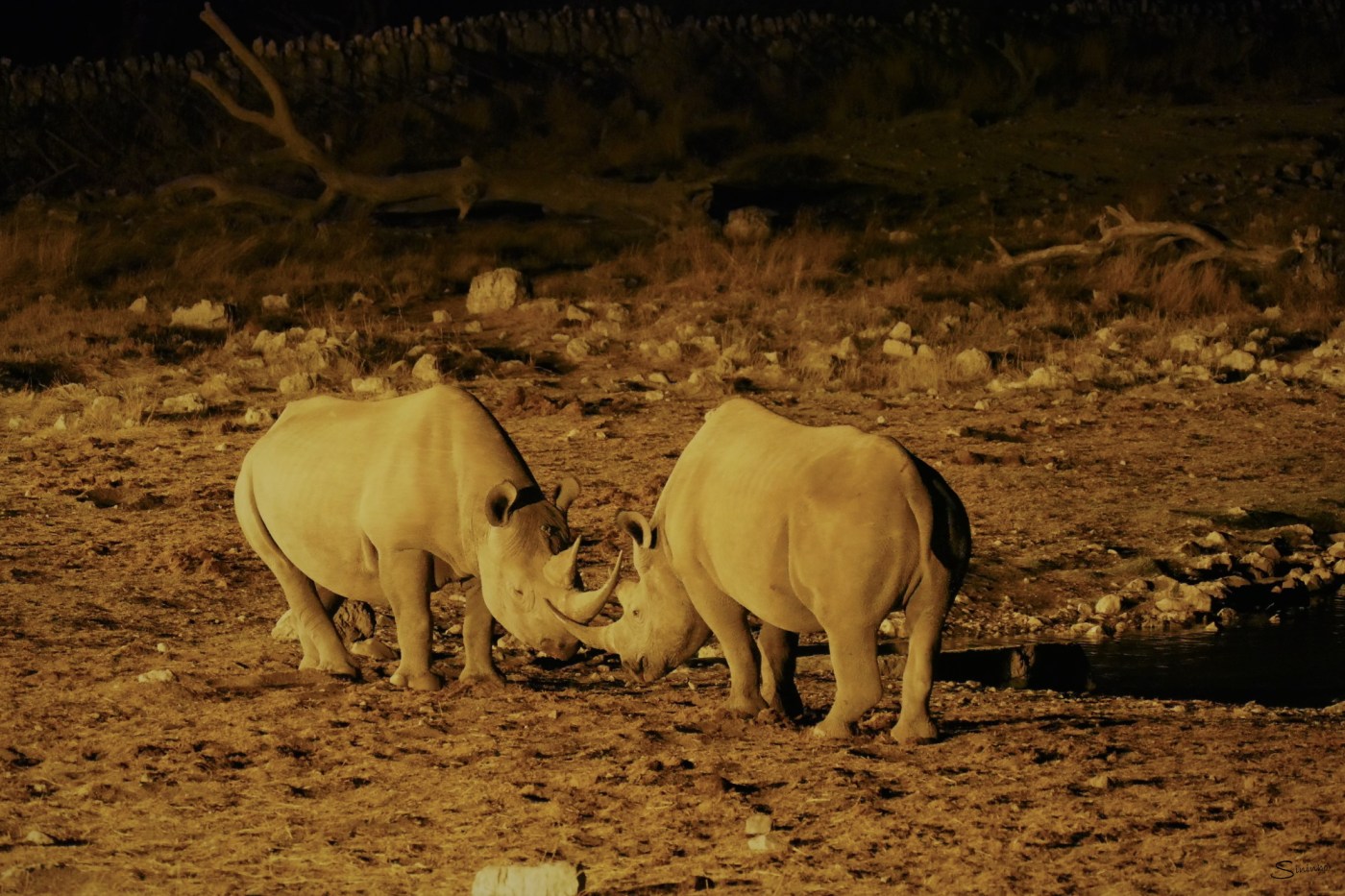
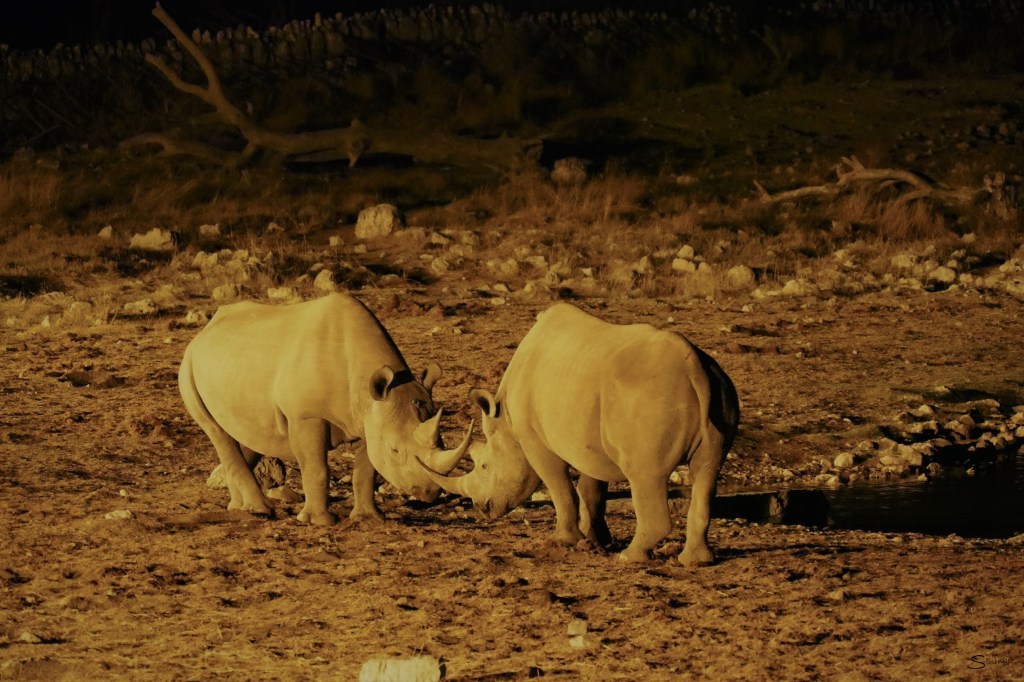
Sleeping Rhinos are nice to watch as it is such a rare sighting but more entertaining are they when awake. These two had a bit of a discussion. A bit of “pff pff” (their “hello”), a bit of horn rubbing, and one took off into the pool 😊
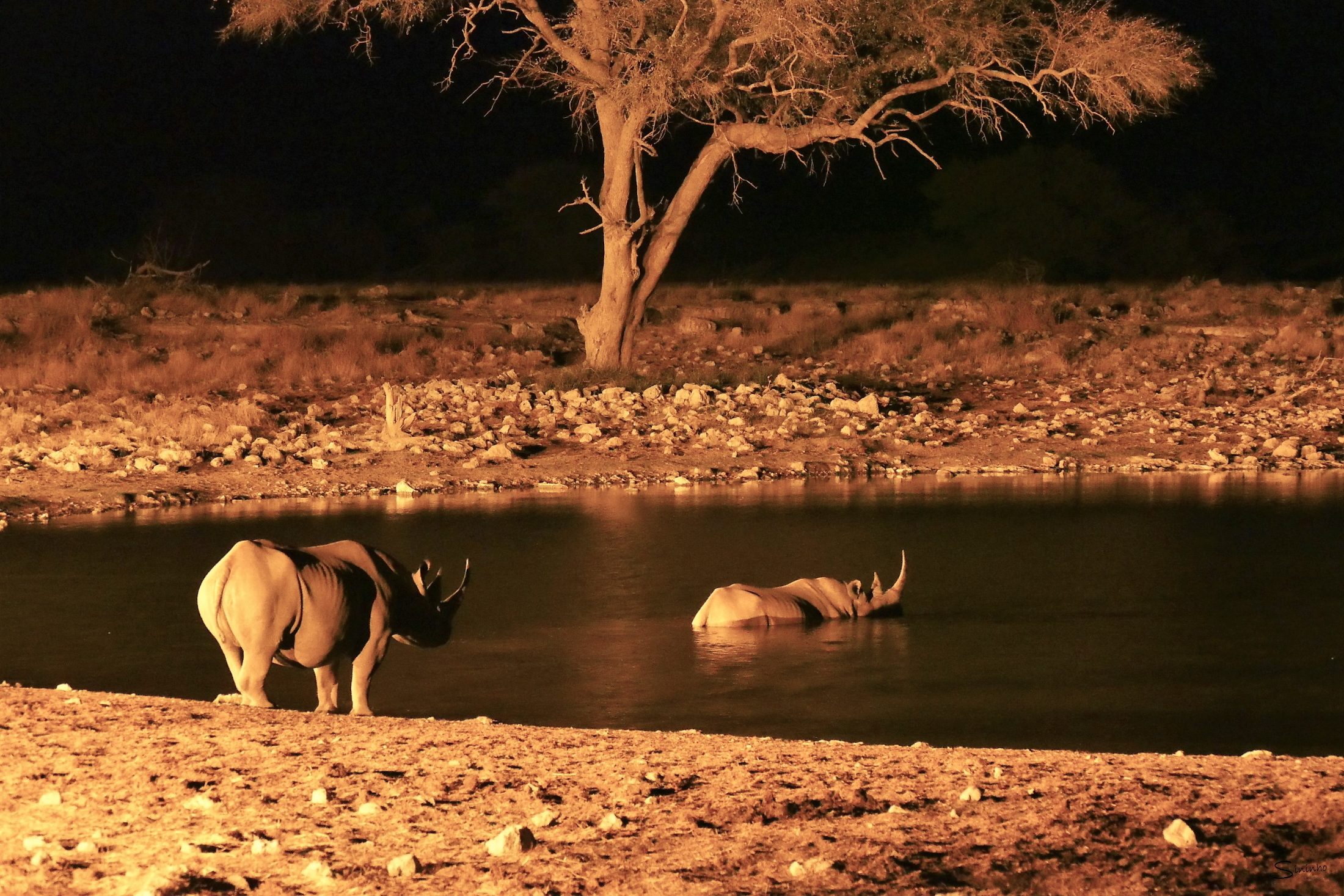
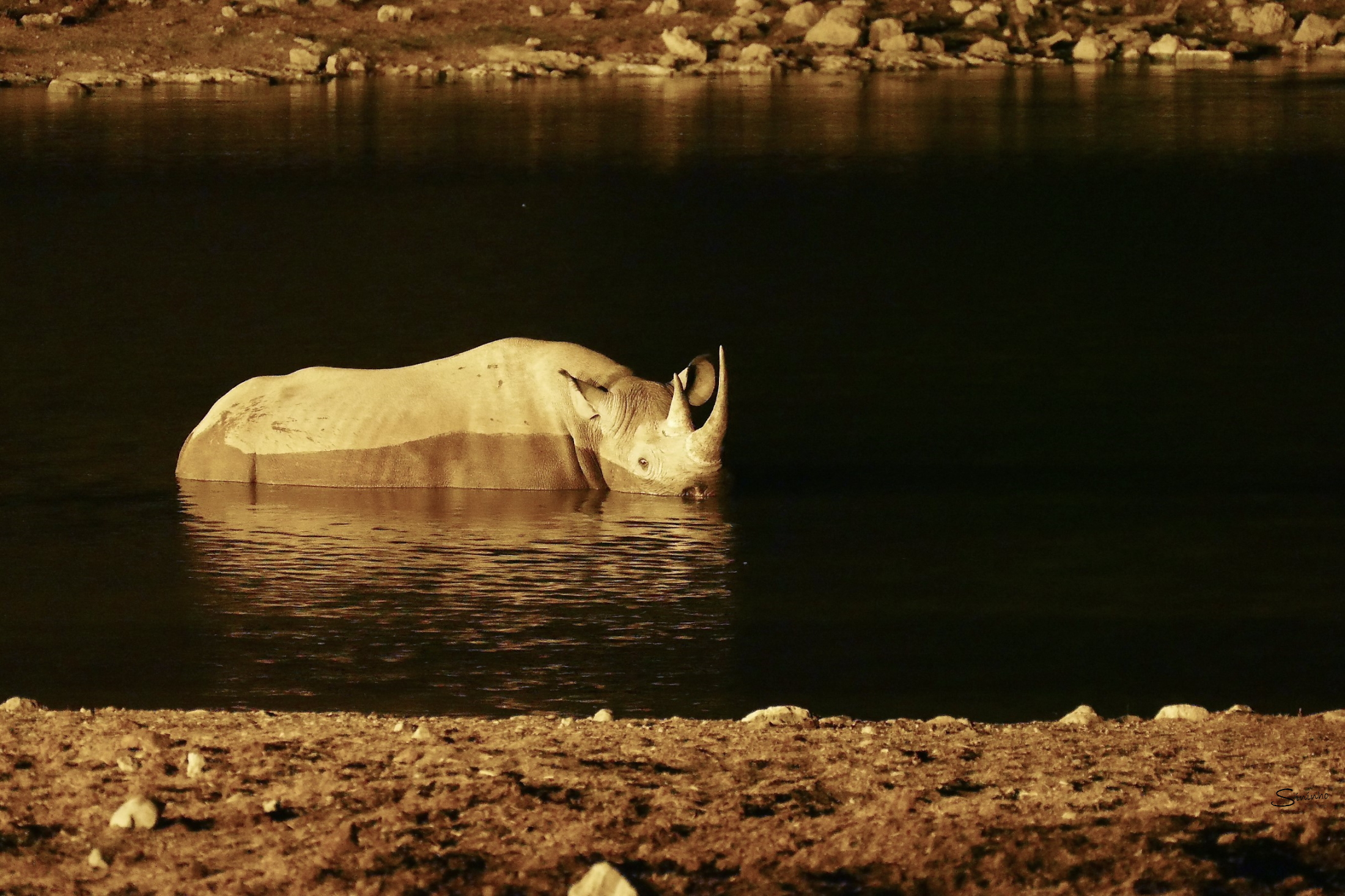
I went back home to get a coffee but and when I came back, three Rhinos were still present, two of them staring in the direction of the corner beside a little pavilion where tourists can enjoy a brilliant view on the waterhole. Could the Lions be in that corner? I have never seen them there before but that does not mean it would not be possible! I thought about going to have a look but the wall around that area is not the highest and the coward in me (the walls there are not really a barrier for animals with a decent jumping ability) decided to rather stay where I was, but I of course kept an eye on that corner in case something comes out.
I did not have to wait for long before I noticed a shadow slowly and nearly inconspicuous coming from exactly that corner towards the waterhole. Aha, I thought, the lions are indeed there!
But something was not right, and after an intensive look through the binoculars I knew what it was. That cat was not tawny-coloured but had rosettes all over its body. It was no Lion; it was a Leopard! A Leopard!
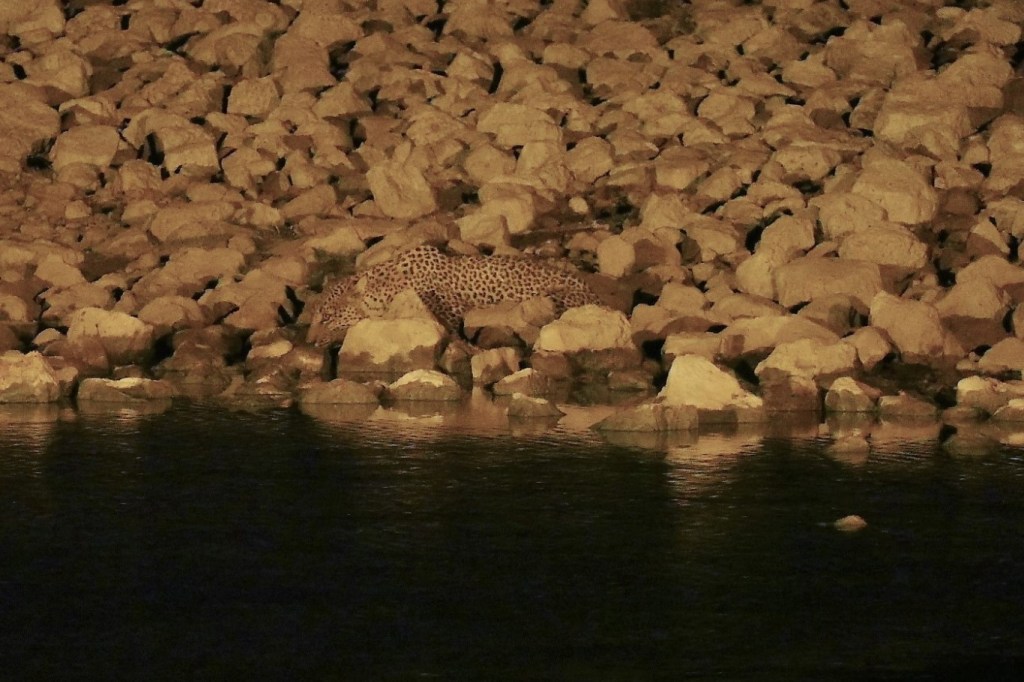
My heart started jumping! Leopards are not so easy to see and very shy and usually found in rocky, dense vegetation (which we not really have here).
What a sighting!!
After the Lions, the Rhinos, the Giraffes, the Hyena and the Leopard, I was bright awake and not ready for bed, so I stayed a bit longer. I still hoped for more Lions and when I know they are around I always fear that the show up just when I left. But for the next twenty minutes nothing happened.
I thought I saw another Jackal running around. Jackals have a distinctive trot, they seldomly walk slowly but are restless and constantly on the move. But again, something was different. It was a bit smaller and lighter than a Jackal, but probably was only a young one then.
It was on the other side of the waterhole and the artificial nightly illumination is nice, but not really bright, so it took me a while to get a better view on that little thing that looked a bit like our foxes in Europe, just sand-coloured. It was indeed not a Jackal, but – I think – a Cape fox (Vulpes chama)! What a cutie!
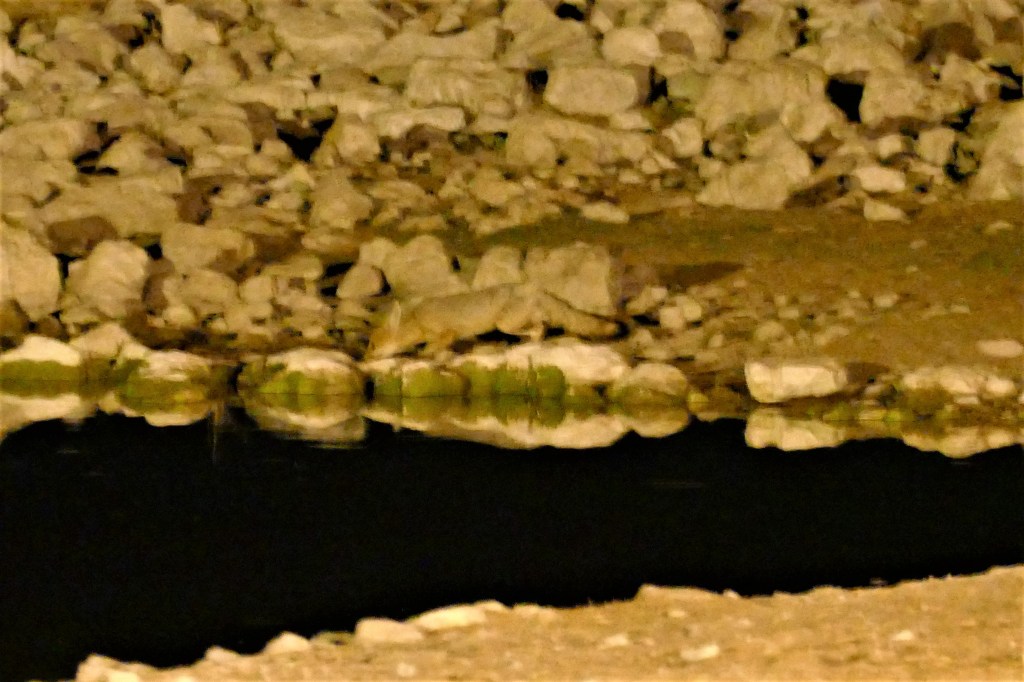
| The Cape fox is nocturnal and most active just before dawn or after dusk; it can be spotted during the early mornings and early evenings. During the day, it typically shelters in burrows underground, holes, hollows, or dense thickets. It is an active digger that will excavate its own burrow, although it generally modifies an abandoned burrow of another species, such as the springhare, to its specific requirements. They are solitary creatures, and although they form mated pairs, the males and females are often found alone, as they tend to forage separately. They are not especially territorial but will mark their territories with a pungent scent. Although a normally silent fox, the Cape fox is known to communicate with soft calls, whines or chirps. However, it will utter a loud bark when alarmed. When in an aggressive mood, the Cape fox is known to growl and spit at its attacker. To show its excitement, the fox lifts its tail, the height of the tail often indicating the measure of excitement. (Source: Wikipedia) The only “true fox” in southern Africa, the Cape fox is part of a group of related species that share specific characteristics: a pointed muzzle, distinctive triangular ears, a flatter skull than other canids, and a tail that’s a different fur color at the tip. The Cape fox’s large ears and excellent hearing help it detect prey and predators. When it forages for food, such as small rodents living underground, it first listens carefully. When it hears prey moving, the Cape fox rapidly digs to reach it. In addition to live prey, it eats a wide variety of things, including wild fruits and vegetables. It may also scavenge for food. (Source: National Geographic). |
What a night … probably the first here I cannot sleep.
Good night,
Sinino
 Sininho´s World
You must be logged in to post a comment.