The last week started disappointing.
On Monday I had been to Grootfontein to hand in my visa extension application, just to hear that this cannot be done here but must be mailed directly to the Windhoek office. I was so stupid not to ask for the mail address because that later became a problem as I could not find any information anywhere and had to learn at the end of the week that the documents must be send in personally, not via email or online application as I understood it.
Anyway, I made my way back to Okaukuejo. It is a long drive for half a day, but I still enjoyed it a lot as the landscape in the western part of Etosha differs from what I am used to. Around Okaukuejo we have a lot of grassland, steppe, and shrub savanna whereas between Halali and Namutoni there is lower to high tree savanna.
I pretty much appreciated the passing landscape and especially one shrub caught my attention: Orupunguya, Lerwanale, ǀɢáli … or simply Acacia nebrownii.
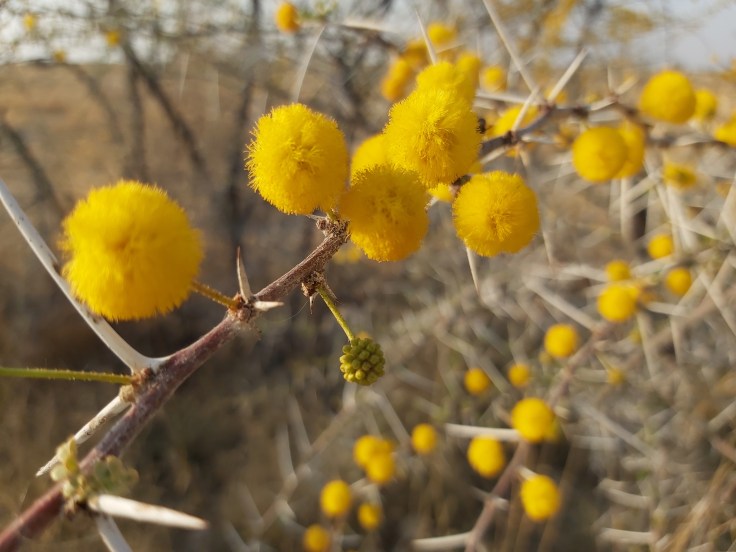
The Water thorn is one of the common shrubs here in Etosha and for the last months, I did not pay too much attention to it. Although I was impressed by its numerous straight, slender white spines, it was simply a shrub. But a couple of days ago, little yellow, fluffy ball-shaped flowers started decorating this untidy plant. In some regions they are so abundant that the area is dipped into a beautiful yellow and the air is filled with a nice, sweet scent. The smell of spring.
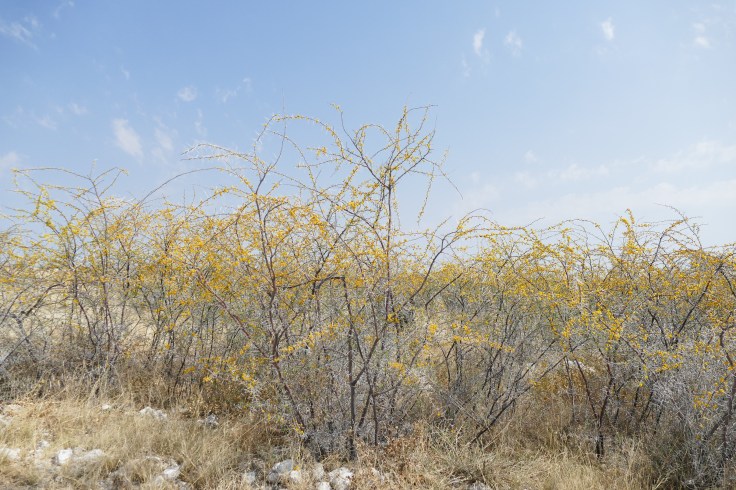
It is like a miracle … the days are burning hot and the last rain was in March, so all I see is an arid and dry landscape, just like our cornfields in autumn, and still in these rough conditions, these plants find a way to survive and to start a new cycle.
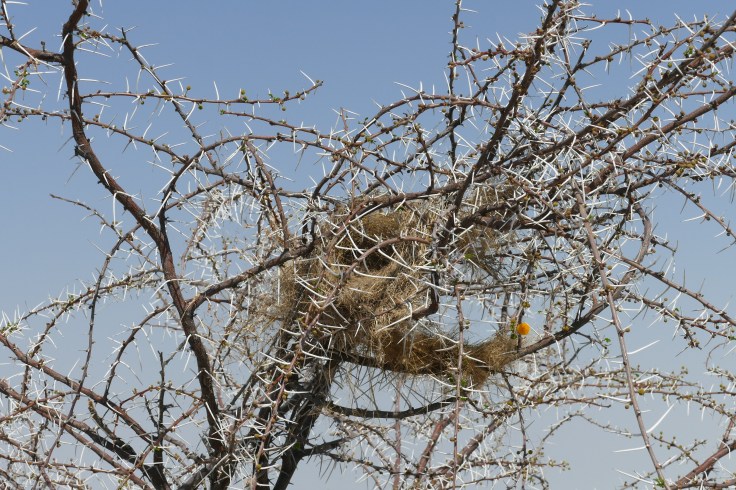
But I am not the only one that appreciates the new growth: whereas birds use the plant all year long for nesting, plenty of insects now feed on them, and so do giraffe, springbok, steenbok and sunbirds are happily enjoying them.
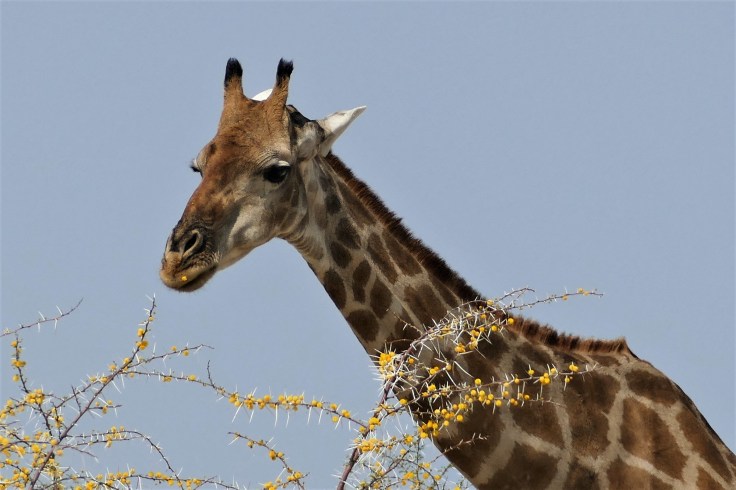
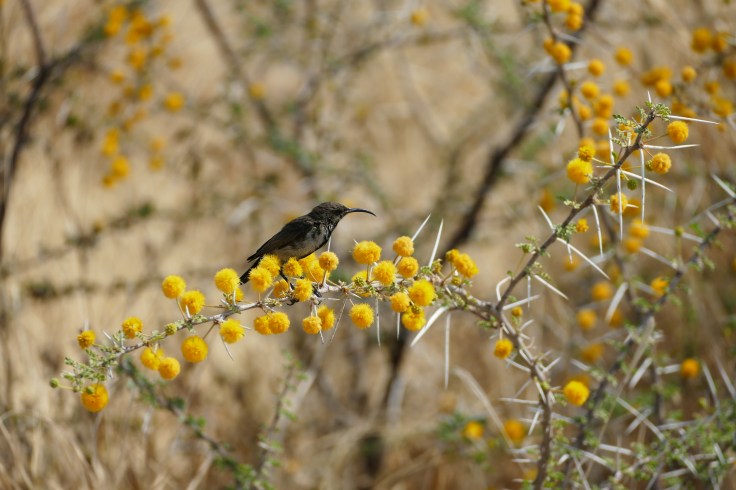
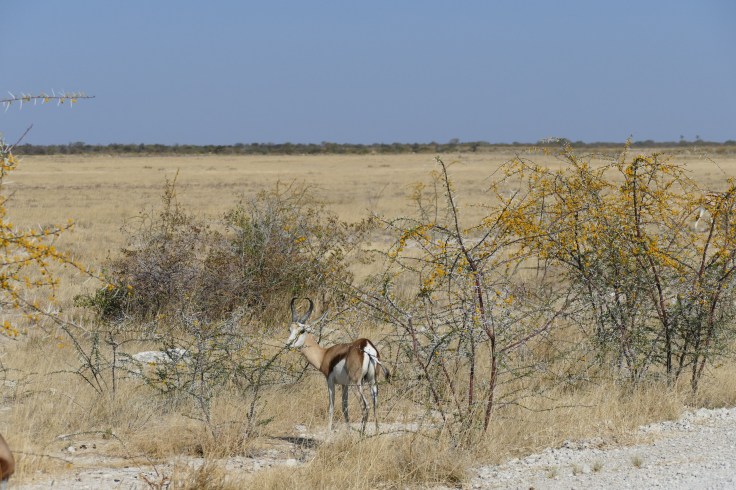
The rest of the week was more or less dominated by work and lions. I think it was around Wednesday when I realised that I really spend a lot of time in front of the computer to get my work done. It is of course a good thing but I mustn´t neglect my “bush time”, right? I decided that it is time to get out and relax mind and soul.
I drove to Okondeka, a waterhole about 20 km away from the Okaukuejo camp, to have a look for the lion pride that lives there.
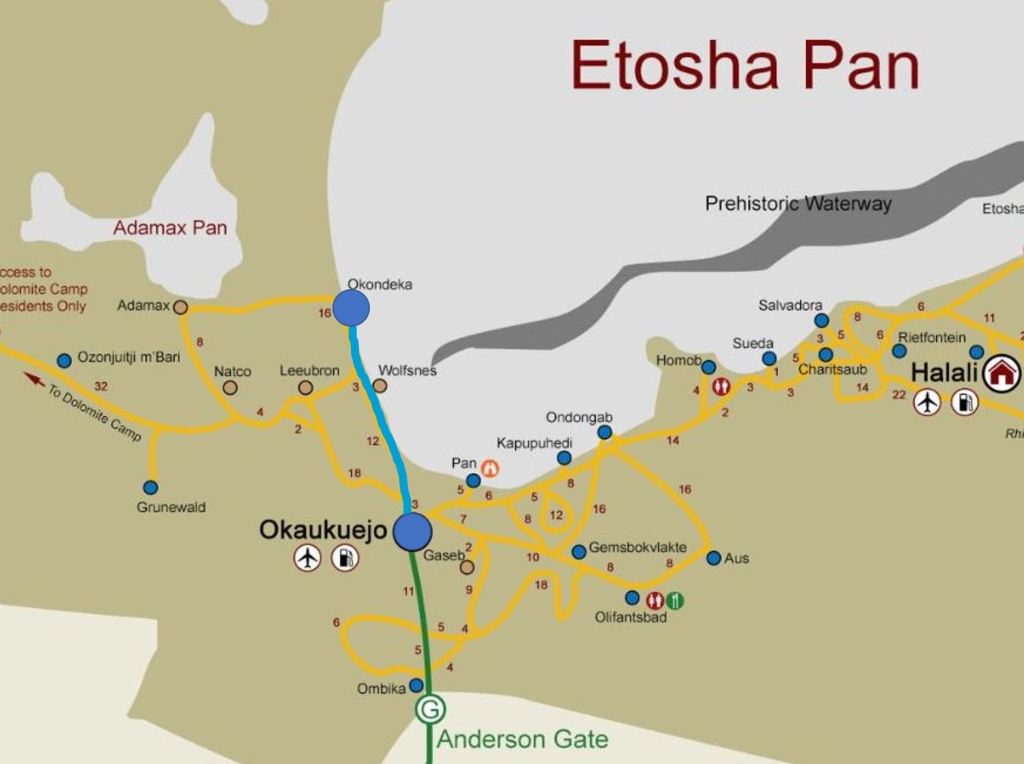
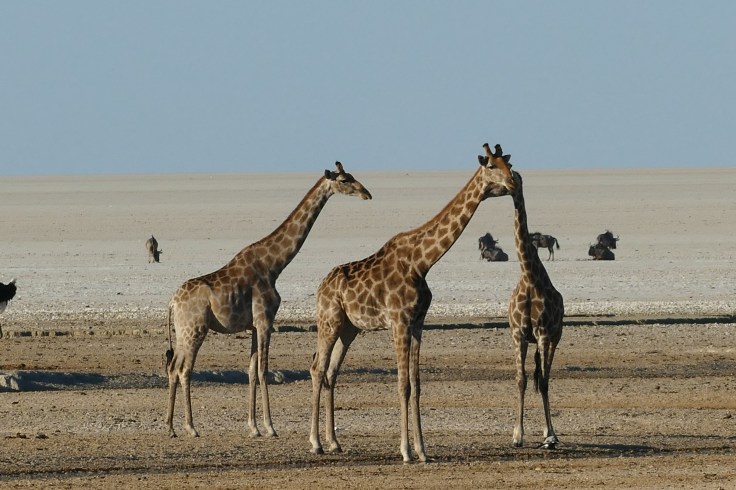
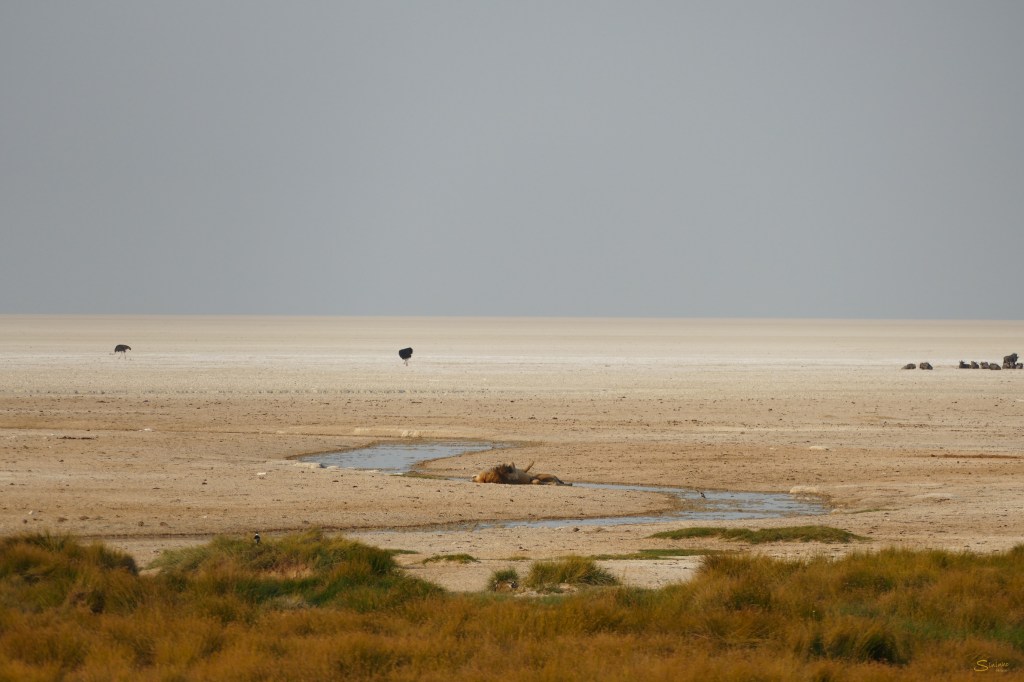
When I arrived, the shrinking waterhole was busy with Oryx, Wildebeest, Ostrich, some Jackals, and three giraffes were on their way for a drink. I spend some time there, enjoying my coffee and the late afternoon sun that was dipping the landscape in a beautiful warm light.
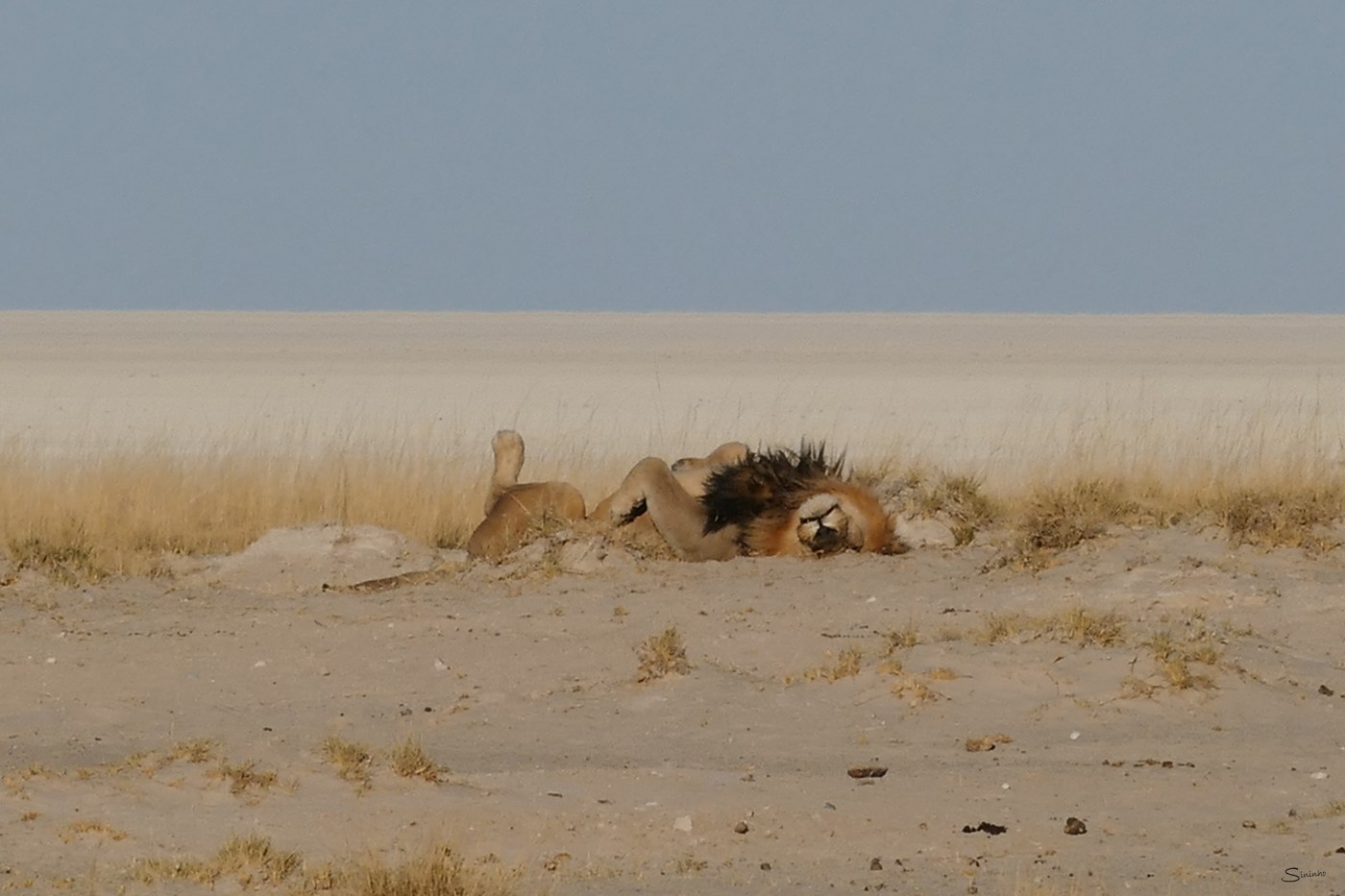
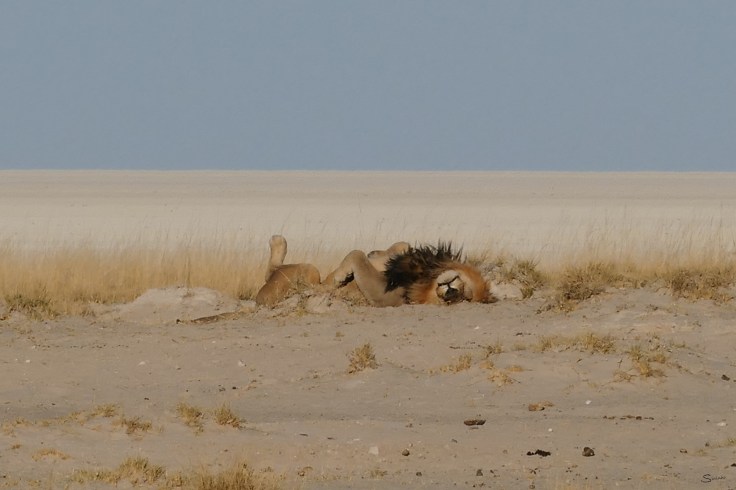
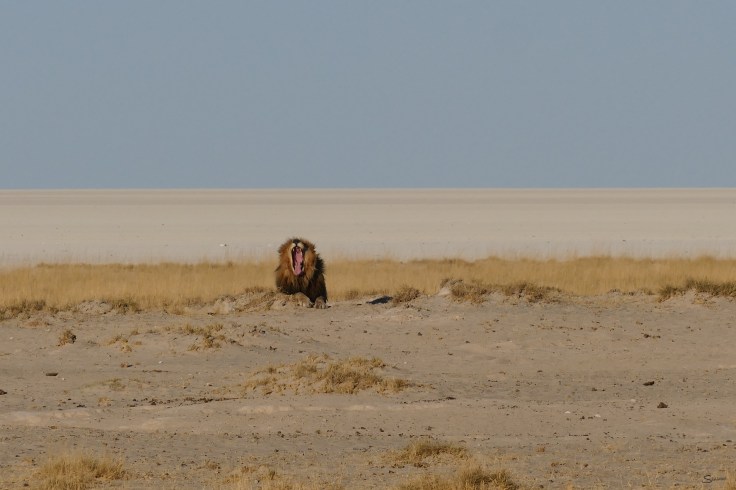
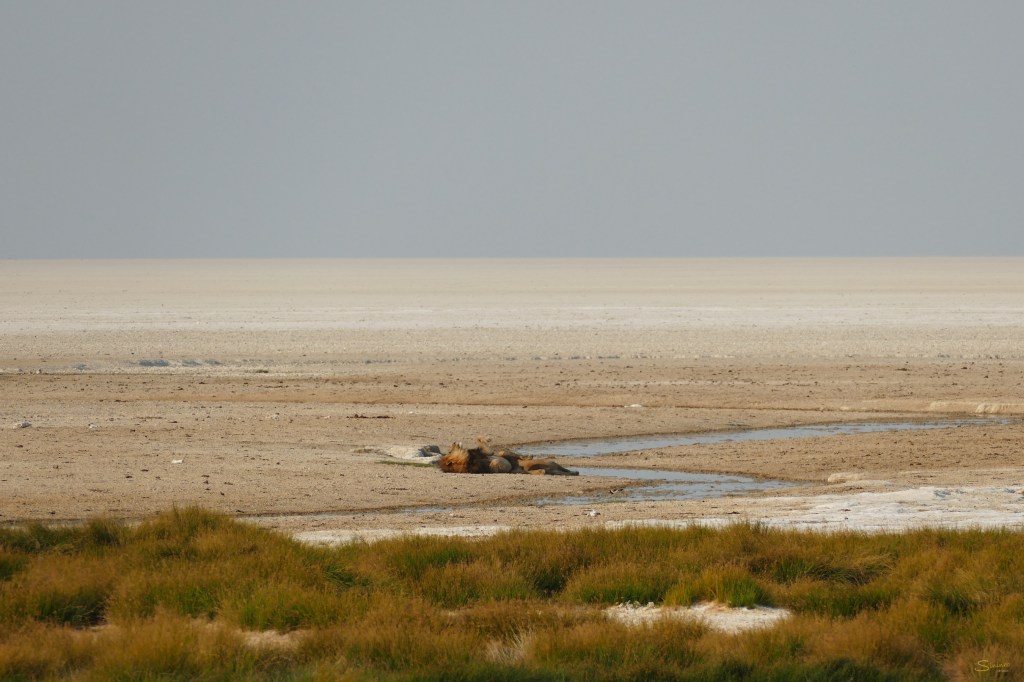
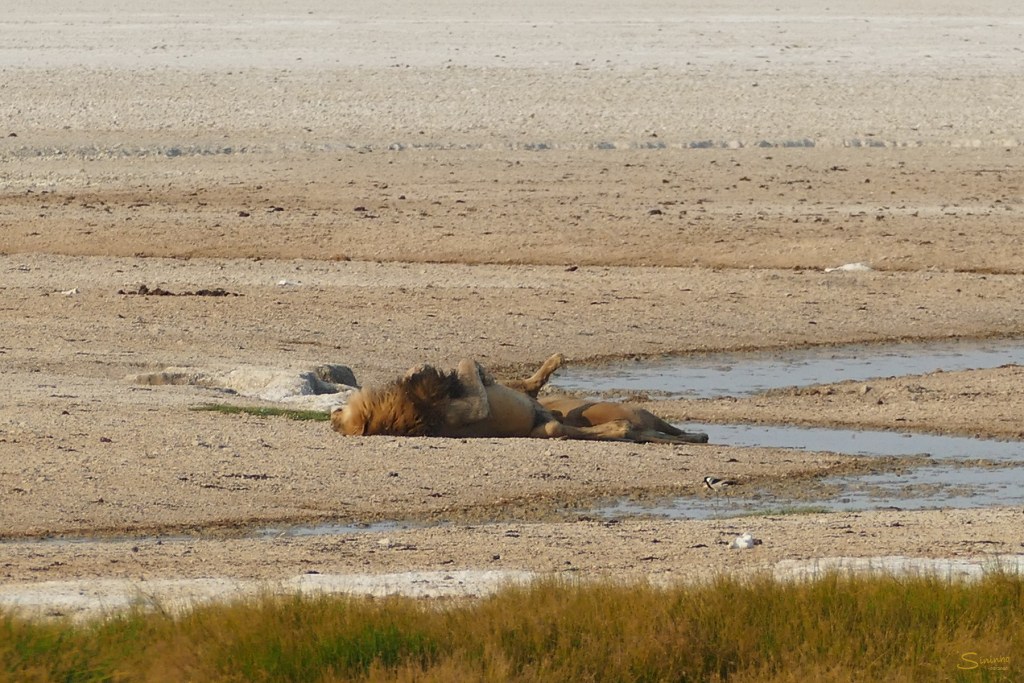
There was still some time left so I thought about taking a detour via Leeubron instead of driving home directly but just about 100 metres down the road, something dark on the last patch of grass before the Etosha Pan caught my attention. I could not remember any bush there so stopped and a look through the binoculars showed the smiling face of a sleeping lion with all four paws up in the air. His gorgeous dark mane was forming a perfect contrast to the tawny grass. What a pretty boy. Bingo!
And he was having such a hard life. Lying around, lifting the head from time to time to have a big yawning and a sneeze (very cute!), just to fall down for another nap again …
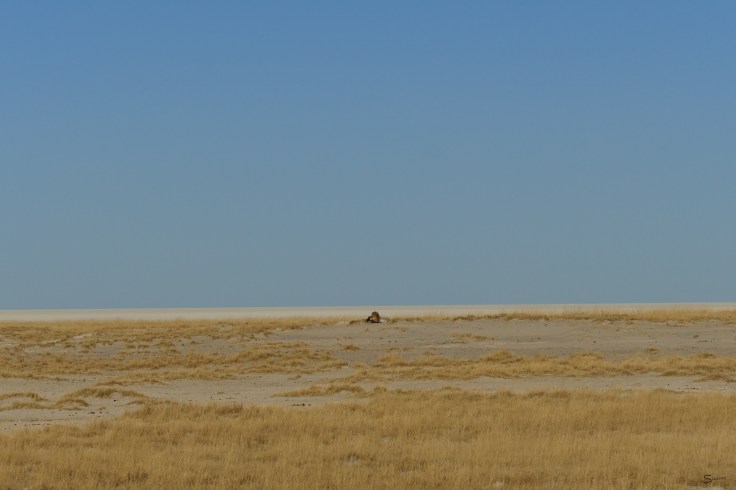
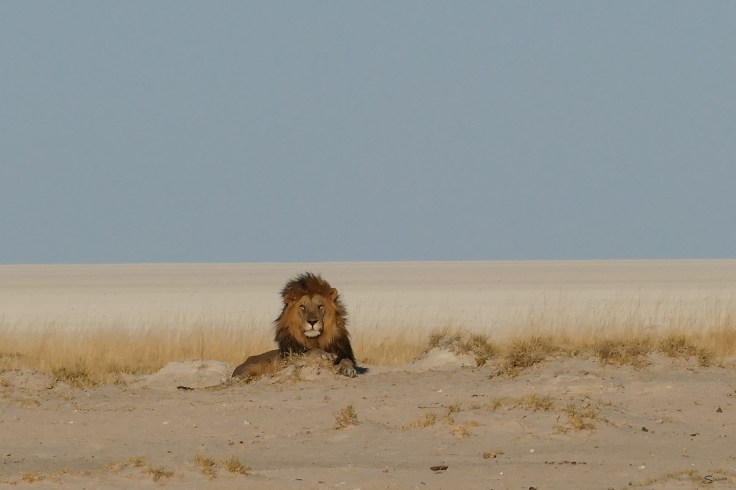
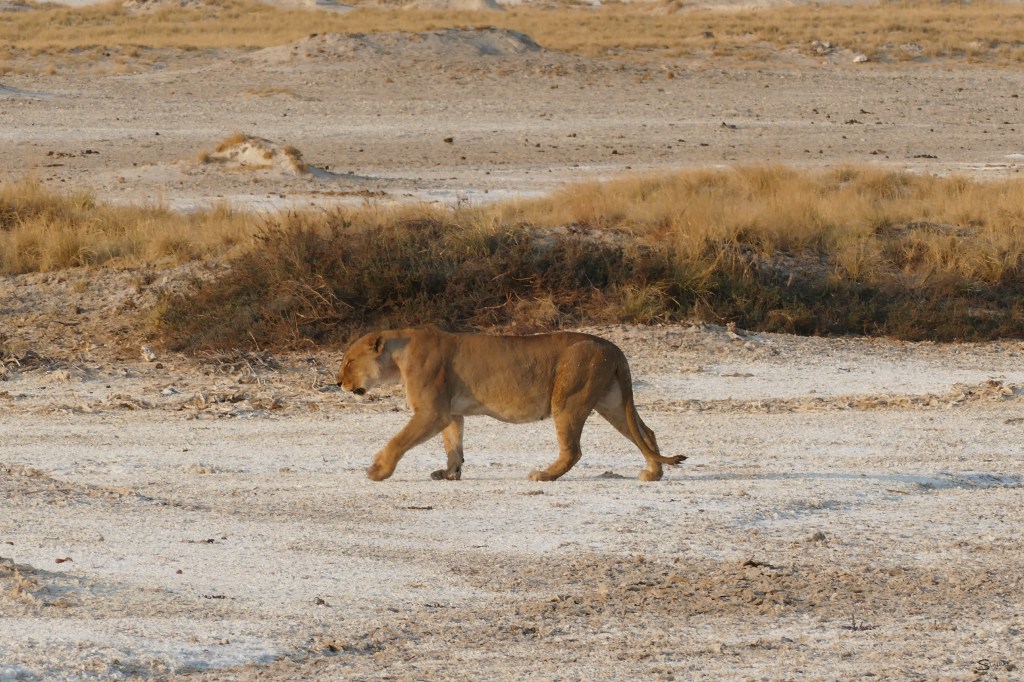
I wondered where the rest of the pride was and screened the area but could not see anything when out of nowhere another head popped up from the grass in the distance. I parked the car a bit closer and found about five lionesses. It is incredible how lions blend in with the environment! You hardly see them when they lay down or don´t move.


I cancelled my detour and rather watched them a bit longer when I noticed that one of the lionesses became alert. She got up and in stalking position she walked into my direction while the remaining four stared in the same direction. Following their gaze, I noticed a Springbok unknowingly strolling towards them, stopping from time to time but then continuing its way to the waterhole.
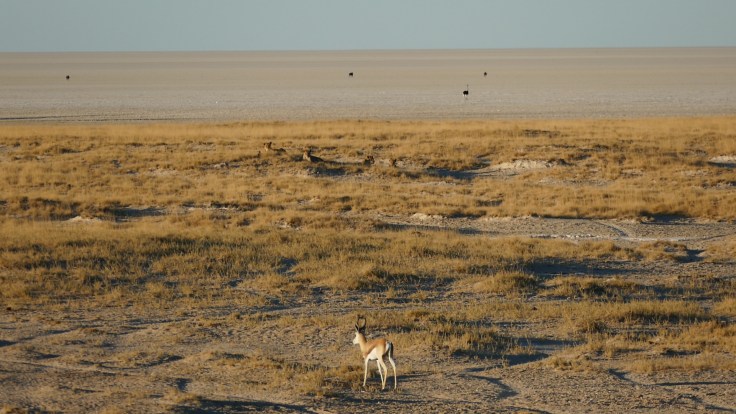
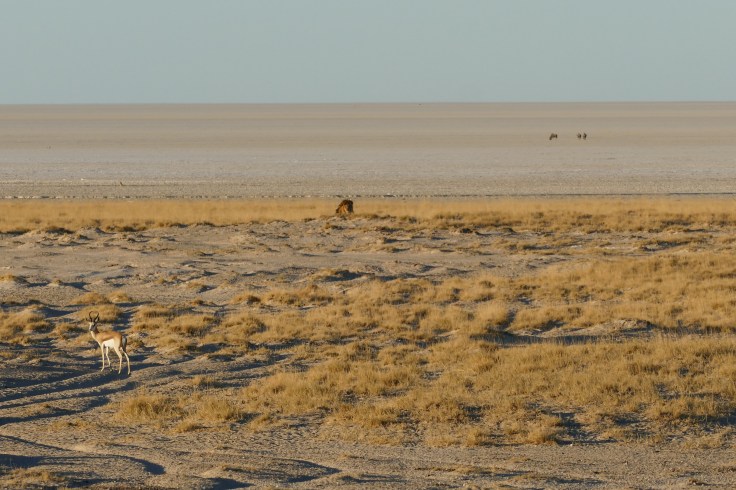
It is special to watch predators stalking their potential prey. They must try to get as close as possible without losing their cover which needs patience and time. Unfortunately, time was nothing I had as the sun was setting already and I had to be back in camp before darkness ☹
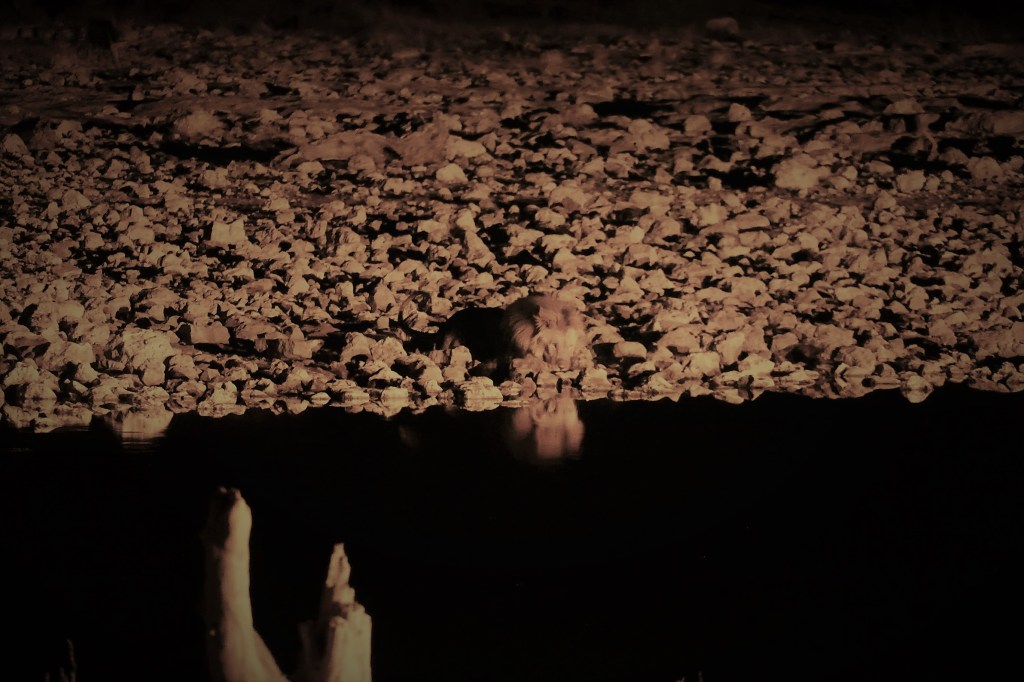
At least I was gifted with a nice close-up of the big male at the Okaukuejo waterhole at night.
A couple of days later I went back to Okondeka and was not disappointed. The lions were still there (or maybe again), and still occupying the remaining water. I personally find that a bit mean. Considering that lions anyway sleep the most time during the heat of the day, they could find themselves a nicer spot instead of blocking the way to the precious water for all the other animals that are desperate to get there.
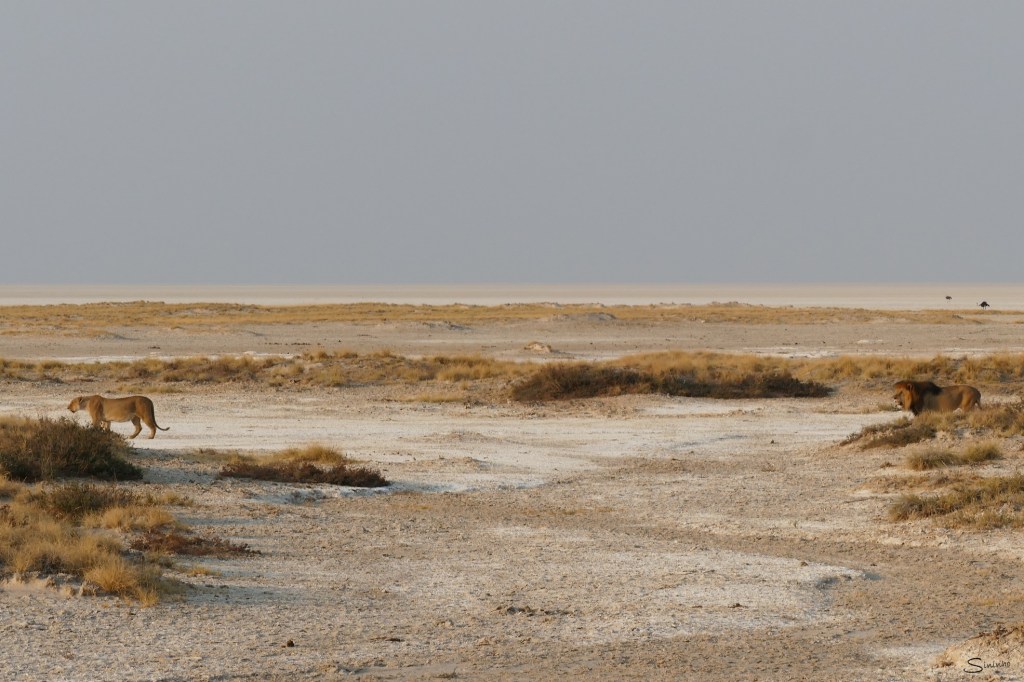
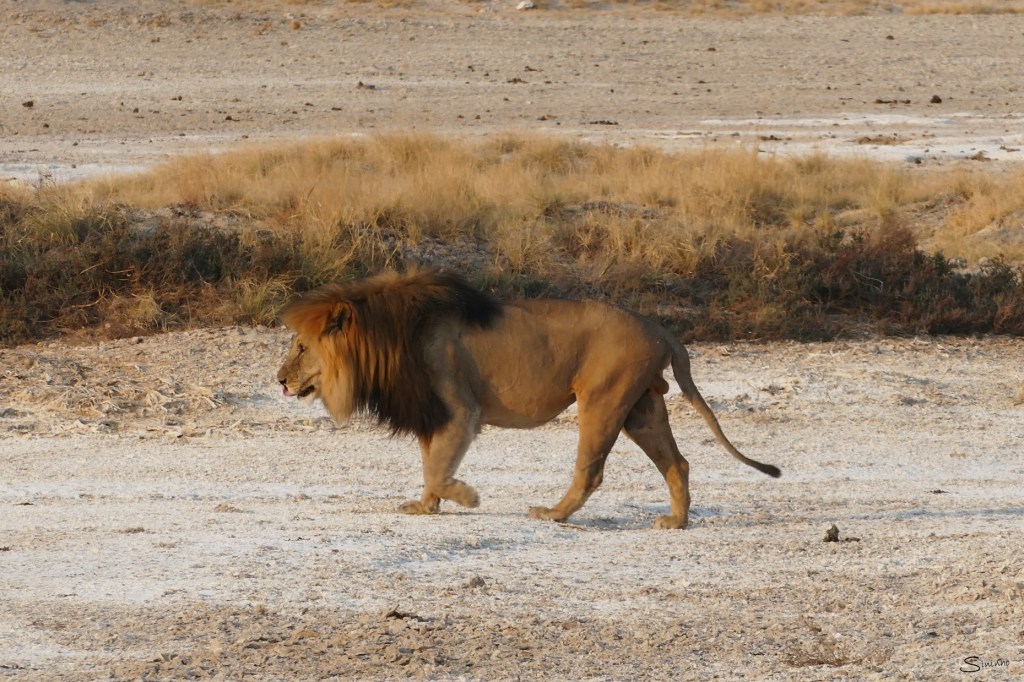
The route in-between Okondeka and Okaukuejo always fascinates me. The area is dominated by grassland on the one side and the Etosha Pan on the other one.
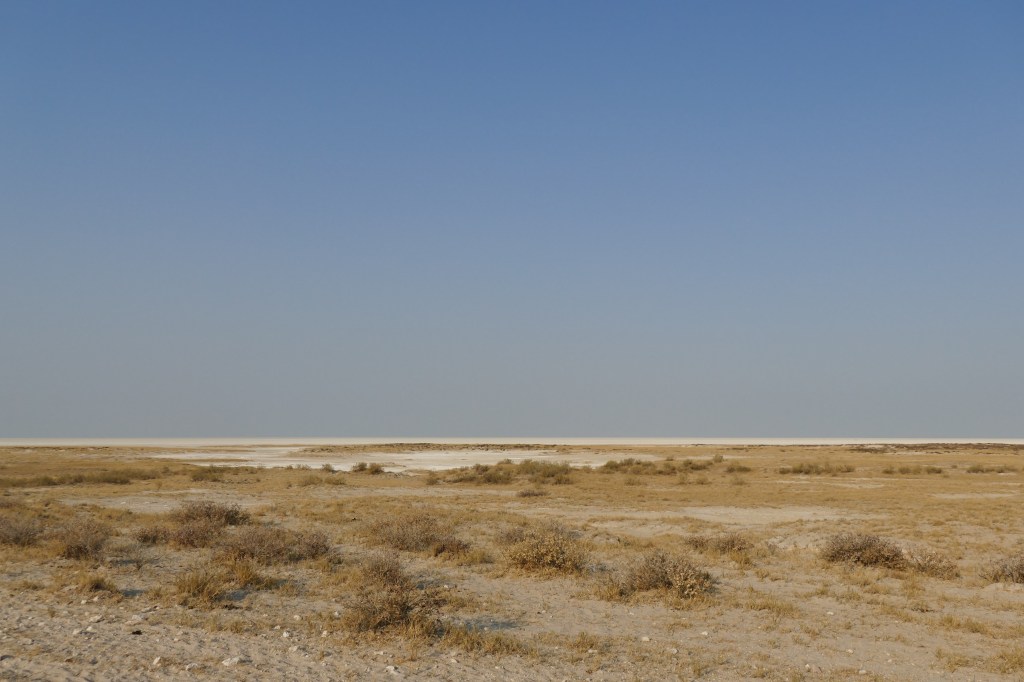
An endless width stretches in every direction and is only disrupted by two trees midway. These trees look so strange here in the middle of nowhere and it amazes me that even in this desolated appearing spot they found their way to grow and survive.
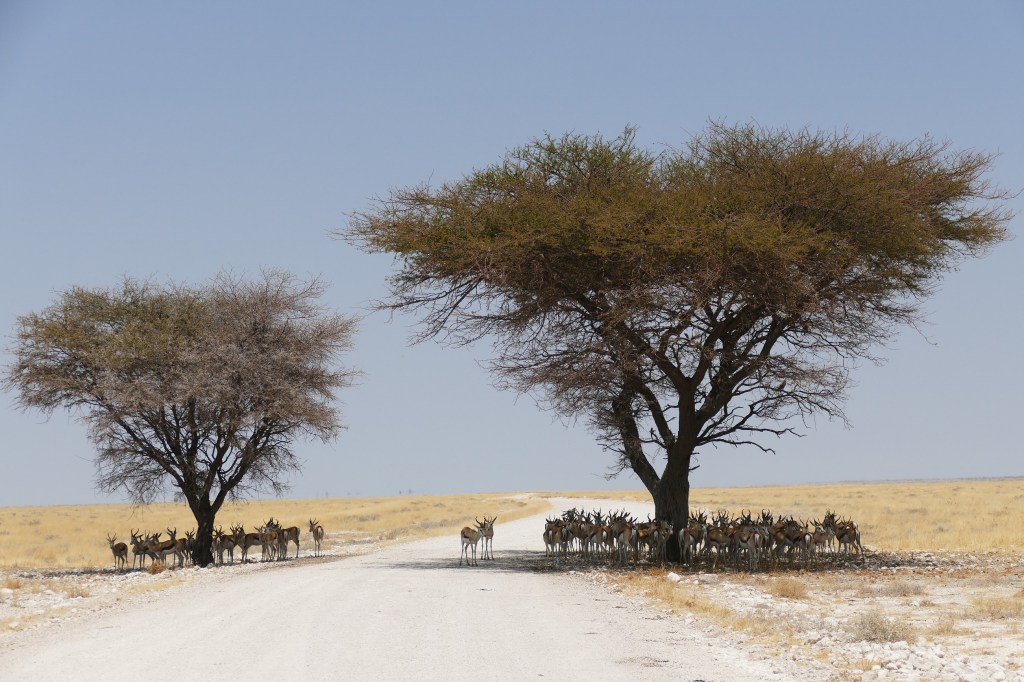
A herd of springbok is obviously thankful for some shade. The only one within a radius of a couple of kilometres.
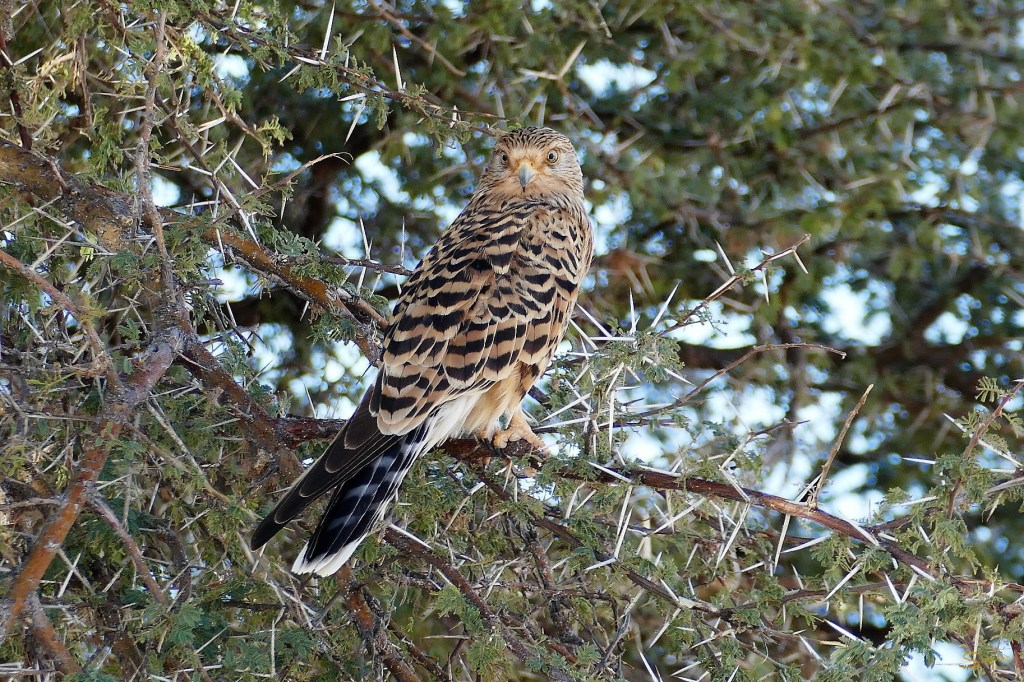
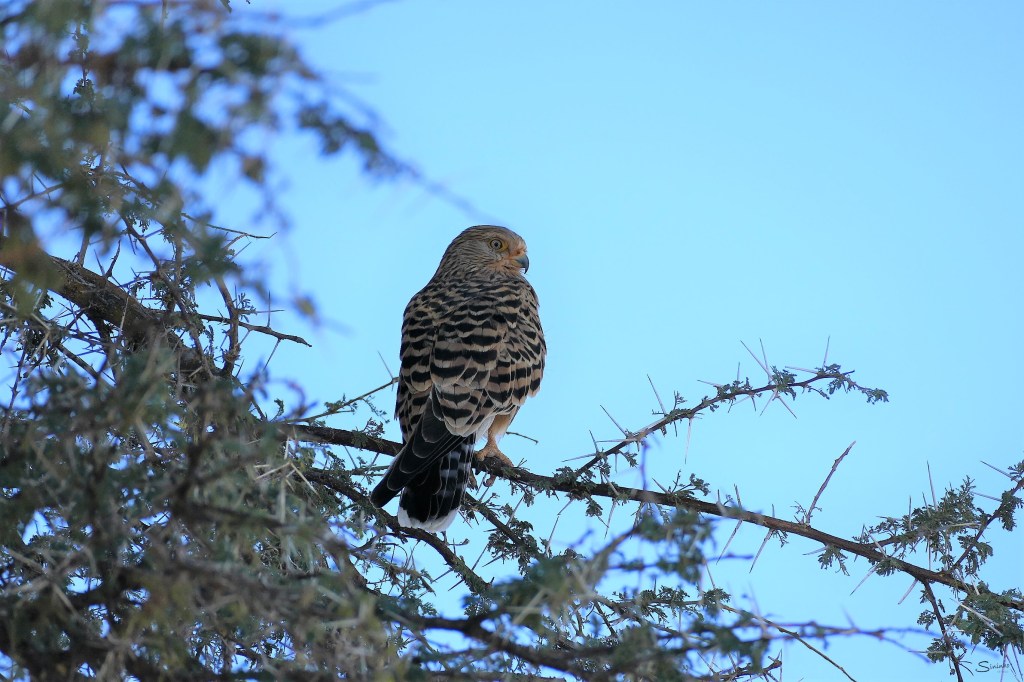
Whenever I pass these two trees, I watch out for some birds I recently saw here. They are quite pretty and often sit in our around the trees but are shy and most times fly away whenever I try to get a better view on them. This week I have been lucky, and they accepted my presence which finally allowed me to identify them as Greater Kestrels (Falco rupicoloides).
Greater Kestrels are monogamous and prefer dry grassland and savanna grassland. Yes, they have selected the perfect area here! They feed on invertebrates, reptiles, other birds and small mammals. Is their plumage pattern not just stunning?
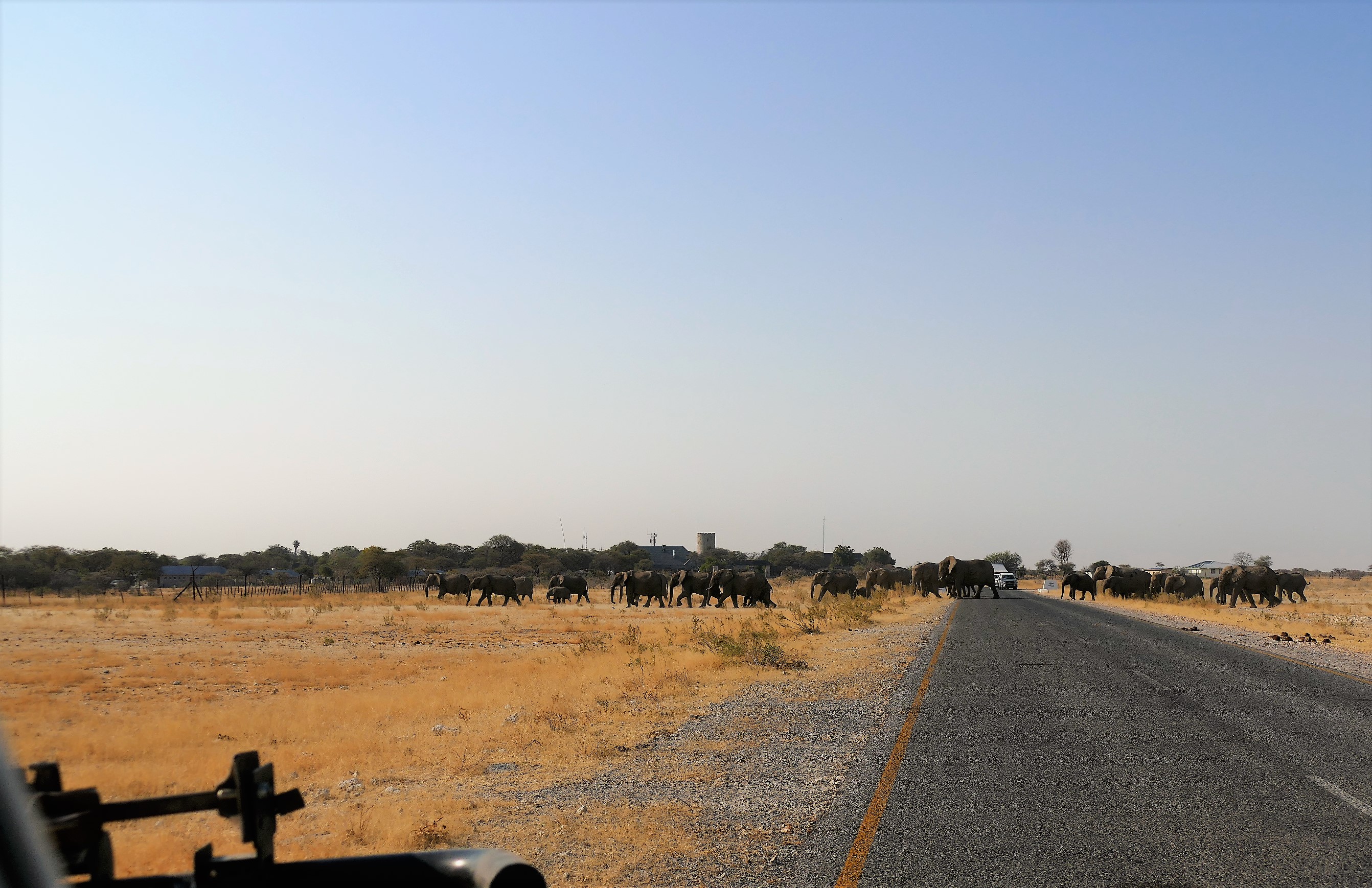
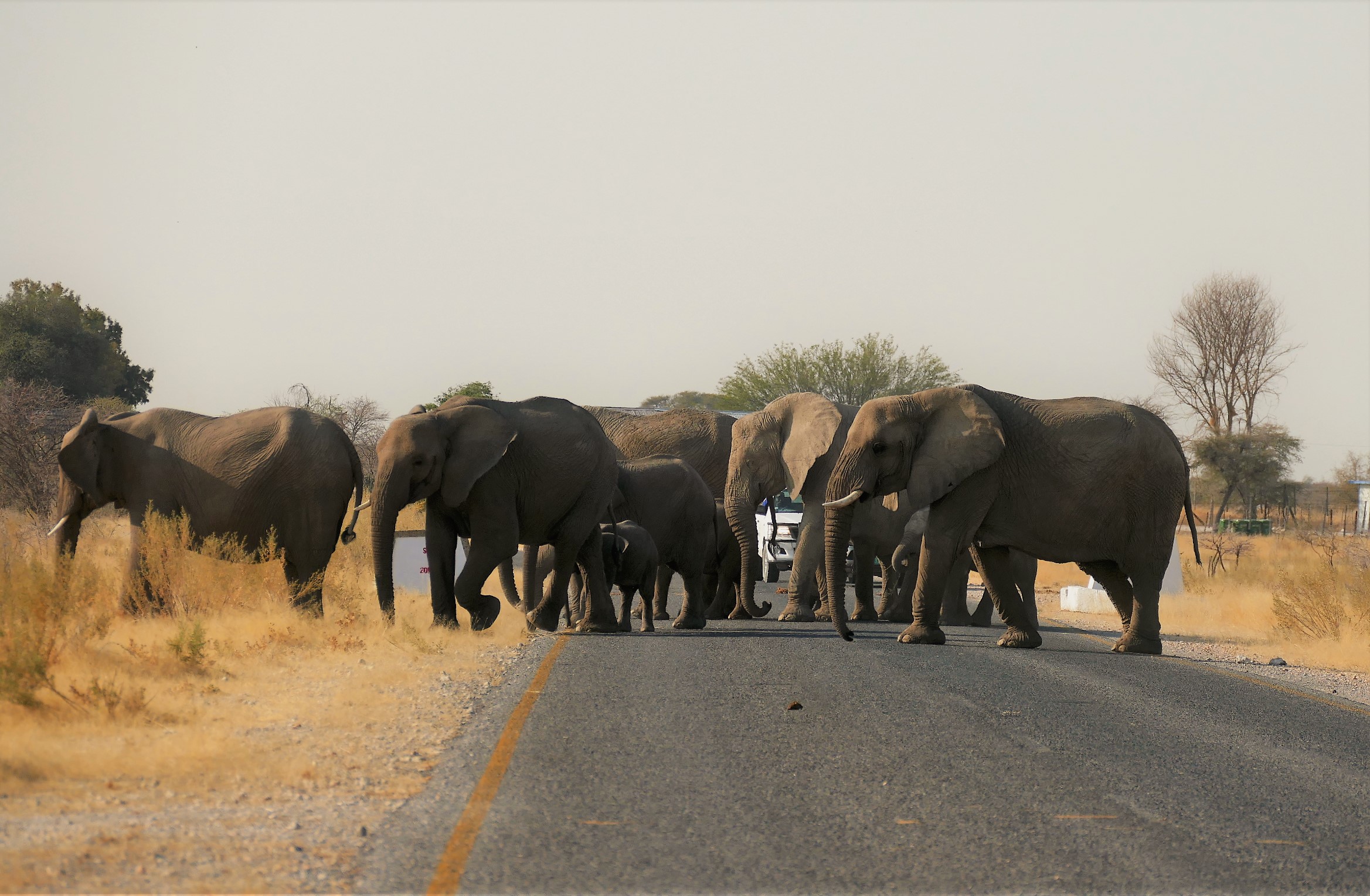
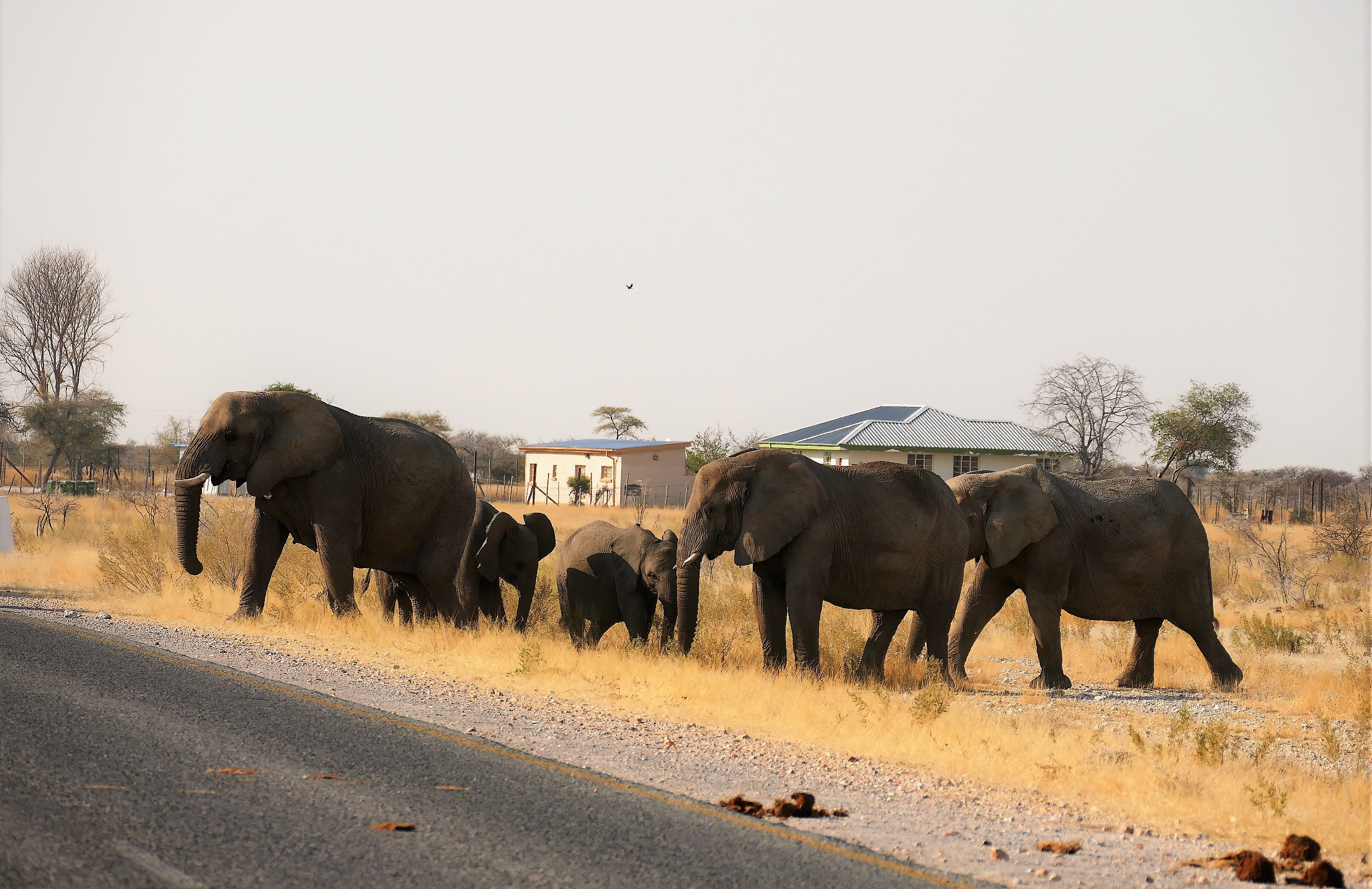
Highlight of the week: Elephant road block
Good night,
Sininho
 Sininho´s World
You must be logged in to post a comment.