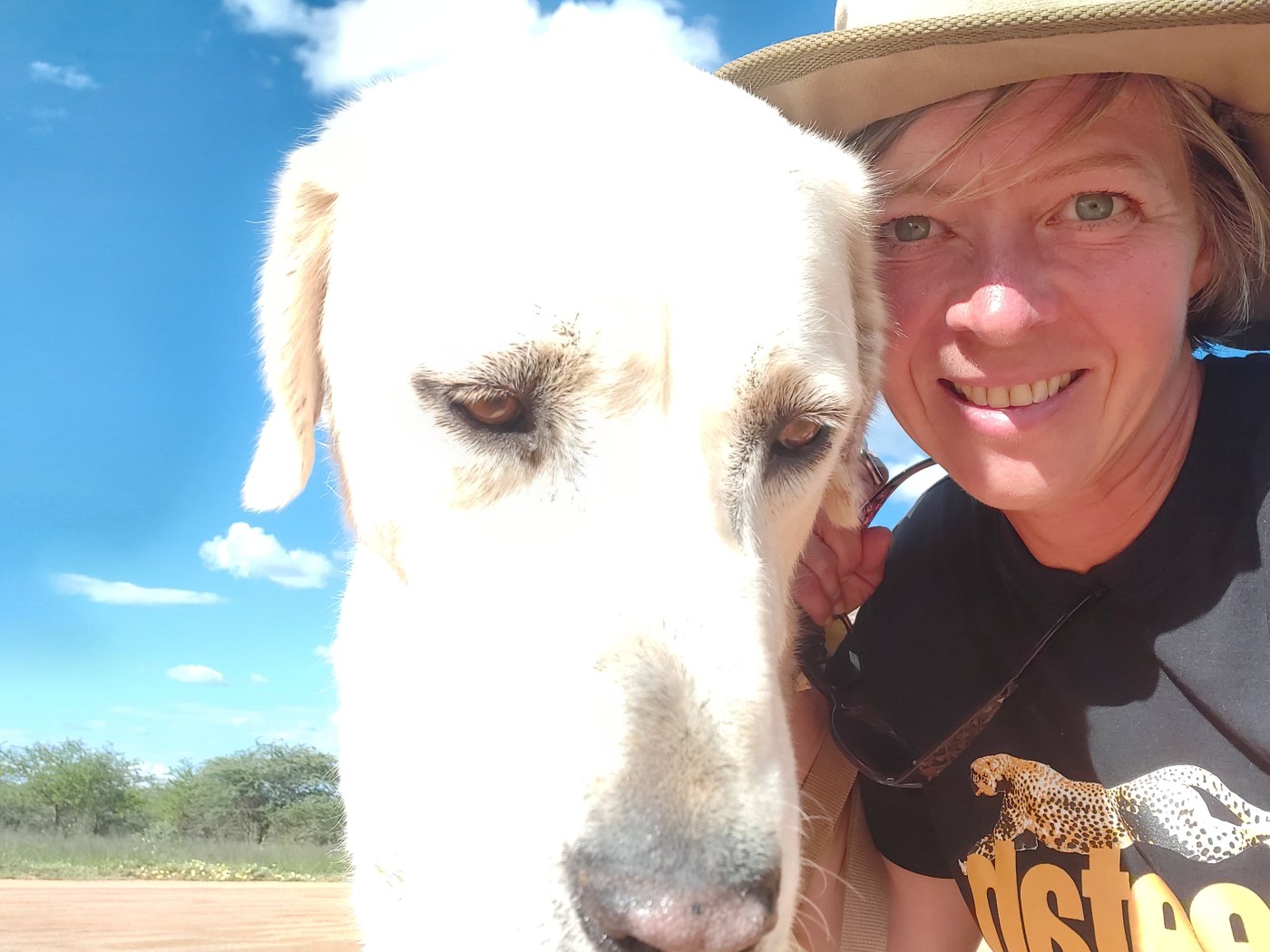
My time at the Cheetah Conservation Fund (CCF) was an interesting one. When I moved in at the beginning of March, I was excited and full of expectations. I saw myself learning more about hospitality and the Namibian wildlife. I saw me walking and driving with guests and telling them about the environment and animals in there. I was very much looking forward to my new duties when only two weeks later the world changed. COVID-19 was officially declared a pandemic, countries were looked down, and tourists left. Masks, sanitizers, and social distancing ruled the daily life.
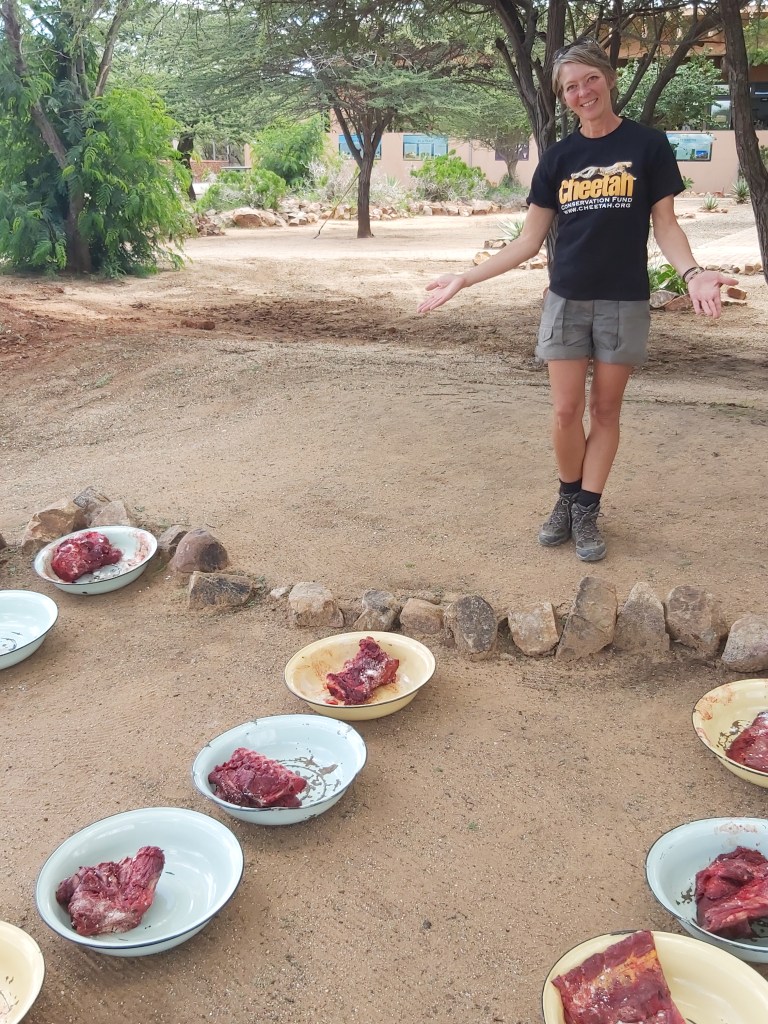
Nevertheless, life went on and especially on a sanctuary, you can´t stop working. CCF hosts around 40 cheetahs. Some must stay in permanent captivity, as they can´t be released due to their circumstances they came in, others will be released into the wild as soon as they are stable enough. Beside other programs, CCF also runs a model farm and an Anatolian shepherd breeding program (LGD – Lifestock Guarding Dogs) as part of their conservational work. All those cheetahs, dogs, sheep and goats need still to be fed and taken care of.
Now, four months later, it is time to say good-bye. During my vacation three weeks ago to the Waterberg Plateau and Etosha NP, I met incredible people and thanks to them and truly fortunate circumstances, I am now starting a new chapter as a trainee/volunteer in the Ecological Institute in Etosha where I will assist the veterinarian. I feel overwhelmed, incredibly blessed, and still can´t believe it. I will mainly focus on administrative tasks but will have the opportunity to go out as well. It´s going to be awesome, I can feel it!
But let´s have a look back to the last months … It was an interesting period, and I am very thankful for the time I had and all the insights I got. I not only learned a lot about conservational work, but also about people and myself, especially with COVID-19 coming along and messing up the world as it was. Only two weeks after I arrived, Namibia locked down completely. People had to stay in their houses, tourists flew back home. For countries like South Africa or Namibia, countries that depend on international guests, this is a disaster and I keep fingers crossed that the people and the economy will recover from this crisis.
Still, at CCF life must go on. With no guests being allowed to visit, our tourism department ran on minimum staff. But all the animals still needed to be taken care of, so I helped feeding the animals, cleaning their enclosures, walking the dogs and bottle feeding the baby goats. I also had the chance to join Dr. Mark Stanback who is running a hornbill study and to participate a 12-hour-game-count. My schedule left enough time in the mornings and evenings to study, and – as our camp was not fenced – to go out to look for birds, animals, and tracks.
Although I will miss the animals, the view from my room to the Waterberg Plateau, my bushwalks in the evening, and the clicking of the eland when it walked through camp at night, I am also overly excited about the upcoming chapter. Conservational work and education are crucial to save the animals on our planet and I raise my hat to all the people that dedicate their time or even life to it cause at the end, there is nothing better to know that there are animals out there that can roam free in the wild. How dull would the world be without them.
CCF Cheetahs
Illegal trade, human-wildlife-conflict and habitat loss are the major threats the African predators face. The cheetahs at CCF are victims of those unfortunate circumstances: people kept them (illegally) as pets, farmers caught them in traps as they considered them as a threat to their livestock or game, they are orphaned when their mothers are shot, or (in rarer circumstances) they are abandoned by their mothers. Like many other conservation projects, the aim of CCF is to release them, but under some circumstances this not possible. During my time, around 40 cheetahs were here, some of them as “residents”, others will go back into the wild.
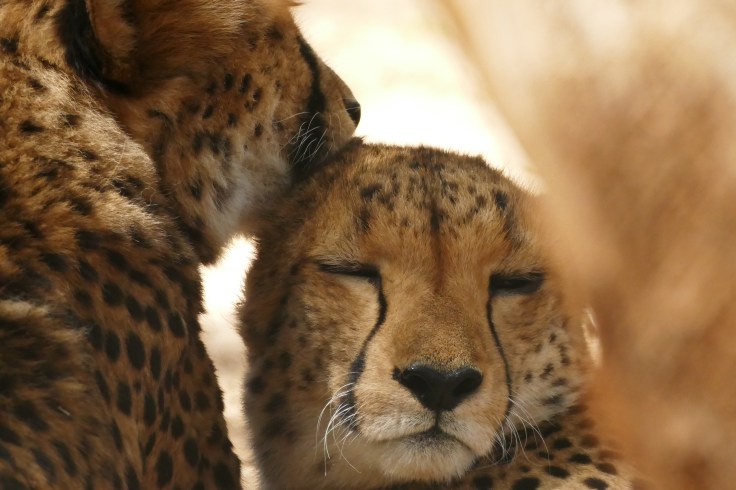
Numerous cats usually live a solitary life. In cheetahs however, different social structures can be found: Females are mostly solitary or seen with cubs, whereas males often live in coalitions (most likely littermates). I really enjoyed it to see them hanging around together, grooming and playing with each other.
Unlike other cats, cheetahs have semi-retractable claws. The cheetahs super force is speed and the claws help them to accelerate from 0 to 100 km/h in only three seconds. In captivity, cheetahs do not need hunt for their food, but the instinct is still there and to keep them enriched and exercised, CCF regularly “runs” the cheetahs. For this, a lure (a cloth or old shirt in our case) represents an artificial prey item that is moving at speed to stimulate the cheetahs´ hunting instinct. It is fascinating to see how focused they are and how they speed up.
What always stroke me most with the cheetah is the face. They have these beautiful amber-coloured eyes and a very distinctive black marking from the eyes down along the nose. It is supposed that this so-called tear-mark helps them reflecting the sun’s glare. I will tell you soon, where they really come from 😉
I still find it hard to see animals behind fences. It simply feels wrong, but I am glad that I got to know places where people take care of these amazing animals. I have the feeling that we will need some more years, if not centuries, before we come to a point where we humans find a way to share the environment with the wildlife out there. With a threating number of estimated less than 7000 cheetahs out in the wild, I hope they make it until then. The world would lose an amazing animal.
CCF LGD
Dogs have been used to guard livestock for nearly as long as they have been domesticated and people, like the Damara people, have been raising and training livestock guarding dogs for generations.
The principle is simple: from young age, dog cubs are introduced to livestock, e.g. goats or sheep, and identify them as their family. Once the dogs grow older, their instincts will tell them to defend their adopted family. In this way, livestock guardian dogs (LGDs) have become an effective tool for limiting livestock predation and minimise the risk for predators to be hunted and shot by the farmers.
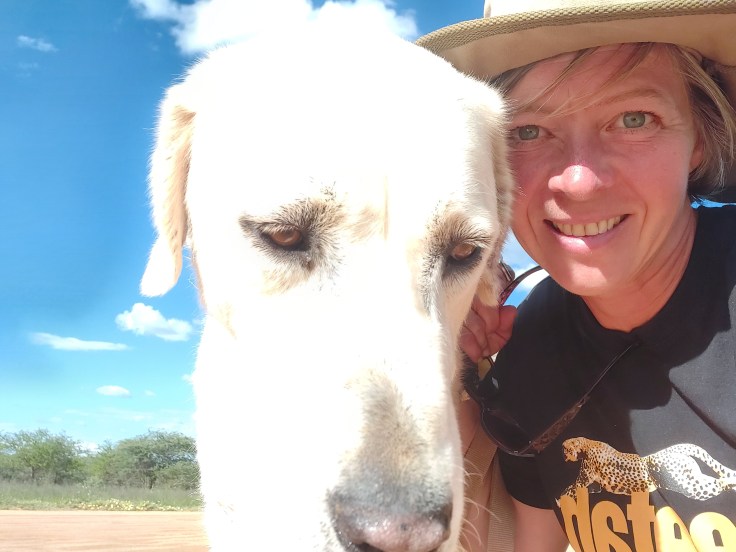
The Cheetah Conservation Fund (CCF) has established a breeding program for Anatolian Shepards as Lifestock Guardian Dogs (LGDs). Once the dogs are old enough, they are given away to farmers to help them protect their herds. But as long as the dogs live at CCF, we had to take care about them. This includes feeding, cleaning their pens, and – my favourite – walking the dogs.
Every dog has its own personality. Some were calm and relaxed, others sneaky and playful (one stole my hat and refused to give it back 😊). It was such a joy to have them around. One day, it was quite hot in the afternoon, we passed a mud puddle on our way home and Kiri, obviously happy to find a place to her down, made herself comfortable in it. There was no chance to get her out for about fifteen minutes
I miss these “little” cuddly bears!
CCF Goats
“CCF includes model farms that have been developed to research and display predator-friendly and commercially viable livestock and wildlife programs. CCF operates a Model Farm that raises sheep, cattle, and goats and uses this farm as a tool to research and deploy predator-friendly farming methods, including herd management and veld management, proper animal husbandry, the use of swing gates, and other techniques. The Model Farm has become an education and training tool for farmers all over Namibia and through the cheetah’s range, allowing CCF to lead by example.“
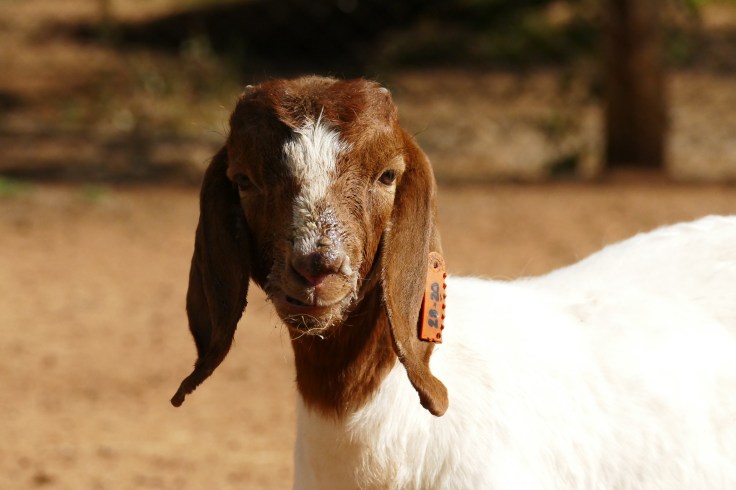
I was not really involved with the goats but still liked to be with them. I especially fell in love with “sunflower”, who didn´t really have a good start into life. She had orf, a virus disease that primarily occurs in sheep and goats. It is very contagious and also known as “scabby mouth” disease, which makes sense to everybody that has ever seen the result of this infection. I would compare it to an awfully bad herpes and sunflower was hit by it very hard. Her mouth looked terrible and was bloddy and she was nicknamed “Orfi”. Only after some weeks of special care in the clinic and away from her friends, everything healed very nicely, and we could see how she improved. The formerly weak goat became energetic and stronger, started jumping around and often enough she escaped her pen in the clinic.
One day, I prepared the bottles for the baby goats. She was fine at that point. But when I came back to feed her, she was limping on her back-front leg and she held it as if it was broken. I felt so sorry for her but luckily (we found out the next day) nothing was broken.
Not even a week later – her front leg got a bit better – I gave her a beauty treatment. Her fur was very sticky and dull, so she got a nice and warm bath. But can you believe it – when I took her out to dry, she was not putting any weight on her back leg, meaning she was limping on two legs now. How is that even possible??
After over two months she eventually went back to her friends in the kraal, but she has not 100% recovered yet. I still visited her several times a week and had the impression she liked it. When I came back from my vacation, I learnt that she was given away to a farmer the same morning and I feel very sad that I had no chance to say good-bye to this cutest of all goats ever.
CCF Creamery
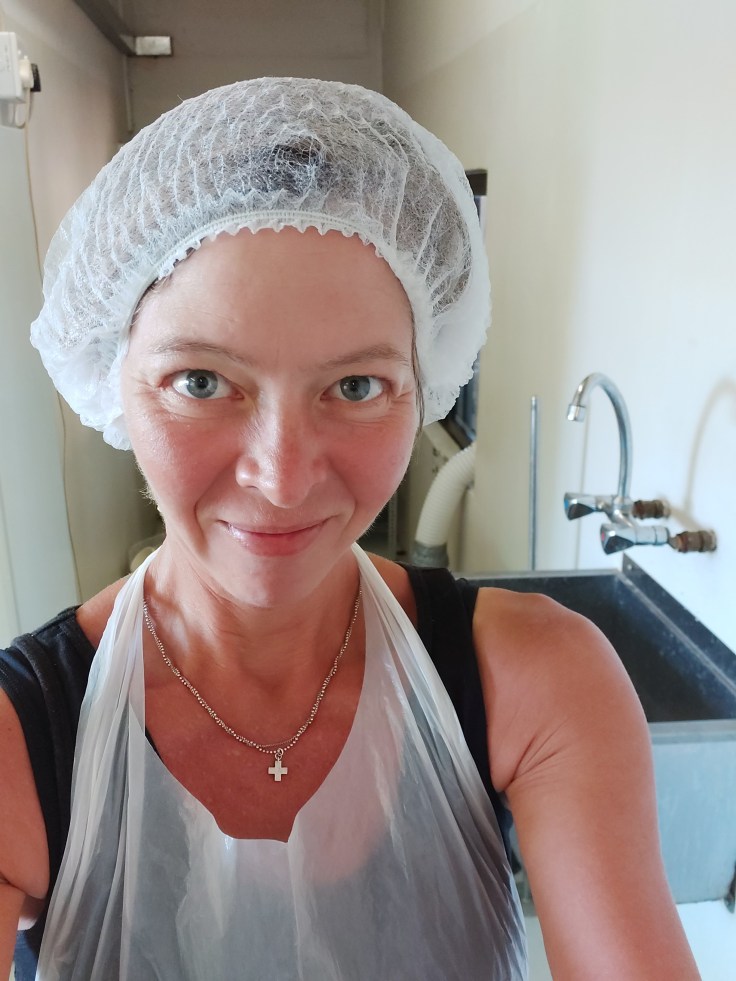
CCF has not only a model goat farm with goats and sheep but an own creamery where the milk from their own goats is used to produce dairy products like cheese, fudge, ice cream or soap and one day I had the opportunity to support the cheese making. Usually hard cheese, ricotta, chevre and feta are produced but our chef wanted to try a cream cheese recipe that surprisingly worked out quite nice.
CCF Ecology
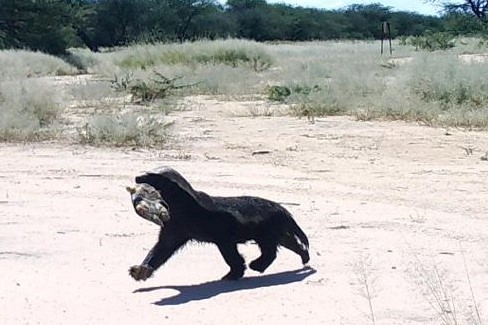
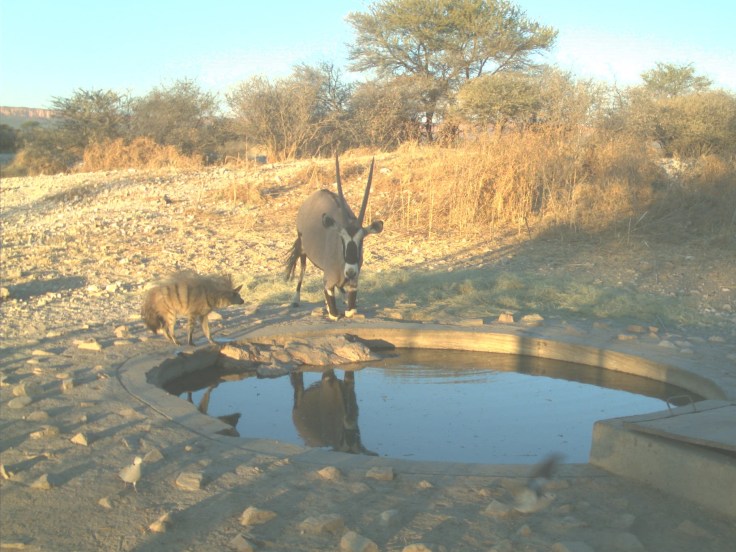
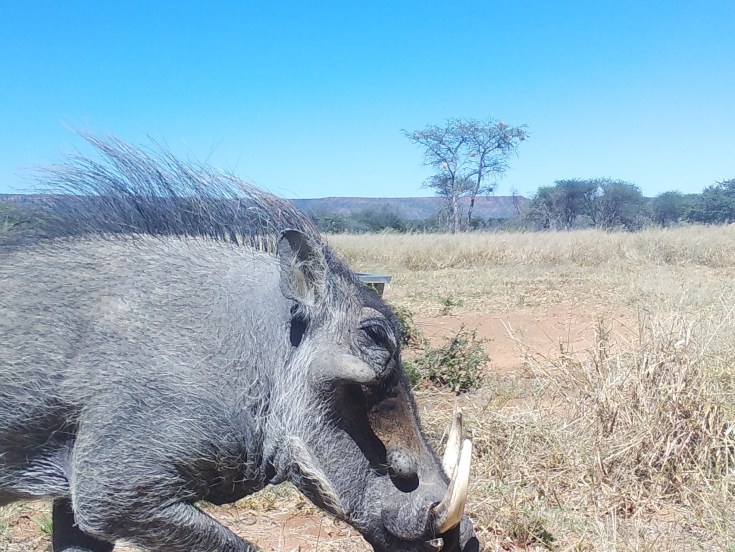
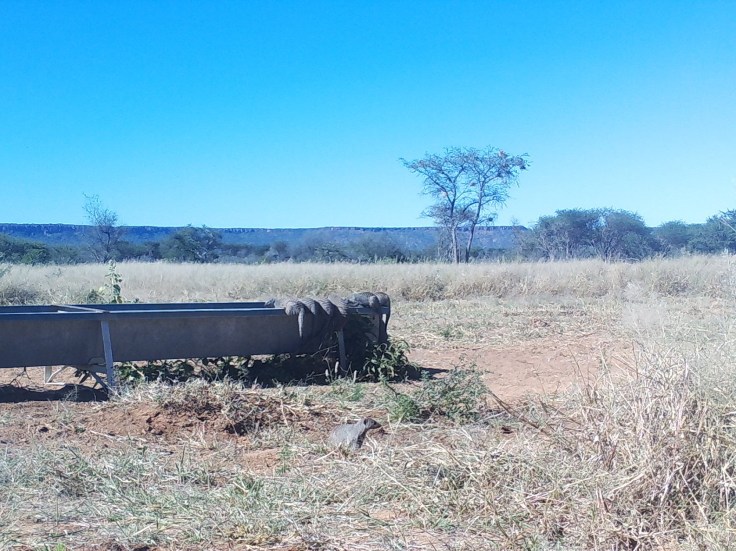
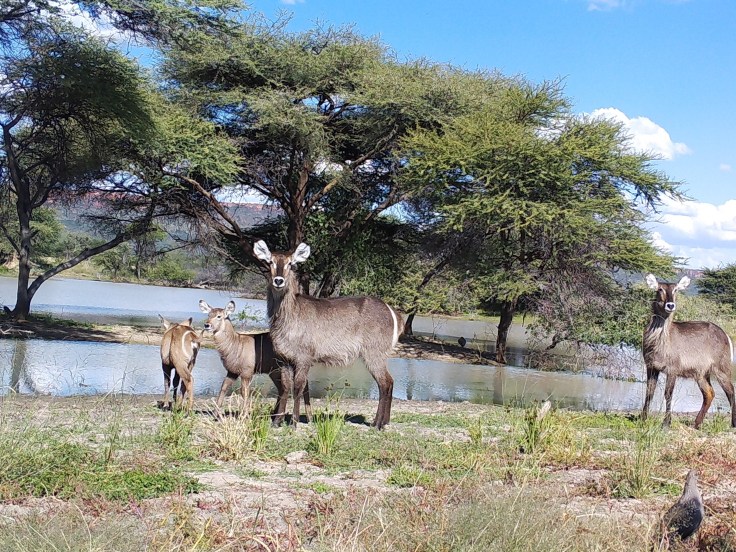
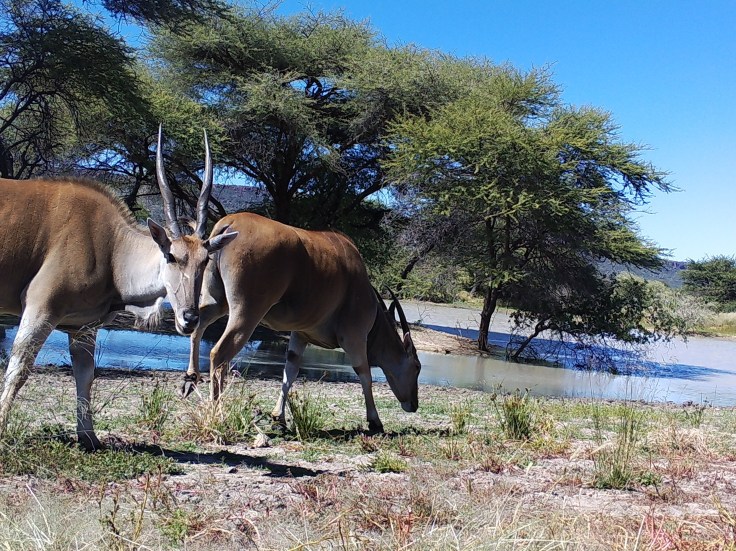
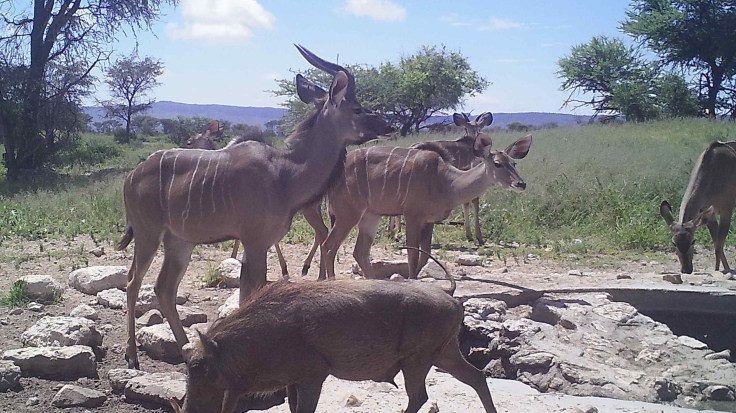
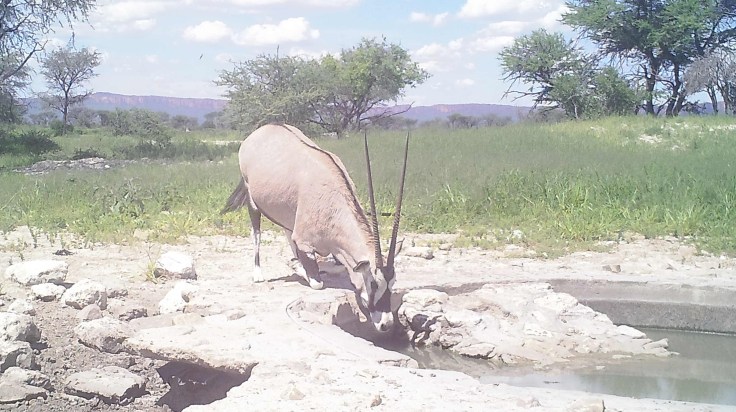
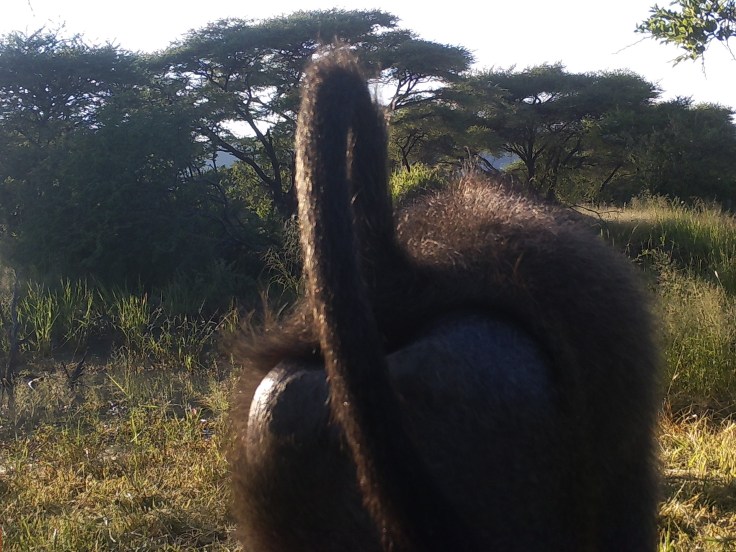
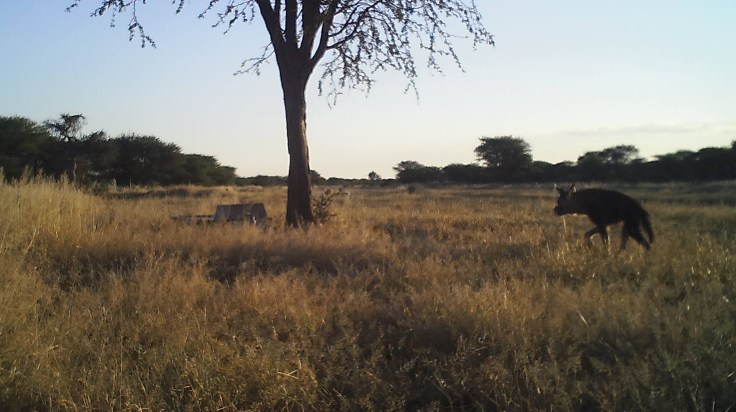
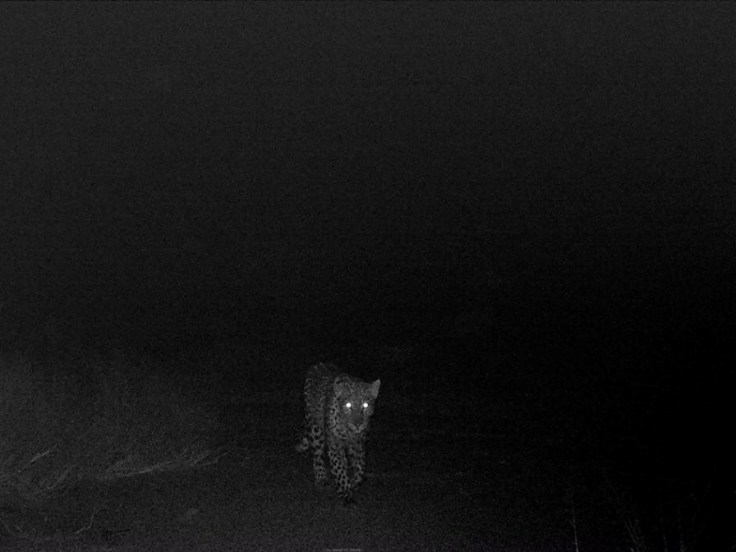
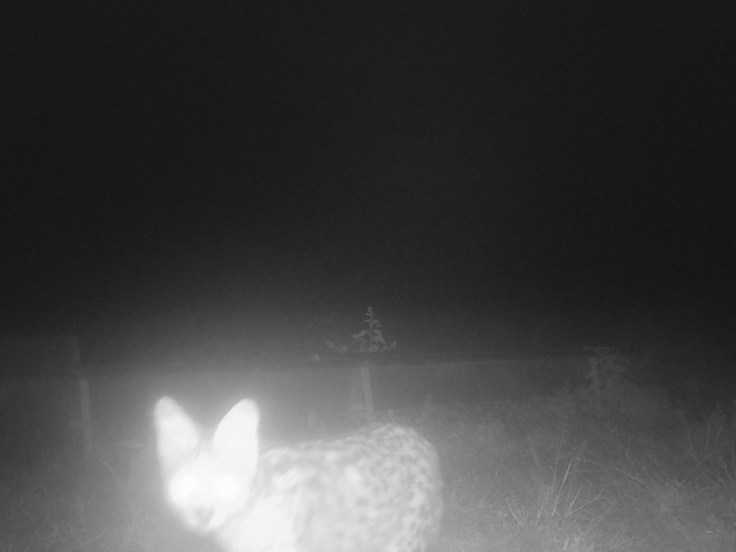
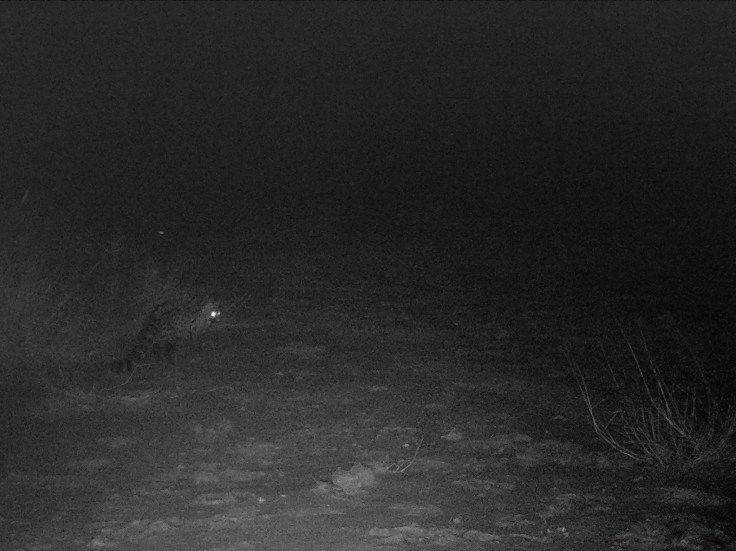
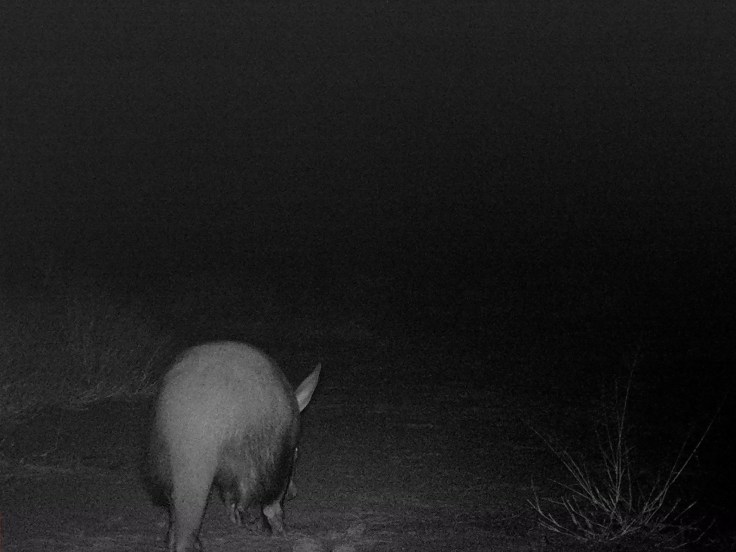
One of my favourite tasks was the camara trap picture evaluation. On the reserve, several camera traps are positioned and every Monday we drive out to change the SD card. The rest of the week we mostly spend by viewing the pictures to see what animals passed by. Of course I loved being out at least once a week, but to work through the pictures is fun as well. It provides a great opportunity to see some of the nocturnal and shy animals that otherwise are not so easy to find and it also provides great information about their behaviour.
Good-bye CCF, and thank you for everything.
Good night,
Sininho
 Sininho´s World
You must be logged in to post a comment.