After 14 weeks at CCF with only 3 days off, I finally went on a proper vacation.
My first stop was the Waterberg Plateau Park that I managed like a coward (remember the honeybadger encounter?). But it was lovely. The place is just beautiful and perfect to escape the outside world for a moment. Okay, not that I had much of an outside world for quite a while but it was nice to have a change 😊
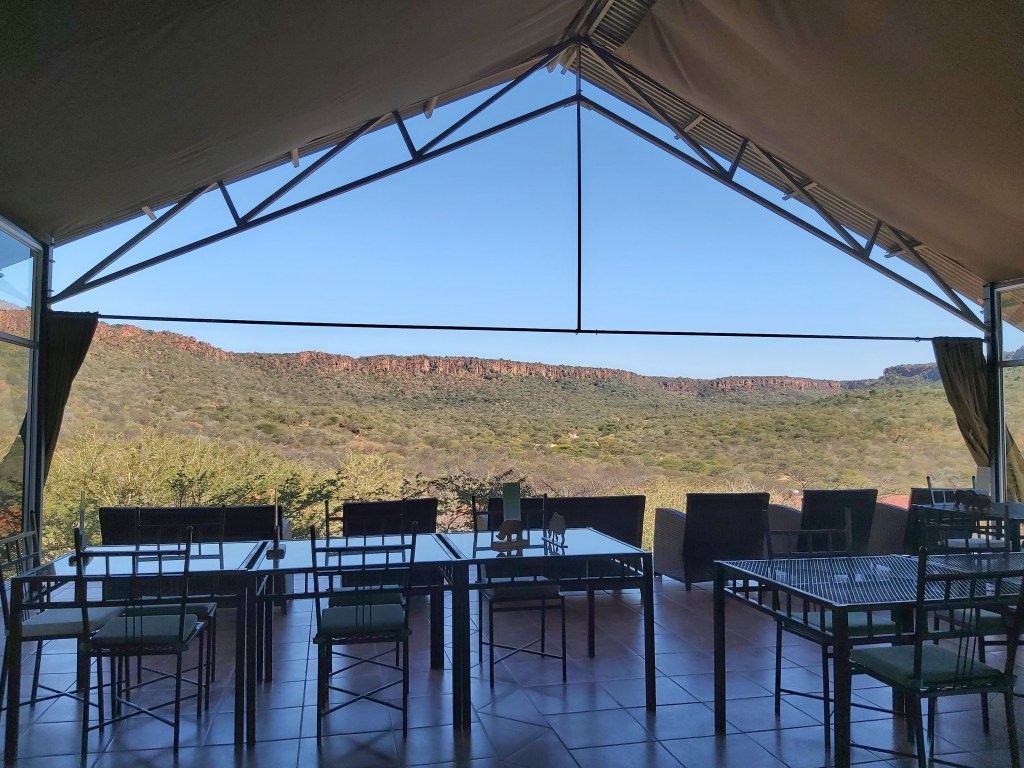
The first two days were chilled and easy-going. I read, walked a bit from time to time or went to the restaurant to simply enjoy the silence and the view.
Being the only guest in camp has advantages. It was silent and clean, and I had all the reserve for myself.
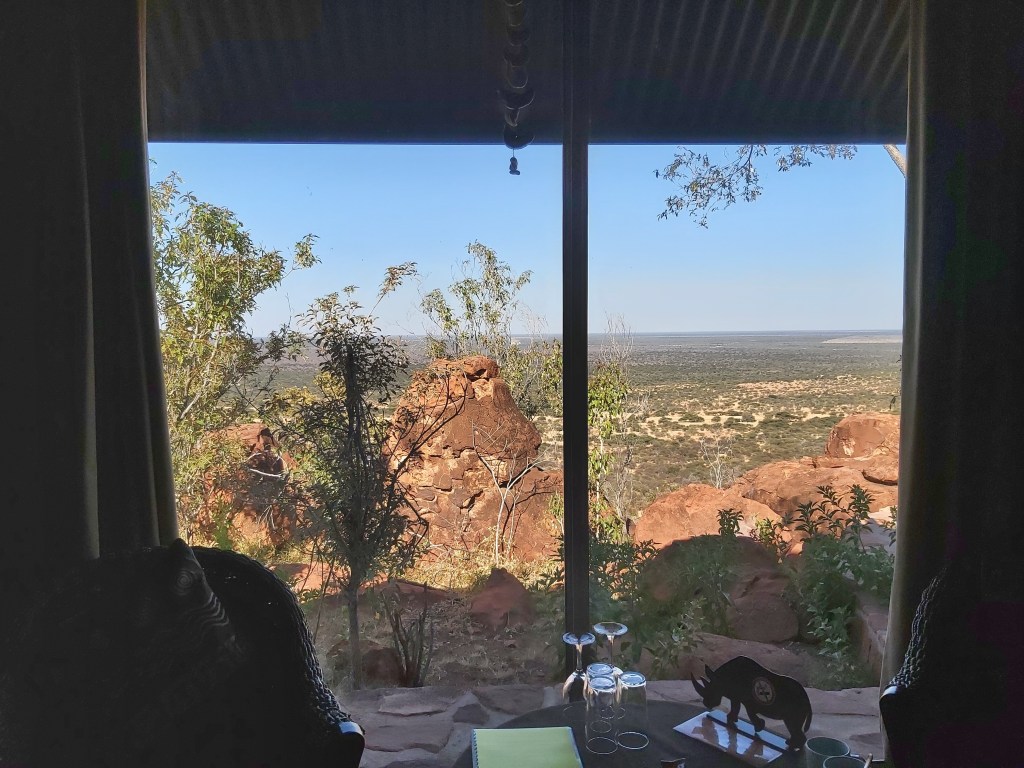
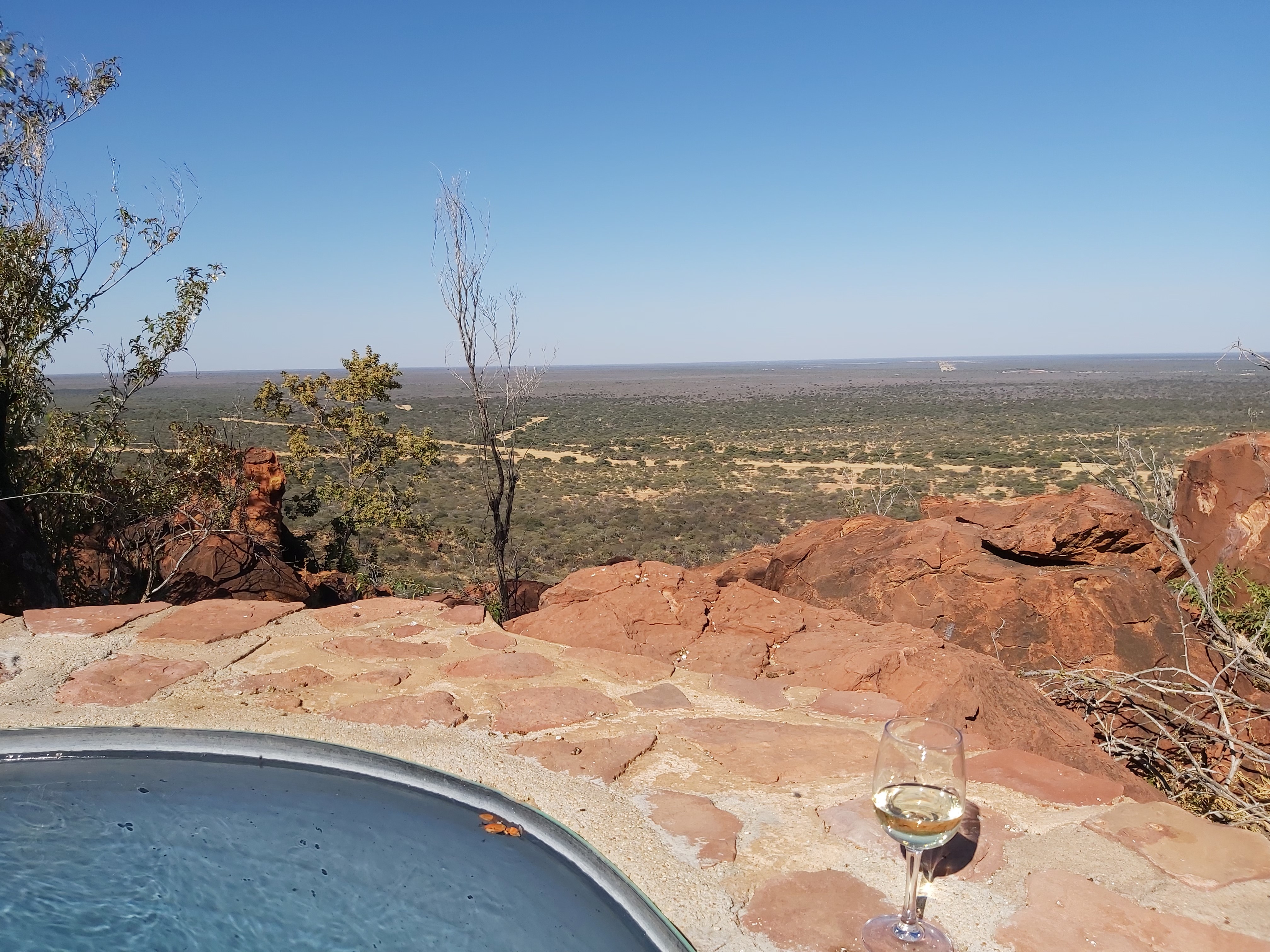
For my last night and after two nights sleeping in the car like a baby, I thought I could treat myself with an upgrade to one of the tented rooms, but received an additional upgrade from the Valley Lodge to Plateau Lodge, with a private swimming pool and a terrace with a stunning view on the savanna plains. Not too bad 😊
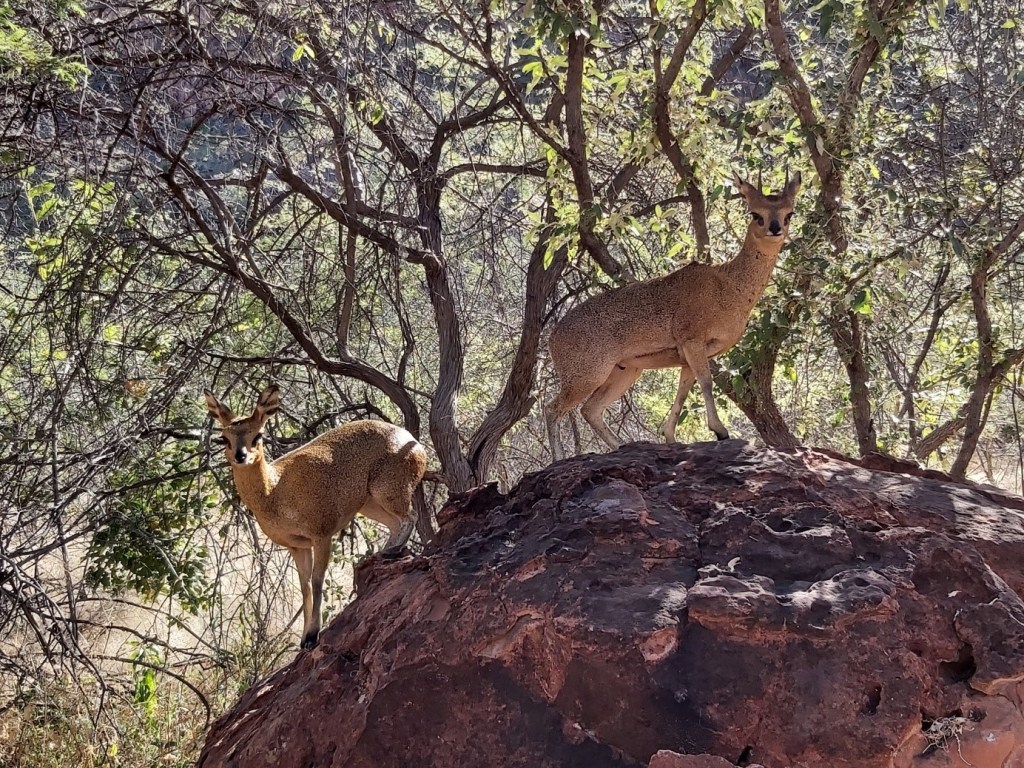
When moving in, a klipspringer couple came along, not being very shy. These diurnal and territorial animals are monogamous and often found in pairs or family groups. They are perfectly adapted to the rocky habitat they live in, and the Waterberg suits their needs quite well. They belong to the even-toed ungulates and walk on the tip of their toes which enables them to jump around on rocks as if this is the easiest thing in the world. They have very prominent preorbital glands in the corner of their eyes from which they secrete pheromones that they rub on shrubs and trees.
Klipspringers (Oreotragus oreotragus)
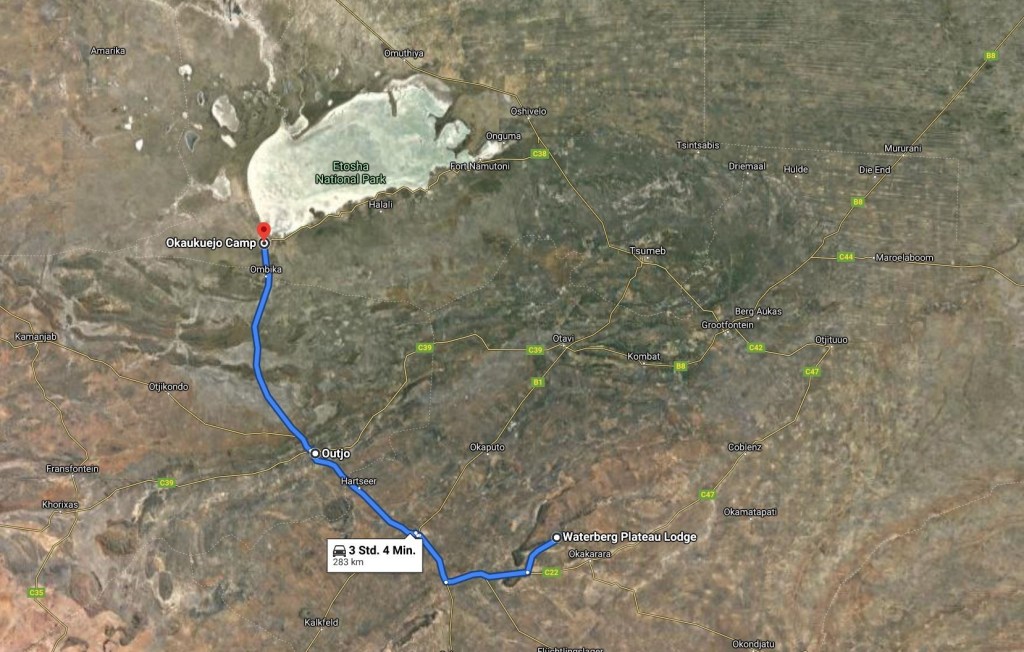
After three awesome days, I hit the road to drive all the way up north to the Etosha National Park.
The plan was to stay in the three main camps along the Etosha Pan, Okaukuejo, Halali and Namutoni, so explore the Park from West to East.
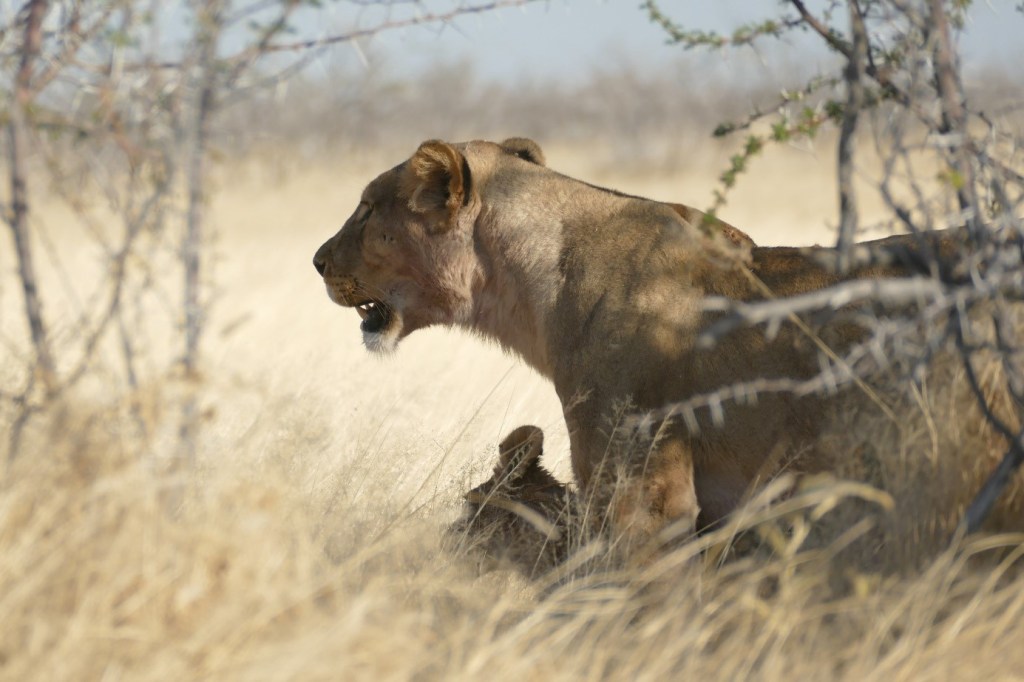
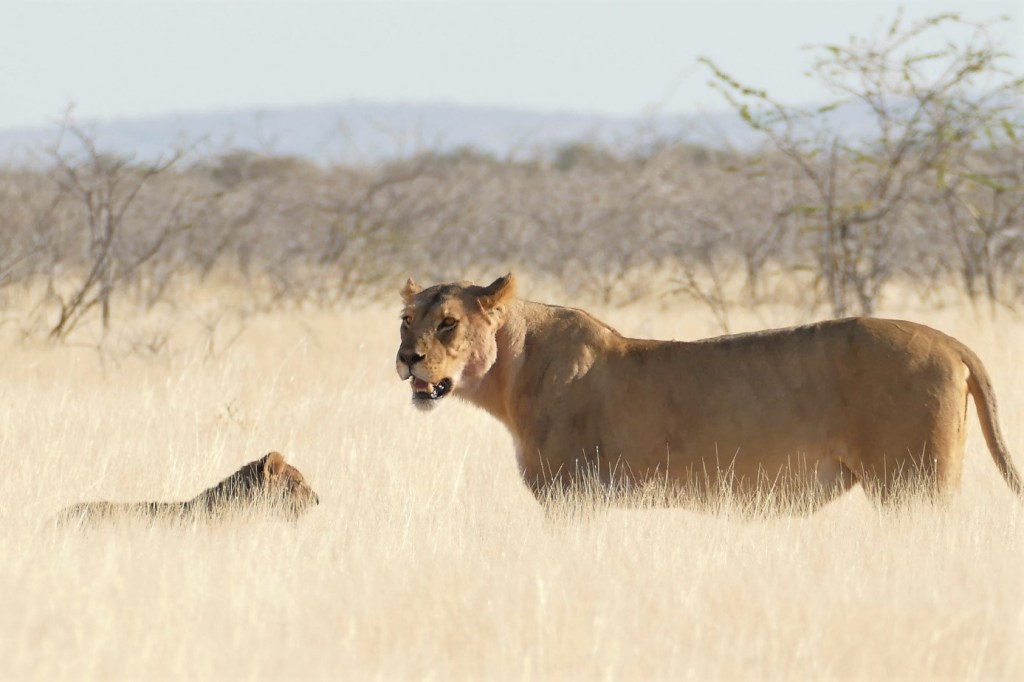
At Okaukuejo, I was happy to see the campsite nearly empty. Not that many tourists were around and I had free choice to select my camping spot. Once settled in, and after a short visit to the camps´waterhole, it was already afternoon and I decided to have a quick drive out to get an idea of the area and just some hundred metres outside camp, I had an amazing sighting:
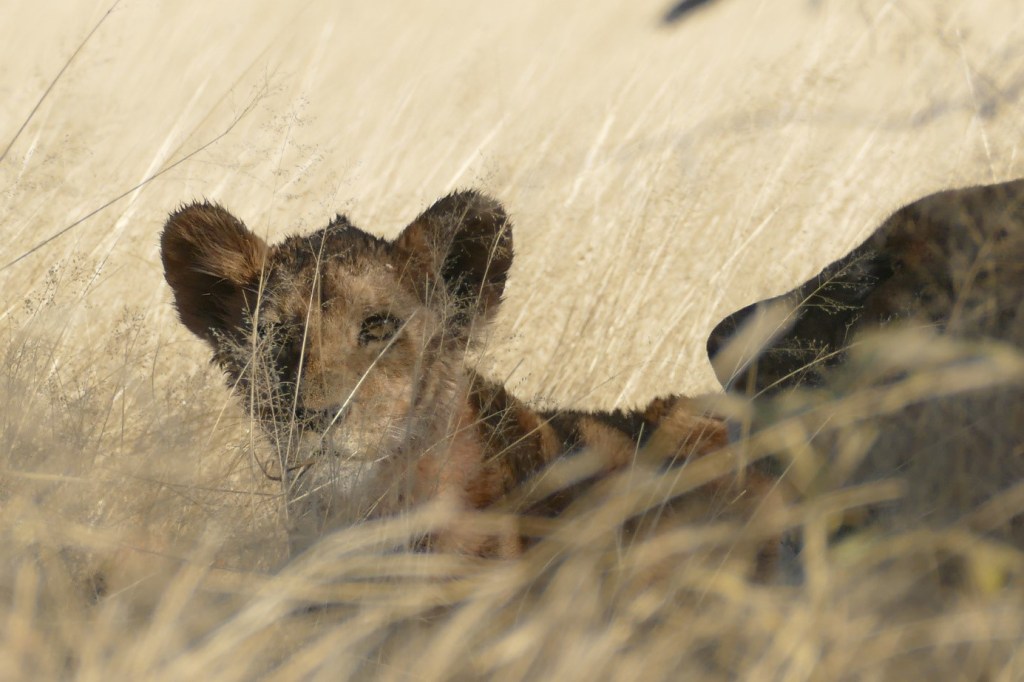
This small pride of lions resting in the shade after an obviously satisfying meal.
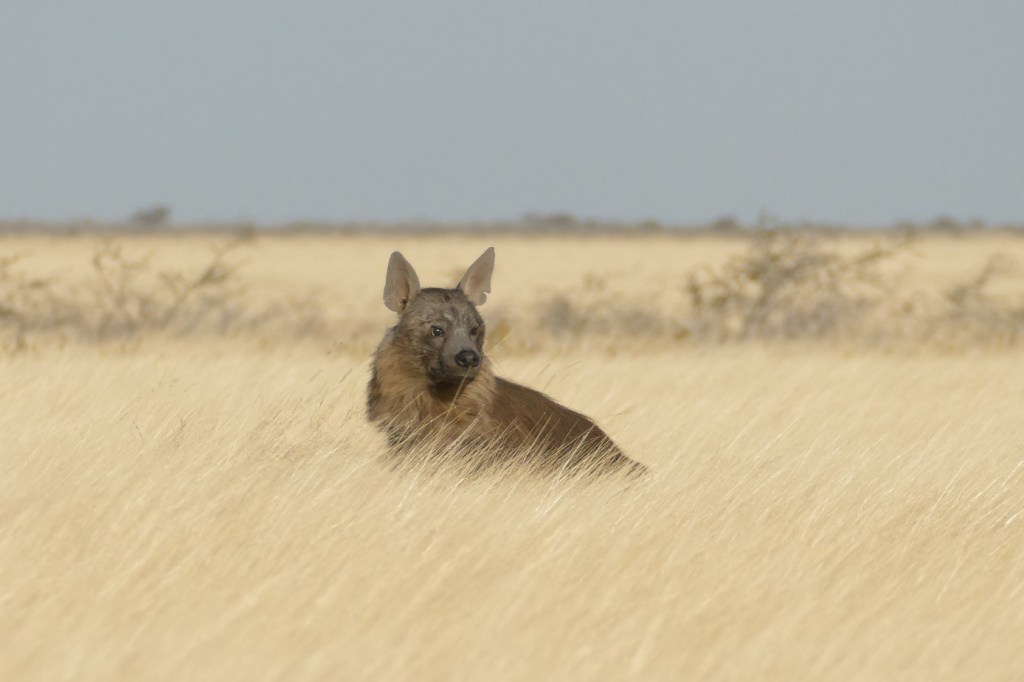
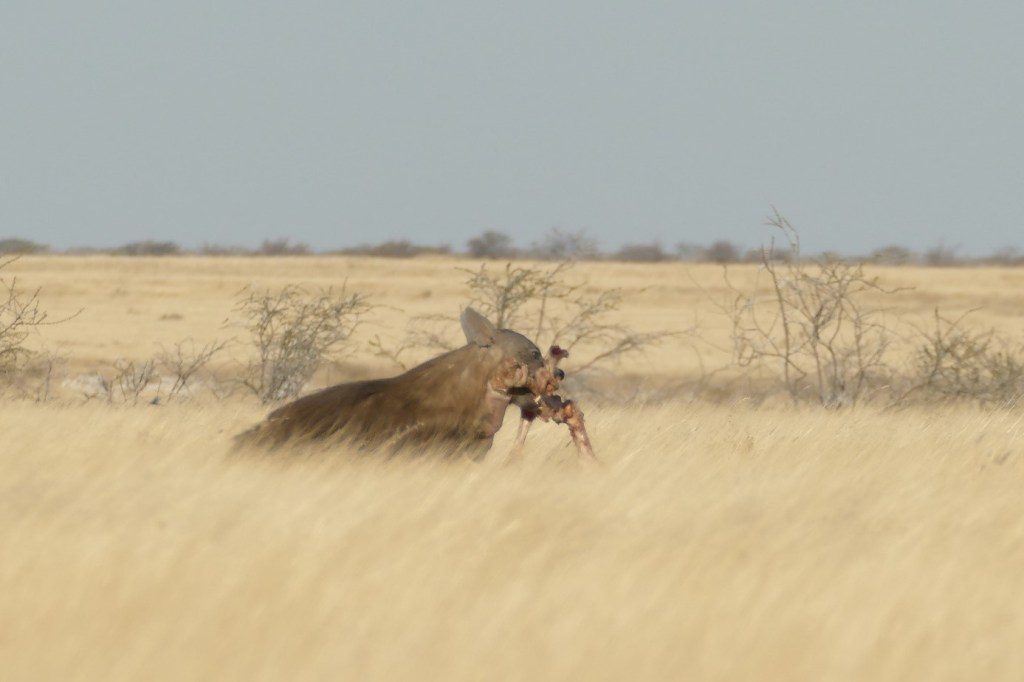
When one of the lionesses became alert, I noticed something dark moving in the distance. I could not figure out immediately what it was but it looked hyena-like. To my surprise, it was not a spotted one, but the usually nocturnal brown hyena that slowly came closer and, under the observation of the lioness, took a portion of the dead antelope and trotted away.
Brown hyena (Hyaena brunnea)
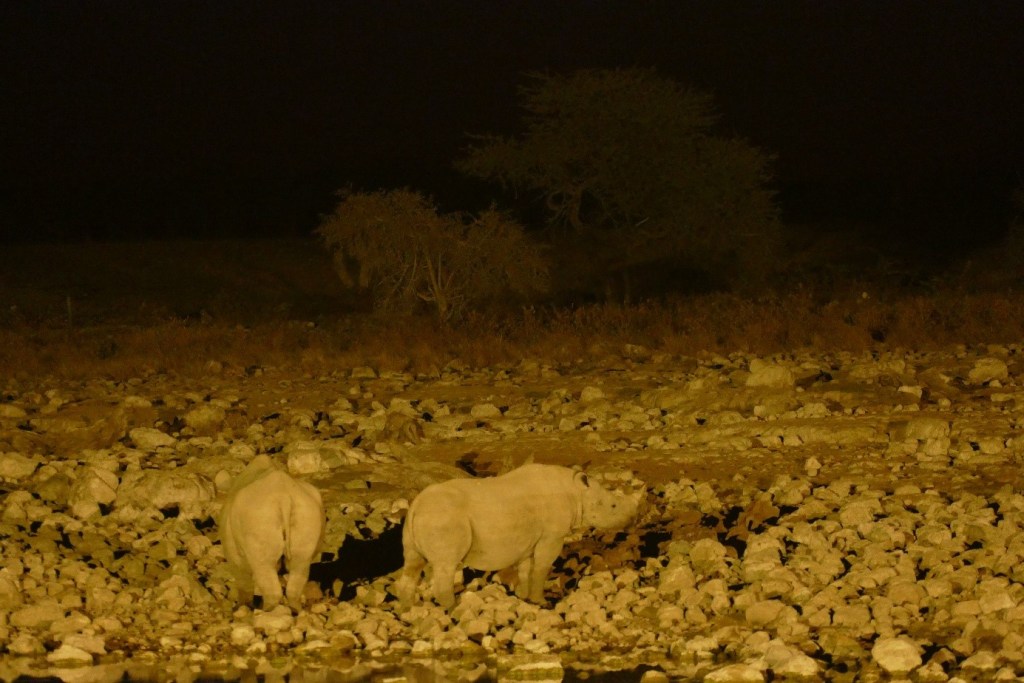
With these pictures I drove back and after a good meal in the evening, I made my way to the waterhole to find out what animals would come to drink at night.
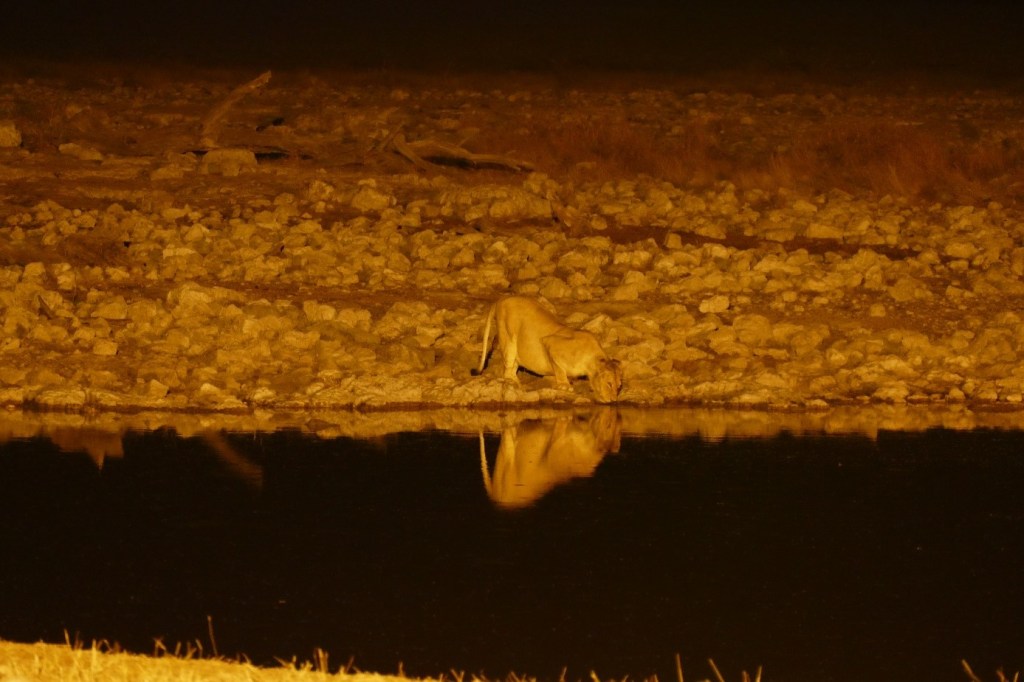
I did not have to wait too long for the black rhinos to come. A mother with a subadult and a male (I guess) came along and took a peaceful sip of water, sniffed each other, and went away in different directions. Shortly after, a single lioness came for a drink with no sign of the rest of a pride.
During the next days, I had so many nice sightings and really enjoyed the wildlife. Just be out there and observe the animals is amazing. I would love to present every single animal I met, but that would go beyond the scope, but I will share my favourites.
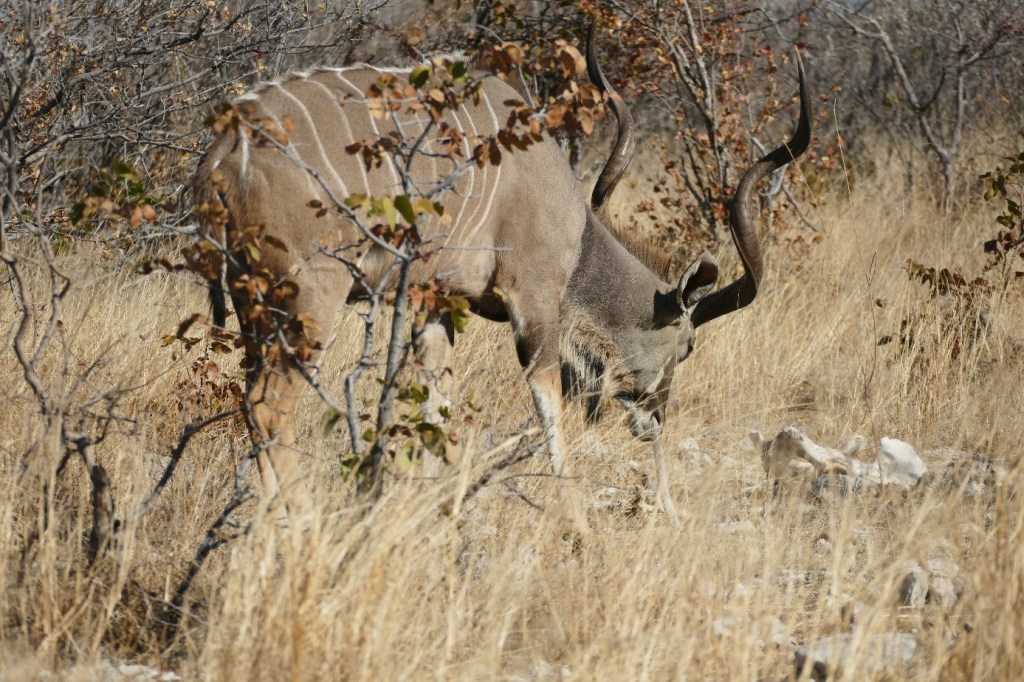
The Greater Kudu
Greater kudu (Tragelaphus strepsiceros)
Kudus are one of my favourite antelopes. Majestic, proud, strong. But in this scenarion something else amazed me: I saw that one of them chewing on something that is definitely not its “normal” food which is mainly leaves and shoots, and they would add wild watermelons and other fruits to their diet during dry seasons for the liquid they contain. But this was none of these foot items. I had a second look and yes, it was a bone! While I had read about this, this was the first time I actually saw it: In case the diet does not provide sufficient minerals (such as calcium and phosphorus) to meet their needs, they also practise “osteophagia”, chewing on bones, to absorb those missing nutrients. Amazing!
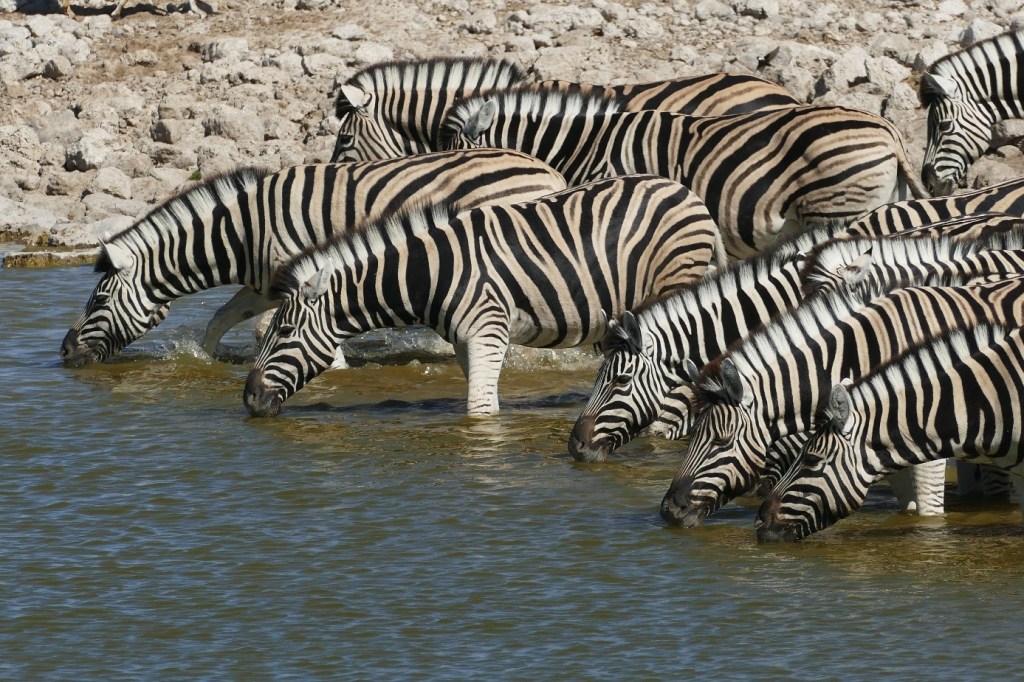
Plain´s Zebra
Plains zebra (Equus quagga)
Often overlooked, I get to really like zebras. Just like our fingerprints, not two individuals have the same stripe patterns. The reason for their stripes is not 100% clear but it is assumed that it is serves as protection from biting flies, for thermoregulation and protection from predators.
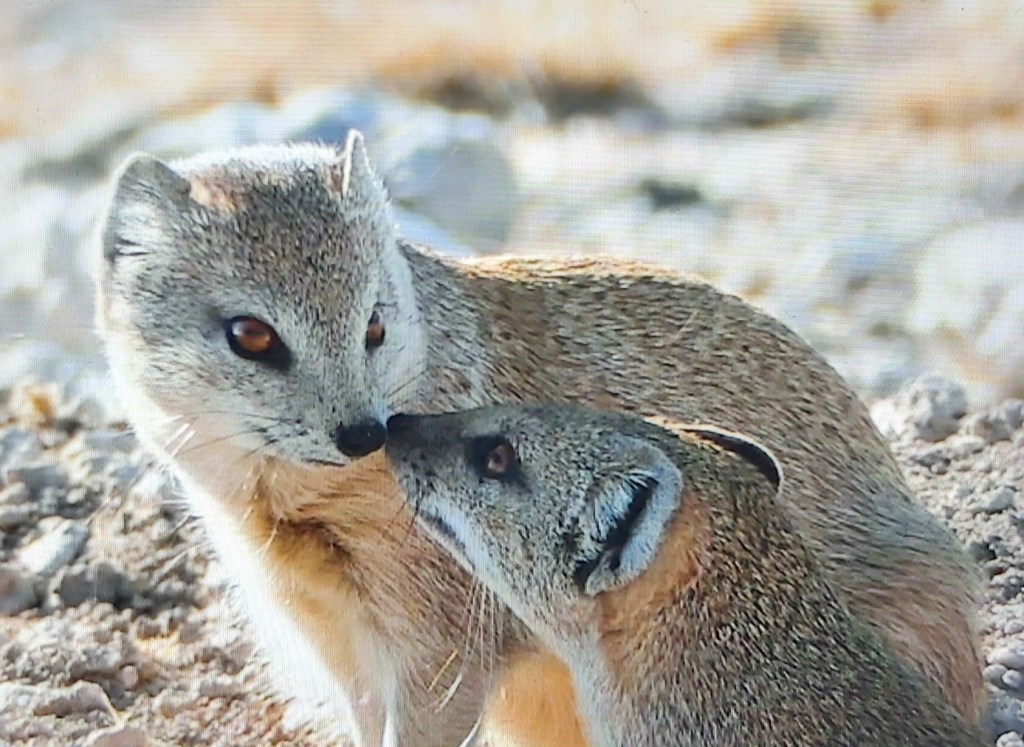
Yellow Mongoose
Yellow mongoose (Cynictis penicillata)
These weasel-like mammals are Yellow mongooses. This cute little thing got obviously a fright when I drove by and headed back to its den. While I still thought it would disappear immediately, another head popped out. They greeted each other gently and simply stayed there for a couple of minutes.
Fun fact: These diurnal, gregarious and territorial animals define their boundaries by using different forms of scent-markings. The alpha male in this species will go even further and also will mark members of his group each morning with anal secretions, urine and faeces.
Black-faced Impalas
Black-faced impalas (Aepyceros melampus petersi)
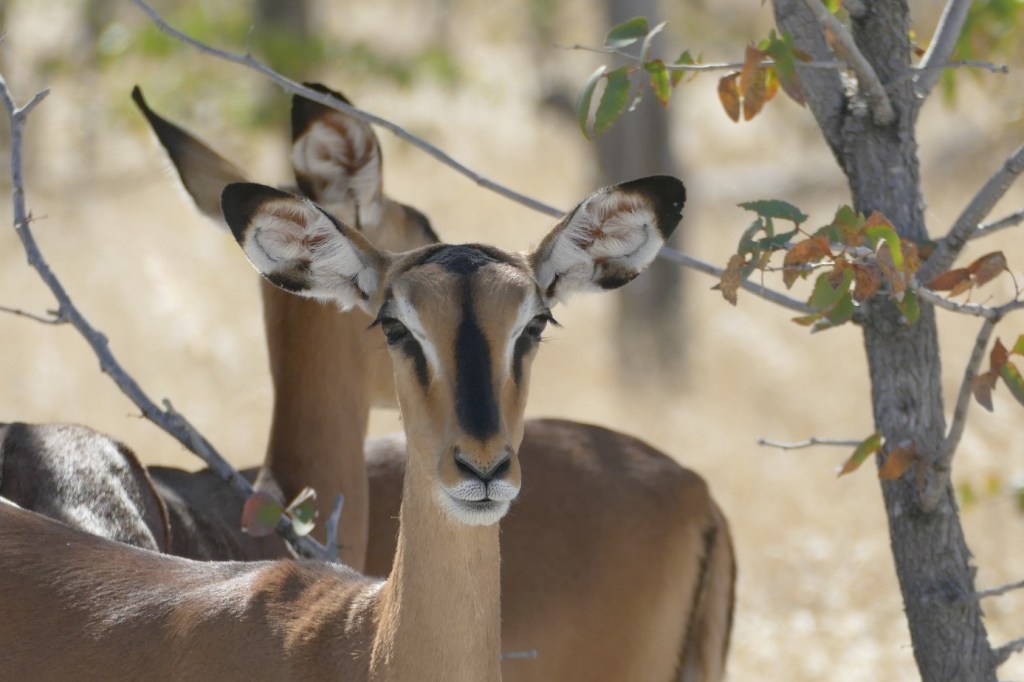
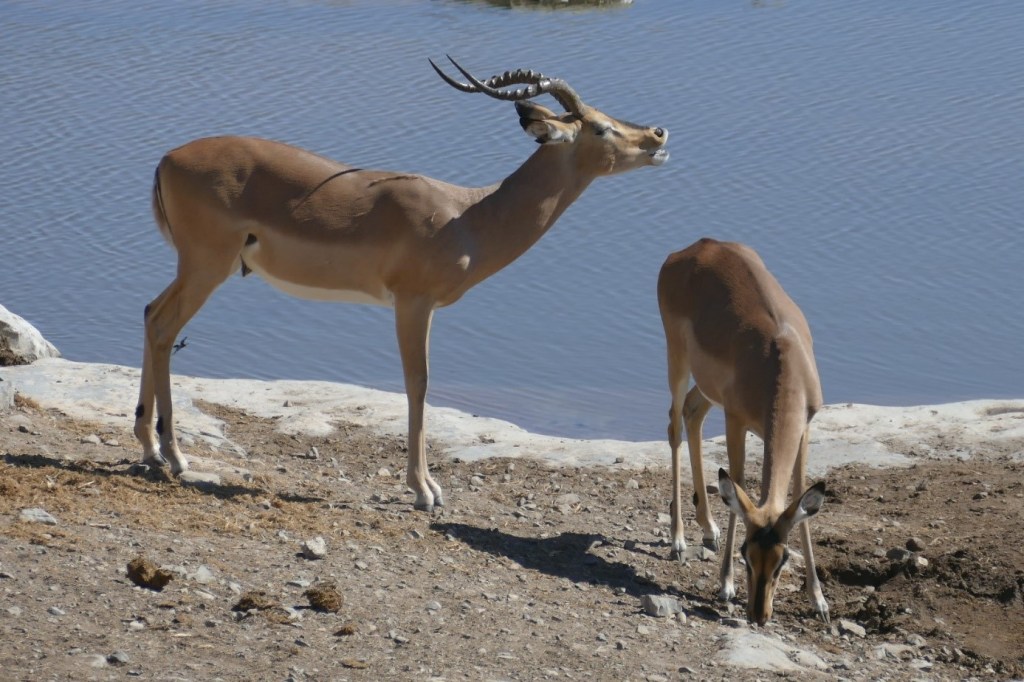
Black-faced impalas (Aepyceros melampus petersi) are a subspecies of the Common impala (Aepyceros melampus melampus) that has adapted to arid areas and that nowadays is nearly endemic to Namibia. Only an estimated population of 3000 individuals are left in the wild.
In comparison to the Common impala, they have a dark nose blaze, a longer, bushier tail, a darker fur colouration, and they are about 10 kg heavier.
Rutting season has started and the impalas show their intentions by tongue-flicking, urine-sniffing, tail-lifting and grunting. Have a look on the “funny-face” of the male when they sniff the females’ genitals. This behaviour is called “flehmen” and a typical mammalian behaviour in which the animal inhales scent with the mouth open and upper lip curled to facilitate the transfer of scents and pheromones into the vomer-onasal organ, the Jacobson’s organ, above the roof of the mouth. This is one type of communication they use. In this way they test the female’s reproductive status. I am already looking forward to the baby season!!
Elephants
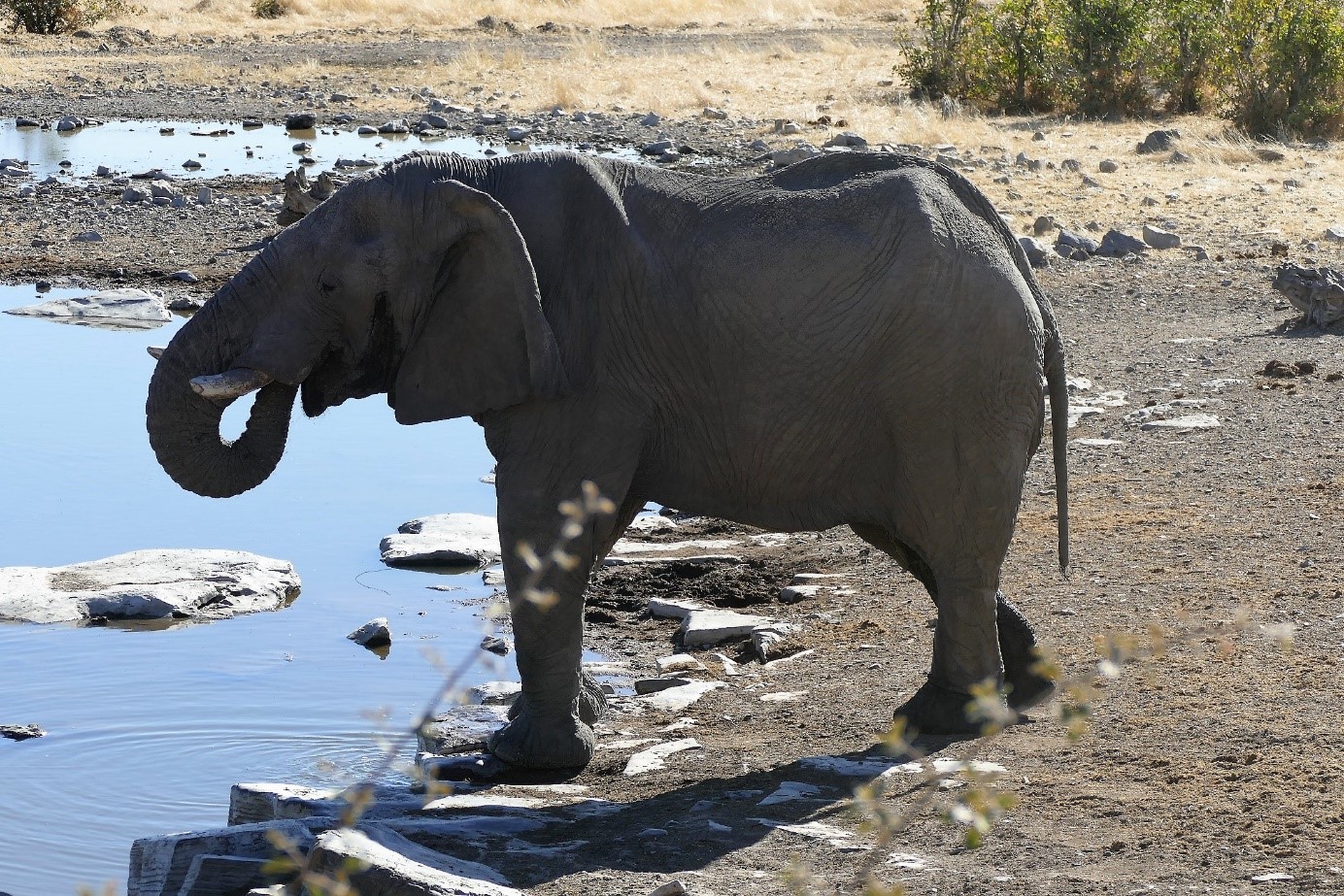
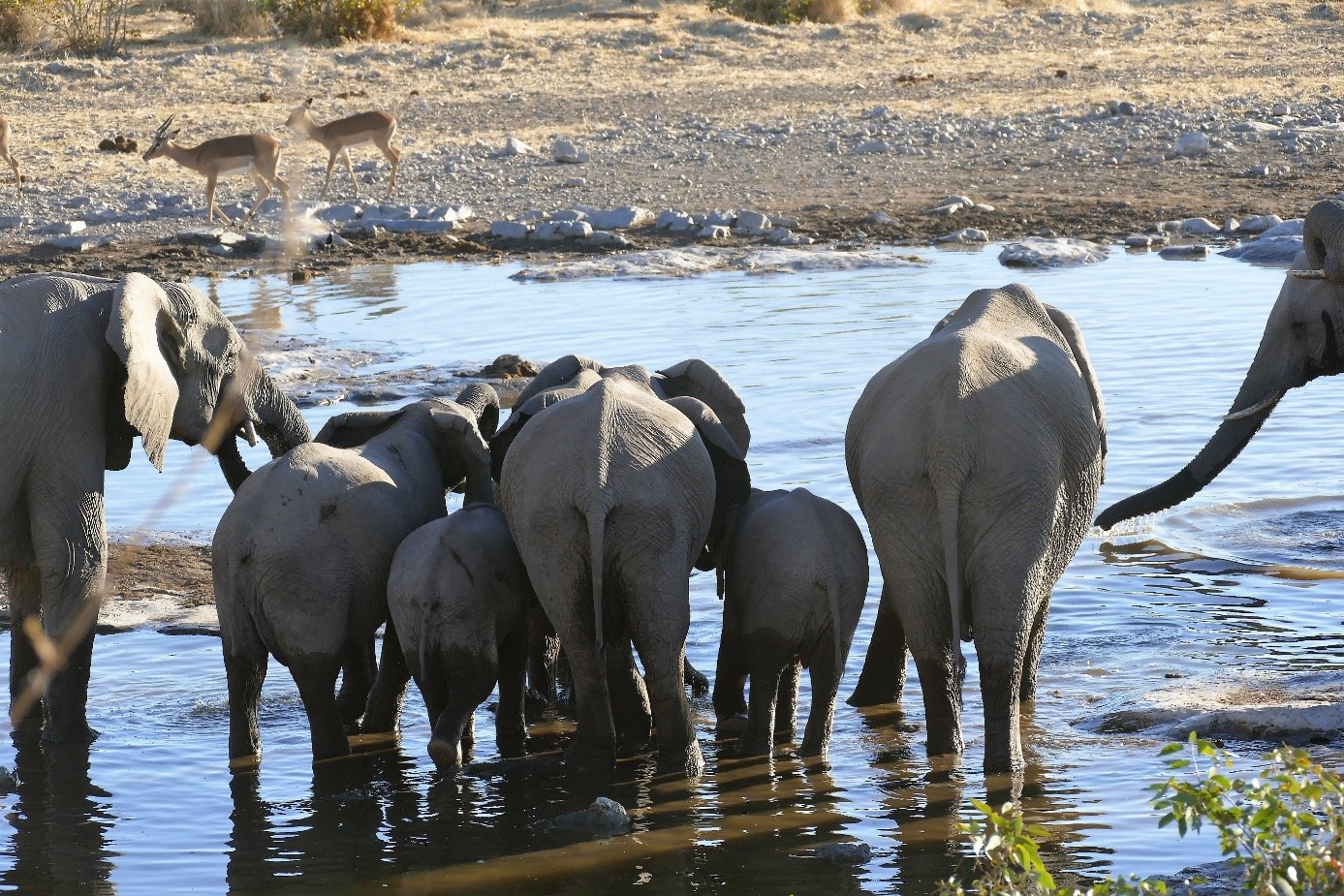
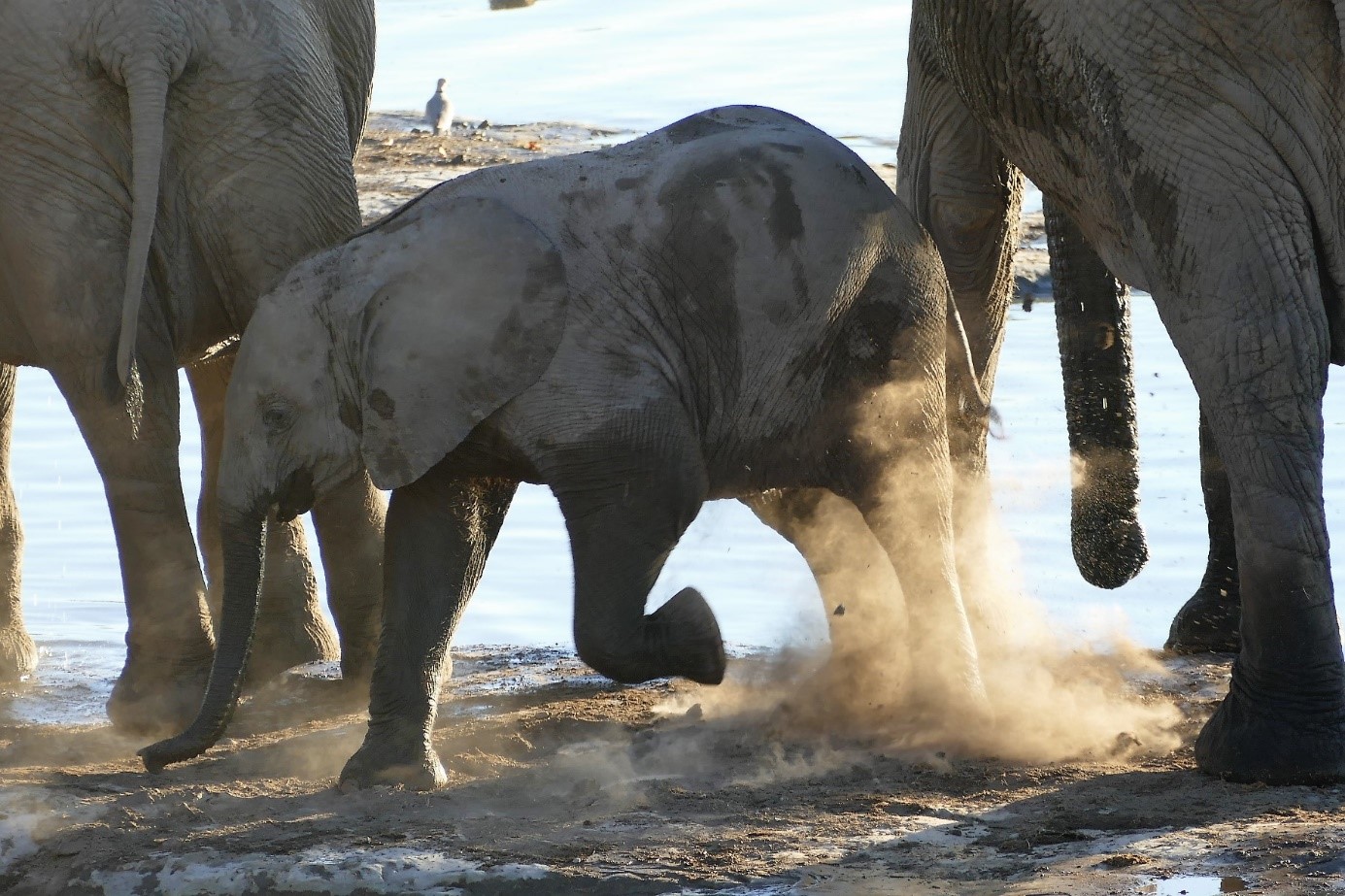
Later in the afternoon, this beautiful male Elephant came by, followed by a small nursery herd. It was nice to see all kind of different sizes and ages.
I am not sure if the young Elephant struggled or had fun. He stayed close to an adult and was obviously practising the habit of “dusting” himself. Dusting is a way to help cooling down, but also to prevent and get rid of parasites or skin irritations. Anyway, it was quite cute so see him trying to use his trunk and balance himself out at the same time. I guess it was good to have an adult close by that served as a pillar.
A beautiful Dragonfly
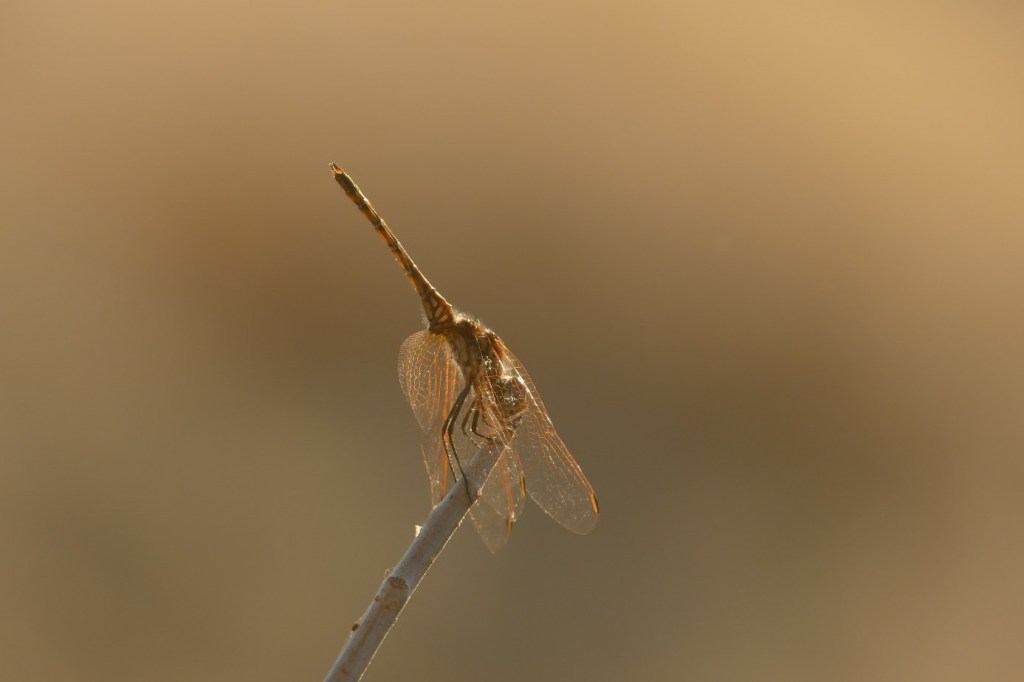
While watching the Elephants, something else, much smaller and a bit more colourful, caught my attention. This beautiful and bright orange dragonfly, that I think could be a Small Scarlet (Crocothemis sanguinolenta) or one of the Dropwings (Trithemis selika), was sitting at the tip of a branch, flying off from time to time just return to the exact same spot after a few seconds, arranging its wings in the way you see on the pictures.
I researched a bit and found out that this so-called “obelisk position” orients the dragonfly’s abdomen directly at the sun, thereby reducing the surface area exposed to solar heating. Some dragonflies also point their wings forward and down to reduce exposure to sunlight and, perhaps, to reflect light and heat away from their bodies.
Interesting, interesting: “The dragonfly symbolizes change, transformation, adaptability, and self-realization. The change that is often referred to has its source in mental and emotional maturity and understanding the deeper meaning of life.” Let´s go
A Rhino, a Lapwing and a Spotted Hyena
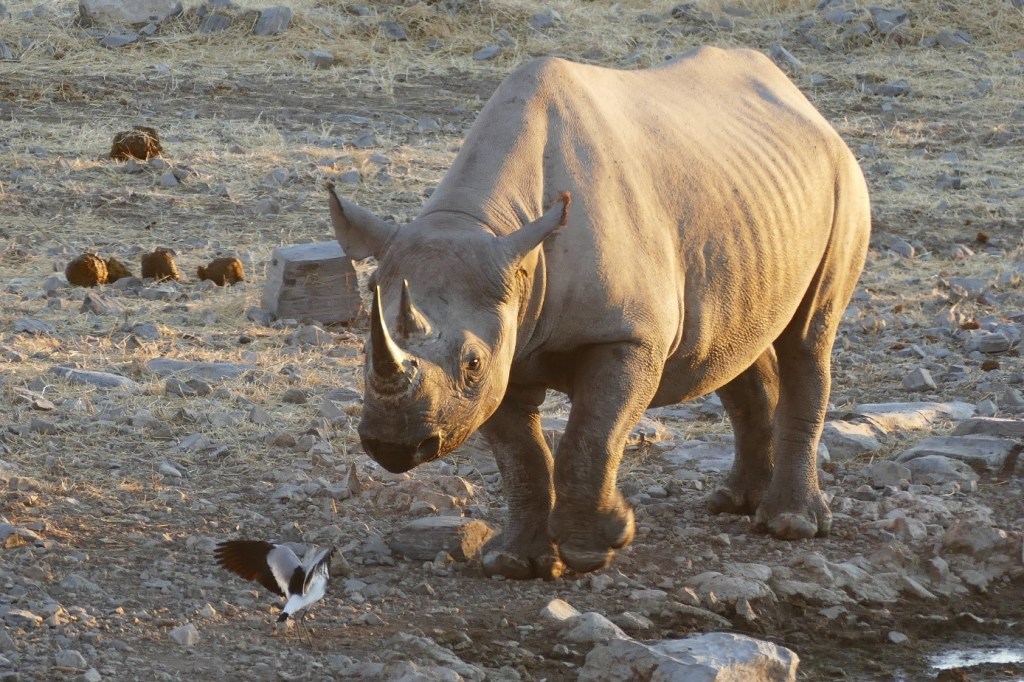
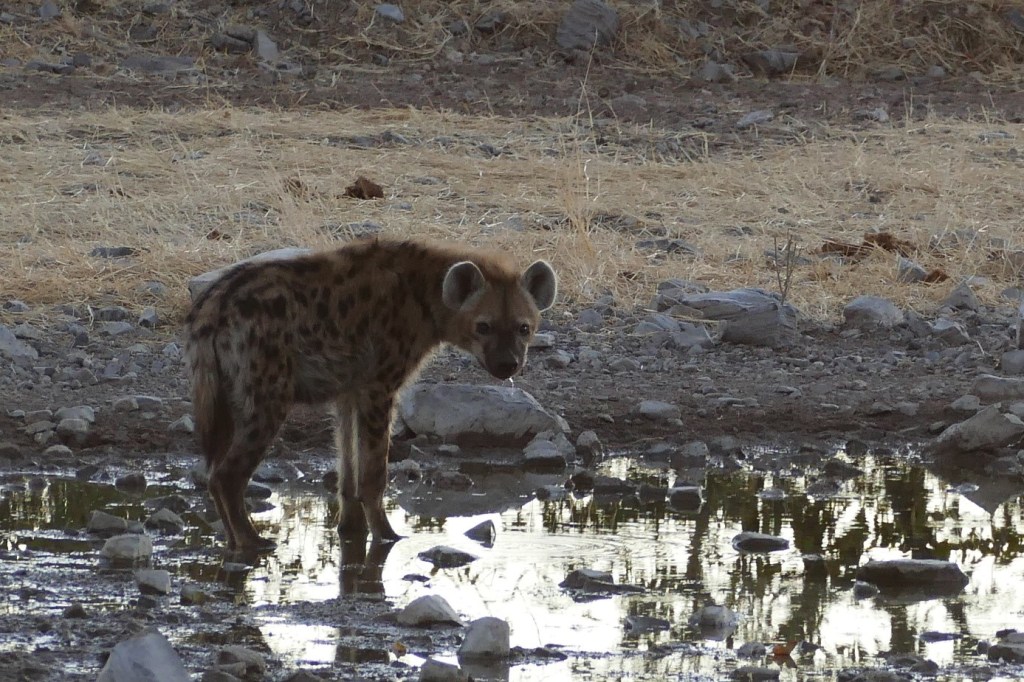
Shortly before sunset, a Black Rhino and a Spotted Hyena came along.
The Rhino had a bit an issue with that Blacksmith Lapwing. I am not sure if the Lapwing has a nest there or was just upset that the Rhino was walking in its way, but it was complaining constantly and flying around. Didn´t bother the Rhino too much though.
The Spotted hyena sneaked in silently from the back and also took a sip of water. While they live in clans and also usually hunt in groups, I often see them walking around alone as well, like this one. What I found very interesting is that the Hyena, once finished with drinking, took a wee within the waterhole. I am not sure if this is done to distribute or to hide their scent, or maybe simply for no reason.
Another Black Rhino
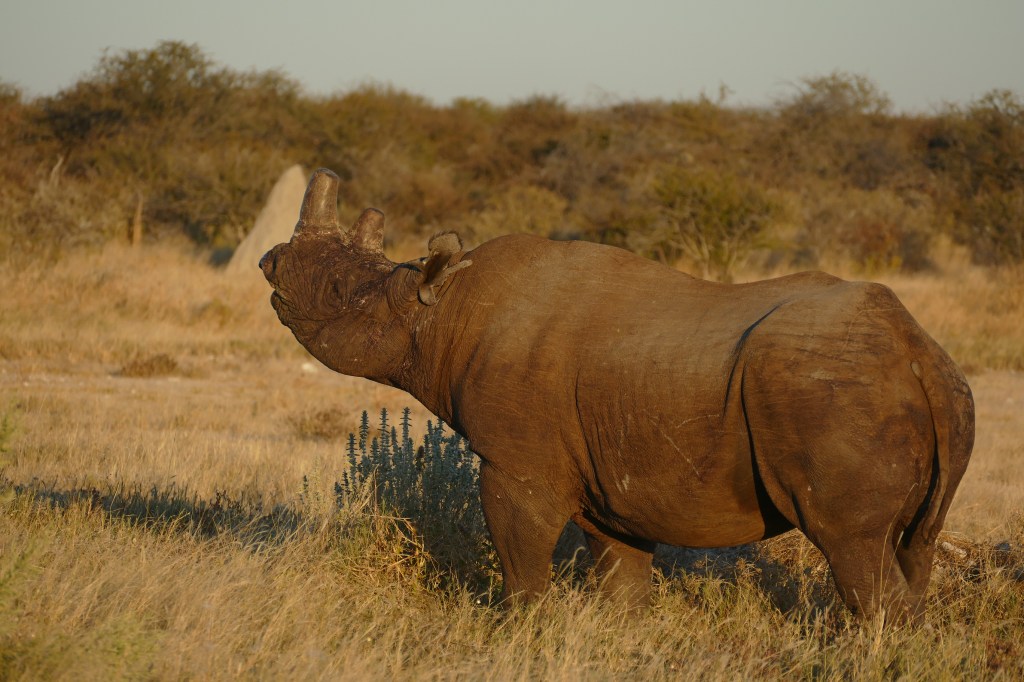
One afternoon, shortly before sunset, this old lady appeared out of nowhere and stood all of a sudden in front of the car on the road. Black Rhino (Diceros bicornis bicornis) can live up to 50 years and this female did obviously went through a lot. She looks tired and you can see from the scars on her bump that she might have had quite some encounters with the bigger cats out there. I am deeply touched and simply enjoy the time that she allows me to stay with her.
Banded Bandits
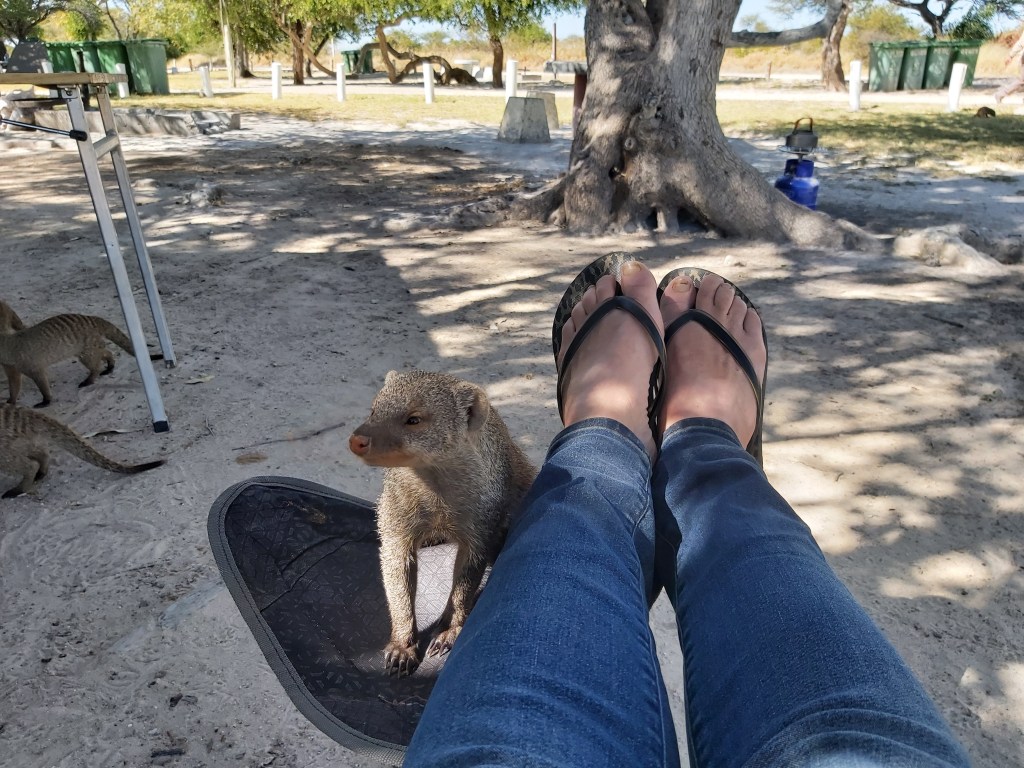
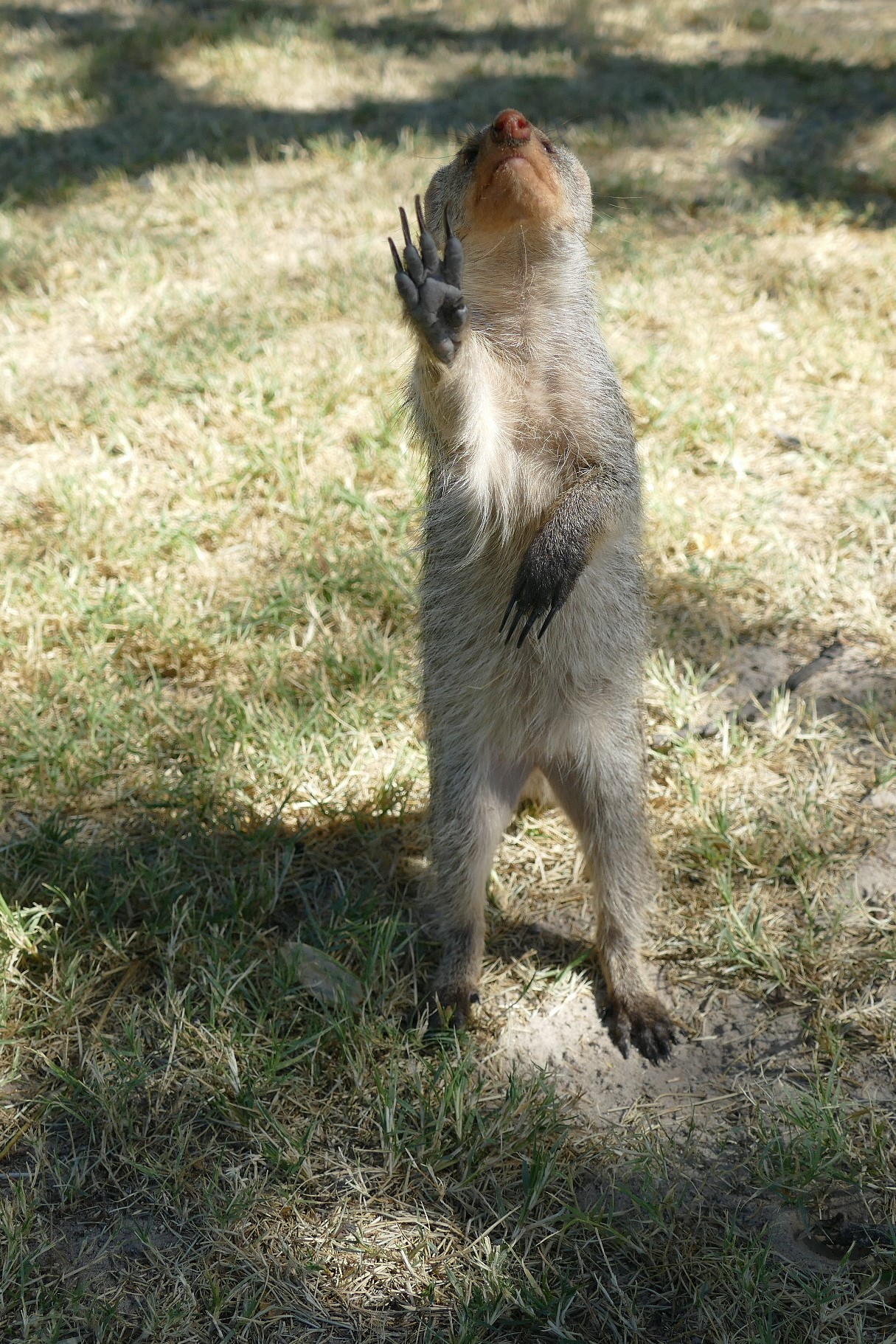
In the last camp – Namutoni – these cheecky little bandits raided the campside. These usually rather shy Banded mongoose (Mungos mungo) got quite habituated to guests here. They are carnivorous, but to be more specific, they are insectivorous and feed primarily on insects and myriapods. Invertebrates constitute the major portion of their diet, and they particularly favour beetles and termites. They are also known to scavenge dumps or campsites for edible titbits, what I can confirm here.
Banded mongoose are very social and live in mixed and permanent groups between 6 and 40 individuals, consisting of an average of 15 adults and their offspring. Within the group, there is no strict hierarchy or dominating sex and to strengthen and maintain the strong group bond, mongooses mutually scent-mark each other with a secretion from our anal glands, practice social grooming and use vocalisation.
A group of mongoose is also called troop, committee, delegation or mongaggle (my favourite).
During the Field Guide course last, I never really got into birds but slowly I start to see their pretty and really enjoy watching them. Apart from their pure beauty or cuteness, it is also interesting to listen to their stories, like the one of the Lilac-breasted roller.
More Elephants
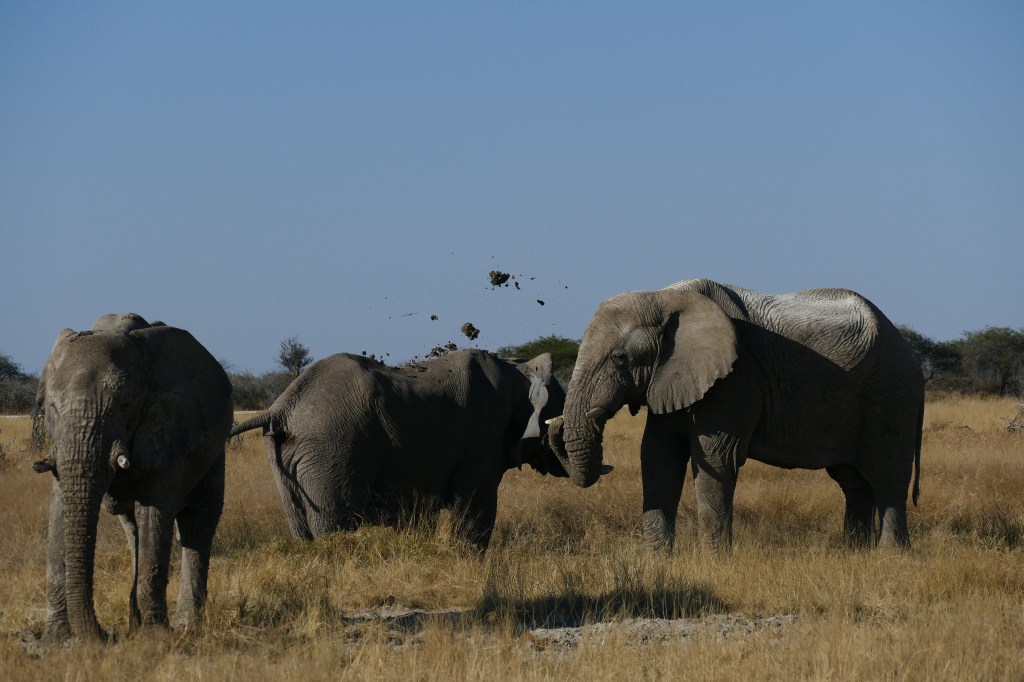
On my last afternoon, I met those three elephant bulls. They had found a small water puddle next to the road and threw a bit of remaining mud around. Not enough to cool them down but I assume that every bit of moisture helps.
I stopped in a fair distance and left enough room for them to move in any direction. The last thing I want is to severely irritate them, stand in their way or even become a target if they feel disturbed by my presence. But this distance thing is obviously still a learning process for me and always depends on the situation and the animal itself.
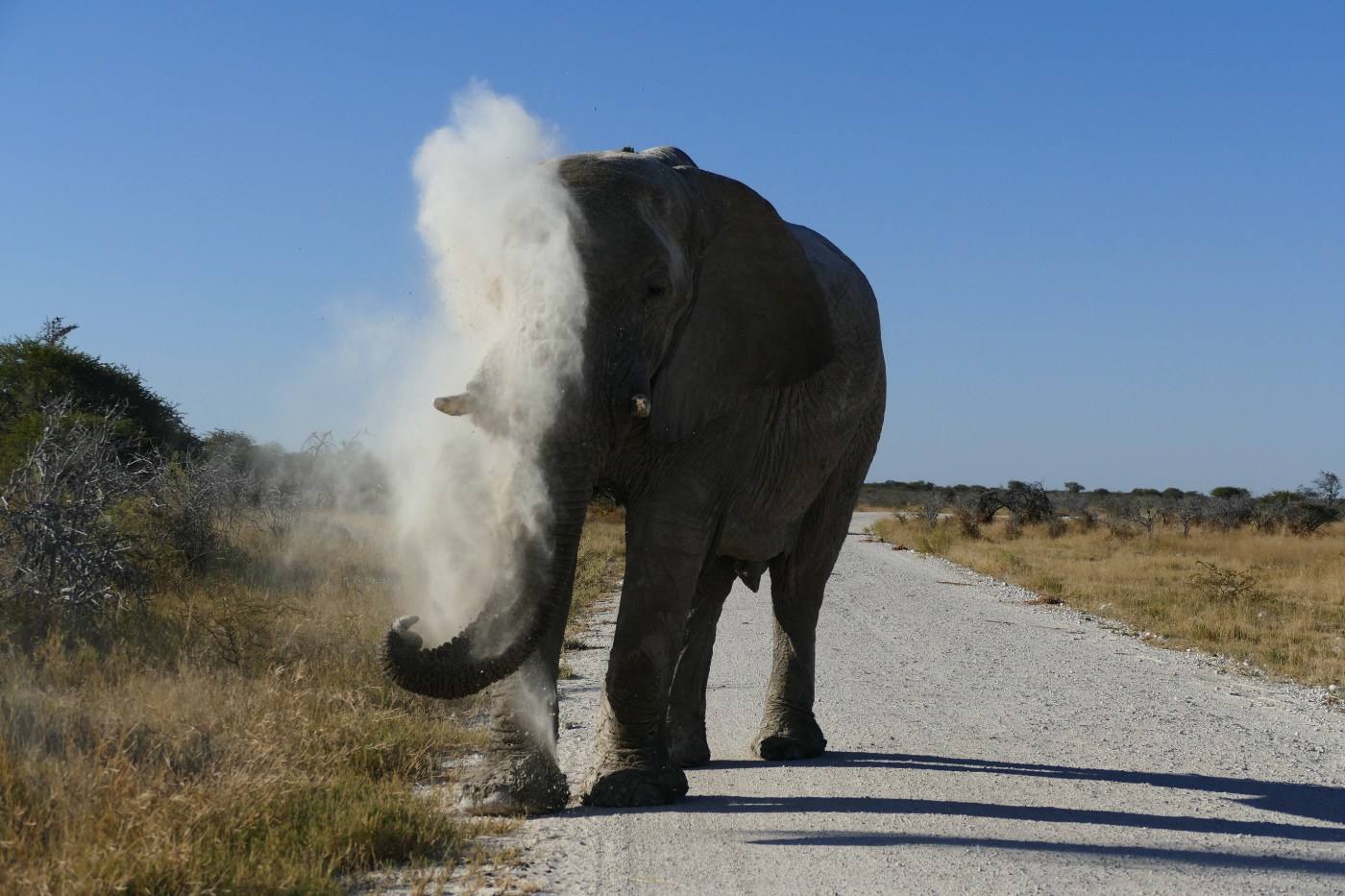
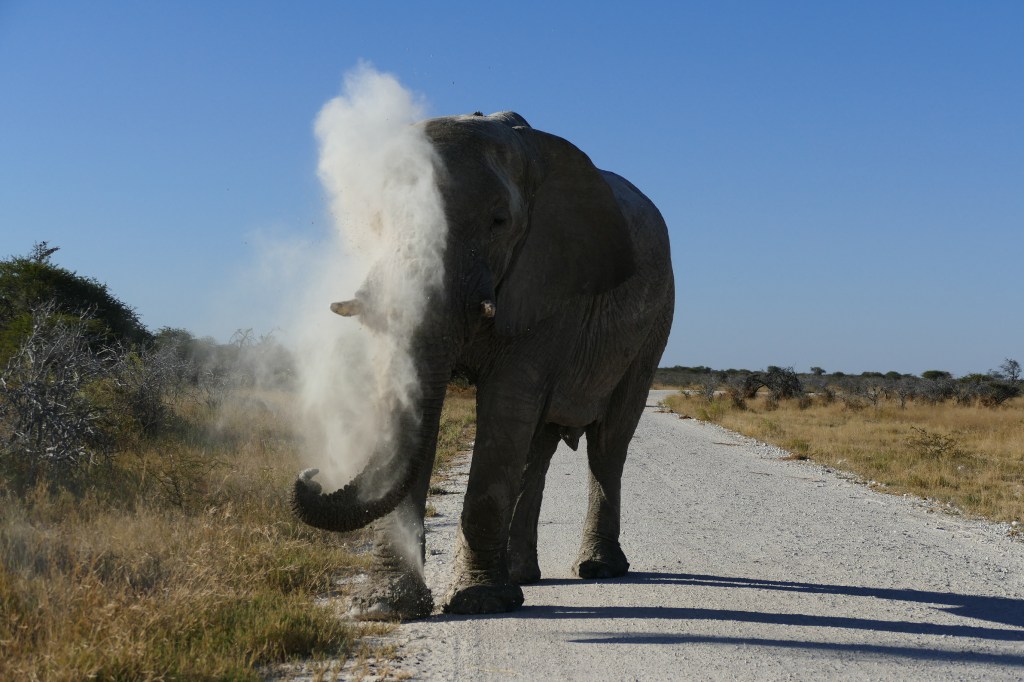
Once everybody had enough of the mud, they started to move on to the other side of the road. Even though I had not moved for the last half hour and was not in his way, one started showing off a bit, throwing sand all over his body to intimidate me and to make sure who has the right of way.
It worked, a bit, but not enough to scare me off 😊 It is always a pleasure and joy to see those majestic animals. Every single sighting is different, and it is amazing to watch them interacting with each other or other species.
Puh, for everyone that made it through this post … respect!

 Sininho´s World


You must be logged in to post a comment.