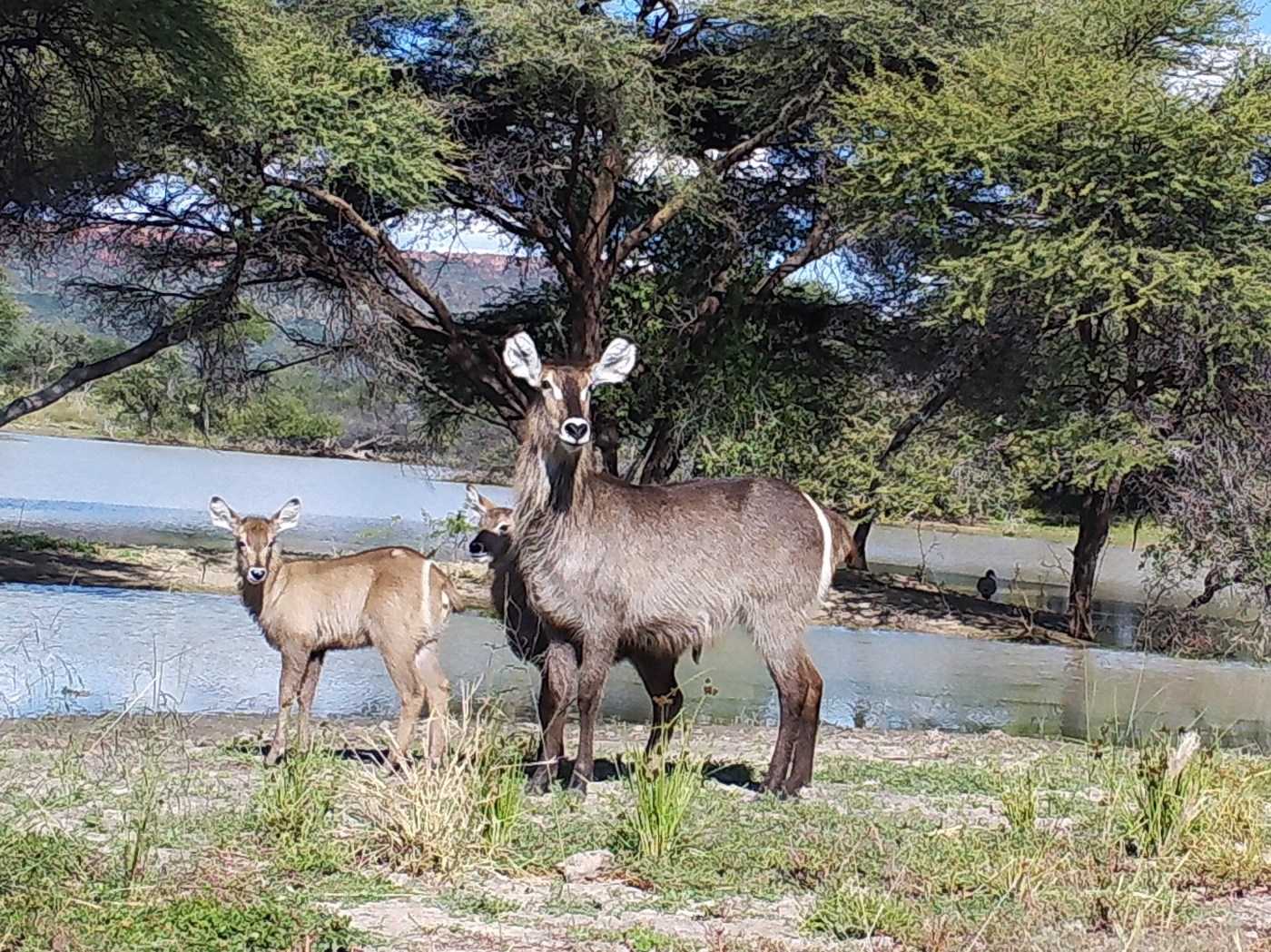
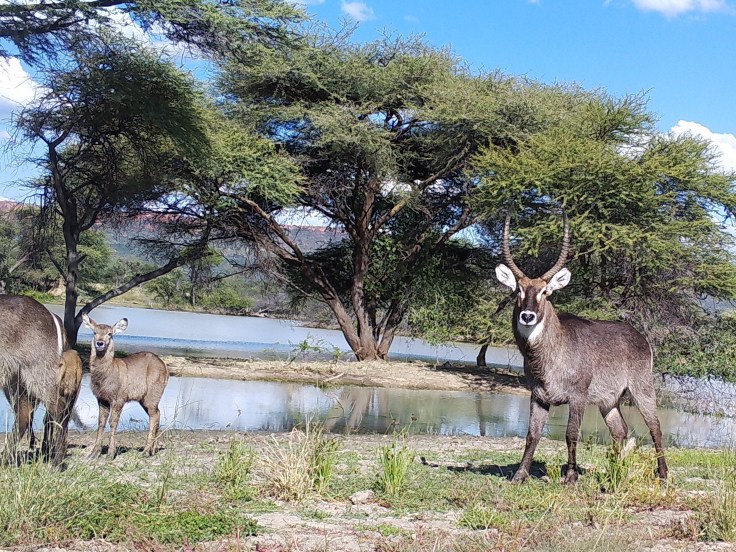
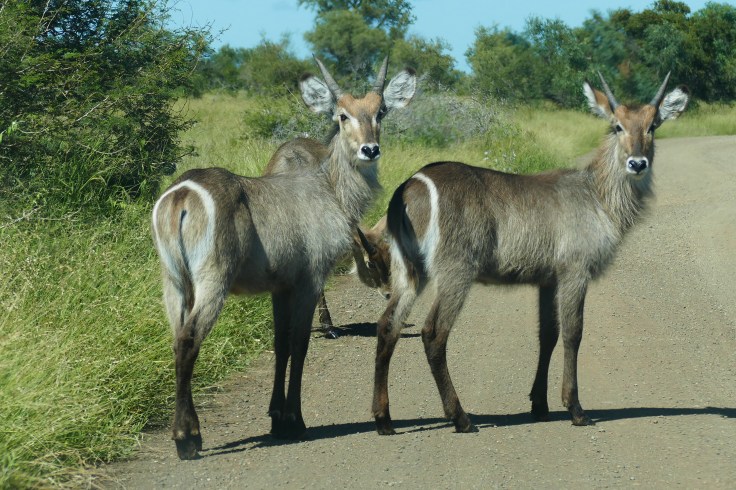
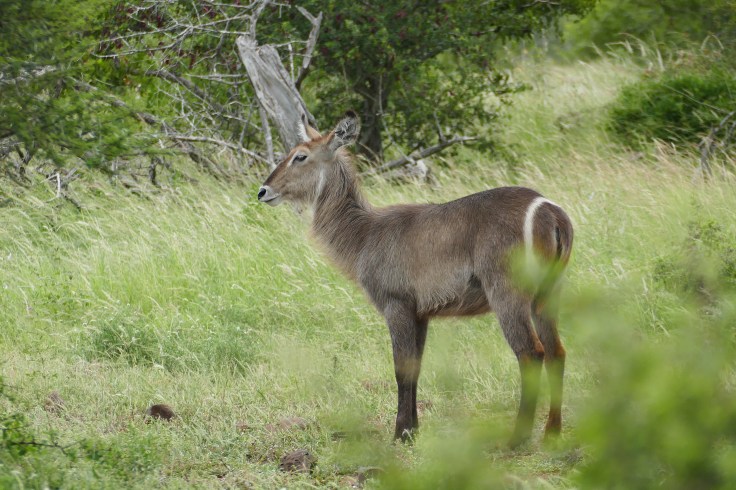
The first Waterbuck I saw was in Selati, in October 2019. Since then, this shaggy-looking antelope became one of my favourite animals. I have to confess that I often forget about it, but whenever I see it again, my eyes are sparkling and I can not stop smiling. The Waterbuck does not appear as spectacular as other antelopes. Its coat is a boring grey, the face not as cute as the Nyala´s, and the horns not as magnificent as the kudu´s. But that does not mean that this animal is not an impressive creature!
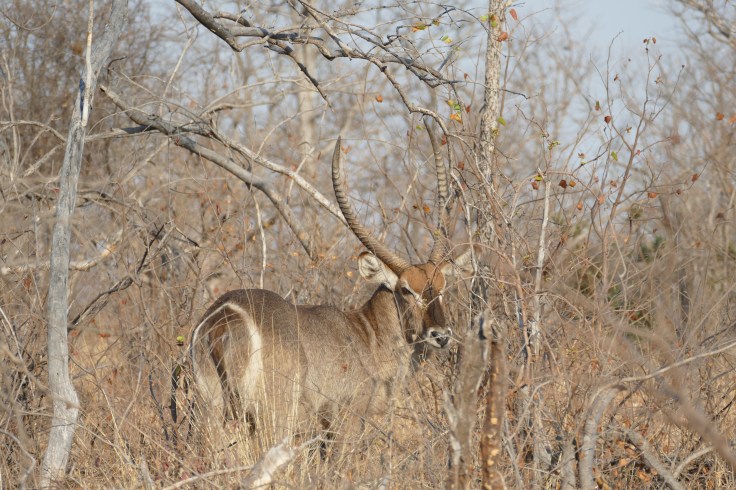
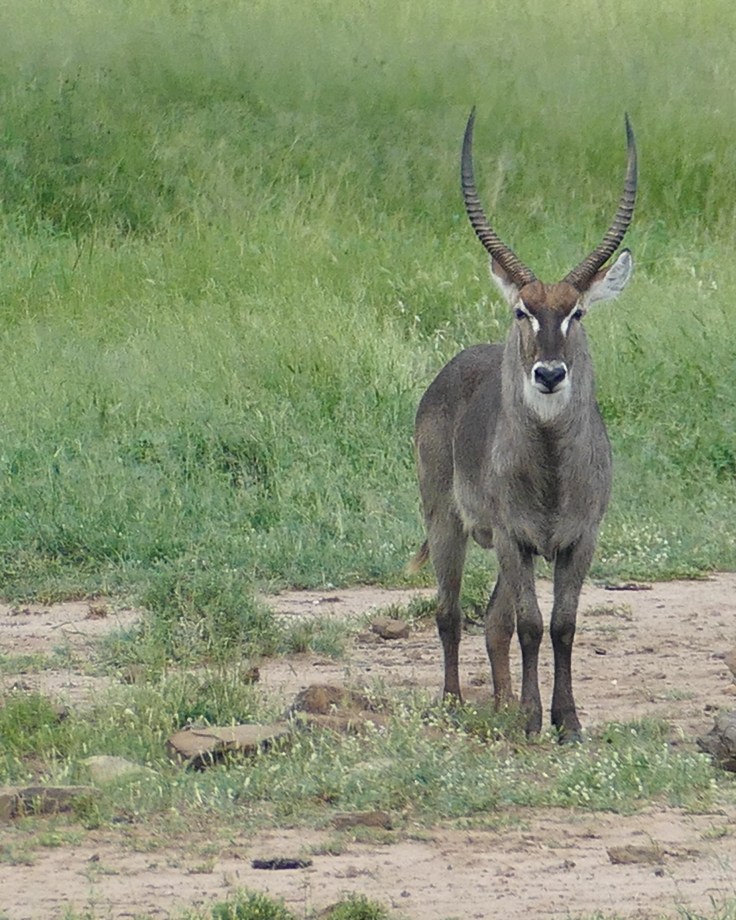
The Waterbuck is one of the larger antelopes. The fur is grey and thicker than in its relatives and interesting enough, the hair is hollow which allows for extra buoyancy when swimming. The Waterbuck has skin glands that produce a greasy secretion which is thought to have a water-proofing quality but also releases a musky odour that can be smelt up to 500 m away. Males have long, inwards-curved spiral horns that can cause deadly wounds and they do not hesitate to use them, for example in fights during breeding season when they defend their territory or the females.
What made me fall in love instantly is their nose. It is so perfectly heart-shaped and – funny enough – nearly identical to their hoofprints 🙂
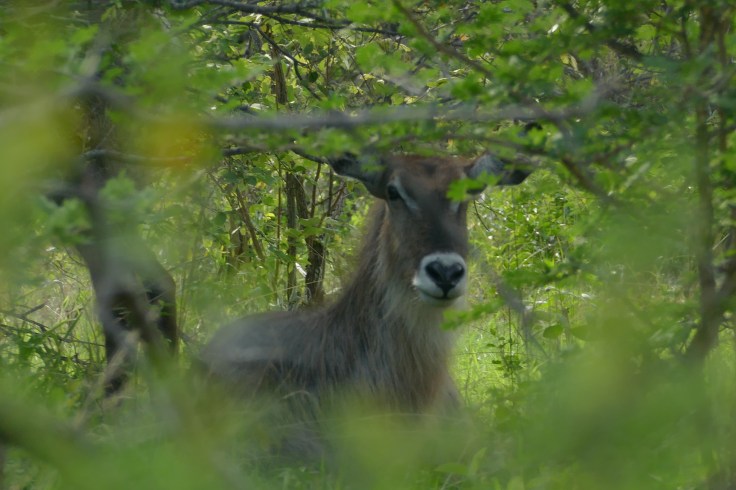
In days gone by, people believed that the Waterbuck has magical healing powers. African people used to go to a lake or a river and carefully captured this special antelope. The Batswana people called it serwala botloko – „he who carries our pain” or “the carrier of pain”. It was firmly believed that if a sick person touched a living waterbuck, especially on the rump, the waterbuck would take away pain and sickness. When a waterbuck was captured for the purpose of healing a sick person, great care had to be taken not to injure it in any way. If it was injured, it was believed that the patient would die of his or her illness.
Equally great care was taken when the waterbuck was released, to ensure that it was not harmed in any way, and its movements through the bush were carefully observed. If the waterbuck ran into a dense clump of bush, this indicated that the sick person would recover slowly. If the waterbuck crossed a river, this was an extremely good sign that the animal was taking away the patient´s illness and that recovery would be rapid. If the waterbuck began grazing, this signified that the patient would recover, but would die soon thereafter from another illness.
More facts and stories about the Waterbuck can be found HERE.
Good night,
Sininho
 Sininho´s World
You must be logged in to post a comment.